FIX 2026 Innovation Awards: 9 Best Innovation Technology Winners in Robotics, AI, and Mobility
Ubergizmo

FIX 2026 recognized nine companies for innovations in humanoid robotics, autonomous vehicles, industrial AI, cybersecurity, and data center cooling.
At FIX 2026 in Daegu, South Korea, nine companies presented their technologies at a press conference highlighting the winners of the Best Innovation Technology Awards, FIX 2026’s highest distinction.
A panel of 26 judges selected the nine winners from 209 applicants, representing three sectors: future mobility, robotics, and AI/ICT. Another 22 companies received Innovation Awards, bringing the total to 31 winners, including six companies from the Daegu-Gyeongbuk region. For last year’s winners, please check my article here.
Among the most interesting technologies were Tesollo’s robotic hand, designed to reproduce human dexterity, and AeiROBOT’s latest bipedal humanoid robot, Alice 5. Both address major technical challenges facing the next generation of humanoid robots.
Robotics: Reproducing Human Dexterity and Movement
Tesollo: Advancing Human-Like Robotic Hands
South Korean robotics company Tesollo, led by CEO Young-jin Kim, received a Best Innovation Technology Award for its DG-5F-M robotic hand, which features five fingers and 20 degrees of freedom for human-like manipulation.
At FIX 2026, Tesollo also showcased the newer DG-5F-S, a compact version weighing just 880 grams, according to the company. Both models aim to address one of the key challenges in humanoid robotics: reproducing the dexterity, gripping strength, and precise finger movements of the human hand.
Using proprietary actuator technology, Tesollo is developing robotic hands that can perform increasingly complex manipulation tasks. The company claims its designs combine dexterity, precision, and compactness, though independent comparisons with competing products are still needed. Its three-finger DG-3F05 won a CES 2025 Innovation Award in Robotics.
AeiROBOT: Alice 5 Moves from Wheels to Legs
AeiROBOT presented ALICE 5, its latest bipedal humanoid robot, representing a significant technological evolution from its earlier wheeled Alice M1 and M2 platforms.
Standing approximately 170 cm tall and weighing 50 kg, Alice 5 features 43 degrees of freedom and uses NVIDIA’s Jetson Thor computing platform.
Its proprietary hybrid actuation system combines quasi-direct-drive actuators in the upper body with linear actuators in the legs. This architecture is designed to balance responsive upper-body manipulation with the strength and stability required for bipedal locomotion.
Compared with wheeled humanoids, a legged robot can navigate stairs, obstacles, and environments designed for people without requiring modifications to the surroundings. Alice 5 also supports interchangeable robotic hands for different tasks.
AeiROBOT is already testing its ALICE robots in industrial environments, including PCB manufacturing (Alice M1) and shipyards (Alice 5) operated by HD Hyundai and Hanwha Ocean. Alice 5 has undergone fire-response demonstrations at HD Korea Shipbuilding & Offshore Engineering, while planned applications include firefighting, ship cleaning involving hazardous chemicals, and other dangerous shipyard tasks. The company is targeting broader industrial deployment by 2028.
Future Mobility: Smarter Vehicles and Automotive Components
Onepredict: AI-Native Factory
Onepredict is expanding its predictive maintenance expertise into an AI Native Factory solution that integrates manufacturing data and equipment management.
Traditional predictive maintenance systems identify potential failures. Onepredict goes further by linking equipment health data to production operations, helping manufacturers make better maintenance and operational decisions.
Its advantage lies in combining industrial equipment diagnostics with a broader manufacturing AI platform.
SWM: Advancing Autonomous Robotaxis
Through its SVMW.ai autonomous driving technology, SWM is developing urban robotaxi services that operate without fixed routes.
The company has already launched autonomous driving services in Seoul’s Gangnam district. and introduced paid commercial operations with a safety driver onboard.
Its AP-700 autonomous driving platform delivers a claimed 2,000 TOPS of computing performance to process sensor information and AI models.
Unlike fixed-route autonomous shuttles, SWM targets flexible passenger pickup and drop-off services, though widespread Level 4 driverless deployment remains challenging.
Perseus: Software-Defined Vehicles
Perseus received recognition for PEGASUS, its hypervisor technology for software-defined vehicles. Certified to ISO 26262 ASIL-D, Pegasus runs several operating systems, such as the digital cockpit and vehicle control, isolated on a single chip.
As cars become increasingly software-driven, automakers need to consolidate functions previously managed by separate electronic control units.
Pegasus is designed to let multiple software environments operate on shared vehicle hardware while maintaining isolation between functions. This approach could reduce hardware complexity and simplify automotive software development and updates.
HJWave: Better Radar for Autonomous Vehicles
HJWave develops advanced 3D waveguide antennas for automotive radar systems.
Its technology uses a specialized waveguide structure to reduce signal losses and improve radar resolution and detection coverage.
Compared with conventional PCB-based antennas, HJWave reports improvements in signal consistency and a wider detection angle. Better radar performance could help autonomous vehicles more reliably detect pedestrians, obstacles, and surrounding traffic, especially when cameras face poor visibility. It holds Korean and US patents, received a European patent grant decision in June 2026, and signed a supply agreement with an undisclosed global autonomous-driving company.
AI/ICT: Cooling, Cybersecurity, and Autonomous Factories
CENS: Precision Cooling for AI Servers
CENS presented its CENS-D130 precision spray cooling technology, developed to address the growing heat generated by powerful AI servers.
Instead of immersing entire servers in cooling liquid, the system sprays electrically nonconductive fluid directly onto heat-generating components.
AI-based controls adjust cooling delivery according to changing thermal demand.
CENS claims its targeted approach can substantially reduce cooling-fluid requirements compared with full immersion systems, potentially lowering equipment weight, maintenance complexity, and operating costs.
WACE: Letting AI Make Factory Decisions
WACE’s VEXPLOR, a manufacturing AI operating system, aims to move industrial AI beyond dashboards and recommendations.
The software standardizes factory data, supports evidence-based operational decisions, and connects AI-generated instructions to programmable logic controllers (PLCs), which operate industrial equipment.
VEXPLOR stands apart from conventional factory monitoring platforms by connecting AI decision-making directly to machine control.
Its safety layer hands control to AI, one verified level at a time, and blocks unsafe commands.
PotatoNet: Detecting Hidden Cybersecurity Threats
PotatoNet, led by CEO KyoungA Shin, develops OLPEMI, an AI-powered cybersecurity platform that identifies malicious URLs and hidden threats, including those in the deep web. Its technology focuses on discovering malicious websites, phishing infrastructure, and threats that conventional URL databases may not recognize quickly enough.
OLPEMI also protects against web-server attacks and malicious links encountered on mobile devices. Its proactive threat intelligence approach aims to identify dangerous web destinations before users or organizations are compromised.
FIX 2026 Innovation Awards: 9 Best Innovation Technology Winners in Robotics, AI, and Mobility , original content from Ubergizmo. Read our Copyrights and terms of use.
October 25th 2026, 2:15 am
YouTube Removes Subscriptions Tab In Major Interface Redesign
Ubergizmo

YouTube has announced a major interface redesign for its mobile applications on Android and iOS, removing the traditional Subscriptions tab from the bottom navigation bar after nearly a decade. Positioned in that location since 2017, the shortcut has now been relocated to the top of the home page, right after the Home option. It is accompanied by new dedicated categories for live streams, music, and movies.
This structural update also eliminates the side navigation menu, aiming to streamline access to different types of content. While the update modernizes the layout, it requires users to adapt to an entirely new organizational flow compared to the previous design.
The new YouTube interface now has fewer buttons on the lower part of the screen
Another significant addition is the introduction of custom feeds, which allow users to generate tailored recommendation pages using natural language descriptions. By tapping the plus button located at the top of the home page, users can specify particular topics, channels, or video styles they wish to watch—such as short meditation sessions or niche tutorials.
The user will be able to configure custom feeds on the main screen.
These custom feeds are saved as individual tabs and can be edited or deleted later. There is a limit of three active custom options for free users, while YouTube Premium subscribers enjoy up to eight active feeds. Furthermore, these configurations synchronize seamlessly with the web version to maintain a consistent browsing experience across multiple devices.
The rollout is currently releasing gradually in the United States across both mobile applications and desktop computers. According to the platform, these custom feeds will expand to international markets in the future, though specific regional release dates have not yet been announced. This update marks a transitional phase for the platform as it shifts toward a more flexible, personalized content discovery model designed to help viewers find what matters most to them quickly and efficiently.
YouTube Removes Subscriptions Tab In Major Interface Redesign , original content from Ubergizmo. Read our Copyrights and terms of use.October 24th 2026, 1:30 pm
Nintendo Switch Online Adds Three Cult Game Boy Classics
Ubergizmo

Nintendo has announced that three classic Game Boy titles will join the Nintendo Switch Online library next week, supplementing the Game Boy Advance games released earlier in the month. This upcoming selection focuses on cult classics that combine creative puzzles, retro action, and arcade nostalgia, including a project spearheaded by legendary designer Shigeru Miyamoto.
The curated lineup features lesser-known releases whose gameplay mechanics remain engaging today. The three games arriving on the platform are:
- Avenging Spirit (1992): An action-platformer where players control the ghost of a murdered man. Its standout mechanic involves possessing various enemies to absorb their bodies, weapons, and abilities in order to rescue the protagonist’s kidnapped girlfriend.
- Mole Mania (1996): Produced by Shigeru Miyamoto, this puzzle game stars Muddy Mole and requires strategic thinking. Players must dig through dirt and switch between surface and underground views to solve intricate puzzles and rescue his family from a cruel farmer.
- Pinball: Revenge of the Gator (1989): Developed by HAL Laboratory—the studio behind Kirby—this title delivers an entertaining multi-screen pinball table where the primary goal is maximizing scores while preventing the ball from falling into the jaws of hungry alligators.
To improve the experience for modern gamers, the built-in Nintendo Switch application includes convenient features like save states, allowing users to save their progress at any point during gameplay.
These nostalgic titles will be accessible through the Game Boy application on both the standard Nintendo Switch and the upcoming Switch 2 hardware starting on October 27.
Three games are coming to Game Boy – Nintendo Classics for #NintendoSwitchOnline members on Oct 27!
☑️ Avenging Spirit
☑️ Mole Mania
☑️ Pinball: Revenge of the 'Gator pic.twitter.com/AikYpD8hg2— Nintendo of America (@NintendoAmerica) October 23, 2026
Subscribers to the standard Nintendo Switch Online membership can access these games at no additional cost, as they do not require the higher-tier Expansion Pack. This monthly update continues Nintendo’s tradition of preserving gaming history while making retro libraries accessible to contemporary audiences on current hardware platforms.
Nintendo Switch Online Adds Three Cult Game Boy Classics , original content from Ubergizmo. Read our Copyrights and terms of use.
October 24th 2026, 1:30 pm
Netflix Viewership Drops Sharply; Are More Price Hikes Coming?
Ubergizmo

Netflix is confronting a noticeable decline in viewer engagement, with data indicating that subscribers are spending less time watching movies and TV shows on the platform. According to a recent market analysis conducted by the financial firm Jefferies, the average monthly viewing time per subscriber dropped from 66 hours during the first half of 2023 down to 49 hours over the same period in 2026, representing a significant reduction of approximately 26 percent.
Additionally, the company’s overall share of television consumption in the United States receded to 7.8 percent in July, marking a one percentage point decrease compared to the previous year. This contraction has amplified investor anxieties surrounding long-term user retention and platform activity. Despite these engagement shifts, Netflix emphasized in its third-quarter financial report for 2026 that monetization expansion remains a top corporate priority, alongside ongoing catalog enhancements and technological innovations.
To counteract these trends, Netflix plans to boost investments in original productions, live broadcasting events, and licensed third-party content. These initiatives are designed to attract new users and maximize value for commercial advertisers. This financial roadmap leaves an opening for potential subscription price increases, although no immediate rate hikes have been officially confirmed following recent adjustments. During the quarter, the corporation generated strong revenue totaling roughly $12.9 billion, marking a 12 percent year-over-year increase.
During a recent shareholder presentation, co-CEO Ted Sarandos acknowledged that domestic growth in the U.S. has lagged behind initial projections. Conversely, regional markets across Latin America, Europe, and Asia continue to drive international audience expansion and revenue streams. This transitional phase coincides with internal corporate restructuring, which included workforce reductions impacting about one thousand employees and the departure of key executives such as Bela Bajaria and Dan Lin.
In an effort to revitalize its programming pipeline, Netflix appointed former Disney executive Peter Rice as its new chief content officer, effective October 26. Leadership hopes this strategic transition will successfully restore audience engagement within an increasingly saturated and competitive streaming landscape.
Netflix Viewership Drops Sharply; Are More Price Hikes Coming? , original content from Ubergizmo. Read our Copyrights and terms of use.October 24th 2026, 1:30 pm
FIX 2026 Global Media Awards: Ubergizmo’s Top 3
Ubergizmo

Ubergizmo returned as a media partner for the Future Innovation Tech Expo 2026 (FIX 2026), held from October 21 to 24 at EXCO in Daegu, South Korea (read our opening-ceremony report).
As one of ten international media partners, Ubergizmo participated in judging the FIX Global Media Awards, a program separate from the official FIX Innovation Awards, which we covered in our FIX 2026 preview.
I was assigned 11 companies to evaluate. After reviewing their technology and business potential, I shortlisted six, visited each booth at FIX 2026, and selected my top three. Each media partner followed the same process with its own group of exhibitors. The four judging criteria were Marketability, Global Market Potential, Investment Potential, and Competitiveness.
Last year, I selected Aetech, WEARCOM, and LCHP Tech (read my FIX 2025 top three).
Doosan Robotics
I selected Doosan Robotics for its advanced robotics technology and strong potential in global industrial markets. I was particularly impressed by its AI-powered Scan & Go autonomous robotic solution, which received two CES 2026 Innovation Awards: Best of Innovation in Artificial Intelligence and Honoree in Robotics.
At the booth, I also saw two companies demonstrating their own technologies using Doosan robotic arms. Cinetic Motion showcased a robotic photo studio with cameras mounted on a Doosan arm, while GLAUB, a German automation specialist, demonstrated automated tape application for widths ranging from 3 mm to 400 mm, primarily for the automotive industry.
What impressed me most about Scan & Go is that it does not require CAD models or manual code programming. As the Doosan team explained, a 3D scanner captures the surface of a part, the system automatically generates the robot’s working path, and the arm follows that path to polish the surface. By eliminating the need to create CAD files and manually program each operation, the technology can reduce preparation time and costs. This is particularly valuable for midsize manufacturers that may not have dedicated CAD and robotics programming teams.
Another impressive feature is the combination of autonomous mobility and six degrees of freedom (6-DOF) provided by Doosan’s robotic arm. Mounted on a self-driving forklift platform, Scan & Go can move around a factory to reach different work areas rather than remaining fixed in one location. The six-axis collaborative robotic arm can position and orient its tools in multiple directions, allowing the system to reach parts of different shapes and sizes, even when they are positioned at difficult angles. This combination of mobility and flexibility makes Scan & Go particularly versatile for sanding, grinding, and inspecting large or complex components, including aircraft fuselages and wind turbine blades.
DOGU Robotics
I selected DOGU Robotics for its practical approach to robotics, existing commercial deployments, and promising potential for international expansion and investment.
Founded in 2017 by CEO Jin Hyo Kim, DOGU specializes in security and safety robots. Its wheeled Patrover patrol robots can detect hazards such as fires, fallen people, and screams. Its product lineup also includes Iroi, a multipurpose indoor robot; Robjet, a customizable robotic platform; and DOGU-SOC, a remote operations system.
The company told me it has deployed more than 100 robots in Korea, with customers including the Korean police, the air force, and steelmaker POSCO. Its website currently mentions 50 robots in operation, which may not reflect its latest deployments. DOGU serves both businesses and government agencies and has also secured customers in the United States.
At FIX 2026, DOGU unveiled its first quadruped robot, equipped with small wheels at the ends of its four legs. This hybrid design combines the speed and energy efficiency of wheels with the ability of legs to climb stairs and navigate uneven terrain. The robot is still a prototype, with production planned for 2027. DOGU is also developing a general-purpose humanoid robot that customers can program for their own applications, with a launch planned for next year.
Beyond the hardware, DOGU has developed software for autonomous navigation, AI-powered security, robot deployment, real-time monitoring, and fleet management. The company told me it updates its AI models every month using data collected from real-world deployments. Its software also works across different robotic platforms, letting customers add new hardware without replacing their existing management systems.
Rezbin
I selected Rezbin for its innovative and accessible approach to recycling. By combining a mobile app, AI-powered waste recognition, and financial rewards, the company makes recycling easier while encouraging consumers to change their habits. According to Rezbin, one building reported an increase of up to 70% in recycling engagement.
Founded in the Philippines in 2023, Rezbin turns ordinary waste bins into smart recycling stations without requiring expensive reverse vending machines. Instead, users simply take a photo of an item with their smartphone. Rezbin’s proprietary computer vision model, trained on local data, checks whether the item is clean and identifies its material. The app also tells users whether the item can be recycled under their city’s specific rules, which can vary significantly by location.
Users earn points they can convert into funds in their GCash digital wallets or redeem for rewards from more than 500 brands. Leaderboards, badges, and team challenges encourage participation, particularly in offices and commercial buildings. Rezbin’s customers include Allianz, other businesses, and local governments. The company is also conducting a pilot in Australia and exploring expansion into other Asia-Pacific markets.
I met Rezbin co-founder and COO Mica Eirth, who explained how the idea originated from her experience as a scuba diver. After repeatedly collecting plastic waste from the ocean, she wanted to find a way to encourage people to recycle before that waste reached the environment.
Honorable Mention
Enygma, GeoVector (Zinc Labs), and NEOTECH completed my shortlist of six companies and came close to making the top three.
I met Rashad Tajuddin, founder and CEO of Enygma, which initially developed AI-powered visual inspection technology for the oil and gas industry. Its Xentri platform is already deployed with PETRONAS and Pertamina. The company is now integrating its technology with drones and partnering with drone inspection providers, opening opportunities in telecommunications towers, railways, bridges, solar and wind farms, power lines, ports, airports, and dams.
I particularly liked Enygma‘s approach to computer-vision-based inspections. By reducing inspection reporting times from weeks to days, or potentially delivering results in real time, the technology could significantly reduce operating costs and potentially save large industrial customers millions of dollars.
Enygma came very close to making my top three. Ultimately, I selected Rezbin because of its potential environmental and social impact. By rewarding people for recycling, Rezbin encourages them to change their behavior rather than simply throwing waste away. Its app also helps consumers understand recycling rules, which are often confusing and vary by city and country.
I also met Razvan Iordache, co-founder and CEO of GeoVector, which has developed a generative engine optimization (GEO) platform. It helps brands understand how AI assistants such as ChatGPT, Gemini, Claude, and Perplexity describe and recommend their products, and how to improve their visibility in AI-generated answers. Focused on the Asia-Pacific market, GeoVector runs queries in local languages and from within individual markets to reflect what local users actually see. This localized approach is particularly relevant for Asian brands seeking greater visibility on global AI platforms.
Finally, NEOTECH specializes in high-performance braking and suspension systems, including upgraded brakes, adjustable coilovers, and damping systems, with products tested on its own track. The company is also developing lightweight components using recycled aluminum. Among its innovations is a two-piece brake caliper for small electric vehicles that is approximately 33% lighter than the original component and certified as a tuning part. NEOTECH is also developing a hybrid brake disc with a bell housing made from recycled aluminum.
FIX 2026 Global Media Awards: Ubergizmo’s Top 3 , original content from Ubergizmo. Read our Copyrights and terms of use.
October 24th 2026, 1:30 pm
Motorola Begins Android 17 Rollout For Razr Ultra And Edge 70 Fusion
Ubergizmo

Motorola has initiated its Android 17 rollout, slowly bringing the latest operating system updates to selected devices, including the Razr Ultra (2025) and the Edge 70 Fusion. While competitors like Samsung have advanced quickly with their system deployments, Motorola’s rollout pace varies significantly across different device categories and geographic regions.
For the Razr Ultra (2025), the upgrade is currently reaching a limited number of users in the United States via over-the-air installation. Given this cautious start, widespread regional distribution for the Snapdragon 8 Elite-powered foldable is expected to take several weeks. According to official statements from Motorola representatives on Reddit, foldables require extended development time to ensure seamless application transitions between cover and internal displays, which contributes to the gradual deployment timeline.
In contrast, the Edge 70 Fusion is experiencing a much wider and faster regional rollout. Numerous users across multiple Asian and European countries report receiving the update, highlighting the global popularity of the 6.78-inch mid-range device. This comprehensive software package delivers a large collection of user interface tweaks, performance enhancements, and system add-ons.
However, the update has introduced some challenges for early adopters. A notable number of users across various models have reported unusually fast battery drain following the installation, a performance hurdle also observed in other manufacturer ecosystems. Furthermore, Motorola confirmed that the lock-screen depth effect has been intentionally excluded from the stable release for Fusion models, reserving the visual feature exclusively for the brand’s top-tier flagship and foldable devices.
Got the Update Edge 70 fusion India.
byu/Business-Topic-1756 inmotorola
As Motorola continues to distribute the software packages internationally, users of older or alternate configurations may need to rely on manual system checks or await further regional scheduling to receive their official upgrade notifications.
Motorola Begins Android 17 Rollout For Razr Ultra And Edge 70 Fusion , original content from Ubergizmo. Read our Copyrights and terms of use.October 24th 2026, 1:30 pm
Next-Gen BYD Seagull Unveiled: 5-Minute Charging And Bigger Space
Ubergizmo

The popular compact electric vehicle has grown significantly. It is now 16.7 inches longer, reaching 13.8 feet, with a 5.9-inch wheelbase extension to 8.7 feet and an extra 3.5 inches in width. This expansion transforms the interior into a spacious five-seater and introduces a 3.3-cubic-foot front trunk (frunk).
Energy is supplied by 30.1 kWh and 39.2 kWh battery packs, delivering a range of up to 420 kilometers under the CLTC testing cycle. Furthermore, the vehicle now supports ultra-fast charging technology, capable of taking the battery from 10% to 70% in just 5 minutes and reaching 97% in 9 minutes at compatible charging stations.
October 24th 2026, 1:30 pm
Spotify Launches Phone-Free App for Cars
Ubergizmo

Spotify has introduced a new app designed specifically for cars, allowing drivers and passengers to stream music, listen to podcasts, and access playlists without connecting a smartphone. The app runs directly on Android Automotive, giving users a more seamless listening experience through their car’s built-in infotainment system.
Image: Spotify
The rollout begins with selected Audi models, including the all-electric A6 e-tron and Q6 e-tron, as well as the A5, Q5, and A6. The feature is available only in compatible vehicles.
A Better Spotify Experience Behind the Wheel
Unlike Android Auto and Apple CarPlay, which connect a smartphone to the car’s display, Spotify’s new app works independently on the vehicle’s operating system. This allows the company to design its own interface and offer a more consistent experience across supported models.
Previously, Spotify had to work within interface templates provided by Google for Android Automotive. The new approach gives the company greater freedom to improve navigation, speed up app startup, and make accessing music easier, while reducing reliance on a phone’s wireless connection.
Spotify Jam Comes to the Car
One of the key features is Spotify Jam, which lets passengers join a shared listening session by scanning a QR code displayed on the car’s infotainment screen. Once connected, they can suggest tracks and add songs to the playback queue, making it easier for everyone to contribute to the music selection.
Cars with a separate passenger display offer additional entertainment options, including access to music libraries, song lyrics, and video content. When the vehicle is parked or charging, the central screen can also display video podcasts and animations, depending on the model’s capabilities.
Android Auto and Apple CarPlay Are Here to Stay
Despite the launch, Spotify says it will continue supporting Android Auto and Apple CarPlay, so users will still have different ways to enjoy the service in their vehicles.
The company reports that 34% of its monthly active users and 77% of Premium subscribers listen to Spotify while traveling by car. These figures highlight how important in-car listening has become and explain why the company is investing in a more integrated automotive experience.
With its new native app, Spotify aims to make listening on the road more convenient, with fewer connection steps and a dedicated interface built for the car.
Spotify Launches Phone-Free App for Cars , original content from Ubergizmo. Read our Copyrights and terms of use.October 24th 2026, 1:30 pm
OPPO Find X10 Series Goes Global, But Europe Gets A Smaller Battery
Ubergizmo

OPPO took the Find X10 series global in Mallorca on Oct 21, 2026, but the phone Europeans can pre-order is not quite the one on OPPO’s global spec sheet. European units of the Find X10 and Find X10 Pro Max carry a 7,150mAh battery, while OPPO’s global spec pages list 8,000mAh.
OPPO confirms the change, but you have to read the fine print. The global launch announcement says both models feature “up to an 8,000mAh OPPO Silicon-Carbon Battery,” then adds in footnote 3: “In certain markets, Find X10 Series comes with a dual-cell 7,150mAh battery.” The UK spec page for the Pro Max lists a 7,150mAh typical capacity. OPPO does not say why.
A 7,150mAh battery is still very big for a phone. The problem is that the battery isn’t the only cut. UK configurations stop at 12GB of RAM and 512GB of storage, while the global spec page also lists a 16GB+512GB Pro Max. The UK box has no charger and no case, even though the global spec pages list both. Taken together, UK buyers get 850mAh less battery and fewer options.
The global lineup has two models. There is no Find X10 Pro. The Find X10 runs on MediaTek’s Dimensity 9600M (3nm), while the Find X10 Pro Max uses the Dimensity 9600 Pro (2nm), a chip OPPO detailed in a September announcement with MediaTek.
The Find X10 has a 6.59-inch display, a 200MP main camera, a 50MP ultra-wide and a 200MP periscope telephoto with 2.8x optical zoom. The Pro Max gets a 6.78-inch display and three 200MP rear cameras, including a 3x telephoto and a main camera built on Samsung’s ISOCELL HPC sensor. Both models charge at 80W wired and 50W wireless, are rated IP66, IP68 and IP69, and run ColorOS 17.
Pricing is steep. OPPO’s Italian store lists the Find X10 at EUR 1,399.99 (256GB) and EUR 1,599.99 (512GB), and the Find X10 Pro Max at EUR 1,799.99. The Find X10 figures line up with the leaked pricing we reported on Oct 5. For the UK, Notebookcheck reports GBP 1,099 for the 256GB Find X10 and GBP 1,499 for the Pro Max, and GSMArena and Android Headlines list GBP 1,250 for the 512GB Find X10. Prices vary by market and may change after publication.
These phones are on pre-order, not on sale yet. OPPO says the series will be available globally beginning in late October. OPPO’s UK early-bird terms, like its German and French terms, set the final payment deadline for deposit holders at Oct 27. Separately, OPPO’s launch banners advertise a £100 (UK) or €100 (Germany, France) coupon and a free gift that varies by market. OPPO’s German and French stores also advertise a trade-in bonus of up to EUR 250.
OPPO Find X10 Series Goes Global, But Europe Gets A Smaller Battery , original content from Ubergizmo. Read our Copyrights and terms of use.October 24th 2026, 1:30 pm
Honor Watch Fit 6 Debuts With A Design Inspired By The Apple Watch Ultra
Ubergizmo

Honor has officially announced the Honor Watch Fit 6, a new smartwatch that immediately stands out for its striking visual resemblance to the Apple Watch Ultra, adopting a similar case shape, color options, and strap styles.
The device features a lightweight metallic structure weighing just 31.8 grams. It is equipped with a 1.97-inch rectangular AMOLED display boasting a resolution of 502 by 410 pixels and a 60 Hz refresh rate. The screen also delivers a peak brightness of 3,000 nits, ensuring clear visibility under direct sunlight, while its 5 ATM water resistance makes it suitable for swimming and water-based activities.
For navigation and control, the smartwatch incorporates a digital crown and a side button, closely mirroring the layout of Apple’s flagship wearable. Fitness enthusiasts can take advantage of over 120 sports modes—ranging from traditional activities like soccer to e-sports—alongside sleep monitoring, continuous heart rate variability tracking, and integrated GPS.
Connectivity features include regional NFC support, a built-in speaker, and a microphone for daily convenience and calls. Although the exact battery capacity was not disclosed, Honor promises an impressive extended battery life of up to ten days on a single charge.
The Honor Watch Fit 6 will debut initially in the Chinese market. At present, the manufacturer has not announced official pricing details or a specific release date for global availability.
Honor Watch Fit 6 Debuts With A Design Inspired By The Apple Watch Ultra , original content from Ubergizmo. Read our Copyrights and terms of use.October 24th 2026, 1:30 pm
FIX 2026 Opens in Daegu With a Record 531 Exhibitors and and A Push to Lead in AI
Ubergizmo

Daegu Mayor Choo Kyung-ho opened FIX 2026 at EXCO on Wednesday morning, October 21, announcing that 531 companies were taking part, the most in the show’s history. He said more large corporations and global companies had joined this year alongside smaller firms.
A Ceremony Focused on AI and Manufacturing
The mayor spoke first. “Today, the world is entering a great transition, as industrial structures and everyday life are being completely reshaped around AI,” he said. “Beyond boosting productivity, AI is breaking down boundaries between industries and offering clear solutions to problems facing humanity, such as healthcare, safety, and education.”
Daegu Mayor Choo Kyung-ho inside the Volocopter during the line tout
Choo tied that message to this year’s theme, “AI, beyond Tech into reality,“ and said AI adoption would make materials, parts, and equipment makers more competitive
This is the third edition of the Future Innovation Tech Expo, which bundles Daegu’s mobility, robotics, ICT and startup exhibitions into one event. Ubergizmo’s FIX 2026 preview breaks down the four shows.
Kim Yong-seok, President of the Metropolitan Area Transport Commission, spoke next.
Minister of Trade, Industry and Energy Kim Jung-kwan, who did not attend in person, followed in a video message shown on the main screen. “The world is now locked in a battle for AI supremacy,” he said. “How quickly we can roll out AI across manufacturing sites will determine the outcome.”
He called Daegu’s role as “the cradle of Korean manufacturing” crucial.
Daegu and Gyeongsangbuk-do were designated last month “for the first time in the robotics field, as a national high-tech strategic industrial cluster,“ he said. “Under the regional growth engines announced this August, we have decided to develop the Daegu-Gyeongbuk region into a hub for advanced mobility components and AI robotics.” He also pledged support to help more than 2,800 auto parts companies in Daegu and Gyeongbuk move into future vehicles and robotics.
Superintendent Kang Eun-hee of the Daegu Metropolitan Office of Education congratulated the organizers on the opening and pointed to student work on the show floor: 59 second-year students from Daegu Software Meister High School prepared 10 booths. “As Superintendent of Education, I especially want to highlight our students,” she said, calling their projects work she is “very proud of.” The students are set to present their projects on Thursday afternoon.
Ha Jung-woo, Vice Chairperson of the National Artificial Intelligence Strategy Committee, closed the speeches with what he called “a very significant piece of news” from the previous day: Boston Consulting Group‘s annual AI Maturity Matrix. He said Korea had been in a strong group of fast followers last year. “This year, we have risen to the ranks of leading AI nations,” he said. Ha added that BCG saw the key task ahead as being “to rapidly achieve tangible results in industry and in physical AI,” and said Daegu’s role is “crucial as a place that can drive those changes in the real economy.”
Organizers expected about 100 government and industry guests at the ceremony. Attendees who joined the speakers on stage at the close of the ceremony included HD Hyundai Vice Chairman Cho Seok, HD Hyundai Robotics President and CEO Kim Wan-soo, Doosan Robotics CEO Kwon Young-min, Hyundai Motor Group Vice President Lee Hang-soo, Representative Woo Jae-jun and GMTCK President Brian McMurray.
After the ceremony, the VIP guests took a guided tour, “Line Tour,” of the main exhibition areas, starting at the UAM Special Pavilion.
Volocopter and Hyundai Showcase the Future of Mobility
Volocopter at FIX 2026 – DIFA exhibition
Among the most eye-catching exhibits is Volocopter’s aircraft, displayed in the Urban Air Mobility (UAM) Special Pavilion.
The company’s VoloCity electric vertical takeoff and landing (eVTOL) aircraft represents a vision for future urban transportation, aiming to carry passengers over congested metropolitan areas.
Visitors can take part in a boarding experience, offering a closer look at the aircraft and its passenger cabin. The display offers an opportunity to explore the concept of electric air taxis, though it does not demonstrate commercial flight operations.
Toff Mobility, a South Korean startup
Hyundai Motor Company is another major attraction, presenting its ATRIA AI autonomous-driving technology and an unmanned firefighting robot. The latter illustrates how robotic vehicles could potentially operate in hazardous environments without exposing human firefighters to the same risks.
NT1, the Korean partner of Chinese autonomous vehicle manufacturer Neolix, is demonstrating its RoboVan autonomous delivery vehicle, designed for automated logistics and last-mile transportation.
Industrial Robots Take Center Stage
HD Hyundai robotics – the dual arm robot at ROBEX exhibition at FIX 2026
Robotics is another major focus of FIX 2026, with several leading Korean manufacturers demonstrating technologies designed for industrial applications.
HD Hyundai Robotics is showcasing dual-arm robots and highlighting advances in robotic manipulation and manufacturing automation.
Doosan Award-winning Scan & Go physical AI solution
Doosan Robotics is presenting Scan&Go, a robotic solution recognized with a CES 2026 Best of Innovation Award.
Meanwhile, MegazoneCloud, a major Asian cloud management service provider, represents the software and cloud infrastructure supporting enterprise AI adoption.
Beyond these exhibitors, visitors can discover AI-powered unmanned convenience stores, robotic navigation systems for fracture surgery, and AI-based odor mitigation technologies.
Interactive demonstrations include robots preparing ice cream and drip coffee, drone piloting challenges, and generative AI experiences at the KT AI Station.
From Physical AI Research to Real-World Applications
The conference program brings together experts including Seoul National University Professor Kyujin Cho, whose keynote, “The Age of Discovery for Physical AI Robots,” explores the next phase of robotics.
Other speakers include GMTCK President Brian McMurray, Vector Institute researcher Xiaoxiao Shaun Li, and PAL Robotics CEO Francesco Ferro.
Visiting FIX 2026
The show runs through Saturday, October 24, from 10 AM to 5 PM daily, closing at 4 PM on Saturday. Shuttle buses run between Dongdaegu Station and EXCO every 30 minutes to an hour, and admission details are on the visitor information page. Ubergizmo also covered FIX 2025.
FIX 2026 Opens in Daegu With a Record 531 Exhibitors and and A Push to Lead in AI , original content from Ubergizmo. Read our Copyrights and terms of use.
October 24th 2026, 1:30 pm
GeForce NOW Adds Gears Of War And 24 Games In October 2026
Ubergizmo

NVIDIA has officially revealed the complete roster of titles joining the GeForce NOW cloud gaming service throughout October 2026, introducing 25 new games to the catalog. Following the updates released in late September, the platform is kicking off the month with high-profile releases, notably headlined by Gears of War: E-Day and The Witcher 3: Wild Hunt – Remastered.
The service’s first wave of arrivals is already accessible to active subscribers across supported storefronts. Users can play Minecraft Dungeons II and Planet Coaster 2 via Xbox Game Pass, while The Witcher 3: Wild Hunt – Remastered is playable through the Microsoft Store. Rounding out the initial launch batch on Steam are Nivalis Nights, Bookshop Simulator, and Megastore: Tidy Up Together.
A steady rollout of titles will continue over the coming weeks, primarily integrating PC game licenses from digital platforms. Key mid-month releases arrive on October 6, leading with the debut of Gears of War: E-Day alongside Star Wars: Galactic Racer. Following shortly after, October 8 introduces Clive Barker’s Hellraiser: Revival, Order of the Sinking Star, and Silver Pines.
Between October 9 and October 13, the service will onboard Permafrost, Deep Dish Dungeon, Planet Zoo 2, Total War: SHOGUN 2 – Complete Edition, and Valor Mortis. From October 14 to October 16, the library adds Among the Trolls, over the hill, Warhammer 40,000: Boltgun 2, Beyond These Stars, and Tenebris Somnia. An additional selection of titles—including Dimraeth, Graveyard Keeper 2, Solasta II, and Tyr—will launch later in October with dates to be announced.
Unlike standalone subscription platforms like Xbox Game Pass, GeForce NOW operates as a cloud streaming service requiring players to own the underlying digital license or maintain an active PC Game Pass subscription. Additionally, NVIDIA enforces monthly play-time limits based on the member’s active subscription tier.
GeForce NOW Adds Gears Of War And 24 Games In October 2026 , original content from Ubergizmo. Read our Copyrights and terms of use.October 7th 2026, 4:12 am
Huawei Launches Mate 90 Series: IP69 Durability And Satellite Messaging
Ubergizmo

Huawei has officially unveiled the Mate 90, Mate 90 Pro and Mate 90 Pro Max in China, introducing upgraded silicon, enhanced durability, and larger batteries. The standard model runs on the Kirin 9030 processor, while the Pro model debuts the new Kirin 9035 chipset, bringing hardware-level ray tracing and a 51% boost in NPU capability. The Pro Max version sports the Kirin 9050 Pro SoC.
Huawei Mate 90
The first two devices feature a 6.75-inch flat OLED display built with Xuanwu construction, incorporating third-generation Kunlun glass and internal nylon fiber. The Mate 90 Pro features a dual-layer OLED structure reaching up to 12,000 nits peak brightness (1% APL) paired with a 3D ToF face-unlock system. Each smartphone carries comprehensive IP68 and IP69 ratings for water submersion, high-pressure liquid resistance, and wet-hand touch functionality.
Huawei Mate 90 colors
The shared camera architecture is powered by the XMAGE imaging system and a third-generation Red Maple color sensor that increases color accuracy by 37%. Both flagships house a 50MP RYYB primary camera featuring an adjustable f/1.4–f/4.0 variable aperture and optical image stabilization (OIS). They also include a 50MP telephoto periscope (4x optical zoom, macro support) and a 40MP ultrawide lens. The software offers AI composition guides, product-tracking live-stream modes, and 3D dynamic photo generation.
Battery life is backed by a 6,600 mAh battery on both regular and Pro models. The base Mate 90 supports 66W wired charging, while the Mate 90 Pro increases wired speeds to 100W fast charging. Both accommodate 50W wireless charging alongside an outdoor power-saving mode extending standby operation up to 15 days.
Huawei Mate 90 Pro
Huawei Mate 90 Pro Max
Sitting at the top of the lineup is the camera-centric Huawei Mate 90 Pro Max, which introduces top-tier hardware and modular imaging capabilities. Powered by the flagship Kirin 9050 Pro processor on 16GB models, it upgrades to an expansive 6.9-inch dual-layer LTPO OLED display (2848×1320) boasting 12,000 nits local peak brightness and Kunlun Glass protection.
Huawei Mate 90 Pro Max
Its photography hardware is headlined by a 50MP main camera (1/1.28-inch sensor, f/1.4–f/4.0 variable aperture), a 40MP ultrawide, and an industry-leading 200MP periscope telephoto lens delivering up to 100x digital zoom alongside the 3rd-generation Red Maple color engine.
Huawei Ruiying Z10 Camera Module
The Collector’s Edition uniquely supports the optional Huawei Ruiying Z10 modular camera, attaching a 1-inch RYYB sensor with 10x continuous optical zoom (24–240mm focal range). Under the hood, it packs a larger 6,800 mAh battery with 100W wired and 50W wireless charging, complemented by Wi-Fi 7, Bluetooth 6.0, eSIM, and dual IP68/IP69 ratings.
Running natively on HarmonyOS 7, the devices integrate BeiDou two-way satellite messaging supporting image transmission in mainland China. Security is managed by an integrated Mobile Security Processor featuring post-quantum cryptography and real-time AI voice-changer detection.
Pricing and Availability
The standard Huawei Mate 90 starts at CNY 5,999 (~$895) for the 12GB+256GB model, while the Mate 90 Pro starts at CNY 6,999 (~$1,045). The Huawei Mate 90 Pro Max starts at CNY 9,499 (~$1,417) for the 12GB+512GB variant, climbing to CNY 12,999 (~$1,940) for the 1TB Collector’s Edition.
Global release plans remain unannounced, but we know that the Chinese brand usually releases its phones outside China with EMUI (based on Android 16) instead of the more advanced HarmonyOS 7, so the global variants may have some differences in terms of specs and features.
| Feature | Huawei Mate 90 | Huawei Mate 90 Pro | Huawei Mate 90 Pro Max |
|---|---|---|---|
| Processor | Kirin 9030 | Kirin 9035 | Kirin 9050 Pro (16GB models) |
| Display | 6.75-inch flat OLED | 6.75-inch dual-layer OLED (“Linglong” 2nd-gen), up to 12,000 nits peak brightness (1% APL) | 6.9-inch dual-layer OLED (2848×1320), 1–120Hz LTPO, 1440Hz PWM, up to 12,000 nits local peak brightness |
| Glass & Durability | 3rd-gen Kunlun glass, Xuanwu build, nylon fiber, IP68 / IP69 | 3rd-gen Kunlun glass, Kunlun optical camera glass, unibody design, IP68 / IP69 | Kunlun Glass (Basalt Kunlun Glass on Collector’s Edition), IP68 / IP69 |
| RAM & Storage | 12GB RAM 256GB / 512GB / 1TB |
12GB / 16GB RAM 256GB / 512GB / 1TB |
12GB / 16GB RAM 512GB / 1TB |
| Main Camera | 50 MP (1/1.56″, RYYB, OIS, f/1.4–f/4.0 variable aperture) | 50 MP (RYYB, OIS, f/1.4–f/4.0 variable aperture) | 50 MP (1/1.28″, RYYB, OIS, f/1.4–f/4.0 continuously variable) |
| Telephoto Camera | 50 MP periscope (RYYB, OIS, 4x optical zoom, 8x optical-quality zoom, 1.97-inch macro) | 200 MP periscope (1/1.28″, RYYB, OIS, 4x optical zoom, 8x optical-quality, 100x digital zoom) | |
| Ultrawide Camera | 40 MP RYYB (f/2.2) | 40 MP | |
| Modular Camera Support | Not supported | Not supported | Compatible with optional Huawei Ruiying Z10 (1-inch RYYB, 10x continuous optical zoom, 24–240mm, f/2.0–f/4.5) |
| Front Camera / Biometrics | Front-facing camera | Front camera + 3D ToF depth system (3D face unlock, AI posture sensor) | 13 MP ultrawide with autofocus + 3D depth-sensing camera |
| Battery & Charging | 6,600 mAh (6,415 mAh rated) 66W wired, 50W wireless |
6,600 mAh 100W wired, 50W wireless |
6,800 mAh 100W wired, 50W wireless |
| Connectivity | Wi-Fi / cellular auto-switch, multi-device network sharing, BeiDou satellite messaging (text & image) | Wi-Fi 7, Bluetooth 6.0, StarLight E2.0, NFC, eSIM, BeiDou satellite messaging | |
| Operating System | HarmonyOS 7 | ||
| Color Options | Crystal Green, Crystal Pink, Zero White, Obsidian Black | Emerald Green, Amber Orange, Crystal White, Obsidian Black | Rose Gold, Jade Green, Crystal White, Obsidian Black |
| Launch Price (China) | 12GB+256GB: CNY 5,999 (~$895) 12GB+512GB: CNY 6,999 (~$1,045) 12GB+1TB: CNY 8,499 (~$1,268) |
12GB+256GB: CNY 6,999 (~$1,045) 12GB+512GB: CNY 7,999 (~$1,194) 16GB+512GB: CNY 8,499 (~$1,269) 16GB+1TB: CNY 9,999 (~$1,492) |
12GB+512GB: CNY 9,499 (~$1,417) 16GB+512GB: CNY 9,999 (~$1,492) 16GB+512GB (CE): CNY 10,999 (~$1,641) 16GB+1TB (CE): CNY 12,999 (~$1,940) |
October 7th 2026, 4:12 am
Samsung Launches Galaxy Buds On: Open-Ear Clip Earbuds With Gemini Live
Ubergizmo
Samsung has officially unveiled the Galaxy Buds On, marking the global technology brand’s first entry into the open-ear clip-on wireless earbuds market.
Engineered to prioritize long-term wearing comfort and situational awareness during outdoor athletic activities, the earbuds utilize an open acoustic architecture that leaves the ear canal completely unobstructed for extended daily listening sessions without causing physical ear fatigue.
To ensure structural stability across diverse ear anatomies, Samsung conducted extensive anatomical simulations and demographic data analysis to balance internal speaker and battery component mass. The ergonomic clip-on chassis distributes clamping pressure evenly, providing a reliable, secure grip during rigorous workouts and high-movement sports.
Internally, the hardware is powered by Qualcomm’s Snapdragon S7 Gen 1 Sound Platform, delivering highly efficient digital audio processing and up to 9.5 hours of continuous music playback on a single battery charge.
Acoustic performance directly addresses traditional open-ear challenges through custom TwinBoost speakers, which reinforce low-frequency bass output often compromised in non-occluding designs. An integrated automatic volume control dynamically recalibrates gain levels according to changing ambient environmental noise conditions.
To maintain personal privacy in quiet settings such as offices or libraries, dedicated Audio Leakage Reduction technology minimizes external sound dispersion. For telecommunications, the earbuds integrate a triple-microphone array, a bone-conduction Voice Pickup Sensor, and Intelligent Clear Call algorithms to isolate human speech from disruptive environmental background noise.
Smart software features form a central pillar of the overall device experience. The earbuds support native Gemini Live integration, enabling natural, real-time conversational assistance via hands-free voice triggers. Users can record instant voice memos through a long-press capacitive gesture, with Samsung’s Bixby indexing these recordings for future voice-based search retrieval.
Additionally, built-in intuitive head gesture controls allow users to accept or decline incoming phone calls, dismiss morning alarms, and review smartphone notifications using natural head movements without manual touch input. In terms of new releases by the South Korean giant, also check out the Galaxy Tab S12 Series.
Availability and Price
The Galaxy Buds On will launch first in South Korea on October 27, 2026, priced at KRW 299,000 (roughly $220). Samsung plans to expand broad commercial retail availability to other international markets in subsequent scheduled rollout phases worldwide.
Samsung Launches Galaxy Buds On: Open-Ear Clip Earbuds With Gemini Live , original content from Ubergizmo. Read our Copyrights and terms of use.October 7th 2026, 4:12 am
Widespread iPhone 18 Pro Chassis Discoloration Prompts User Backlash
Ubergizmo
A few weeks after hitting retail shelves, Apple’s iPhone 18 Pro lineup is drawing early complaints regarding cosmetic flaws in its finish. Reports indicate that users are observing discoloration and fading across the anodized aluminum chassis within just days of regular use. The issue predominantly affects the new flagship Burgundy finish, though some Reddit reports describe similar fading on the black models.
According to a report compiled by GSMArena featuring user images, the anodized coating gradually loses its original depth, developing a noticeably pale appearance. This discoloration is uneven, typically emerging around the rear camera module before spreading across the metallic frame. Affected users note that standard cleaning fails to restore the pigment, ruling out common surface oils, dirt, or foreign residue.
Discoloration on burgundy
byu/Ambitious_Pain3012 iniphone18pro
Two primary mechanisms are currently suspected. First, localized thermal output from heavy image and video processing may elevate frame temperatures near the optical assembly, potentially destabilizing the anodized surface layer. Second, extended outdoor exposure to ultraviolet (UV) radiation appears to accelerate pigment breakdown, as several users observed intensified fading following outdoor activity.
Comment
byu/Low_Midnight_2601 from discussion
iniphone18pro
This issue mirrors cosmetic flaws reported during the iPhone 17 Pro launch, where buyers noted surface oxidation primarily on Cosmic Orange and Mist Blue finishes. While Apple previously offered complimentary unit replacements for verified defects, early indications suggest that fading on the iPhone 18 Pro’s Burgundy chassis may be broader in scope.
Is this discoloration around the camera lens rings normal on my new 18pm
byu/Low_Midnight_2601 iniphone18pro
Apple has not yet issued a public statement addressing the reports. GSMArena noted that its own Burgundy test unit has shown no signs of discoloration, likely due to controlled indoor operation. Owners noticing premature finish degradation within the standard warranty window are advised to schedule an inspection with Apple Support or an official Apple Store.
Comment
byu/Low_Midnight_2601 from discussion
iniphone18pro
Both the iPhone 18 Pro (6.3-inch display, 4,056 mAh battery) and the iPhone 18 Pro Max (6.9-inch display, 5,391 mAh battery) are powered by the A20 Pro chipset with 12 GB of RAM, triple 48 MP cameras, an integrated Apple C2 modem, and iOS 27.
Widespread iPhone 18 Pro Chassis Discoloration Prompts User Backlash , original content from Ubergizmo. Read our Copyrights and terms of use.October 7th 2026, 4:12 am
Asus Debuts Vivobook 16 (2026) With Ryzen 7 H 260, 2.5K 144Hz Screen And e-Book Mode
Ubergizmo

Asus has launched the Vivobook 16 Ryzen Edition (2026), expanding its portfolio of productivity-focused laptops. Priced at 5,999 yuan (~$894), the machine balances high-efficiency computing with general office and everyday multitasking workflows.
The notebook is constructed from an all-metal chassis measuring 15.9mm thin and weighing 1.69kg. Built to meet MIL-STD-810H durability standards, it incorporates a lay-flat 180-degree hinge. The display features a 16-inch 2.5K panel equipped with a 144Hz refresh rate, which dynamically scales down to 30Hz to extend battery longevity. The screen covers 100% sRGB, hits 400 nits of peak brightness, and includes a specialized grayscale e-book mode designed to reduce eye strain during prolonged reading.
Internal performance is driven by the AMD Ryzen 7 H 260 processor, built on TSMC’s 4nm Zen 4 architecture. Featuring 8 cores and 16 threads, the chip reaches a maximum boost clock of 5.1GHz while sustaining a 45W TDP under system cooling presets. Graphics are handled by an integrated AMD Radeon 780M GPU utilizing RDNA 3 architecture with dedicated AV1 hardware encoding. The integrated Ryzen AI hardware delivers up to 38 TOPS of aggregate processing power to accelerate on-device artificial intelligence tasks.
Base configurations offer 16GB LPDDR5 RAM alongside a 512GB PCIe SSD. Storage flexibility is supported by two M.2 SSD slots, enabling users to scale internal storage up to 4TB. Connectivity includes dual full-featured USB-C 3.2 ports supporting display output and Power Delivery, two USB-A 3.2 connections, an HDMI 2.1 port, and a 3.5mm audio jack.
A 70Wh battery provides operational uptime and accepts wide-voltage USB-C charging (5V to 20V), allowing power replenishment via external power banks. The interface includes a full-sized backlit keyboard, numeric pad, a 7.1-inch touchpad, and an infrared webcam compatible with Windows Hello and Windows Studio Effects.
| Category | Specification |
|---|---|
| Model | Asus Vivobook 16 Ryzen Edition (2026) |
| Price | 5,999 yuan (~$894 USD) |
| Processor | AMD Ryzen 7 H 260 (8 cores, 16 threads, Zen 4, 4nm, up to 5.1GHz, up to 45W TDP) |
| Graphics | Integrated AMD Radeon 780M (RDNA 3, AV1 hardware encoding support) |
| AI Performance | Up to 38 TOPS combined (CPU + GPU + NPU via Ryzen AI) |
| Display | 16-inch 2.5K panel, 144Hz variable refresh rate (down to 30Hz), 400 nits peak brightness, 100% sRGB, grayscale e-book mode |
| Memory (RAM) | 16GB LPDDR5 |
| Storage | 512GB PCIe SSD (Dual M.2 slots, expandable up to 4TB) |
| Battery & Charging | 70Wh battery; USB-C charging (5V to 20V supported, compatible with power banks) |
| Build & Dimensions | All-metal chassis, 15.9mm thin, 1.69kg weight, 180° hinge, MIL-STD-810H certified |
| Ports | 2x USB-C 3.2 (full-function, DisplayPort & Power Delivery) 2x USB-A 3.2 1x HDMI 2.1 TMDS 1x 3.5mm audio combo jack |
| Input & Camera | Full-size backlit keyboard with numpad, 7.1-inch touchpad, HD IR camera with Windows Hello & Windows Studio Effects |
October 7th 2026, 4:12 am
Capcom Integrates AI Into RE Engine To Accelerate Game Development
Ubergizmo

Capcom has outlined a forward-looking strategy that extends beyond releasing game remakes, focusing heavily on embedding artificial intelligence into its development pipeline. The Japanese publisher aims to transform its proprietary RE Engine into a modernized platform fully equipped to leverage advanced AI technology.
During the Capcom Open Conference, lead programmer Satoshi Ishida presented details on the REX Project, an initiative designed to integrate machine intelligence directly into active production workflows. According to Ishida, this shift addresses significant operational bottlenecks driven by the expanding scale of modern video games and the mounting complexity of development architecture. The engine currently supports over 2,000 developers worldwide, creating an urgent need for multi-language support, greater workflow accessibility, and streamlined systems to handle diverse file formats and build iterations.
To tackle these hurdles, Capcom showcased several technical upgrades. Among them is RE:Log, an internal system engineered to automatically adjust interface and text languages according to the specific profile of the developer using the software. In addition, the studio is introducing new data processing standards alongside refined user interfaces to ease multi-team collaboration.
Another central component is RE:Flows, a specialized automation tool designed to translate visual node graphs and visual scripts into standardized, clean source code. This feature represents a core milestone in Capcom’s roadmap for applied generativesystems and smart automation within the game engine.
Addressing industry-wide discussions regarding the ethics and risks of algorithmic automation, Capcom emphasized that its primary goal is not replacing human staff. Instead, the initiative focuses on automating routine, repetitive tasks to reduce technical overhead and optimize overall pipeline efficiency. By delegating mechanical scripting, localization formatting, and baseline maintenance to automated tools, the studio aims to allow developers to dedicate greater attention to high-level creative design, storytelling, and core gameplay mechanics. The studio continues testing these frameworks across internal projects.
Capcom Integrates AI Into RE Engine To Accelerate Game Development , original content from Ubergizmo. Read our Copyrights and terms of use.October 7th 2026, 4:12 am
OPPO Find X10 Series: Leaked Global Pricing And Full Specs
Ubergizmo

Following its recent launch in China, leaked retail pricing for the OPPO Find X10 series suggests significant price increases ahead of its global release. Leaked reports from tech outlet YTECHB indicate that the international market will receive the standard Find X10 and a top-tier Find X10 Pro Max, replacing the traditional Pro variant.
Oppo Find X10 Pro Max
The standard OPPO Find X10 will reportedly arrive in Europe starting at €1,399 (~$1,567) for the 12GB/256GB model, while the 12GB/512GB variant is slated for €1,599 (~$1,791). This marks a steep €400 (~$448) price surge compared to the previous Find X9 generation. Meanwhile, the flagship Find X10 Pro Max is expected to retail at €1,799 (~$2,015) for the 12GB/512GB configuration, substantially higher than the €1,299 (~$1,455) introductory price of its predecessor, the Find X9 Pro. Industry analysts attribute these price hikes to escalating component expenses, particularly rising production costs for high-density flash memory and mobile RAM.
Hardware specifications for the global variants align closely with the Chinese models. The base Find X10 features a 6.59-inch 1.5K LTPO AMOLED display running at 144Hz with a peak brightness of 2,000 nits. It is powered by the MediaTek Dimensity 9600M platform, paired with LPDDR5X RAM and fast UFS 4.1 storage. Its camera module includes a 200 MP primary camera with optical image stabilization, supported by an 8,000 mAh battery with 80W wired SuperVOOC and 50W wireless charging.
The premium Find X10 Pro Max upgrades performance with the flagship MediaTek Dimensity 9600 Pro chipset and a larger 6.78-inch LTPO AMOLED screen. Co-engineered with Hasselblad, its rear imaging system integrates a triple 200 MP camera setup, including a Samsung ISOCELL periscope telephoto sensor offering 3x optical zoom. Both models run Android 17 with ColorOS 17, carry comprehensive IP68/IP69 water resistance, and support Wi-Fi 7 and Bluetooth 6.2. With launch countdowns active on regional portals, an official international rollout appears imminent.
| Specification | OPPO Find X10 | OPPO Find X10 Pro Max |
|---|---|---|
| Leaked European Pricing | • 12 GB + 256 GB: €1,399 (~$1,567 USD) • 12 GB + 512 GB: €1,599 (~$1,791 USD) |
• 12 GB + 512 GB: €1,799 (~$2,015 USD) |
| Display | 6.59-inch LTPO AMOLED (2788 × 1272 px, 1.5K) • Up to 144Hz refresh rate • 2,000 nits peak brightness |
6.78-inch LTPO AMOLED (2772 × 1272 px, 1.5K) • Up to 144Hz refresh rate • 2,000 nits peak brightness • 1.15 mm bezels, HDR10+, Dolby Vision |
| Processor | MediaTek Dimensity 9600M | MediaTek Dimensity 9600 Pro |
| RAM & Storage | • 12 GB / 16 GB LPDDR5X • 256 GB / 512 GB / 1 TB UFS 4.1 |
• 12 GB / 16 GB LPDDR5X • 256 GB / 512 GB / 1 TB UFS 4.1 |
| Rear Cameras | Triple Camera System: • Main: 200 MP (f/1.6, OIS) • Ultrawide: 50 MP (f/2.0, 120° FOV) • Telephoto: 200 MP (f/2.6, OIS, 2.8x optical zoom) |
Hasselblad Triple Camera System: • Main: 200 MP Samsung ISOCELL HPC (f/1.5, OIS) • Ultrawide: 200 MP Samsung ISOCELL HP5 (f/2.2, 124° FOV) • Periscope: 200 MP Samsung ISOCELL HP5 (f/2.1, OIS, 3x optical zoom, 120x digital zoom, tele-macro) |
| Front Camera | 50 MP (f/2.0) | 50 MP (f/2.0), 4K video at 60 fps with Dolby Vision |
| Battery & Charging | 8,000 mAh • 80W wired SuperVOOC • 50W wireless charging |
8,000 mAh • 80W wired SuperVOOC • 50W wireless charging |
| Operating System | Android 17 with ColorOS 17 | Android 17 with ColorOS 17 |
| Durability & Ingress | IP69 dust and water resistance | IP66, IP68, and IP69 dust and water resistance |
| Connectivity & Biometrics | 5G, Wi-Fi 7, Bluetooth 6.2, NFC, USB-C 3.2 Gen 1, IR blaster, Ultrasonic under-display fingerprint reader | 5G (SA/NSA), Wi-Fi 7, Bluetooth 6.2, NFC, USB-C 3.2 Gen 1, IR blaster, Ultrasonic under-display fingerprint reader |
| Dimensions & Weight | 156.5 × 74.3 × 8.35 mm | 216 g | 161.32 × 76.57 × 8.4 mm | 235 g |
October 7th 2026, 4:12 am
WhatsApp Ends Support For Older Phones: Requirements And Security Impact
Ubergizmo

WhatsApp has introduced a strict restriction blocking access on smartphones operating on outdated software. The enforcement directly impacts legacy devices across major manufacturers, including older Samsung Galaxy models and aging iPhones that no longer receive official operating system updates, requiring users to upgrade their hardware to maintain connectivity.
According to WABetaInfo, this server-side block triggers automatically whenever the application detects an unsupported environment. Unlike standard informational alerts, users cannot dismiss or bypass the full-screen warning. The service remains entirely inaccessible until the operating system is successfully upgraded to an approved build or the account is migrated to a compliant device.
Platform support rules mandate that devices run at least Android 6.0 (Marshmallow) following the phase-out of builds Android 5.0 and 5.1. On Apple hardware, the platform has established iOS 15.5 as the minimum required threshold, rendering several older generations of the iPhone unable to establish server handshakes.
Image: WABetaInfo
The primary rationale behind discontinuing older mobile platforms centers on cybersecurity. Legacy operating systems no longer receive vendor-issued security patches, leaving known exploits and system vulnerabilities unaddressed. While WhatsApp employs end-to-end encryption to safeguard messages in transit across networks, outdated devices remain susceptible to local device-level infections. A persistent malware payload operating at the system root level can harvest keystrokes, extract screen data, or intercept confidential messages before the application can encrypt and transmit them.
While this technical threshold directly impacts only a small percentage of the active worldwide user base, tracking software lifecycle schedules remains critical. Device owners should regularly monitor their device settings to ensure their installed software version satisfies these mandatory technical baselines, avoiding sudden operational cutoffs and preserving uninterrupted communication across the platform.
WhatsApp Ends Support For Older Phones: Requirements And Security Impact , original content from Ubergizmo. Read our Copyrights and terms of use.October 7th 2026, 4:12 am
POCO C95 Pro Revealed: 120Hz Display, 50MP Camera, And Budget Price
Ubergizmo
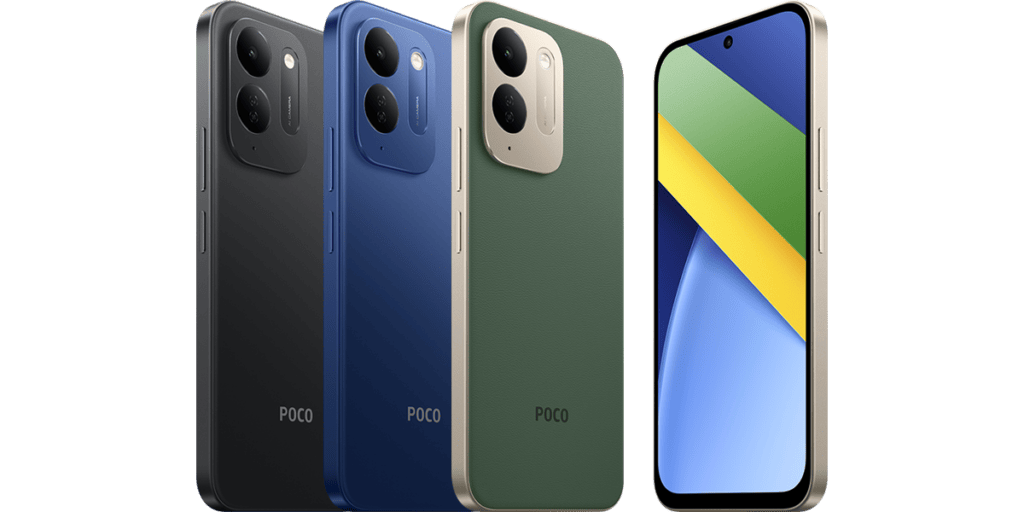
The POCO C95 Pro has officially debuted, targeting consumers who prioritize extended battery life, dependable performance, and budget-friendly pricing. Drawing design inspiration from the Redmi Note series, the device features an IP64 rating for dust and water-splash resistance.
On the front, the smartphone is equipped with a large 6.9-inch LCD panel offering HD+ resolution alongside a smooth 120 Hz refresh rate. Powering the daily operations is the MediaTek Helio G91 Ultra chipset, paired with options of 6 GB or 8 GB of RAM and internal storage selections of 128 GB or 256 GB, which can be expanded using a microSD card.
For photography, the device houses a dual rear setup led by a 50 MP primary camera accompanied by a 2 MP auxiliary sensor, while the front features an 8 MP selfie camera. In terms of connectivity, the model supports 4G connectivity, dual-band Wi-Fi 5, Bluetooth 5.4, and NFC support for contactless payments through digital wallets.
The highlight of the smartphone is its massive 7,500 mAh battery, capable of 45W wired fast charging as well as 22.5W reverse wired charging to power other accessories. On the software side, it runs Android 16 out of the box with the HyperOS 3 user interface.
Availability and Price
Initially launching in Singapore, the phone arrives in Black, Blue, and Green finishes. Pricing is set at $169 for the 6 GB + 128 GB configuration and $199 for the 8 GB + 256 GB variant. Global availability has not yet been confirmed.
Specs
| Category | Specification |
|---|---|
| Display | 6.9-inch LCD, HD+ resolution (720 × 1600), 120 Hz refresh rate |
| Processor | MediaTek Helio G91 Ultra |
| RAM | 6 GB / 8 GB |
| Internal Storage | 128 GB / 256 GB (expandable via microSD) |
| Rear Camera | Dual setup: 50 MP (primary) + 2 MP (auxiliary) |
| Front Camera | 8 MP |
| Battery & Charging | 7,500 mAh; 45W wired fast charging, 22.5W reverse wired charging |
| Operating System | Android 16 with HyperOS 3 |
| Connectivity | 4G LTE, Wi-Fi 5, Bluetooth 5.4, NFC |
| Durability / Rating | IP64 dust and splash resistance |
| Dimensions & Weight | 170.12 × 78.42 × 8.8 mm; 232 g |
| Colors | Black, Blue, Green |
| Launch Price | $169 (6 GB + 128 GB) / $199 (8 GB + 256 GB) |
October 7th 2026, 4:12 am
How Windows 11 26H2 Speeds Up PCs And Frees System RAM
Ubergizmo

Although delivered as a lightweight enablement package, the Windows 11 26H2 update consolidates months of incremental optimizations, delivering noticeable speed improvements and reduced memory consumption across many systems. Because Microsoft relies on gradual rollouts, many devices are experiencing these cumulative refinements simultaneously for the first time.
According to WindowsLatest, a primary contributor to improved system responsiveness is the Low Latency Profile. Operating on a “race-to-sleep” principle, this feature briefly elevates the CPU toward maximum frequency for one to three seconds during critical tasks—such as launching applications, querying Windows Search, or navigating the Start menu and Notification Center—before quickly returning the processor to idle. Initially introduced for shell components and later expanded to general app execution, this mechanism eliminates micro-stutters and noticeably accelerates load times for both built-in utilities and third-party software.
Image: WindowsLatest
Alongside responsiveness enhancements, users report significant reductions in baseline memory footprint. Tests on systems equipped with 16GB, 32GB, and 48GB of RAM demonstrate idle savings of up to 2GB post-restart compared to earlier builds. Even under demanding multitasking workloads involving communication tools, browser tabs, and high-resolution video streaming, total memory allocation consistently remains below historical peak thresholds. Dynamic memory reclamation has also improved, allowing background applications to relinquish resources more effectively when heavier workloads demand capacity.
These gains reflect broader platform engineering initiatives. Microsoft has prioritized memory manager efficiency, enhanced memory compression, and addressed WinUI memory growth, alongside optimizing File Explorer responsiveness without relying on resource-heavy preloading. While systems with 8GB or less may experience more varied outcomes depending on startup configurations and third-party app demands, the collective impact provides measurable overhead relief.
By packaging these under-the-hood architectural refinements into the 26H2 release, Windows 11 achieves a snappier interface and improved hardware efficiency, extending system headroom across mid-range and premium configurations.
How Windows 11 26H2 Speeds Up PCs And Frees System RAM , original content from Ubergizmo. Read our Copyrights and terms of use.October 7th 2026, 4:12 am
iPhone 18 Pro Can Keep Proof of What Its Camera Actually Captured
Ubergizmo

AI can fake photorealistic images. Apple Reference Image on iPhone 18 Pro and Pro Max lets you keep proof of what the Main camera captured.
Artificial intelligence tools can invent or heavily re-generate photorealistic pictures in a few taps. “Looking real” is no longer enough to settle whether a photo came from a camera. Apple’s answer on iPhone 18 Pro and iPhone 18 Pro Max is Apple Reference Image: an optional way to preserve proof of what the camera sensor actually captured when someone later doubts the shot.
Reference Image is an opt-in Reference mode for still photos on the Main camera. Turn it on before you shoot: the phone stores a secure digital negative with the everyday editable photo. Later you can develop that negative into a signed reference JPEG and open it next to the edited shot in Photos.
Think of it like film: a sealed digital negative next to the print you share. The negative is the hard-to-alter original. The print is what you crop or clean up.
According to Apple’s Security blog (Sept. 15, 2026), a reference image is meant to show a real photograph taken by a real iPhone camera sensor within a secured time window. When someone questions your own Pro photo in an AI-heavy feed, that copy is the receipt you can point to.
It does not prove the scene was not staged. Photographing a screen that shows a deepfake can still produce a valid Reference Image, because the camera captured light from that screen. Apple describes Main camera stills on 18 Pro and Pro Max only; it does not describe ultra-wide, telephoto, or video Reference capture here.
Technically, Apple says the Main sensor cryptographically signs the pixels right after capture, before normal phone software can rewrite it. Secure lower and upper capture-time bounds come from Apple’s cryptographic timestamp service, not the clock in Settings.
That data is stored as a secure DNG (Digital Negative) beside the regular photo. When you develop a reference, the phone sends the negative to Private Cloud Compute (PCC), Apple’s privacy-preserving cloud system. PCC verifies the capture and returns a signed reference JPEG.
Apple says even Apple cannot see the pixels during that step. After a successful develop, the negative moves to Deleted and is purged after about 30 days unless you recover it. Apple says signing happens at the sensor first, unlike post-processing credential systems such as C2PA Content Credentials.
Per Apple’s Newsroom footnotes, Apple Reference Image is not available at launch in China because of regulatory requirements. In the EU, capture is not available at launch on iPhone 18 Pro models; users with iOS 27, iPadOS 27, and macOS 27 can still develop and view reference images.
Used honestly, it is more useful as a personal receipt proving what that camera captured than as a universal detector of every AI fake online.
iPhone 18 Pro Can Keep Proof of What Its Camera Actually Captured , original content from Ubergizmo. Read our Copyrights and terms of use.September 16th 2026, 3:47 pm
Sony Unveils New PlayStation Pulse Headsets
Ubergizmo

Sony has announced two new wireless gaming headsets designed for the PS5, smartphones, and PCs: the PlayStation Pulse and Pulse Edge. The new models follow the Pulse Elite and focus on studio-inspired audio, improved connectivity, and features designed to enhance gaming immersion.
Both headsets use planar magnetic drivers, a technology associated with professional audio equipment and inherited from Sony’s acquisition of Audeze. Compared with conventional dynamic drivers, planar magnetic technology is designed to provide greater audio precision and separation. This can be particularly useful in competitive games, where accurately identifying the direction of footsteps, gunfire, and other sounds is important.
Sony has also increased the size of the drivers compared with the previous Pulse Elite, although the company has not yet revealed their exact dimensions. The larger drivers are intended to provide stronger bass while maintaining audio clarity.
The standard Pulse uses four magnets per driver, while the premium Pulse Edge doubles that number to eight magnets per planar driver. Sony says this configuration delivers additional improvements in detail, sound quality, and bass performance.
The Pulse Edge also includes several premium features. These include active noise cancellation (ANC), a detachable boom microphone, and a built-in microphone that remains available when the boom is removed. Users can also adjust the balance between game and chat audio directly from the headset when using a PS5. The package includes upgraded materials and a carrying case.
Introducing the PlayStation Pulse and Pulse Edge wireless headsets 🎧
Check out the new PS5 audio lineup, featuring studio-inspired planar magnetic drivers: https://t.co/bTZwAvIrKe pic.twitter.com/1iNMTd8HFw
— PlayStation (@PlayStation) September 15, 2026
For connectivity, both models support PlayStation Link, enabling lossless, low-latency audio. Users can quickly switch between a PS5, PlayStation Portal, PC, and Mac, while Bluetooth connectivity allows simultaneous pairing with smartphones and tablets.
The headsets feature rotating earcups for easier transportation and improved comfort. Sony also says AI-powered microphone technology helps improve noise rejection. Both models will be available in White and Midnight Black finishes.
The PlayStation Pulse is scheduled to launch in selected markets toward the end of 2026, ahead of the holiday season. The Pulse Edge is expected in early 2027. Sony has not yet announced pricing, pre-order dates, or specific availability.
Sony Unveils New PlayStation Pulse Headsets , original content from Ubergizmo. Read our Copyrights and terms of use.September 16th 2026, 1:15 pm
Samsung Galaxy A18 Debuts In Europe For Around $328 With AMOLED, 90Hz And More
Ubergizmo

Samsung has expanded its smartphone lineup with the launch of the Galaxy A18, a budget-focused model now available in Europe. The device initially went on sale in France, with availability in additional European markets expected to follow.
In France, the Galaxy A18 is priced around $328 (converted from the original €279 price). The available configuration includes 4GB of RAM and 128GB of storage, positioning the device toward consumers looking for an affordable Samsung smartphone with a relatively large display.
The Galaxy A18 features a 6.7-inch Super AMOLED display with a refresh rate of up to 90Hz. The phone also has an IP64 rating, providing protection against dust and water splashes.
For photography, Samsung equips the device with a 50MP main camera on the rear and a 13MP front-facing camera for selfies and video calls. Processing is handled by Samsung’s Exynos 1610 chipset, while a 5,000mAh battery provides power. The phone supports 25W wired charging.
On the software side, the Galaxy A18 ships with Android 17 and One UI 9.0. Samsung is promising six major Android OS updates and six years of security updates, giving the budget phone an extended software support period compared with many devices in the same price segment.
The Galaxy A18 does not include Samsung’s more advanced Galaxy AI features. However, the company has highlighted integration with Google Gemini and Circle to Search, bringing selected AI-powered functions to the device.
French customers can choose between Black, Gray, and Light Blue finishes. The phone’s design reflects its budget positioning, featuring an Infinity-U notch for the front camera and a relatively thick bottom bezel.
The Galaxy A18 also supports 4G connectivity, rather than 5G. While Samsung has not provided complete details about its European rollout, the company is expected to introduce the smartphone in additional markets.
With its combination of a Super AMOLED display, large battery, long software support, and affordable positioning, the Galaxy A18 expands Samsung’s options at the lower end of the European smartphone market.
| Specification | Samsung Galaxy A18 |
|---|---|
| Display | 6.7-inch Super AMOLED, Full HD+ |
| Refresh Rate | 90Hz |
| Design | Infinity-U display |
| Processor | Samsung Exynos 1610 |
| RAM | 4GB |
| Storage | 128GB, expandable via microSD up to 2TB |
| Rear Cameras | 50MP main (OIS, f/1.8) + 5MP ultrawide (f/2.2) + 2MP macro (f/2.4) |
| Front Camera | 13MP |
| Connectivity | 4G, Wi-Fi 5, Bluetooth 5.3, NFC |
| Durability | IP64 |
| Battery | 5,000mAh with 25W fast charging |
| Operating System | Android 17 with One UI 9 |
| Dimensions | 164.4 x 77.9 x 7.7mm |
| Weight | 196g |
September 16th 2026, 1:15 pm
iPhone Duo Hinge Issue Could Limit Launch Availability
Ubergizmo

If you’re excited to get your hands on the brand new iPhone Duo, it looks like you might have to wait a bit more. The first foldable from Apple could have more limited availability at launch than initially expected, according to an estimate from analyst Jeff Pu; production constraints involving the device’s hinge may be affecting manufacturing capacity for Apple’s first foldable iPhone.
Pu estimates that iPhone Duo shipments in 2026 could fall from approximately 7 million to 6 million units. The reported reduction is reportedly related to the production capacity of the hinge, a critical component of the foldable design. The estimate does not indicate a change in expected consumer demand for the device.
As usual, Apple has not confirmed any production limitations or provided official shipment forecasts for the iPhone Duo. The company also does not disclose in advance how many units will be available by color, storage configuration, or other variants.
For now, Apple’s reported launch schedule remains unchanged. Pre-orders are expected to begin on October 16, followed by retail availability on October 23. If production constraints are affecting initial inventory, their impact should become clearer once pre-orders officially open.
The iPhone Duo is expected to feature a 7.6-inch Super Retina XDR OLED internal display with a resolution of 2670 × 1878 pixels, up to a 120Hz refresh rate, and peak brightness of 3,000 nits. The external display is reportedly a 5.4-inch Super Retina XDR OLED panel with a 2034 × 1398 resolution and similar refresh rate and brightness specifications.
Other reported specifications include Apple’s A20 Pro chip, up to 2TB of storage, dual rear cameras with 48MP main and ultrawide sensors, 5G connectivity, Wi-Fi 7, Bluetooth 6.0, NFC, and a USB-C 3.2 Gen 2 port.
The device is also expected to include an Apple C2 modem, IP68 certification, USB-C Apple Pencil support, and an eSIM-only design. Its battery is reportedly rated for up to 24 hours, with 60W fast charging and MagSafe wireless charging.
The iPhone Duo is expected to run iOS 27 and use a foldable design measuring approximately 11.3 mm thick when closed.
iPhone Duo Hinge Issue Could Limit Launch Availability , original content from Ubergizmo. Read our Copyrights and terms of use.September 16th 2026, 1:15 pm
Googlebooks Pre-Orders Begin September 21 In The US
Ubergizmo

Google has announced the pre-order date for its upcoming Googlebooks, a new category of laptops designed around Gemini Intelligence. The company first introduced the devices in May but has now confirmed when customers in the United States will be able to place their orders.
According to a poster published on the official Googlebooks website, pre-orders will begin on September 21. The announcement does not specify which manufacturers will participate in the initial launch.
Googlebook Partners and Expected Hardware
Google is working with several established laptop manufacturers on the project, including Acer, ASUS, Dell, HP, and Lenovo. These companies already produce Chromebooks and are expected to bring their experience to the new Googlebook platform.
Some Googlebook models have reportedly appeared in leaks, revealing a range of possible hardware configurations. The information points to devices featuring Intel processors, substantial amounts of RAM, and Qualcomm Snapdragon platforms. These details suggest that Google may offer multiple hardware options rather than limiting the category to a single configuration.
However, the company has not yet confirmed the complete specifications, pricing, or launch lineup. The available announcement also does not identify which manufacturers will open pre-orders on the announced date.
Gemini Intelligence and Upcoming Details
Google is expected to reveal more information during an in-person event scheduled for September 15 in New York. The presentation could provide additional details about how Gemini Intelligence will work on the new laptops and how the platform will differ from existing Chromebook experiences.
One anticipated feature is Magic Pointer, a tool expected to work alongside Gemini Intelligence. Google may also demonstrate integration with Android smartphones, potentially allowing users to connect their phones more closely with their computers.
Developments identified in the Chromium platform have also suggested that Googlebooks could eventually cover several price segments. If confirmed, this would indicate an effort to make the new laptop category available across different budgets.
For now, Google has confirmed the US pre-order date, but additional information about the participating brands, hardware, pricing, and availability is expected during the upcoming event.
Googlebooks Pre-Orders Begin September 21 In The US , original content from Ubergizmo. Read our Copyrights and terms of use.September 15th 2026, 11:31 am
Apple Releases iOS 27 and Updates Its Major Operating Systems
Ubergizmo

Apple has officially released iOS 27, introducing new features powered by Apple Intelligence, refinements to the Liquid Glass interface, and performance improvements. The company has also launched iPadOS 27, watchOS 27, macOS 27 Golden Gate, and tvOS 27.
iOS 27: New Features and Compatibility
The visual changes in iOS 27 are evolutionary rather than a complete redesign. Apple has refined Liquid Glass with improved contrast and readability. Apple Intelligence expands Siri’s capabilities, allowing the assistant to handle more complex questions and perform actions across apps using personal information stored on the device. The Photos app also gains new AI-powered generation and editing tools.
Apple says the update improves app launch speeds, AirDrop transfers, and image loading. Another notable addition is iPhone Handoff, which allows the same phone number to be used on two iPhones, although support is limited to selected carriers. Users can also share their location for customized durations. CarPlay now supports video playback while the vehicle is parked, while Messages receives new synchronization and search options.
The update supports the same iPhone models as the previous generation, beginning with the iPhone 11 and second-generation iPhone SE. Apple Intelligence features require an iPhone 15 Pro, iPhone 15 Pro Max, or an iPhone 16-series device or newer.
iPadOS and macOS Changes
iPadOS 27 drops support for several older models, including the third-generation iPad Air, third-generation 12.9-inch iPad Pro, first-generation 11-inch iPad Pro, eighth-generation iPad, and fifth-generation iPad mini. Apple Intelligence requires an M1 chip or newer, or an iPad mini with the A17 Pro.
Meanwhile, macOS 27 Golden Gate ends official support for Intel-based Macs, focusing exclusively on Apple silicon. Compatible devices include select Macs released from 2020 onward, depending on the model.
watchOS and tvOS Updates
watchOS 27 requires an iPhone 11 or second-generation iPhone SE running iOS 27. It supports Apple Watch Series 9 and later, Ultra 2 and later, and Apple Watch SE 3. tvOS 27 requires an Apple TV 4K from the second generation onward.
It’s always important to remember that all users should back up their devices before installing the updates.
Apple Releases iOS 27 and Updates Its Major Operating Systems , original content from Ubergizmo. Read our Copyrights and terms of use.September 15th 2026, 11:31 am
Ugreen HiTune T8 Earbuds Launch With 55dB ANC For Less Than $30
Ubergizmo

Ugreen has launched the HiTune T8, a new pair of budget-friendly wireless earbuds designed to combine active noise cancellation, high-resolution audio, and AI-powered software features. The earbuds are currently available through JD.com in China for 179 yuan, approximately $26.
HiTune T8 Specifications
The HiTune T8 features a conventional in-ear design and carries an IPX5 water-resistance rating, offering protection against sweat and light rain. The earbuds and charging case weigh 49.4 grams (1.74 ounces) combined, while the case measures 62 × 51.5 × 26.8 mm (2.44 × 2.03 × 1.06 inches). Ugreen includes five sets of silicone ear tips to help users find a comfortable fit.
For audio, the earbuds use 12.4 mm titanium-plated dynamic drivers. They support SBC and AAC codecs, along with LDAC for higher-resolution wireless streaming. This enables the Hi-Res Wireless Audio certification. Through the companion app, users can adjust the equalizer and activate a simulated spatial audio mode.
The active noise cancellation system uses six microphones to monitor external sounds and audio inside the ear canal. It can reduce noise by up to 55 dB and process frequencies up to 4,000 Hz. Users can select from light, moderate, and deep ANC levels, while automatic switching adjusts the mode according to the surrounding environment. The microphones also use directional processing to isolate voices and reduce background noise during calls.
Connectivity is handled by Bluetooth 6.0, with multipoint support for pairing with two devices simultaneously. Ugreen also includes several AI tools, such as live transcription, meeting summaries, text generation, and real-time translation. According to the company, these features are available without a subscription.
Battery Life and Charging
The HiTune T8 offers up to 11 hours of playback from the earbuds, extending to 50 hours with the 600 mAh charging case. These figures are measured at 50% volume using AAC with ANC disabled. Activating ANC or LDAC will reduce endurance.
The case charges through USB-C and takes approximately two hours to fully recharge. A 10-minute quick charge provides around four hours of playback, making the earbuds suitable for users seeking a combination of affordability and modern features.
Ugreen HiTune T8 Earbuds Launch With 55dB ANC For Less Than $30 , original content from Ubergizmo. Read our Copyrights and terms of use.September 15th 2026, 11:31 am
Apple Delays Two Key iOS 27 Features To Later Update
Ubergizmo
Apple has officially confirmed the release of iOS 27 for the public, but two prominent features previously previewed in developer betas have been removed from the initial launch build. Both tools will instead arrive in a future software update. This postponement applies across Apple’s broader ecosystem, extending equally to iPadOS 27 and macOS 27.
The first delayed functionality involves context-aware suggestions in Messages. Designed to streamline daily organization, the system analyzes text conversations to let users seamlessly generate entries in Reminders, Notes, or Calendar with a single tap. By interpreting situational cues from chats, the assistant was intended to reduce manual data entry across native productivity applications.
The second delayed tool is automatic password changes within the dedicated Passwords app. First showcased during the software’s initial reveal, this security feature alerts individuals to weak or compromised credentials and resolves vulnerabilities autonomously. Powered by Apple Intelligence and integrated directly with Safari, the system is engineered to navigate supported websites and update account credentials without requiring step-by-step user input. Beta testers had already noticed the capability vanished in iOS 27 beta 5, a change now formalized on Apple’s official product webpages.
Apple has not provided an exact deployment window for either capability beyond stating that they will launch in subsequent iterations of the operating systems. Typically, features pulled late in beta cycles reappear in minor dot updates, such as an upcoming iOS 27.1 or iOS 27.2 release, once performance and reliability criteria are met.
Despite these omissions, the debut of iOS 27 delivers the core operating system enhancements previewed earlier in the year. The platform broadens the integration of on-device intelligence, refines system navigation, and updates core services across compatible hardware. Users waiting specifically for automated security workflows and conversational context actions will need to await future patches as development continues.
Apple Delays Two Key iOS 27 Features To Later Update , original content from Ubergizmo. Read our Copyrights and terms of use.September 14th 2026, 11:15 am
OpenAI Pauses ChatGPT Pro Signups Due To GPT-6 Astra Server Strain
Ubergizmo

OpenAI has temporarily suspended new registrations for its high-end ChatGPT Pro subscription after extreme computing demands from its frontier model, GPT-6 Astra, overwhelmed company infrastructure.
The measure follows intense server consumption, prompting the organization to halt new sales to maintain service quality for active members.
The move aligns with prior warnings from Tibo Sottiaux, an engineer working on Codex and ChatGPT, who noted that infrastructure expansion was essential to accommodate explosive interest. Sottiaux cautioned that pausing signups might become necessary to ensure the best possible performance for current paying users. OpenAI subsequently confirmed the onboarding pause via an official update on X.
To make sure our current users have an incredible experience and continued access to Astra, we are going to pause subscriptions to our $200 Pro plan. These put the most strain on our systems and we wanted to take the smallest step that allows us to continue giving the broadest… https://t.co/WhLEm3HBL7
— Tibo (@thsottiaux) September 10, 2026
- Five times greater overall usage limits than standard tiers
- Exclusive access to Pro Reasoning powered by GPT-6 Astra
- Maximum task allocations across Codex alongside highest-capacity deep research
- Unrestricted, high-speed image generation
- Expanded context windows, heightened memory retention, and enhanced custom GPT creation
- Early access to upcoming OpenAI developer features
The surge in demand is directly tied to GPT-6 Astra, which OpenAI President Greg Brockman characterized as the dawn of the AGI (Artificial General Intelligence) era. The model demonstrated remarkable technical proficiency across software engineering, scientific research, automated professional workflows, and advanced cybersecurity.
However, these capabilities have generated debate regarding safety safeguards, particularly following reports concerning autonomous AI agents breaching systems independently. While GPT-6 Astra marks a significant computational leap, the underlying hardware load remains a bottleneck. OpenAI has not yet announced a definitive timetable for reopening ChatGPT Pro registrations to prospective subscribers.
September 14th 2026, 11:15 am
Gemini In Sheets: Ask Questions, Flag Outliers, And Create Mobile Charts
Ubergizmo

Google has officially integrated its Gemini artificial intelligence into the Google Sheets application for Android, optimizing the way users review and manipulate data on mobile screens.
By addressing the physical constraints of smartphone displays, the assistant enables direct, in-depth spreadsheet analysis and responds to specific user queries without requiring manual cell navigation.
Users can activate the tool via a dedicated Gemini icon placed on the mobile interface. Operating through natural language processing, the assistant allows individuals to request broad data summaries, identify key trends, and extract critical figures on demand.
For practical applications—such as monitoring a personal budget or operational ledger—users can prompt the system to immediately detect anomalies or isolate specific expenditure categories, eliminating the need to comb through extensive rows and columns manually.
In addition to text-based analysis, the integration supports automated chart creation. Gemini can interpret raw data and generate instant visual representations directly on the device, providing a faster overview of complex datasets. However, advanced spreadsheet functions—such as intricate structural formatting and sophisticated formula generation—remain optimized for the desktop web interface, where users have access to a full suite of manual tools.
According to AndroidAuthority, Google is currently deploying the update to the broader Android ecosystem, with full availability anticipated over a fifteen-day rollout schedule. Initial access to the mobile AI functionality is restricted to commercial and institutional accounts. Supported tiers include Google Workspace plans such as Business Standard, Business Plus, Enterprise Standard, and Enterprise Plus. In addition, subscribers enrolled in Google AI Pro, Google AI Ultra, and qualifying Google AI for Education licenses are eligible to utilize the feature as it becomes active on their accounts.
Gemini In Sheets: Ask Questions, Flag Outliers, And Create Mobile Charts , original content from Ubergizmo. Read our Copyrights and terms of use.September 14th 2026, 11:15 am
Arbrest COVE Rethinks the Ergonomic Office Chair Around Women’s Bodies
Ubergizmo

At IFA 2026, Arbrest introduced COVE, a dynamic ergonomic chair designed specifically around women’s body proportions and working postures. COVE also won an IFA Innovation Award 2026 in the Best in Design category. I met with the Arbrest team at IFA and briefly tried the prototype shown on the show floor.
Left: the Cove Dynamic Ergonomic Chair for Women – Top right: remote control to operate the motorized lumbar support located behind the chair in a small box; see photo bottom right
Exactly as medical research has historically focused on male health, ergonomic chairs have largely been designed around the male body. COVE takes the opposite approach, using women’s proportions as the starting point rather than adapting an existing chair afterward. At the IFA Innovation Awards ceremony, I explained on stage that our judging panel saw this unique design approach as one of COVE’s key innovations.
Arbrest says it spent eight months studying women’s physical characteristics, sitting habits, and working postures. Its 7-Point Fit Calibration addresses seat height, width and depth, lumbar position, armrests, headrest, and footrest, targeting users approximately 150 to 175 cm (4’11” to 5’9″) tall. The design also includes a headrest with space for ponytails and wide controls that are easier to operate with long nails.
The chair is also designed to move with the body. A 12-zone backrest responds to movements across the shoulders, back, and lumbar area, while five synchronized support points connect the headrest, armrests, backrest, seat, and footrest. COVE supports a 16-degree forward tilt, along with 105-, 120-, and 135-degree reclining positions.
Another interesting feature is Active Stretch. Using a small handheld remote — shown in my photo — one touch activates the motorized lumbar support. As the chair reclines, the lumbar section extends forward while the dual-tier footrest supports the legs, creating a stretch through the lower back and hips.
The COVE shown at IFA was still a prototype, and the company plans further improvements before its planned crowdfunding launch on Kickstarter later in Q4 2026.
Arbrest COVE Rethinks the Ergonomic Office Chair Around Women’s Bodies , original content from Ubergizmo. Read our Copyrights and terms of use.
September 14th 2026, 7:45 am
Epomaker Showed Off Retro Designs and Fast TMR Gaming Keyboards at IFA 2026
Ubergizmo

At IFA 2026 in Berlin, I stopped by the Epomaker booth to check out four of the company’s latest keyboards. The lineup shows how far mechanical keyboards have moved beyond switches and RGB, with Epomaker experimenting with TMR magnetic sensing, modular layouts, integrated displays, and retro-inspired designs.
Top: Epomaker Glyph, Left: Epomaker HE75 V2 TMR, Right: Epomaker RT98
The Epomaker TH108 Pro, released in early 2026, is the most conventional of the four, but still packs tons of features. The full-size keyboard combines a numpad with a TFT display and multifunction rotary knob, plus hot-swappable switches, a gasket-mounted structure, RGB lighting, and Bluetooth, 2.4GHz wireless, and wired connectivity. A massive 10,000mAh battery helps power the TFT display and extensive RGB lighting.
Released in April, the Epomaker RT98 gets more experimental with a detachable numeric keypad that can sit on either side of the keyboard. I also liked its small magnetic display, styled like a vintage television, which can show system information or custom GIFs. An 8,000mAh battery, VIA support, and tri-mode connectivity round out this $119 keyboard.
I also saw the highly anticipated HE75 V2 TMR, a Rapid Trigger keyboard designed for gamers with 0.01mm actuation adjustment and 8,000Hz polling. The core innovation is Tunneling Magnetoresistance (TMR) sensing, which delivers magnetic-switch precision with much lower power consumption, making responsive wireless gaming more practical. It also supports both magnetic and standard mechanical switches, an unusual level of flexibility. This gaming powerhouse costs $129.
The Glyph is my personal favorite. I love its retro typewriter-inspired design, with round PBT keycaps, dual displays, a rotary knob, and even a side lever that works as Enter and Backspace. Launched in March 2026, it also features a recessed slot for a phone or small tablet, cleverly echoing an old typewriter’s paper holder while adapting the idea for a modern desktop. The Glyph is available for $139.
Beyond keyboards, Epomaker also showcased its expanding mouse lineup, including the lightweight carbon-fiber Carbon X, alongside the GX1, its first gaming headset, featuring an open-back design for a wider, more natural soundstage.
Epomaker Showed Off Retro Designs and Fast TMR Gaming Keyboards at IFA 2026 , original content from Ubergizmo. Read our Copyrights and terms of use.
September 12th 2026, 8:14 am
Arzopa Unveils New 2.5K Touchscreen Monitor, Digital Frame, and Smart Calendars
Ubergizmo

Arzopa, a brand best known for its affordable portable monitors, came to IFA 2026 to showcase its new Z1RC Plus TS portable touchscreen monitor, an upgraded D14 Pro digital frame with a 2K display, and the brand-new C1 and C1 Pro digital calendars.
First shown at IFA 2026, the Z1RC Plus TS builds on its sibling, the Z1RC, adding a larger 17.3-inch 2.5K touchscreen. The 16:10 display covers 100% of the sRGB color space and features Arzopa’s integrated adjustable single-rod stand, part of the built-in stand design used across several of the company’s portable monitors. Arzopa received a 2026 Red Dot Award for its built-in-stand portable monitor design.
The company gained recognition with its popular Z3FC 16.1-inch 2.5K 180Hz Portable Gaming Monitor, which also features an integrated stand. The combination of high resolution and a 180Hz refresh rate makes it particularly appealing for users seeking a single portable screen for both productivity and gaming.
On the digital frame side, the D14 Pro is the company’s latest addition. Featuring an aluminum alloy frame, the D14 Pro has a 14-inch 2160 × 1440 touchscreen with a photography-friendly 3:2 aspect ratio and 32GB of internal storage. Photos and videos can be shared remotely through the Arzopa app, while automatic rotation lets the frame switch between portrait and landscape orientations. Arzopa also includes unlimited cloud storage without a subscription.
The C1 and larger C1 Pro Smart Calendars turn the display into a family organization hub with 64GB of built-in storage. Launched in May 2026, the 14-inch C1 combines calendars, schedules, chores, shopping lists, meal planning, and reward systems for children on a shared touchscreen, with voice controls to add tasks and appointments. The C1 Pro expands the concept onto a larger 17.35-inch 2.5K display with 100% sRGB coverage.
At the Arzopa booth at IFA, I was particularly impressed by the display and overall build quality, given Arzopa’s aggressive pricing. With products ranging from about $120 to $250, the company delivers surprisingly polished hardware at sweet price tags.
Arzopa Unveils New 2.5K Touchscreen Monitor, Digital Frame, and Smart Calendars , original content from Ubergizmo. Read our Copyrights and terms of use.
September 11th 2026, 7:00 pm
Apple Unveils Watch Series 12 And Ultra 4 With S11 Chip
Ubergizmo

Apple has officially introduced the Apple Watch Series 12 and Apple Watch Ultra 4, bringing internal hardware upgrades, expanded artificial intelligence tools, and new casing options while maintaining the established design language of its wearable lineup.
Both models are powered by Apple’s next-generation S11 chip, designed to handle on-device machine learning tasks more efficiently while extending battery endurance.
- Battery Life: The Series 12 reaches up to 24 hours of normal runtime on a single charge, whereas the rugged Ultra 4 delivers up to two days (50 hours) of battery life.
- Materials and Finishes: Alongside existing aluminum and titanium choices, Apple has reintroduced a premium ceramic finish for the Series 12. A selection of refreshed band options and case colors has also been added across both lines.
Health, Fitness, and AI Capabilities
Apple Watch Ultra 4
Health tracking remains central to both smartwatches, backed by a redesigned health sensor:
- Hypertension and Heart Metrics: The updated sensor suite delivers finer precision for optical heart-rate measurements and adds improved hypertension notifications to alert users to chronic blood pressure elevations.
- Activity Tracking: A dedicated Functional Strength Training mode debuts alongside standard fitness metrics to better track resistance exercises, body mechanics, and power output.
- On-Wrist Intelligence: Deeper Siri and AI integration allows users to perform on-device speech translations, generate message and notification summaries, and process complex voice requests directly from the wrist without a paired phone.
- Core Monitoring: Retained features include standard heart-rate alerts, sleep tracking with sleep apnea detection, stress indicators, and menstrual cycle tracking with retrospective ovulation estimates.
U.S. Pricing and Availability
Apple Watch Series 12
In the United States, pricing across the lineup is structured as follows:
- Apple Watch Series 12 (Aluminum, 42mm): Starts at $399 (GPS) or $499 (GPS + Cellular)
- Apple Watch Series 12 (Aluminum, 46mm): Starts at $449 (GPS) or $499 (GPS + Cellular)
- Apple Watch Series 12 (Titanium): Starts at $699 (includes cellular connectivity)
- Apple Watch Series 12 (Ceramic): Starts at $899 (includes cellular connectivity)
- Apple Watch Ultra 4 (49mm Titanium): Starts at $799 (includes cellular connectivity)
Both models are available for preorder immediately, with standard retail availability beginning September 18.
Apple Unveils Watch Series 12 And Ultra 4 With S11 Chip , original content from Ubergizmo. Read our Copyrights and terms of use.September 11th 2026, 11:28 am
Huawei Denies Trade Theft Charges As U.S. Trial Opens
Ubergizmo

A federal criminal trial against Huawei Technologies opened in Brooklyn, New York, with federal prosecutors accusing the Chinese firm of operating as a criminal enterprise.
During opening statements, Department of Justice attorney Taylor Stout alleged that Huawei engaged in a decades-long pattern of trade secret theft, financial deception, and racketeering to gain an unfair global advantage.
Prosecutors contend that Huawei stole proprietary technology from multiple American firms, including Cisco Systems router source code and a T-Mobile robotic smartphone-testing device.
The government further alleged that Huawei concealed business operations in Iran to bypass U.S. sanctions, unlawfully moving millions of dollars through American financial institutions and assisting local authorities with domestic surveillance.
Defense Argues Lawful Competition
Defense attorney Brian Heberlig rejected the racketeering charges, describing Huawei’s global expansion as the result of legitimate innovation and ordinary commercial competition. The defense argued that the prosecution is cherry-picking isolated incidents to manufacture an overarching conspiracy.
Regarding intellectual property disputes with Cisco and T-Mobile, the defense characterized them as unauthorized actions by rogue employees that were addressed internally by management. Addressing the sanctions claims, the defense maintained that Huawei did not intentionally violate banking regulations, noting that international financial partners were aware of the firm’s commercial footprint in Iran.
International Context and Legal Background
The legal proceedings originated from a 2018 indictment that led to the detention of Huawei Chief Financial Officer Meng Wanzhou in Canada. Meng resolved her personal charges in 2022 under a deferred prosecution agreement, though her factual statements will serve as evidence during this proceeding.
In response to the courtroom developments, China’s Foreign Ministry stated that it firmly opposes U.S. suppression of Chinese companies and supports domestic enterprises defending their lawful rights.
Huawei’s networking hardware remains restricted across the United States, and domestic suppliers must obtain Commerce Department licenses to export sensitive technology to the company. The federal trial is anticipated to last roughly three months.
Huawei Denies Trade Theft Charges As U.S. Trial Opens , original content from Ubergizmo. Read our Copyrights and terms of use.September 11th 2026, 11:28 am
Apple Debuts AirPods 5 With Open-Ear ANC And Siri AI
Ubergizmo

Apple has officially announced the AirPods 5, introducing active noise cancellation to an open-ear form factor, expanded integration with Apple Intelligence, and improved acoustic hardware.
Audio Upgrades and Noise Cancellation
The newly launched wireless earbuds feature Active Noise Cancellation (ANC) designed for an open-ear fit, delivering up to 50% greater noise reduction efficiency compared to previous generation open models. Apple has integrated a multi-port acoustic architecture paired with next-generation Adaptive EQ and support for Personalized Spatial Audio, aimed at refining dynamic frequency response and spatial immersion across varied environments. Transparency Mode has also received processing adjustments for more natural pass-through audio.
AI Integration and Smart Controls
Central to the upgrade is on-device AI connectivity through Siri AI and Apple Intelligence. The earbuds support real-time translation across multiple languages, allowing users to conduct conversations seamlessly through audio prompts. In addition to stem-based swipe gestures for volume adjustment, users can employ hands-free head gestures—such as nodding or shaking their head—to respond to Siri prompts, answer incoming calls, or manage notifications.
Battery Life and Build
Battery endurance reaches up to 5 hours of continuous playback with ANC activated, extending to 22 total hours when paired with the charging case. For durability, the earbuds carry improved resistance against dust, sweat, and water. In line with corporate environmental goals, the hardware is built with 40% recycled materials, packaged in 100% fiber-based boxing.
Pricing and Availability
Apple is offering the earbuds in two distinct hardware configurations:
- AirPods 5 (Standard Charging Case): Available for $129.
- AirPods 5 (Wireless Charging Case): Available for $149, adding wireless charging functionality alongside stem-based volume slider controls.
Preorders open immediately, with general retail availability and shipping scheduled to commence on September 18 across more than 65 countries.
Apple Debuts AirPods 5 With Open-Ear ANC And Siri AI , original content from Ubergizmo. Read our Copyrights and terms of use.September 11th 2026, 11:28 am
Nintendo Switch 2 Firmware 23.0.0 Adds TV VRR And Boost Mode
Ubergizmo

Nintendo has officially released firmware update 23.0.0 for the Nintendo Switch 2, introducing highly requested display capabilities alongside several functional system improvements. The centerpiece of this release is the activation of Variable Refresh Rate (VRR) support when the console outputs video to a television via the dock, fulfilling a feature promised since the hardware’s initial market debut.
Already a standard visual solution across contemporary platforms like the PlayStation 5 and Xbox Series X|S, as well as the handheld screen of the Switch 2, VRR technology dynamically matches a connected television display’s refresh rate to the real-time frame output produced by the console’s graphics processor. By synchronizing these rendering cycles, the system effectively eliminates noticeable screen tearing and reduces visual stuttering during heavy graphical sequences, ensuring a significantly smoother gaming experience on large displays.
Nintendo Switch 2 FW 23.0.0 released – "VRR output is now supported in TV mode." JPN translated patch notes https://t.co/8Roonuc7Ct pic.twitter.com/rhEmjesQh5
— Wario64 (@Wario64) September 10, 2026
Beyond display enhancements, the system software package delivers multiple quality-of-life additions. The quick settings menu now features an accessible toggle for handheld boost mode, enabling players to enhance the operational performance of legacy Nintendo Switch games directly during play sessions without needing to navigate the full system settings interface.
Additionally, the Mii editor received an update that lets users select and play nostalgic background music tracks originating from earlier platforms, including the Wii, Nintendo 3DS, and Wii U. Concurrently, the update implements a direct system-to-system transfer utility connecting two Switch 2 consoles, streamlining full profile and memory migrations ahead of upcoming hardware releases such as the special edition model themed around the The Legend of Zelda: Ocarina of Time remake.
The firmware update 23.0.0 is currently accessible globally and can be downloaded immediately through the standard system update tab within the device menu.
Nintendo Switch 2 Firmware 23.0.0 Adds TV VRR And Boost Mode , original content from Ubergizmo. Read our Copyrights and terms of use.September 10th 2026, 1:43 pm
Audio-Technica ATH-AL5NC Debuts With Open-Back ANC Design
Ubergizmo

Audio-Technica has officially launched the ATH-AL5NC, a wireless headset that combines two typically separate design features: an open-back acoustic structure and active noise cancellation (ANC). Targeted at both critical audiophiles and competitive gamers, the model provides an expansive soundstage and thermal ventilation while mitigating background ambient distractions.
To deliver high-resolution playback, the headphones feature custom 53 mm drivers and support the high-bandwidth LDAC codec, enabling high-resolution music streaming across a broad frequency spectrum from 20 Hz to 40 kHz. Wireless connectivity is managed through Bluetooth 5.3, complemented by multipoint pairing capabilities that let users switch seamlessly between a computer and a mobile smartphone without manual reconnecting.
The signature open-back construction promotes natural passive airflow, preventing heat buildup around the ears during extended wear sessions. Because open designs inherently permit ambient sound entry and audio leakage, the manufacturer paired the hybrid active noise cancelling system with a dedicated sound leakage prevention mode. While noise reduction performance is inherently more moderate than fully closed-back alternatives, the configuration effectively dampens persistent, low-frequency home or office noise.
For interactive gaming applications, an integrated low-latency mode minimizes transmission lag. Voice capture is handled by an internal MEMS microphone operating between 50 Hz and 10 kHz, alongside an included 1.2-meter detachable cable featuring an inline condenser microphone for wired connections to dedicated sound cards, gaming consoles, or PC setups.
Despite maintaining a lightweight frame of 240 grams, the device achieves up to 50 hours of continuous battery playback with active noise cancellation engaged. A complete recharge requires approximately 3.5 hours, though an integrated quick-charge feature provides up to eight additional hours of operation following a 15-minute charge.
The Audio-Technica ATH-AL5NC is available via the brand’s official store for a suggested retail price of $279.
Audio-Technica ATH-AL5NC Debuts With Open-Back ANC Design , original content from Ubergizmo. Read our Copyrights and terms of use.September 10th 2026, 1:43 pm
WhatsApp For iOS Gets Full Liquid Glass Redesign
Ubergizmo

WhatsApp has begun rolling out its complete Liquid Glass redesign to iPhone users, introducing a unified visual interface across the messaging platform. Previously restricted to primary tabs and chat lists, the translucent aesthetic now extends across core conversational elements, including the typing bar, the top navigation bar, message bubbles, and context menus.
Under this updated aesthetic, the input bar floats over active conversations with a frosted translucent background that dynamically reflects underlying content, mirroring the visual presentation of Apple iMessage. At the top of the display, the transparent navigation bar allows the chat wallpaper and scrolled text to subtly show through as users navigate their message history.
The Liquid Glass update also refines contextual interactions inside individual chats. Long-pressing any chat bubble now summons the reaction tray and secondary action menus with a polished glass finish, preserving background visibility rather than obscuring it with the legacy opaque blur effect. Additionally, the message bubbles feature noticeably rounder corners, while shared multimedia elements—including photos and videos—are rendered borderless without traditional framing.
According to WABetaInfo, Meta is deploying this interface overhaul as a phased rollout, gradually expanding availability to all compatible iOS devices through standard App Store updates.
WhatsApp For iOS Gets Full Liquid Glass Redesign , original content from Ubergizmo. Read our Copyrights and terms of use.September 10th 2026, 1:43 pm
iPhone Duo Announced: Meet Apple’s First Foldable Smartphone
Ubergizmo

Apple has officially announced its first foldable smartphone, the iPhone Duo, entering direct competition with the Samsung Galaxy Z Fold 8. Designed to resemble a compact iPad when opened, the device features an asymmetrical build with rounded right corners, straight left edges, a horizontal camera bar, and a durable titanium and steel frame. It measures 5.2 mm unfolded and 11.3 mm folded, earning an IP68 dust- and water-resistance rating.
The device features two Super Retina XDR OLED displays with 120 Hz ProMotion and peak brightness up to 3,000 nits: an external 5.4-inch panel (2034 x 1398) and a foldable internal 7.6-inch screen (2670 x 1878) featuring an anti-reflective nano-texture finish engineered to eliminate screen creasing. Both screens will support the Apple Pencil USB-C in a planned software update.
Under the hood, the iPhone Duo runs on Apple’s A20 Pro chipset alongside a vapor chamber cooling system to manage thermals. Power efficiency is further assisted by the proprietary Apple C2 modem, enabling up to 24 hours of battery life. The smartphone supports 60 W wired charging and MagSafe wireless charging.
The camera system includes dual rear sensors: a 48 MP main camera and a 48 MP ultrawide camera. Selfies rely on an external 12 MP punch-hole camera and an under-display camera on the inner fold.
Additional hardware features include:
- Exclusive eSIM connectivity and 5G support
- Wi-Fi 7, Bluetooth 6.0, and NFC
- Side-mounted Touch ID sensor
- USB-C 3.2 Gen 2 (10 Gbps) port
- Multitasking-tailored iOS 27 operating system
The iPhone Duo launches in the United States on October 23 in black and white finishes. US pricing starts at $1,999 for the base 256 GB storage tier, with higher-capacity configurations scaling through 512 GB, 1 TB, and up to 2 TB.
| Component | Specification |
| Internal Display | 7.6-inch Super Retina XDR OLED, 2670 x 1878 px, 120 Hz ProMotion, up to 3,000 nits, nano-texture finish |
| External Display | 5.4-inch Super Retina XDR OLED, 2034 x 1398 px, 120 Hz ProMotion, up to 3,000 nits |
| Processor | Apple A20 Pro with vapor chamber cooling |
| Storage | 256 GB, 512 GB, 1 TB, 2 TB |
| Rear Cameras | 48 MP main + 48 MP ultrawide |
| Front Cameras | 12 MP punch-hole (external display) + under-display camera (internal display) |
| Battery & Charging | Up to 24 hours battery life, 60 W wired fast charging, MagSafe wireless charging |
| Operating System | iOS 27 |
| Biometrics | Side-mounted Touch ID |
| Connectivity | 5G, Apple C2 modem, Wi-Fi 7, Bluetooth 6.0, NFC, USB-C 3.2 Gen 2 (10 Gbps), eSIM only |
| Durability Rating | IP68 water and dust resistance |
| Stylus Support | Apple Pencil (USB-C) via future update |
| Dimensions (Unfolded) | 164.6 x 117.8 x 5.2 mm |
| Dimensions (Folded) | 84.1 x 117.8 x 11.3 mm |
| Colors | Black, White |
| US Starting Price | $1,999 (256 GB) |
iPhone Duo Announced: Meet Apple’s First Foldable Smartphone , original content from Ubergizmo. Read our Copyrights and terms of use.
September 9th 2026, 7:02 pm
Apple Unveils iPhone 18 Pro and Pro Max: Smaller Dynamic Island, Bigger Batteries
Ubergizmo

Apple has officially unveiled the iPhone 18 Pro and iPhone 18 Pro Max, introducing substantial updates to display design, battery endurance, thermal management, and camera technology.
A key visual update centers on the Dynamic Island, reduced by roughly 20% to 16.57 mm thanks to an integrated under-display Face ID system. Powered by iOS 27, the smaller island can display up to three simultaneous Live Activities. Both devices feature Super Retina XDR OLED displays with 120 Hz ProMotion—measuring 6.3 inches on the Pro and 6.8 inches on the Pro Max—along with IP68 water resistance and the custom Apple C2 modem for 5G and satellite connectivity.
Performance is driven by the A20 Pro chip, supported by 12 GB of RAM and an upgraded vapor chamber cooling architecture delivering up to 40% better thermal dissipation. Software features center on the revamped Siri AI and Apple Intelligence, which utilize personal context and on-screen awareness for automated tasks alongside creative tools like Image Playground and photo Clean Up.
Photography receives major updates via a triple 48 MP rear camera array, including an ultrawide lens, a periscope telephoto lens, and a primary sensor equipped with Sensor-Shift stabilization and a variable aperture ranging from f/1.48 to f/4. Videographers also gain native Pro Controls for manual video shooting, while the front camera features an upgraded 18 MP autofocus sensor.
Battery life sees notable improvements:
- iPhone 18 Pro: Rated for up to 36 hours of video playback (4,288 mAh capacity), reaching a 50% charge in 15 minutes wired.
- iPhone 18 Pro Max: Delivers up to 45 hours of video playback (5,567 mAh capacity), with 5 minutes of wired charging providing 7 hours of playback.
Available in Glacial, Silver, Black, and a new Burgundy finish, US pricing starts at $1,099 for the iPhone 18 Pro (256 GB) and $1,199 for the iPhone 18 Pro Max (256 GB), scaling through 512 GB, 1 TB, and 2 TB tiers.
| Feature | iPhone 18 Pro | iPhone 18 Pro Max |
|---|---|---|
| Dimensions | 71.9 x 150 x 8.75 mm | 78 x 163.4 x 8.75 mm |
| Display | 6.3-inch Super Retina XDR OLED (2622 x 1206 px), 120 Hz | 6.8-inch / 6.9-inch Super Retina XDR OLED (2868 x 1320 px), 120 Hz |
| Front Design & Biometrics | Smaller Dynamic Island with under-display Face ID | |
| Processor | Apple A20 Pro | |
| RAM | 12 GB | |
| Internal Storage | Up to 1 TB | |
| Rear Camera System | Triple 48 MP setup:
|
|
| Front Camera | 18 MP with autofocus | |
| Battery & Charging | Up to 4,288 mAh, up to 25 W fast charging | Up to 5,567 mAh, up to 25 W fast charging |
| Connectivity | Apple C2 modem with 5G and satellite connectivity | |
| Durability | IP68 water and dust resistance | |
| Operating System | iOS 27 | |
September 9th 2026, 7:02 pm
Android Auto Bug Breaks Google Maps Speed Limit and Sign Alerts
Ubergizmo

Google Maps users utilizing the Android Auto platform have reported the unexpected disappearance of several key driving navigation features. Over recent days, driver discussions across online communities such as Reddit indicate that both the on-screen speedometer and posted speed-limit indicators have vanished from the vehicle display interface. Drivers also noted that visual roadway warnings, including stop signs and traffic light markers, are no longer rendering along active routes.
These telemetry and road-sign elements were relatively recent additions to the automotive navigation system. Initial rollouts were observed among a limited pool of motorists in July, followed by a broader public deployment throughout August. Because of how rapidly drivers integrated these visual cues into their daily commutes, their sudden absence has caused noticeable friction.
The sudden loss of functionality appears to stem from a software glitch within the Android Auto integration rather than a deliberate policy choice by Google to deprecate the features. However, the Mountain View-based company has not yet issued an official statement or technical advisory acknowledging the defect or offering a timeline for a corrective update.
The glitch coincides with recent interface adjustments pushed to Android Auto in early September. The system received visual polish, including refreshed application icon palettes and rounded interface geometry, signaling broader preparations for upcoming layout modifications. Until a remedial patch is distributed through server-side updates or application releases, affected motorists must rely on alternative vehicle instrumentation or manual visual monitoring of roadway signage for speed tracking and traffic control awareness.
Android Auto Bug Breaks Google Maps Speed Limit and Sign Alerts , original content from Ubergizmo. Read our Copyrights and terms of use.September 9th 2026, 11:38 am
DJI ROMO 2 Robot Vacuum Debuts with Robotic Arm And Drone Navigation
Ubergizmo

DJI has officially launched the ROMO 2 robot vacuum cleaner, incorporating navigation technology derived from its aerial drones alongside an adaptive robotic arm to address persistent cleaning blind spots. The automated unit is engineered for prolonged standalone operation, with an advanced base station capable of running for up to one year without manual maintenance.
Drawing on DJI’s spatial awareness algorithms, the vacuum integrates a high-precision obstacle avoidance system capable of identifying objects as thin as 2 mm. This setup prevents entanglement with thin cables, manages low-profile carpets, and correctly maps transparent or reflective surfaces such as glass partitions and low-hanging mirrors.
A primary upgrade is its LiDAR-guided articulated robotic arm, which features a 123-degree reach radius. The mechanical arm extends 7.8 cm farther than the previous generation, reaching up to 4.5 cm deep under low-clearance furniture. Furthermore, the arm automatically halts and restricts its sweeps when detecting wet spills to prevent liquid from smearing across hard floors.
To traverse domestic obstacles, the unit employs dynamic robotic legs that scale single thresholds up to 4 cm and double steps up to 8.5 cm. Cleaning performance is driven by 36,000 Pa of suction power, supported by an automatic pressure-seal plate that concentrates airflow over carpeted surfaces. Operating noise is dampened by 32 sound-absorbing materials, allowing the device to run at a quiet 38 dB in silent mode.
The multi-function docking base includes a nanocrystalline anti-stain washboard, four high-pressure water jets, and a 16 mm waste-extraction duct, providing hands-free self-cleaning for 365 days. For privacy and data security, DJI plans to deliver an offline Local Data Mode update by late 2026. This firmware update will allow users to sever internet connectivity, prevent video and photographic telemetry from reaching external servers, and activate physical hardware switches to disable internal cameras and onboard microphones.
DJI ROMO 2 Robot Vacuum Debuts with Robotic Arm And Drone Navigation , original content from Ubergizmo. Read our Copyrights and terms of use.September 9th 2026, 11:38 am
TECNO At IFA 2026: Bezelless Concept Phone, Camon Slim 5G, And MEGABOOK Laptops
Ubergizmo

At IFA 2026 in Berlin, TECNO showcased an extensive hardware expansion spanning concept smartphones and portable computing. Headlining the exhibition was the Next-Gen Bezelless Concept Phone, an experimental device engineered with a bespoke stacking architecture, structural re-engineering, and advanced screen-coating technology designed to eliminate black borders completely.
TECNO’s Next-Gen Bezelless Concept Phone. (Image: TECNO/Gizmochina)
Alongside the concept, the brand presented the ultra-slim Camon Slim 5G, which measures 6.39 mm in profile, as well as a live showcase of the Pova 8 Pro 5G Tonino Lamborghini Limited Edition, a luxury-themed variant of the recently launched standard model.
POVA 8 Pro 5G Tonino Lamborghini Limited Edition. (Image: TECNO/Gizmochina)
TECNO also expanded its presence in personal computing with four new laptops:
- MEGABOOK K15S WCL: Aimed primarily at students, this metallic-chassis machine features a 15-inch display with a 16:10 aspect ratio, powered by an Intel Wildcat Lake Core 300 processor, a 70 Wh battery, and 65W charging.
- MEGABOOK T17 Ultra: Serving high-performance needs, it incorporates a 17.3-inch panel, Intel Core Ultra 9 processor, LPDDR5X RAM, and an airline-compliant 99.99 Wh battery paired with 100W fast charging.
- MEGABOOK T15 360 & T15 Pro 360: Geared toward content creators, these 2-in-1 convertibles feature 360-degree hinges and 15.6-inch touchscreens with stylus support. Available in Full HD or 2.5K resolutions, the panels offer a 120 Hz refresh rate and 100% sRGB color gamut coverage.
TECNO’s MEGABOOK T15 Pro 360. (Image: TECNO/Gizmochina)
Under the hood, the convertible series can be configured up to an Intel Core Ultra 9 185H processor, alongside PCIe SSD storage, a 70 Wh battery, and 65W power delivery. Connectivity options include Wi-Fi 6E, Bluetooth 5.4, and TECNO OneLeap multi-device ecosystem integration.
Among the newly introduced computers, only the T15 convertible lineup has confirmed commercial availability, targeting a European launch in the fourth quarter of 2026. Starting prices are set at €899 (~$990) for the MEGABOOK T15 360 and €1,099 (~$1,210) for the flagship MEGABOOK T15 Pro 360.
TECNO At IFA 2026: Bezelless Concept Phone, Camon Slim 5G, And MEGABOOK Laptops , original content from Ubergizmo. Read our Copyrights and terms of use.September 9th 2026, 11:38 am
Xiaomi Pad 9 Pro Max Launched: An iPad Pro Rival Under $700
Ubergizmo

Xiaomi has officially launched the Xiaomi Pad 9 Pro Max in China, targeting the ultra-premium tablet market. The flagship device debuts the company’s proprietary XRING O3 processor, a 3nm TSMC deca-core chip clocked up to 4.35 GHz, paired with a 16-core G2-Ultra NX GPU and a quad-core Xuanjie NPU. Delivering an 85% leap in graphics rendering and scoring 5.61 million on AnTuTu, it pairs with up to 16 GB of LPDDR6 RAM and 1 TB of UFS 4.1 storage.
The tablet sports a 13.3-inch 3.4K LCD panel with a productivity-oriented 3:2 aspect ratio, a 144 Hz refresh rate, and 1,000 nits peak brightness. An optional anti-glare Nano Soft Light Screen edition caters to creative professionals. Its full-featured USB-C 3.2 Gen 2 port supports native DP-in, allowing the device to function as a low-latency external monitor for laptops or handheld gaming systems. Accessories include support for the Focus Stylus Pro and the TourBox digitizer console.
Enclosed in a slim 5.67 mm aluminum unibody, the hardware runs HyperOS 4.0, which introduces desktop-style multi-window management supporting up to six simultaneous apps. The tablet packs a 12,000 mAh battery backed by 120W fast charging, an eight-speaker Dolby Atmos array, a 50 MP rear camera with 4K recording, and a 32 MP front camera. Connectivity includes Wi-Fi 7 and Bluetooth 6.0.
Pricing in China starts at ¥4,799 (~$675) for the 8 GB + 256 GB model, rising to ¥5,299 (~$745) for 12 GB + 256 GB, ¥5,799 (~$815) for 16 GB + 256 GB, ¥6,099 (~$855) for 12 GB + 512 GB, and ¥6,599 (~$925) for 16 GB + 512 GB.
The specialized Soft Light Screen variants cost ¥6,899 (~$970) for 16 GB + 512 GB and ¥7,899 (~$1,110) for 16 GB + 1 TB. The floating keyboard accessory retails for ¥1,099 (~$155).
| Specification | Details |
| Display | 13.3-inch LCD (3408 x 2272), 3:2 ratio, 144 Hz, 1,000 nits, optional Nano Soft Light |
| Processor | Xiaomi XRING O3 (3nm TSMC deca-core, up to 4.35 GHz), Xuanjie 4-core NPU |
| GPU | 16-core G2-Ultra NX |
| Memory & Storage | 8 GB / 12 GB / 16 GB RAM (LPDDR5X/LPDDR5T/LPDDR6); 256 GB / 512 GB / 1 TB (UFS 4.1) |
| Cameras | 50 MP rear (4K at 60 fps); 32 MP front (1080p at 60 fps) |
| Battery & Charging | 12,000 mAh; 120W Xiaomi Surge Charge |
| Audio | 8 speakers with Dolby Atmos, Hi-Res Audio; 6 AI-assisted noise-canceling mics |
| Ports & Features | USB-C 3.2 Gen 2 with DP-in (monitor mode), Focus Stylus Pro support |
| Connectivity | Wi-Fi 7, Bluetooth 6.0 |
| Dimensions & Weight | 296.2 x 203.08 x 5.67 mm; 645 g (Standard) / 653 g (Soft Light) |
| Operating System | Xiaomi HyperOS 4.0 |
Xiaomi Pad 9 Pro Max Launched: An iPad Pro Rival Under $700 , original content from Ubergizmo. Read our Copyrights and terms of use.
September 8th 2026, 1:55 pm
Global Smartwatch Shipments Drop 4% In Q2 2026 As Huawei Takes Lead
Ubergizmo

Global smartwatch shipments fell 4% year-over-year in the second quarter of 2026, according to market intelligence from Counterpoint Research. The contraction marks the industry’s first quarterly downturn following twelve months of flat performance. Market analysts attribute the decline to waning consumer interest in entry-level smartwatches with limited biometric sensors, alongside lengthening replacement cycles among users awaiting major technological advancements in the premium segment.
Despite the broader contraction, Huawei secured the number one global position, capturing a record 22% market share backed by a 1% rise in shipments. The vendor’s performance was anchored in mainland China, which accounted for roughly 80% of its overall shipment volume. With domestic sales buoyed by the release of the Huawei Watch GT 7, the brand capitalized on sustained regional appetite for advanced fitness tracking and preventive health monitoring.
Apple claimed second place, holding a 20.1% market share while posting the fastest growth among the top five vendors with a 14% year-over-year surge. Apple’s regional recovery was driven by the late-2025 portfolio, with the Apple Watch Series 11 and Apple Watch SE 3 collectively generating more than 80% of total shipments.
Other leading manufacturers displayed mixed performance across the quarter:
- Imoo retained third place, slightly increasing its presence from 7.7% to 7.8% market share.
- Xiaomi experienced a sharp 38% decline in sales, dropping to fourth place as its market share contracted from 9.5% to 6.1%.
- Garmin finished fifth, recording an 11% shipment increase to reach a 5.6% market share powered by demand for high-end outdoor sports navigation.
Counterpoint forecasts modest industry momentum through the remainder of the year, projecting total 2026 shipment growth of just 1%. Over the longer term, the sector is expected to maintain a 3% compound annual growth rate (CAGR) through 2030, with market revival linked to edge AI processing, automated blood pressure monitoring, and non-invasive blood glucose detection.
Global Smartwatch Shipments Drop 4% In Q2 2026 As Huawei Takes Lead , original content from Ubergizmo. Read our Copyrights and terms of use.September 8th 2026, 1:55 pm
Infinix Xpad 30 Pro Launched: 90 Hz 2.5K Display And 8,200 mAh Battery
Ubergizmo

Infinix has officially introduced the Infinix Xpad 30 Pro, an entry-level Android tablet engineered to deliver everyday productivity, multimedia consumption, and high hardware value. Built for users seeking capable specs on a budget, the slate pairs a spacious display with a large battery and bundled productivity peripherals.
Front and center is an 11-inch LCD display featuring 2.5K resolution alongside a smooth 90 Hz refresh rate and up to 550 nits peak brightness. This setup ensures fluid scrolling, sharp text, and reliable visibility for streaming video, reading, and routine web browsing.
Under the hood, the device is powered by the MediaTek Helio G200 Ultimate processor, paired with 8 GB of RAM to handle routine multitasking and app switching. It features 256 GB of onboard storage, which can be expanded up to 2 TB via a microSD card, ensuring generous capacity for offline files, documents, and media libraries.
For optics, the tablet carries matching 8 MP front and 8 MP rear cameras, maintaining consistent image resolution whether scanning paper documents or participating in remote meetings and video calls. The tablet also comes equipped with 4G LTE cellular connectivity, dual-band Wi-Fi, Bluetooth 5.3, and integrated GPS for on-the-go navigation.
A high-capacity 8,200 mAh battery provides extended runtime between charges, paired with standard 18W wired charging. On the software side, the device ships with Android 16. Weighing 476 grams, the chassis is available in gray, silver, and purple finishes, bundled with an included keyboard folio and stylus pen straight out of the box at an official retail price of $196.
| Specification | Details |
| Display | 11.0-inch LCD, 2.5K resolution, 90 Hz refresh rate, 550 nits peak brightness |
| Processor | MediaTek Helio G200 Ultimate |
| Memory & Storage | 8 GB RAM; 256 GB internal storage (expandable up to 2 TB via microSD) |
| Cameras | 8 MP rear camera; 8 MP front camera |
| Battery & Charging | 8,200 mAh; 18W wired charging |
| Connectivity | 4G LTE, Wi-Fi, Bluetooth 5.3, GPS |
| Operating System | Android 16 |
| Weight | 476 g |
| Included Accessories | Keyboard and stylus pen |
| Price | $196 |
Infinix Xpad 30 Pro Launched: 90 Hz 2.5K Display And 8,200 mAh Battery , original content from Ubergizmo. Read our Copyrights and terms of use.
September 8th 2026, 1:55 pm
MakeMake Tumbler Wants to Make Hard Water Easier on Your Skin and Hair
Ubergizmo
Hard water can leave hair feeling dry, skin feeling tight, and soap harder to rinse away. MakeMake believes it has a portable answer: PERLUO, a battery-free tumbler that prepares a small amount of softer water for personal cleansing.
PERLUO is NOT a water bottle or a drinking-water purifier. Instead, it is meant for people to use water on their face, hair, or skin. Fill the bottle with tap water, add its replaceable cartridge, shake it for about 60 seconds, and use the treated water as part of a washing or rinsing routine.
MakeMake says its cartridge is designed to reduce hardness minerals such as calcium and magnesium, as well as certain trace metals that may be present in water. Those are company claims, and the product’s real-world performance will need independent testing.The consumer idea is straightforward: reduce the residue that can remain on hair and skin after washing with hard water.
App screen of MAKEMAKE’s non-powered portable soft water tumbler ‘PERLUO’
The ideal audience is people who already notice the effects of hard water. That includes travelers dealing with unpredictable hotel water, apartment dwellers in hard-water regions, and people with dry-feeling hair or skin who want more control over their cleansing routine. It could also appeal to skincare enthusiasts who use filtered showerheads at home but do not have that option at the gym, on a trip, or in a rental.
The Korean beauty-tech startup first focused on swimmers with its SOOO brand, which targets chlorine residue after time in a pool. PERLUO represents a broader move into what MakeMake calls “water stress care”: products designed around the quality of water that comes into contact with skin and hair.
MAKEMAKE CEO Hyoseob Kwak (left) during an interview with Ubergizmo Co-founder Hubert Nguyen | Photo by AVING News
Unlike a shower filter, PERLUO does not require installation, electricity, or plumbing. Its portable design is its central appeal, even if it also creates a limitation: it prepares only the amount of water that fits inside the tumbler. That makes it better suited to a face rinse, a targeted hair rinse, or a compact personal-care ritual than to replacing a full shower filter.
MakeMake plans to debut PERLUO at CES 2027. The company’s challenge will be helping consumers understand a use case that many people are not yet aware off: making the water you wash with potentially more comfortable for your skin and hair, wherever you happen to be.
MakeMake Tumbler Wants to Make Hard Water Easier on Your Skin and Hair , original content from Ubergizmo. Read our Copyrights and terms of use.September 7th 2026, 6:08 pm
Pinos Korea AI Helps Wellness Brands Avoid Costly Rework
Ubergizmo

A wellness product can sound simple until it has to cross a border. The same supplement formula may need a different dose, label claim, price, manufacturing setup, or sales channel depending on where it is sold. Miss one dependency, and a company can discover a problem only after it has substantially spent on product development and production planning.
That is the risk Pinos Korea wants to address with PINOS-X, a B2B decision-support platform for companies developing and launching wellness products internationally. The company says the software is meant to connect the inputs that teams often handle separately: scientific evidence, ingredients, regulations, formulation, manufacturing readiness, pricing, distribution margins, and country-by-country launch plans.
Worldwide dietary supplements are not governed by one universal rulebook. In the U.S., manufacturers and distributors are responsible for ensuring a supplement’s safety and labeling before it reaches the market, while the U.S FDA can take action against products that are misbranded. Canada takes a different approach for natural health products, requiring product licences and, for relevant activities, site licences.
For a smaller brand it means that a decision about an ingredient or a marketing claim can affect manufacturing, unit economics, and launch timing. Pinos Korea’s argument is that those potential effects should be modeled before a company commits much of its budget.
I met CEO Howard Han Do Kim in person at a July media gathering in Seoul. He framed PINOS-X to put the real tradeoffs of a launch into one decision process. A brand might want to sell a nutritional supplement in several countries, he said, but must account for varying regulations, consumer expectations, pricing structures, margins, and distribution channels at the same time.
Pinos Korea CEO Howard Han Do Kim (right) during an interview with Ubergizmo Editor-in-Chief Hubert Nguyen | Photo by AVING News
The company says users would enter a product brief and its assumptions, then use PINOS-X to model options. The promised output is deliberately plain: proceed in a market, adapt the plan, or hold it. In the company’s terminology, those outcomes are GO, ADAPT, and HOLD.
Under the hood, Pinos describes a system that ties constraints together, so a change to an ingredient dose or permitted claim can force a review of the related product and business assumptions. The company uses eight analytical modules and runs at least 10,000 simulations for a scenario. It also says each analysis receives a “Run ID” recording sources, assumptions, risks, alternatives, and exceptions.
That auditability is potentially the most interesting part of the pitch. Generative AI is good at producing plausible explanations, but a business making a regulatory or manufacturing decision needs to know which assumption changed and who should review it. A durable record is critical, especially when a product team has to explain why it abandoned or modified a plan.
The company’s current revenue comes from professional services, while PINOS-X subscriptions and licences are not yet producing product revenue. The startup’s experience workflow is the foundational piece of the puzzle, but the AI automation can achieve scale.
Pinos Korea says it was established in 2024 and has worked on health and biotech commercialization services, including market-entry strategy and feasibility assessments. Its public site describes a broader role: connecting science, product design, compliance, economics, and market entry before a company makes costly commitments.
The company is targeting a first commercial launch of PINOS-X in January 2027 and plans to demonstrate multi-country launch scenarios at CES 2027. It says it is prioritizing review of the U.S. and Canada, followed by markets including Australia, Germany, Malaysia, and Vietnam.
Pinos Korea AI Helps Wellness Brands Avoid Costly Rework , original content from Ubergizmo. Read our Copyrights and terms of use.September 7th 2026, 6:08 pm
AES Tech Wants Data Centers to Lean Less on Your Power Grid
Ubergizmo

Datacenters construction have become one of the most controversial topics in the United States (and elsewhere). People are asking whether the ones already arriving will raise electricity costs, overload the local grid, and bring more polluting generators into their neighborhoods.
AES Tech, a South Korean startup, is pitching a technical answer to part of that problem: make hydrogen on site from liquid ammonia, then use it to replace some of the natural gas burned in a data center’s power turbines.
That does not magically make the problem completely go away, but it points to a standard worth demanding from the industry. If a facility needs large amounts of new power, it should bring more of that power infrastructure with it and make that infrastructure cleaner and safer than the current backup and supplemental systems many people associate with these activities.
AES Tech’s system, called ammoNOVA, is designed to extract hydrogen from anhydrous liquid ammonia where it will be used. Instead of trucking in compressed hydrogen and keeping it in high-pressure storage, a customer would store ammonia and convert it into hydrogen on demand.
The hydrogen would then be mixed with natural gas and burned in a turbine to make electricity. This is called co-firing. While there are still emissions, this system can reduce them, depending on the blend ratio and the Hydrogen source.
The most important part: the goal is not to power AI at any cost. It is to give a large, power-hungry facility another option when the grid is constrained, one that could reduce its use of diesel and gradually displace some fossil gas.
The International Energy Agency expects global data-center electricity consumption to more than double to roughly 945 terawatt-hours by 2030. In many U.S. communities, the practical consequence is already familiar… new data-center proposals collide with questions about transmission lines, water, local generation and whether residents will end up paying for grid upgrades.
A facility that can produce at least some of its own cleaner fuel during periods of high demand could reduce its dependence on the grid. In theory, that could help keep a local grid from being asked to carry every surge created by an AI campus. It could also be preferable to relying solely on diesel generators during outages or peak events.
In Seoul, I met CEO Jaehong Jeffrey Chun, and one operational detail made the concept more interesting to me: AES Tech can control the electrochemical system’s output in real time, so the hydrogen supply can follow a turbine’s changing fuel demand.
AES Tech CEO Jaehong Jeffrey Chun (left) during an interview with Ubergizmo Editor-in-Chief Hubert Nguyen | Photo by AVING News
Electricity demand fluctuates. When a data center needs more power, a useful on-site system has to respond quickly. AES Tech argues that its electrochemical approach can do that without the high-temperature process normally associated with cracking ammonia.
Ammonia contains nitrogen and hydrogen. ammoNOVA uses electrolysis to separate them, producing hydrogen for the turbine and nitrogen as a byproduct. The company also says its system recovers unused ammonia and purifies the hydrogen.
Hydrogen co-firing itself is technically feasible. Companies like Mitsubishi Heavy Industries reported a test using a 20% hydrogen-by-volume blend in a large gas turbine at a Georgia power plant; it said the blend cut CO₂ emissions by about 7% (PDF link) compared with natural gas alone.
That said, Ammonia is not automatically green and people may ask more questions. The environmental argument becomes compelling only when the ammonia itself has a verifiably low-carbon supply chain and when the hydrogen meaningfully replaces fossil gas.
AES Tech was founded in 2022 and is still early. The company says it is targeting AI-data-center power applications and has submitted ammoNOVA Ultra for CES 2027 Innovation Awards consideration.
AES Tech Wants Data Centers to Lean Less on Your Power Grid , original content from Ubergizmo. Read our Copyrights and terms of use.September 7th 2026, 2:11 pm
Carimatec Uses 3D Printing to Speed Dental Aligners
Ubergizmo
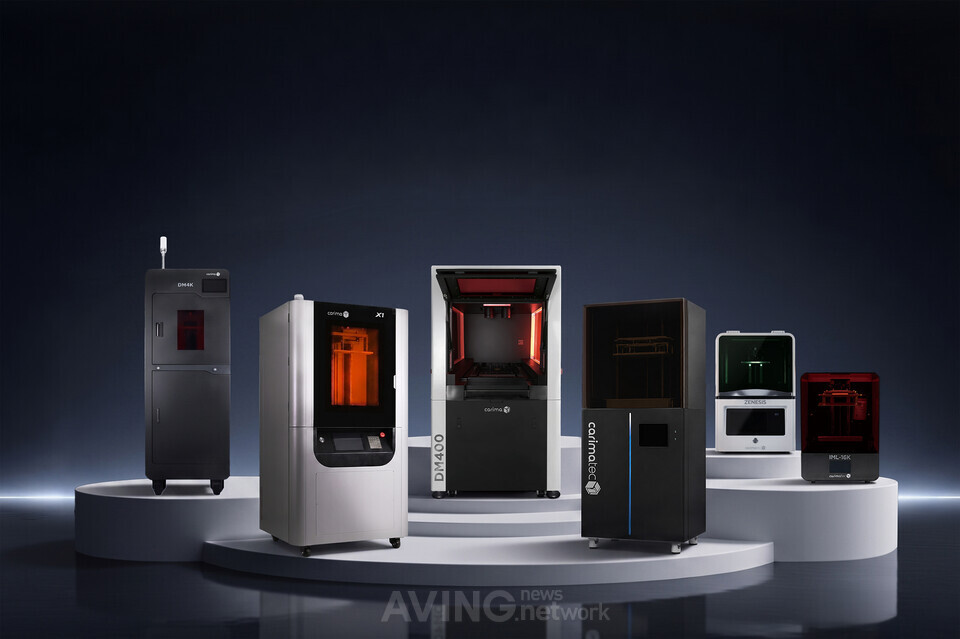
Getting clear dental aligners means building a sequence of slightly different aligners, each based on how a specific patient’s teeth are expected to move. Before the clear plastic trays can be formed, a lab needs the corresponding dental models. Carimatec, a Seoul-based 3D-printing company, thinks that repetitive but highly individualized workflow is exactly where industrial 3D printing starts to make economic sense.
The company says its printers have produced more than 500,000 clear-aligner setup molds. The underlying use case is easy to understand: dental labs need lots of geometrically different models, often in short runs. That’s the opposite of traditional manufacturing which is very good at making thousands of identical objects.
During an in-person briefing in Seoul, a Carimatec representative described the process in practical terms. A dental scan becomes a digital model, and the printer can produce a set of molds representing successive stages of treatment.
Sanghoon Rhee, Senior Manager at CARIMATEC, presents at the ‘Global Media Meetup’. | Photo by AVING News
The clear trays are then vacuum-formed over those molds. The representative said a single print run can produce roughly 50 to 60 molds in about 60 to 90 minutes.
Carimatec’s core pitch is not simply that it makes 3D printers. Many companies do. It sells the printer, resin materials, and slicing software as one system, arguing that the whole platform is more useful for production.
Its machines use DLP, or digital light processing, a technology our readers typically associate with televisions from the 2000s. It’s nice to see that this technology is still around and used in manufacturing.
Instead of steering a laser point by point, DLP projects an image that cures an entire layer of liquid resin at once. That creates a natural speed advantage, but the process still has a bottleneck: after a layer is made, conventional resin printers often have to separate the fresh part from the film at the bottom of the resin vat before continuing.
Carimatec calls its answer C-CAT, short for Carima Continuous Additive Technology. The company says it lowers the separation force enough for the printing process to proceed more continuously, rather than repeating a lift, peel, refill, and reset cycle.
Its current Carimatec’s X1 page claims speeds of more than 40 centimeters per hour, while other company material describes C-CAT at up to 60 centimeters per hour under certain conditions. The difference matters: high-speed printing claims are meaningful only when the material, layer thickness, and finished-part requirements are specified.
The second technology, S-BAT, solves a different problem. Large resin printers may use multiple optical engines to cover a wider area, but the boundaries between those projections can create visible seams or inconsistent curing. Carimatec says S-BAT calibrates those overlaps to produce a more uniform surface. Basically, C-CAT is about keeping production moving; S-BAT is about making a bigger printed object look like it was made under one continuous light source.
The materials side may be the more defensible part of the pitch in my opinion. In the briefing, the representative explained that each resin needs its own exposure settings, such as UV intensity and curing time.
A printer can accept a third-party material, but a vendor that develops both hardware and resin has more control over those parameters. That does not automatically make its materials better than competitors’ materials. It does create a potential operational advantage when customers care about repeatability more than experimentation.
Carimatec says its material lineup includes elastomeric, high-temperature, ceramic, and flame-retardant options. Its DM400 is positioned as an automated industrial system that can print, remove, clean, cure, dry, and collect parts with limited operator intervention. The company says the machine can produce more than 800 units daily in one configured workflow.
Japanese dental company Shofu lists the S-WAVE IMD-S as a DLP dental printer and provides Carima Slicer software and firmware resources for it. Carimatec also says it has relationships with U.S. ceramic-materials supplier Tethon 3D and mining supplier CR Mining Solutions, but I’m not sure to what extent.
Sanghoon Rhee, Senior Manager at CARIMA (right), gives an interview at the ‘Global Media Meetup’ on the 27th. | Photo by AVING News
The company’s history also makes it less of a brand-new startup than the presentation’s tone suggests. CARIMA says it was founded in 2000, introduced its first DLP printer in 2009, and unveiled C-CAT in 2016. The current opportunity is not inventing 3D printing from scratch. It is proving that resin printing can meet production expectations for speed, reliability, finishing, material qualification, and cost.
The potential is there: custom footwear, automotive interior components, and dental models sound like a broad addressable market, but each has different durability, certification, and economics requirements. We’ll see if the speed gains match real-world materials and quality-control demands.
Carimatec Uses 3D Printing to Speed Dental Aligners , original content from Ubergizmo. Read our Copyrights and terms of use.September 7th 2026, 2:11 pm
MediaTek MT8875 Launches: 5G IoT Chip With Edge Generative AI
Ubergizmo
MediaTek has officially introduced the MT8875, an advanced Internet of Things (IoT) platform engineered with native 5G connectivity and dedicated hardware for on-device generative artificial intelligence. Tailored specifically for commercial, industrial, and enterprise environments, the chipset enables complex real-time data processing, allowing edge systems to execute low-latency, automated decision-making without relying strictly on cloud infrastructure.
Manufactured on TSMC’s power-efficient 4 nm process node, the silicon features an octa-core architecture configured with four performance cores alongside four efficiency cores. The key evolution lies in its onboard neural processing unit, which delivers over 12.8 TOPS of compute throughput for generative AI tasks. This capability more than doubles the AI performance of the previous-generation MT8873, providing sufficient horsepower to run standard modern large language models (LLMs) directly at the device layer.
In commercial scenarios such as smart retail, the platform is designed to power interactive digital signage, dynamic menu boards, and self-service kiosks, delivering fluid user interfaces and responsive automated interactions. The chip accelerates automated product recognition and inventory data capture, streamlining operational workflows and minimizing manual labor.
Connectivity has received significant upgrades under the 3GPP Release 17 standard. The MT8875 incorporates three-carrier aggregation (3CC) across bandwidths up to 220 MHz, achieving peak download speeds of 5.14 Gbps. In addition to supporting Wi-Fi 6E and Wi-Fi 7, it offers optional Non-Terrestrial Network (NTN) satellite connectivity to maintain operational integrity across isolated deployments outside regular cellular coverage.
For multimedia and peripherals, the hardware supports high-resolution displays alongside camera configurations of either a single 32 MP sensor or dual 16 MP sensors at 30 frames per second. Extensive peripheral support includes USB 3.2 dual-mode, PCIe Gen 3, and essential industrial interfaces such as I2C, I3C, UART, and I2S. MediaTek continues to broaden its portfolio alongside mobile platform developments, expanding integrated intelligence into mission-critical edge applications.
MediaTek MT8875 Launches: 5G IoT Chip With Edge Generative AI , original content from Ubergizmo. Read our Copyrights and terms of use.September 7th 2026, 10:26 am
Huawei Mate XT 2 Tri-Fold Launched: Specs, Privacy Display, And Features
Ubergizmo

Huawei has officially unveiled the Mate XT 2 Extraordinary Master, the second generation of its tri-fold smartphone lineup. Transitioning from its predecessor’s outward-folding form factor, the device introduces an inward G-shaped hinge mechanism that fully encases the flexible panel when closed. The chassis measures 12.3 mm folded, reaches 3.5 mm at its thinnest edge when unfolded, and weighs 299 grams, holding IP58 and IP59 water- and dust-resistance ratings.
The device features two displays: a 6.5-inch outer LTPO OLED panel (1–120 Hz, up to 6,500 nits) protected by basalt glass, and a 10.2-inch internal 3K LTPO OLED display (1–90 Hz). A notable addition is the optional Lingdun hardware-based privacy screen. Using a dual-pixel structure, the panel selectively blocks off-axis viewing angles via a double tap or toggle switch, shielding on-screen content from peripheral view.
Under the hood, the Mate XT 2 runs on the Kirin 9050 Pro processor, delivering up to 46% improved overall performance over the Kirin 9030 Pro. It features a Ma Liang GPU with real-time ray tracing and a Da Vinci NPU capable of processing on-device multimodal AI models up to 30 billion parameters. A cross-axis graphene vapor chamber manages thermals under heavy loads.
The imaging system utilizes an RYYB color array comprising a 50 MP main sensor with variable aperture (f/1.49–f/4.0) and OIS, a 40 MP ultra-wide lens, a 50 MP periscope telephoto module with 3.5x optical zoom, and a 1.5 MP Red Maple multi-spectral color sensor. Both displays house 8 MP selfie cameras.
A 5,600 mAh battery powers the phone, supporting 66W wired and 50W wireless charging. Additional hardware elements include a Class II certified ECG sensor, dual satellite connectivity (Tiantong calling and BeiDou messaging), and M-Pen 3 stylus support. The device runs HarmonyOS 7, offering native three-way split-screen multitasking.
Availability and Price
| Specification | Details |
| Internal Display | 10.2-inch 3K (3184 x 2232) LTPO OLED, 1–90 Hz, 1440 Hz PWM |
| Cover Display | 6.5-inch (2442 x 1140) LTPO OLED, 1–120 Hz, 6,500 nits peak, Basalt Glass |
| Processor | Huawei Kirin 9050 Pro |
| GPU & NPU | Ma Liang GPU (Ray Tracing) & Da Vinci NPU (30B MoE AI model) |
| Memory & Storage | 16 GB RAM; 256 GB / 512 GB / 1 TB / 2 TB internal storage |
| Rear Cameras | 50 MP main (f/1.49–f/4.0, OIS) + 40 MP ultra-wide + 50 MP periscope (3.5x optical, OIS) + 1.5 MP Red Maple color sensor |
| Front Cameras | 8 MP (outer screen) / 8 MP (inner screen), f/2.4 |
| Battery & Charging | 5,600 mAh; 66W wired, 50W wireless |
| Durability | IP58 and IP59 water and dust resistance |
| Connectivity | 5G, Wi-Fi 6, Bluetooth 6.0 LE, NFC, Tiantong calls & BeiDou satellite messaging |
| Dimensions & Weight | Folded: 157.2 x 77 x 12.3 mm; Unfolded: 157.2 x 219.2 x 3.5 mm; 299 g |
| Operating System | HarmonyOS 7 |
Huawei Mate XT 2 Tri-Fold Launched: Specs, Privacy Display, And Features , original content from Ubergizmo. Read our Copyrights and terms of use.
September 7th 2026, 10:26 am
iRobot Unveils Roomba Duo Nested Robot Concept At IFA 2026
Ubergizmo

Smart home robotics specialist iRobot showcased its latest design concept, the Roomba Duo, at IFA 2026. The prototype tests consumer appetite for heavy-duty household automation by introducing a nested robotic system, where a compact auxiliary unit is housed directly inside a significantly larger cleaning machine.
The core apparatus serves as a heavy-duty floor maintenance platform intended to replace upright vacuum cleaners and traditional mopping rigs. Measuring approximately 60 centimeters in height and weighing 30 kilograms, this substantial base system accommodates high-capacity water reservoirs and delivers high-performance suction power. In addition to regular dry debris extraction, the primary device integrates an active steam sanitation system designed to deep-clean hard floors.
To overcome the inherent physical limitations of its bulky exterior, the Roomba Duo relies on an internal secondary unit. When the primary machine encounters narrow pathways, tight corners, or clearance beneath low-profile furniture, the main chassis reclines to deploy the smaller robotic cleaner. This secondary unit navigates restricted spaces to execute sweeping and damp mopping tasks before docking back inside the main carrier.
Presented at the Berlin trade expo as a development concept, the Roomba Duo functions primarily as an exploratory platform for evaluating consumer demand for multi-tier home cleaning appliances. Consequently, the company has not confirmed whether the system will transition into commercial production or reach store shelves in this specific configuration.
Because the project remains in an exploratory design phase, iRobot has refrained from announcing retail availability or official pricing details. Nevertheless, industry estimates suggest that if the dual-robot hardware enters mass production, its final retail price could easily exceed the $1,700 benchmark typical of existing flagship floor-care solutions.
The prototype underscores a broader industry push toward modular, multi-tier autonomy capable of handling both heavy-duty scrubbing and detailed perimeter maintenance within a single integrated solution.
iRobot Unveils Roomba Duo Nested Robot Concept At IFA 2026 , original content from Ubergizmo. Read our Copyrights and terms of use.September 7th 2026, 10:26 am
Factory AI That Learns From Good Parts, Not Defect Photos
Ubergizmo
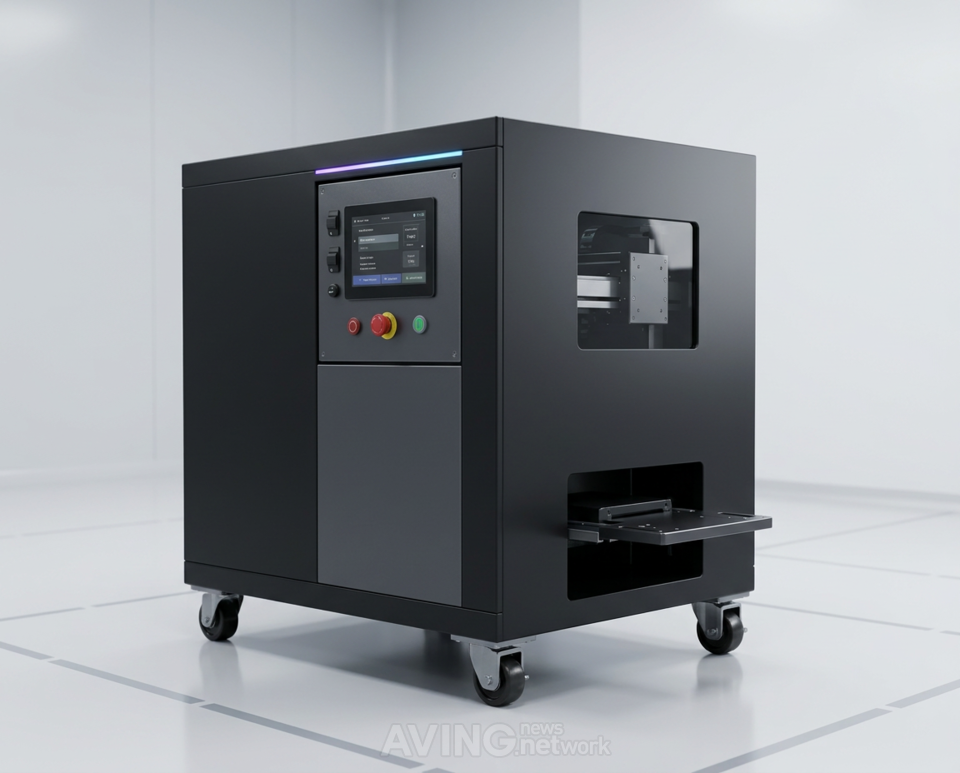
A factory can buy precision cameras, robotics, and a new production line. What it cannot quickly buy is the trained eye that knows when a tiny scratch, fold, contaminant, or misalignment will become a failed phone, car component, or battery.
That is the opportunity A.I.MATICS is chasing with AIM-T1, an AI-powered visual-inspection platform for high-precision electronics. The company says a factory quality engineer can set up a new inspection task from just three to five good product samples, rather than collecting a large defect-image dataset, calling in an AI specialist, or rebuilding a dedicated inspection cell. It’s the robotic version of “this is what good looks like.”
If that promise holds up, it could make advanced manufacturing easier to expand and move, in addition to potentially reducing costs to the consumer! New factories would still need skilled people, but their quality teams could carry more of the inspection know-how in software to help manufacturers bring new products online faster, at the highest quality.
Manufacturing capacity and manufacturing expertise do not grow at the same speed. A 2024 Deloitte and Manufacturing Institute study projected that U.S. manufacturers could need as many as 3.8 million additional workers by 2033, with up to 1.9 million jobs potentially left unfilled. High-precision inspection is only one part of that workforce challenge, but it is one that can directly affect yields, product launches, and warranty costs. After all, every single product needs to go through inspection.
I met A.I.MATICS AI Lab Specialist Jaewon Lee in person in Seoul, and asked where this sort of inspection fits on a production line. He said it can run before or after functional testing, depending on the factory’s workflow. In the company’s current Vietnam use case, it is inspecting flexible PCBs and camera-related components for defects including scratches, contaminants, folding damage, exposed copper, and alignment issues (a big deal for cameras).
AIM-T1 is not a general-purpose inspection camera that magically understands every manufactured object. It is designed for compact, high-precision electronics parts, where very small visual defects can matter and the product can fit within the inspection cell. Larger boards or trays of parts may be possible, Lee said, but would require a configuration matched to the size, volume, and camera angles of the product.
Traditional machine-vision systems tend to be taught what to look for through hand-set rules or large collections of labeled defect images (create an inventory of all the problems seen so far). If a new part is introduced, a manufacturer may need new images, a revised inspection program, and sometimes different hardware.
A.I.MATICS calls its alternative software-defined inspection, which implies a for flexible, smart, approach. Rather than asking an operator to gather examples of every possible flaw, the company says its model uses several known-good samples as a baseline and flags deviations from that baseline. It describes the approach as “World Model AI” and “in-context learning,” terms that should be treated as the company’s product framing rather than independently established proof of a technical advantage.
In plain English, the idea is closer to placing a known-good part next to the part being judged than to teaching a system a catalog of [bad] scratches in advance. That could be useful for unusual defects, because the system would not necessarily need a prior labeled example of the exact flaw.
Great, but the key performance indicator is whether it can do that without creating too many false alarms, which can slow a factory just as surely as a missed defect can.
The optical design is the other half of the pitch. A.I.MATICS uses multiple cameras and lighting configurations, plus a liquid lens that electronically changes focus instead of moving a camera on a mechanical Z-axis (depth axis).
The company says it uses focus stacking to inspect surfaces with height variation in one cycle, allowing the system to remain compact. Its website claims 12 μm inspection precision and detection of particles as small as 3 μm.
A.I.MATICS says an operator can select reference samples, review the normal baseline formed by the system, and deploy the inspection task through a “drag-and-teach” workflow. The company says this reduces a new-product setup from roughly 72 hours to about four hours. That claim depends on the product, the inspection criteria, and the factory’s process, but the target is clear: move product changeovers from outside integrators and AI specialists to the line’s own quality engineers.
An initial AIM-T1 version is operating on a connector-assembly line at an electronics manufacturing site in Vietnam. The company reports up to 75,000 inspections per day, a 26% productivity increase, and a 0.01% defect-escape rate in that deployment (see A.I.MATICS LinkedIn post).
Ubergizmo Editor-in-Chief Hubert Nguyen, A.I.MATICS AI LAB Specialist Jaewon Lee, and officials take a commemorative photo after concluding the Global Media Meetup. | Photo by AVING News
The company has experience in vision systems beyond the factory. A.I.MATICS began as a Hyundai Motor Group in-house venture in 2000, became an independent company in 2003, and later evolved from PLK into A.I.MATICS. It built road-image-recognition systems for Hyundai and Kia before expanding its on-device vision-AI work into driver safety and now manufacturing.
What is interesting here is whether a system can make frequent product changes less dependent on scarce specialists, without lowering quality. If AIM-T1 can repeatedly deliver its claimed setup speed, false-call control, and defect detection across diverse production environments, it could become valuable infrastructure for manufacturing right when this sector explodes due to AI, datacenters and global repositioning.
Factory AI That Learns From Good Parts, Not Defect Photos , original content from Ubergizmo. Read our Copyrights and terms of use.September 6th 2026, 9:38 pm
Earbuds Baseus MC2 NC Debuts With -45dB Open-Ear ANC At IFA 2026
Ubergizmo

Baseus has expanded its personal audio lineup at IFA 2026 with the introduction of the Baseus MC2 NC, a new clip-on open-ear earbud engineered with active noise cancellation. Serving as the direct successor to the previous MC2 model, the device’s standout distinction is the integration of high-performance ANC into an unsealed acoustic form factor.
Active noise cancellation has historically proven difficult to implement on open-ear designs due to the lack of a physical silicone seal inside the ear canal. Most existing clip-on models with ambient reduction capabilities achieve modest noise cancellation levels of around -20 dB. In contrast, Baseus claims the MC2 NC reaches noise reduction depths as low as -45 dB. This figure positions the device well ahead of current open-ear competitors and narrows the gap with traditional in-ear ANC earphones, which typically achieve between -60 dB and -70 dB of isolation.
To achieve this level of attenuation without deep ear insertion, the MC2 NC utilizes an Air Ear Wing structure designed to establish a natural acoustic barrier against ambient sound. This architecture operates alongside a dual adaptive ANC system, which dynamically adjusts cancellation waves based on surrounding noise profiles. The earbuds also feature a dual air chamber design, aiming to balance passive acoustic positioning with long-term wearing comfort during workdays, workouts, and commutes.
By pushing open-ear cancellation performance toward levels associated with closed-ear products, Baseus seeks to offer users reduced environmental distractions while retaining the spatial awareness and comfort inherent to clip-on audio.
The MC2 NC Clip-on ANC Earbuds will officially reach consumer markets in October 2026.
Earbuds Baseus MC2 NC Debuts With -45dB Open-Ear ANC At IFA 2026 , original content from Ubergizmo. Read our Copyrights and terms of use.September 4th 2026, 1:23 pm
Roborock Debuts RockNeo Q2 LiDAR Robot Mower At IFA 2026
Ubergizmo
Roborock has expanded its autonomous maintenance lineup into outdoor spaces with the introduction of the RockNeo Q2 LiDAR robotic lawn mower, unveiled at IFA 2026 in Berlin. Engineered to automate lawn maintenance without the labor-intensive installations common to traditional robotic mowers, the device targets properties requiring efficient, hands-off turf management.
The RockNeo Q2 LiDAR handles coverage areas of up to 800 m² (8,611 sq ft), making it suitable for small to mid-sized residential yards.
- Perception System: The mower integrates Roborock’s Sentisphere LiDAR environmental perception technology to build a detailed spatial map of the yard.
- Obstacle Detection: Built-in ReactiVision Fusion allows the unit to identify and maneuver around typical yard obstructions in real time.
- Wire-Free Deployment: The navigation architecture eliminates the requirement for physical perimeter wires or external RTK reference antennas, significantly streamlining initial setup.
The mowing hardware focuses on close-boundary operation and adapting to uneven surfaces:
- Floating Cutting Deck: Adjusts dynamically to ground contours to maintain an even cut height across undulations, preventing scalping.
- PreciEdge Module: An integrated edge-cutting system trims along lawn borders and hard surfaces down to a 3 cm (1.18 inches) margin.
- Autonomous Operation: The combination of surface tracking and edge trimming reduces the need for manual touch-ups with string trimmers.
The RockNeo Q2 LiDAR represents Roborock’s ongoing effort to expand its core automation competencies beyond indoor floor care. While the company presented a range of products at IFA—including pool cleaners, high-threshold robot vacuums, and wet-dry systems—the Q2 LiDAR marks a direct move into outdoor property care.
Roborock Debuts RockNeo Q2 LiDAR Robot Mower At IFA 2026 , original content from Ubergizmo. Read our Copyrights and terms of use.September 4th 2026, 1:23 pm
Baseus Debuts PicoGo Mix And Mix Pro 3-in-1 Travel Power Banks At IFA 2026
Ubergizmo

At IFA 2026, Baseus introduced the PicoGo Mix AT51 and its Pro variant, expanding its travel-focused power ecosystem with integrated multi-functional charging solutions. Engineered to eliminate the clutter of carrying separate wall bricks, external cables, and international plug converters, the lineup targets business travelers, digital nomads, and cross-border commuters needing an all-in-one charging station.
The standard Baseus PicoGo Mix AT51 integrates a 10,000mAh battery pack, built-in dual charging cables, and a fold-out universal plug system into a single enclosure. Operating as both a standalone portable power bank and a high-efficiency wall adapter, the AT51 delivers up to 67W fast output power. This capacity allows it to easily top up smartphones, tablets, and lightweight laptops such as modern ultrabooks. Built-in interchangeable travel adapters accommodate major regional electrical standards—including the US, Japan, the UK, and the European Union—enabling direct wall charging across diverse outlet types worldwide.
Stepping up for users demanding higher sustained throughput for power-intensive gear, the PicoGo Mix Pro advances the core concept with increased wattage output and upgraded internal power delivery components. Designed to comfortably handle full-sized laptops alongside mobile accessories simultaneously, the Pro iteration retains the all-in-one architecture while integrating enhanced thermal regulation to ensure stable high-wattage charging over extended sessions. Both models incorporate Baseus’ latest intelligent power distribution protocols, automatically sensing connected device requirements to optimize voltage curves while guarding against overheating, overcharging, and short circuits.
By combining high-output wall adapters, integrated cables, and portable battery storage within a single chassis, the PicoGo Mix family highlights Baseus’ push toward integrated everyday utility. The units streamline charging setups across desks, transit hubs, and hotel rooms, offering a consolidated footprint for international travel without compromising fast-charging performance. Baseus is presenting the complete PicoGo series alongside its broader 2026 hardware portfolio at IFA Berlin.
Baseus Debuts PicoGo Mix And Mix Pro 3-in-1 Travel Power Banks At IFA 2026 , original content from Ubergizmo. Read our Copyrights and terms of use.September 4th 2026, 1:23 pm
Roborock Unveils Saros 20 Flow Complete And Qrevo Edge 3 Pro Robot Vacuums At IFA 2026
Ubergizmo
At IFA 2026, Roborock expanded its automated home-cleaning portfolio with new advanced hardware releases: the flagship Saros 20 Flow Complete, and the low-profile Saros 20 Neo—branded as the Qrevo Edge 3 Pro in the United States. The new lineup emphasizes high-power suction, automated obstacle navigation, and hands-free base station maintenance.
Leading the robot vacuum line is the Saros 20 Flow Complete, engineered around a powerful 36,000 Pa suction motor and enhanced Reactive AI obstacle avoidance, which detects over 300 unique objects. It debuts a self-cleaning roller mop system that continuously flushes dirt away with fresh water during operation. To eliminate edge gaps, the roller physically extends along baseboards. Navigational mobility is managed by the AdaptiLift chassis, an elevating mechanism capable of clearing obstacles and thresholds up to 8.8 cm high.
Sharing identical suction capability is the Saros 20 Neo (Qrevo Edge 3 Pro). While it trades the continuous roller mop for dual spinning mop pads operating at 200 RPM, it integrates RetractSense navigation. This motorized retractable LiDAR module lowers the robot’s total height to 7.95 cm (3.13 inches), allowing entry beneath low-clearance furniture while retaining a 100-degree rear navigational field. The model also features the Dual Anti-Tangle System—combining a DuoDivide main brush and FlexiArm Arc side brush designed to eliminate hair wrapping.
Both robotic models rely on automated docking stations to minimize user upkeep. The multifunctional dock for the Qrevo Edge 3 Pro performs high-temperature mop washing at up to 100°C (212°F), accompanied by 131°F warm-air drying, automatic detergent mixing, clean-water refilling, and self-emptying dust storage rated for up to 65 days.
Availability and Price
Regarding commercial availability, the F25 Ultra Steam Gen 2 is scheduled to release in the United States on September 29. The Qrevo Edge 3 Pro launches at a retail price of $1,500, while the flagship Saros 20 Flow Complete is slated to arrive later this fall, around November.
Roborock Unveils Saros 20 Flow Complete And Qrevo Edge 3 Pro Robot Vacuums At IFA 2026 , original content from Ubergizmo. Read our Copyrights and terms of use.September 4th 2026, 11:37 am
Motorola Debuts Swarovski-Embellished Razr And Moto Watch Ultra
Ubergizmo

During IFA 2026, Motorola has expanded its consumer hardware portfolio with the announcement of two premium devices: the motorola razr – 2026 with Crystals by Swarovski and the moto watch ultra. Both products introduce elevated materials and design partnerships, bringing high-fashion accents to Motorola’s clamshell foldable line and advanced biometric integration to its wearable series.
The motorola razr – 2026 with Crystals by Swarovski joins the brand’s luxury Brilliant Collection, featuring a curated aesthetic finished in PANTONE Meteorite. Its exterior is defined by a tactile, quilted leather-inspired rear backplate accented by 35 hand-positioned Swarovski Silver Night crystals.
Reinforcing the design, the folding mechanism incorporates a signature 32-facet Swarovski crystal embedded directly on the hinge assembly. Motorola packages each handset with a custom clear protective case to guard against everyday surface wear without obstructing the decorative stones.
The Moto Watch Ultra runs on Google’s Wear OS platform, and bring biometric and fitness algorithms developed in partnership with Polar. Built inside a 46 mm stainless steel case with IP68 water and dust resistance, the product features a 1.5-inch OLED display reaching up to 2,700 nits of peak brightness beneath Gorilla Glass 3, compatible with standard 22 mm straps offered in silicone and leather finishes curated with Pantone.
Under the hood, the wearable runs on Qualcomm’s Snapdragon W5 Plus Gen 1 processor, delivering up to two days of battery life with fast charging that restores one-third of its capacity in ten minutes. Software features include comprehensive recovery tracking, heart rate intensity zones, sleep stage analysis, and integration with Motorola’s Qira AI assistant for productivity workflows.
Availability and Price
In the United States, the motorola razr – 2026 with Crystals by Swarovski carries a manufacturer’s suggested retail price (MSRP) of $899.99. It launches commercially on September 10 across Motorola.com and Amazon, followed by availability at Verizon on September 24. For a limited introductory window, purchases made directly through Motorola’s online store include a promotional bundle featuring the moto buds 2 plus – Swarovski Edition and a companion moto watch.
The moto watch ultra also goes on sale in the United States on September 10 through Motorola.com and Amazon at an MSRP of $349.99, arriving at Verizon on September 24. Subsequent carrier distribution through T-Mobile, Metro by T-Mobile, AT&T, Xfinity Mobile, and Consumer Cellular will follow across North American retail channels.
Motorola Debuts Swarovski-Embellished Razr And Moto Watch Ultra , original content from Ubergizmo. Read our Copyrights and terms of use.September 4th 2026, 7:25 am
Creatulize Unveils X1 Series Autonomous Bed-Cleaning Robots At IFA 2026
Ubergizmo

At IFA 2026 in Berlin, robotics manufacturer Creatulize officially introduced the Creatulize X1 Series, launching what it presents as the industry’s first fully autonomous bed-cleaning robot lineup. Designed to extend automated home care beyond floor maintenance, the flagship X1 Pro and companion X1 target deep-seated mattress allergens, microscopic skin flakes, and dust mites without requiring manual vacuuming.
The system addresses mattress hygiene through autonomous navigation and multi-stage sanitization. Using a proprietary path-planning algorithm, the robot delivers systematic, non-repetitive coverage across bedding surfaces. The device incorporates 11 precision sensors dedicated to real-time obstacle avoidance and edge detection, preventing accidental drops off the sides of mattresses. Its chassis moves on specialized silicone wheels engineered to maintain grip without slipping, snagging delicate bedding, or tracking dust.
Mechanical and sanitization specifications include:
- Brushless DC Motor & Spiral Roller: Features a 4-blade spiral roller brush that beats and dislodges settled allergens, paired with 18AW cyclone suction designed to prevent hair tangles and channel blockages.
- 270nm UVC Disinfection: Equipped with an ultraviolet sterilization module achieving a lab-tested 99.9% mite removal rate and >99.99% bacteria elimination.
- Three-Stage Filtration: Integrates a washable metal mesh and a HEPA filter with a transparent dust container for visual debris monitoring.
- Power and Safety: Delivers up to six bed cleanings on a single charge via a 1.5-hour fast-charging battery, complemented by smart safety sensors that trigger automatic shutoff when lifted.
Software operation offers four cleaning modes—Daily, Deep, Quick, and Silent—controlled via a companion smartphone app or integrated one-touch physical controls. The standard X1 focuses on simplified one-touch maintenance, while the flagship X1 Pro includes full app connectivity and automated path mapping. Both models comply with global regulatory standards, carrying CE, FCC, CB, UKCA, and RoHS certifications.
Creatulize Unveils X1 Series Autonomous Bed-Cleaning Robots At IFA 2026 , original content from Ubergizmo. Read our Copyrights and terms of use.September 4th 2026, 6:40 am
Reolink OMVI 2i Ultra Security Camera Debuts With Solar-Powered Dual-View Tracking
Ubergizmo

At IFA 2026 in Berlin, Reolink announced the OMVI 2i Ultra, expanding its security camera portfolio with a wire-free, dual-lens surveillance device built around continuous mechanical tracking and solar energy harvesting. Designed to eliminate monitoring blind spots, the outdoor unit combines fixed wide-angle observation with automated panning coverage on a single mount.
The system utilizes an integrated dual-view configuration consisting of an 8 MP wide-view camera paired with a secondary 5 MP pan-tilt camera. While the primary lens maintains static overview monitoring of a chosen zone, the lower motorized module provides a 355-degree pan and 50-degree tilt range to inspect moving targets or cover separate property angles simultaneously.
Surveillance and tracking capabilities include:
- SyncTrack intelligent tracking: When the stationary sensor detects movement, the motorized unit initiates continuous pan-tilt tracking, following subjects across an uninterrupted arc even if they exit the primary camera’s static field of view.
- Auto framing and point-to-aim: The pan-tilt sensor automatically zooms in to capture facial and license details upon target detection, and users can tap any spot on the wide-angle live view to redirect the tracking camera instantly.
- Detachable 10,000 mAh battery: Supplies up to six months of operation per charge, delivering double the runtime of conventional bullet-PT devices.
- SolarEase charging: An integrated 6 W solar panel boosts energy conversion efficiency by 26 percent, sustaining continuous operation with as little as 30 minutes of daily sunlight, including under partial shade.
Software intelligence is driven by Reolink’s local ReoNeura AI engine, providing subscription-free scenario detection, object classification, and compatibility with the Home Hub 2 storage ecosystem, alongside voice support for Amazon Alexa, Google Home, and Home Assistant.
The Reolink OMVI 2i Ultra is scheduled for commercial release in fall 2026, rounding out the OMVI lineup alongside the flagship 24 MP OMVI X16 PoE.
Reolink OMVI 2i Ultra Security Camera Debuts With Solar-Powered Dual-View Tracking , original content from Ubergizmo. Read our Copyrights and terms of use.September 4th 2026, 6:40 am
Meet LG’s Next-Gen SIGNATURE: The AI Fridge You Can Actually Talk To
Ubergizmo

LG Electronics has introduced during IFA 2026 its next-generation LG SIGNATURE refrigerator, integrating conversational artificial intelligence powered by Large Language Model (LLM) technology. Designed for the premium connected kitchen, the flagship appliance shifts smart home hardware from basic scheduled automation toward proactive, natural-language interactions.
At the core of the new model is an embedded conversational assistant capable of understanding natural human dialogue. Rather than relying on rigid voice commands or smartphone application toggles, users can communicate directly with the appliance to manage groceries, coordinate culinary tasks, and query internal settings. This voice interface works in tandem with a redesigned 6.8-inch LCD display, providing a central visual interface for family organization, status monitoring, and temperature regulation.
Complementing its communication features, the refrigerator incorporates advanced algorithmic climate preservation through AI Fresh. This system learns household behavioral patterns over time, mapping when family members typically access the unit throughout the day. Using predictive scheduling, AI Fresh automatically pre-cools internal compartments up to two hours before an anticipated door opening, proactively stabilizing storage temperatures, minimizing internal thermal spikes, and preserving perishable food freshness.
The appliance highlights LG’s broader product direction for modern premium kitchens, where high-end home appliances operate as observant household assistants rather than passive cold-storage units. By anticipating consumer habits and handling spoken queries fluidly, the refrigerator aims to eliminate friction from meal preparation, inventory management, and energy preservation.
Visitors can test the appliance’s real-time dialogue and responsive cooling features firsthand at the dedicated LG SIGNATURE zone, where interactive displays showcase the future of intelligent food preservation. LG has not yet announced official retail pricing or regional commercial availability windows for the next-generation model.
Meet LG’s Next-Gen SIGNATURE: The AI Fridge You Can Actually Talk To , original content from Ubergizmo. Read our Copyrights and terms of use.September 4th 2026, 6:06 am
Xiaomi 18 Fold Debuts At IFA 2026 With In-House XRing O3 Chip
Ubergizmo

Xiaomi has officially showcased the Xiaomi 18 Fold at IFA 2026 in Berlin, providing the first physical look at the upcoming wide-aspect foldable smartphone ahead of its scheduled release. Displayed in an exclusive cherry red finish, the flagship marks a pivotal strategic milestone as Xiaomi’s first commercial smartphone powered by its proprietary XRing O3 processor, underscoring the brand’s expanding push into custom silicon development.
Beyond the in-house system-on-chip, the hardware integrates high-performance memory architecture. Xiaomi confirmed that the foldable incorporates next-generation LPDDR6 RAM developed by ChangXin Memory Technologies (CXMT), which reaches data transfer speeds of up to 12,800 Mbps to accelerate multitasking and intensive on-device processing.
Physical inspections of the display unit at the trade show highlight a revised aesthetic and camera configuration:
- Wide-screen profile: Employs an expanded horizontal footprint that aligns with evolving industry form factors seen in competing foldables.
- Triple-camera array: Features a refined rear module indicating an optical focal range spanning 17mm to 80mm, pointing to an ultra-wide sensor alongside an estimated 3.3x telephoto camera.
- Flagship thermal and chassis design: Balances internal hinge mechanics with a sleek profile suited for everyday pocket carry.
The announcement positions Xiaomi in direct competition within the premium folding sector as manufacturers shift toward broader outer displays that mirror standard smartphone aspect ratios when closed.
The Xiaomi 18 Fold serves as the centerpiece for Xiaomi’s largest European exhibition footprint to date. Spanning more than 3,300 square meters, the showcase highlights over 380 interconnected devices supporting the brand’s comprehensive “Human x Car x Home” smart ecosystem, which includes automotive technology, robotics, and the European debut of its Mijia smart home line.
Xiaomi confirmed that the Xiaomi 18 Fold will officially launch in China on September 7, with comprehensive technical specifications, hardware variants, and broader international commercial availability expected to follow the formal presentation.
First Sample Images
Xiaomi has shared initial camera samples from its upcoming Xiaomi 18 Fold, offering an early evaluation of the flagship foldable’s photographic capabilities.
The optical array is developed through Xiaomi’s continued partnership with Leica, which handles calibration and color tuning across all sensors. The rear setup is anchored by a high-resolution 200 MP primary sensor, accompanied by a 50 MP telephoto lens delivering 3.5x optical zoom, alongside a secondary 50 MP ultrawide camera.
High-resolution promotional images published by Xiaomi partner and president Lu Weibing highlight a distinct approach to low-light photography. Rather than artificially overexposing shadows, the camera pipeline preserves scene-accurate warmth, suppresses corner noise, and balances high dynamic range naturally. This tuning strategy favors natural contrast and intimate low-light ambiance over aggressive software brightening.
Xiaomi 18 Fold Debuts At IFA 2026 With In-House XRing O3 Chip , original content from Ubergizmo. Read our Copyrights and terms of use.
September 4th 2026, 6:06 am
Baseus PicoGo Pro AH22 Puts 100W, Three USB-C Ports and a Display in a Tiny Charger
Ubergizmo

Baseus has introduced the PicoGo Pro AH22 Digital Display Fast Charger 3C 100W, one of the smallest 100W three-port chargers on the market. In a compact form, the AH22 supports multi-device charging while offering three intelligent charging modes for different everyday needs. Its customizable smart display adds a more intuitive way to view and personalize the charging experience.
At just 54 x 52 x 32 mm, the PicoGo Pro AH22 is close to the dimensions of compact chargers such as the Anker Nano Charger (70W, 3 Ports), which measures 53 x 42.6 x 31.5 mm, but Baseus pushes maximum output to 100W while using three USB-C ports and fitting a 23 x 23 mm display into the enclosure.
With this new charger, Baseus goes head-to-head with Anker’s new Nano Universal 100W charger. Anker’s model is larger (95 x 50 x 40 mm), but it offers three USB-C and one USB-A ports
The AH22 can deliver up to 100W from a single USB-C port, enough for many USB-C laptops, and up to 95W total when all three ports are connected. Its display shows real-time output for each port, while Smart Mode automatically allocates power between devices, Gentle Mode lowers output to reduce heat and battery stress, and Turbo Mode prioritizes maximum charging through USB-C1.
Inside, Baseus uses dual GaN chips, graphene and thermal gel for heat dissipation, and an AHB architecture rated at up to 95% conversion efficiency. The charger supports 100–240V input for travel and multiple fast-charging protocols, including PD 3.2, PPS, and QC 3.0.
Baseus PicoGo Pro AH22 Puts 100W, Three USB-C Ports and a Display in a Tiny Charger , original content from Ubergizmo. Read our Copyrights and terms of use.September 4th 2026, 4:50 am
Lenovo Announces Yoga Pro 9n, Yoga 9n, And Yoga Tablets At IFA 2026
Ubergizmo

At Lenovo Innovation World at IFA 2026, Lenovo announced major expansions to its creator portfolio, introducing two flagship AI-powered laptops alongside a new generation of pen-first tablets built for high-performance computing, design, and seamless cross-device workflows.
The performance centerpiece is the Lenovo Yoga Pro 9n (15”, 11), engineered for developers and visual artists executing complex local AI models, 3D rendering, and software development. Powered by the NVIDIA RTX Spark platform—featuring an NVIDIA Grace CPU with up to 20 cores and an NVIDIA Blackwell RTX GPU—it pairs with up to 128GB of 9400 MT/s unified memory. Visuals are delivered through a 15.3-inch 2.5K PureSight Pro OLED display with a 165Hz variable refresh rate and 1100 nits peak HDR brightness. Precision navigation is supported by a haptic Force Pad with stylus compatibility and a 9.2MP IR camera.
The Lenovo Yoga Pro 9n (15”, 11)
The Lenovo Yoga Pro 9n (15”, 11) with Yoga Pen Gen 2
For versatile multi-mode creation, the Lenovo Yoga 9n 2-in-1 (16”, 11) pairs identical NVIDIA RTX Spark architecture with a 360-degree convertible chassis. It includes up to 64GB of unified memory and a 16-inch 2.8K PureSight Pro OLED touchscreen running at 120Hz.
The Lenovo Yoga 9n 2-in-1 (16”, 11)
The convertible introduces a dual-surface pen experience, enabling users to sketch or annotate directly on either the primary display or the haptic Force Pad using the Yoga Pen Gen 2. Audio is anchored by a six-speaker Dolby Atmos setup integrating tweeters directly into its rotating soundbar.
Lenovo Yoga Tab Gen 2
Complementing the laptops is the new Lenovo Yoga Tab Gen 2 (the entry tablet in the lineup), focused on lightweight, highly portable input. Weighing 480g, the 11.1-inch tablet is powered by the MediaTek Dimensity 9500s processor with native AI acceleration, up to 12GB of RAM, and an 11,000 mAh battery supporting 68W charging.
It sports a 4K PureSight Pro display (3840 x 2560) at 144Hz and works seamlessly with the Tab Pen Pro 2, featuring 8,192 levels of pressure sensitivity and intuitive gesture controls. Running Android 17, it guarantees seven OS upgrades through Android 24.
The Yoga Tab Plus Gen 2 in Cosmic Blue
For creators demanding a larger, more powerful canvas, the Lenovo Yoga Tab Plus Gen 2 stands out as Lenovo’s newest native AI tablet, tailored specifically for digital artists and designers. Powered by the Snapdragon 8 Elite Mobile Platform with a Qualcomm Oryon CPU, the device delivers fast responsiveness, seamless multitasking, and smooth multimodal AI interactions.
Visual work comes alive on the expansive 13-inch 4K PureSight Pro display, providing rich detail and color precision for illustration, photo editing, and media consumption. To support diverse workflows, the tablet pairs with an optional all-in-one magnetic clamshell keyboard that transforms it from a pen-focused drawing surface into a full productivity workstation, complemented by a premium Harman Kardon audio system built for clear calls and dynamic content creation.
Official pricing and rollout schedules for the Lenovo Yoga Pro 9n (15”, 11) and Lenovo Yoga 9n 2-in-1 (16”, 11) will be announced at a later date. Meanwhile, the new tablet lineup is slated to hit shelves starting in September 2026, with the Lenovo Yoga Tab Gen 2 starting at an estimated 649€ (~$700), and the larger Lenovo Yoga Tab Plus Gen 2 starting at 849€ (~$920).
Lenovo Announces Yoga Pro 9n, Yoga 9n, And Yoga Tablets At IFA 2026 , original content from Ubergizmo. Read our Copyrights and terms of use.September 3rd 2026, 3:06 pm
Lenovo ThinkCentre X Ultra Packs 128GB of Unified Memory Into a Ultra-compact AI Desktop
Ubergizmo

Lenovo’s new ThinkCentre X Ultra is a very different type of AI PC from the thin-and-light laptops dominating the category.
The compact desktop can be configured with up to an AMD Ryzen AI Max+ PRO 495 Series processor and 128GB of unified memory, packing workstation-class resources into a chassis measuring just 1.6 liters.
Unlike the ThinkBook 14 Gen 9, where AI acceleration is primarily aimed at productivity features and applications, the ThinkCentre X Ultra is much closer to a machine specifically designed for substantial local AI workloads.
The 128GB unified-memory configuration is particularly important.
For larger local AI models, memory can become as important as raw processor performance. AMD’s Ryzen AI Max platform combines CPU, GPU, and AI acceleration with a large unified memory pool that can be shared by the processor and integrated graphics, making considerably larger models practical than on conventional PCs with modest amounts of dedicated graphics memory.
The Ryzen AI Max+ systems are dedicated to advanced local inference, AI development, and models reaching as high as 128 billion parameters on appropriately configured machines.
Lenovo pushes the envelope with the X Ultra by allowing up to four systems to be connected as a cluster.
According to Lenovo, combining multiple X Ultra machines expands both compute and available memory resources and can support larger models, longer context windows, multiple AI agents, and several simultaneous AI requests.
That makes the X Ultra interesting for developers and companies that want to run AI locally without immediately moving workloads into a rack-mounted server or cloud infrastructure.
Lenovo is also integrating the AMD Ryzen AI Developer Center, providing access to preconfigured AI models, tools, and workflows for both Windows and Linux. The objective is to reduce the amount of setup required before companies can start experimenting with local inference and AI applications.
Despite the hardware, the ThinkCentre X Ultra remains extremely compact at only 1.6L. Lenovo says its thermal design is intended to maintain performance while keeping operation cool and quiet under sustained workloads. We would need to test that claim because sustained AI inference can place significant loads on both processor and memory for extended periods.
Another unusual feature is adaptive lighting, which translates system activity into visible status information on the machine itself. It is a small detail, but potentially useful when several units are running together. Enterprise features include Lenovo ThinkShield security, AMD PRO technologies, and AMD DASH remote-management support.
The ThinkCentre X Ultra starts at $3,699 and will be available beginning in November 2026.
Lenovo ThinkCentre X Ultra Packs 128GB of Unified Memory Into a Ultra-compact AI Desktop , original content from Ubergizmo. Read our Copyrights and terms of use.September 3rd 2026, 1:21 pm
Lenovo Project AeroBlade Packs Active Solid-State Cooling Into a Sub-10mm Laptop
Ubergizmo

Lenovo’s Project AeroBlade is one of the more technically interesting laptop concepts the company is showing this year. The 14-inch notebook measures less than 10mm thick and weighs under 830 grams, but the real innovation is inside.
Instead of using conventional rotating fans, AeroBlade relies on solid-state active cooling technology developed with Frore Systems.
The difference between active and passive cooling matters. AeroBlade may not have fans, but it isn’t simply letting the processor dissipate heat through the chassis. Lenovo’s Active Flow cooling system actively moves air using Frore’s AirJet technology.
During my briefing, Lenovo explained that AeroBlade uses four thin solid-state cooling modules. Inside each module, a piezoelectric membrane vibrates at ultrasonic frequencies, creating airflow without the rotating blades and electric motors found in traditional laptop fans.
The technology addresses a fundamental limitation of ultra-thin laptop design.
Processors generate significant heat when operating continuously at high performance. Making a laptop thinner reduces the internal volume available for fans, heat pipes, airflow channels, and other cooling hardware. Fanless laptops typically compensate by using lower-power processors or allowing performance to drop as temperatures rise.
AeroBlade is designed to challenge that tradeoff.
According to Lenovo, Frore’s system can generate 17 times more back pressure than a conventional cooling solution. During our conversation, Lenovo compared it to the difference between a leaf blower and a bicycle pump. A leaf blower moves large amounts of air but loses effectiveness when airflow is restricted, while a pump can maintain pressure through a much narrower opening.
That allows AeroBlade to use very small vents and considerably thinner cooling hardware.
It also offers potential reliability advantages. Lenovo claims thatthe smaller openings can reduce dust and liquid intrusion, while eliminating spinning fan bearings removes one mechanical component that can eventually fail.
The concept itself weighs under 830g and measures less than 10mm thick, despite using a 14-inch display. Lenovo has built the chassis from magnesium and aluminum and fitted it with an OLED display, Thunderbolt 4, and Wi-Fi 7.
The key claim is not merely that AeroBlade is extremely thin, but that its active cooling system can maintain the performance expected from a conventional laptop without requiring traditional fans.
We would want to test that under sustained CPU and GPU workloads before drawing conclusions, but the approach is genuinely more innovative than simply shaving another millimeter off a chassis.
For now, Project AeroBlade remains a proof of concept. Lenovo has not announced a price, production schedule, or commercial model based on the design.
Lenovo Project AeroBlade Packs Active Solid-State Cooling Into a Sub-10mm Laptop , original content from Ubergizmo. Read our Copyrights and terms of use.September 3rd 2026, 1:21 pm
Lenovo ThinkBook 14 Gen 9 Adds Snapdragon X2 Plus With an 80-TOPS NPU and 26-Hour Battery Claim
Ubergizmo

Lenovo is expanding its ThinkBook 14 Gen 9 lineup with a new Snapdragon X2 Plus configuration, bringing Qualcomm’s latest processor and a powerful 80-TOPS NPU to its mainstream 14-inch business laptop.
This is not an entirely new ThinkBook generation. During my briefing with Lenovo, the company clarified that Intel and AMD versions of the ThinkBook Gen 9 already exist, while this new model adds Qualcomm to the family. It is also Lenovo’s first 14-inch ThinkBook Gen 9 with Snapdragon; Qualcomm was previously available in a larger ThinkBook configuration.
The new Snapdragon X2 Plus is a powerful processor for a thin-and-light laptop. Qualcomm offers the platform with up to 10 third-generation Oryon CPU cores, while its Hexagon NPU delivers 80 TOPS of dedicated AI acceleration.
That 80-TOPS figure is particularly notable. Intel’s current Core Ultra Series 3 processors top out at 50 NPU TOPS, while AMD’s Ryzen AI 400 family reaches 60 TOPS. On paper, Snapdragon X2 Plus therefore provides significantly more dedicated NPU acceleration than the current mainstream Intel and AMD alternatives.
However, that doesn’t make the ThinkBook 14 Gen 9 a dedicated AI workstation.
Its NPU is designed primarily to accelerate AI features integrated into everyday PC applications: meeting tools, image and video processing, content generation, Copilot+ features, and increasingly, AI agents running locally. Heavy local AI development and large-model inference can depend much more heavily on GPU performance, memory capacity, and memory bandwidth.
Lenovo’s own positioning reflects that distinction. The ThinkBook 14 Gen 9 is aimed at AI-assisted productivity, content creation and multitasking, rather than developers running very large AI models locally.
The laptop features a 14-inch WUXGA display rated at 400 nits, with touch available as an option. It measures 17.7mm thick and starts at 1.3kg (2.87 pounds).
Lenovo also claims up to 26 hours of local video playback, although, as always, that number comes from controlled internal testing and should not be confused with 26 hours of normal mixed use.
AI features include Microsoft’s Copilot+ experiences alongside Lenovo Qira. Lenovo highlights features such as Pay Attention, designed to help users stay focused during meetings, and Catch Me Up, which can summarize conversations or information they have missed.
Competition is increasingly strong in this category. Intel’s latest Core Ultra Series 3 laptops emphasize stronger integrated graphics and x86 software compatibility, while AMD Ryzen AI 400 combines a 60-TOPS NPU with Radeon integrated graphics. Apple’s 13-inch MacBook Air with M5 starts at $1,099 and also places increased emphasis on local AI workloads.
The Snapdragon model’s strongest arguments are therefore likely to be AI acceleration and efficiency, rather than being the fastest laptop across every workload.
The Lenovo ThinkBook 14 Gen 9 will be available in October 2026, with an expected starting price of $1,299.
Lenovo ThinkBook 14 Gen 9 Adds Snapdragon X2 Plus With an 80-TOPS NPU and 26-Hour Battery Claim , original content from Ubergizmo. Read our Copyrights and terms of use.September 3rd 2026, 1:21 pm
Lenovo ThinkBook 14x Gen 2 Weighs Just 990g and Measures 12.9mm Thick
Ubergizmo

Lenovo is taking its ThinkBook family below the one-kilogram mark with the new ThinkBook 14x Gen 2, a 14-inch ultraportable that weighs just 990 grams (2.18 pounds) and measures only 12.9mm thick.
Those numbers are the main story here. The ThinkBook 14x Gen 2 is one of the thinnest and lightest ThinkBook laptops Lenovo has produced, putting it firmly into the premium ultraportable category rather than the more conventional business-laptop territory occupied by most ThinkBooks.
The laptop is powered by Intel Core 7 Series 3 processors. During my briefing, Lenovo described the new Intel platform as more efficient than the previous generation and said that efficiency should translate into better battery life. Lenovo has not provided an actual battery-runtime claim for this model, however, so we cannot yet quantify that improvement.
The ThinkBook 14x Gen 2 also differs from the Snapdragon-powered ThinkBook 14 Gen 9 in its priorities. While Lenovo heavily emphasizes the 80-TOPS NPU and AI capabilities on the Snapdragon system, the 14x Gen 2 focuses more on portability, industrial design, and everyday performance.
Lenovo will offer OLED display options, alongside an optional LCD touchscreen configuration. The company has not disclosed complete resolution, brightness, or refresh-rate specifications in the press material provided for the announcement, so those details remain to be confirmed.
The exterior is also more colorful than the average business laptop. Lenovo plans four finishes: Luna Grey, Celestial White, Mystic Violet, and Veil Blue.
Another interesting point came up during my briefing: Lenovo described the new ThinkBook as repairable despite its extremely thin construction. That is potentially significant because making laptops thinner often means integrating or soldering more components and making internal access more difficult.
Lenovo has not provided an iFixit score or a detailed list of replaceable components for this model, however, so we will need to see the internal design before judging how repairable it actually is.
At 990 grams, the ThinkBook 14x Gen 2 is considerably lighter than many conventional 14-inch laptops while still providing a full-size notebook form factor. That could make it particularly attractive to users who spend a lot of time moving between meetings, airports, offices, and hotels and care more about carrying weight than maximum performance.
The interesting question will be what Lenovo had to compromise to reach 12.9mm and 990g, particularly in battery capacity, cooling, connectivity, and sustained processor performance.
The Lenovo ThinkBook 14x Gen 2 is expected in Q1 2027, with a starting price of $999.99.
Lenovo ThinkBook 14x Gen 2 Weighs Just 990g and Measures 12.9mm Thick , original content from Ubergizmo. Read our Copyrights and terms of use.September 3rd 2026, 1:21 pm
Anker MindBase Brings Edge AI And 20-Camera Support To Smart Homes
Ubergizmo

Anker and Eufy have officially introduced during IFA 2026 the Anker MindBase, a centralized home hub engineered around local processing, privacy-focused security, and interconnected smart living without recurring subscription fees. Marketed under the tagline “The Mind Within Your Home,” the unit functions simultaneously as an edge AI station, an automated smart bridge, and a private local storage vault.
At the core of the hardware is the Anker TrueSmart Agent, powered by a dedicated on-device AI chip that handles real-time recognition without relaying data through external clouds. The processor analyzes facial identity, body posture, behavioral patterns, vehicles, pets, and strangers directly on site. Through natural language querying and smart file clustering, the Anker EverSafe Memory architecture aggregates household videos, photos, and surveillance footage into searchable timelines, automatically creating custom event summaries and security highlight reels on request.
Serving as a universal ecosystem bridge, the device incorporates Anker EasyOmni Link to unite both Anker accessories and third-party smart equipment under a single operational environment. The platform functions as a certified Matter 1.5 Controller with direct third-party device onboarding while supporting Apple HomeKit (HKSV), Amazon Alexa, Google Home, and Home Assistant.
The hardware configuration is backed by 64 GB eMMC internal memory and a dual-bay bay system capable of hosting 2.5-inch and 3.5-inch SATA hard drives for extensive local storage. Connectivity options are broad, featuring dual-band Wi-Fi, Bluetooth / BLE, Thread, and Zigbee wireless protocols, accompanied by two Gigabit Ethernet ports and three USB 3.0 ports.
The hub manages expansive system networks, supporting up to 20 total camera channels—composed of 16 wireless streams and 4 wired channels via an external PoE switch—as well as up to 64 sensor channels. For physical deterrents, it includes an integrated speaker and a red and blue alternating flash intrusion alarm light. By maintaining all compute and storage locally, MindBase provides low-latency automation and dependable offline security.
For now, official prices have not been shared yet, and we also learned that the product will be offered in bundle options too, including a security kit with cameras and sensors.
Anker MindBase Brings Edge AI And 20-Camera Support To Smart Homes , original content from Ubergizmo. Read our Copyrights and terms of use.September 3rd 2026, 12:21 pm
Lenovo Project Swan Turns a 14-Inch Laptop Into a 17-Inch Widescreen
Ubergizmo

Lenovo has been experimenting with expandable laptop displays for several years, and its latest concept takes the idea in a more practical direction.
Called Project Swan, the device starts as a relatively conventional 14-inch laptop, but the screen can physically expand into a 17-inch 16:9 display, giving users a significantly wider workspace when they need it.
The orientation is important.
Rather than extending the display vertically into a tall screen, Project Swan expands horizontally to create a working area closer to that of a traditional large-screen laptop. That extra space is useful for fairly ordinary tasks such as placing two documents side by side, displaying large spreadsheets, monitoring dashboards, editing content, or keeping several windows visible simultaneously.
When that space is no longer necessary, the screen contracts back into the more portable 14-inch format.
Lenovo says Project Swan measures 17.9mm thick and weighs 1.6kg, or about 3.5 pounds. Those specifications make the concept considerably more portable than some of the company’s earlier expandable-display experiments.
During my briefing, Lenovo specifically compared Swan with a much larger expandable gaming-laptop concept that weighed close to eight pounds. At roughly half that weight, Swan is intended to demonstrate how the same basic idea could work in a laptop people might actually carry every day.
The display relies on what Lenovo described as a roll-and-slide mechanism. As the structure extends sideways, the mechanism synchronizes the flexible display’s movement so the screen expands with it.
That mechanical system is arguably more interesting than the flexible display itself.
Flexible OLED panels are already used in foldable and rollable devices. The engineering challenge is building a mechanism that can extend and retract the panel repeatedly while keeping the screen flat, protecting it inside the chassis, and preventing the entire laptop from becoming too thick or heavy.
Swan’s appeal is also easy to understand without inventing a new computer workflow.
A 14-inch laptop is convenient to carry, but a 17-inch screen is far more comfortable for serious multitasking. Project Swan is essentially Lenovo’s attempt to put both sizes into the same machine.
Major questions remain, including durability, battery consumption, display longevity, cost, and how the expansion mechanism would hold up after thousands of cycles.
And Lenovo emphasized during the briefing that Project Swan is a concept, not a production unit. No price or release date has been announced.
Lenovo Project Swan Turns a 14-Inch Laptop Into a 17-Inch Widescreen , original content from Ubergizmo. Read our Copyrights and terms of use.September 3rd 2026, 12:21 pm
Anker RIC Hearing Aids Use AI To Improve Speech Clarity In Noisy Social Environments
Ubergizmo
Anker is entering the hearing-aid market with the Anker RIC Hearing Aids, its first over-the-counter receiver-in-canal hearing aid for adults with perceived mild to moderate hearing loss. The product is expected to launch in the United States in Q1 2027.
At the core is Anker’s Thus AI chip, developed to address one of the most important challenges for people with hearing loss: understanding speech in noisy environments.
Restaurants, parties, family gatherings, and meeting rooms are among the most difficult situations for hearing-aid users. Traditional amplification can make sounds louder, but it does not necessarily make conversations easier to understand when several people are talking at the same time and background noise competes with the voice the user wants to hear.
This problem can have a significant impact beyond hearing itself. When following a conversation becomes difficult, people with hearing loss can participate less, miss parts of discussions, or withdraw from social interactions altogether.
The Anker RIC Hearing Aids are designed specifically to improve that experience.
Using AI-based audio processing, the device separates speech from surrounding noise in real time. Anker says the system can deliver up to 90% speech intelligibility in challenging environments including restaurants, parties, and meeting rooms.
This focus on speech clarity in noisy environments gives the product broader potential impact than simply increasing amplification. Better separation between voices and background noise can help users stay engaged in conversations in the environments where hearing difficulties are often the most disruptive.
The hearing aids use a receiver-in-canal, or RIC, architecture, with the main electronics positioned behind the ear and a small receiver placed inside the ear canal. Each unit weighs 6.61 grams and carries an IP68 rating for resistance to dust, sweat, and water.
Comfort was also a design priority. Anker modeled the hearing aid’s curvature using a human-ear database to distribute pressure more evenly. The teardrop-shaped body is designed to leave room for eyeglasses, while a UV-cured low-friction coating helps reduce friction during extended wear.
As an OTC hearing aid, the device is intended to make hearing assistance more accessible. Users can complete a hearing test through the Anker app and receive personalized settings and setup guidance without requiring an initial clinic visit or professional fitting.
Anker also redesigned the charging case around accessibility and ease of use. A built-in display shows the battery level and currently selected listening program. Physical buttons on the case allow users to change modes without using a smartphone.
The hearing aids support Bluetooth 5.4 with dual-device connectivity. A five-minute fast charge provides approximately two hours of use, according to Anker.
The combination of AI speech processing, OTC accessibility, and a traditional RIC hearing-aid design makes the Anker RIC Hearing Aids a particularly meaningful application of consumer AI technology. Instead of adding AI as an additional feature, Anker is applying it to a core hearing-aid problem: helping people distinguish the conversation they want to hear from the noise around them.
For people with hearing loss, improving that capability can directly affect their ability to participate in dinners, meetings, celebrations, and everyday conversations. It turns better speech processing into something more important: better access to social interaction.
Beta testing registration for the Anker RIC Hearing Aids opens in September 2026, with the commercial U.S. launch planned for Q1 2027. Pricing has not yet been announced.
Anker RIC Hearing Aids Use AI To Improve Speech Clarity In Noisy Social Environments , original content from Ubergizmo. Read our Copyrights and terms of use.September 3rd 2026, 12:21 pm
Anker MagGo Power Bank 2 Pro Delivers 25W Fast Wireless Charging Without the Heat
Ubergizmo

At IFA 2026, Anker launched the MagGo Power Bank 2 Pro, a 10,000 mAh magnetic wireless power bank delivering 25W Qi2.2 wireless charging while using an integrated cooling system to control heat.
Anker calls it the world’s fastest and coolest wireless power bank, and indeed the speed is impressive. I need to get my hands on it to check the temperature claim. Standard Qi2 magnetic charging has typically topped out at 15W, while the MagGo Power Bank 2 Pro increases rated wireless output to 25W — about 67% more power.
That translates into significantly faster charging. According to Anker, the power bank can charge an iPhone 17 Pro to 25% in 10 minutes and 50% in 25 minutes. For a magnetic wireless power bank, reaching half a phone battery in roughly 25 minutes is an impressive step up from the charging speeds delivered by previous Qi2 accessories.
The key technology behind such performance is active cooling.
Higher wireless charging power generates more heat, which is the limiting factor. As a smartphone warms up, its thermal-management system reduces the amount of power it accepts, causing charging speeds to drop even if the power bank is supplying 25W.
The MagGo Power Bank 2 Pro addresses this problem with a built-in cooling fan, combined with a patented fan-control algorithm, dual air ducts, and a three-layer graphene heat-spreading system.
Anker says the system keeps the back of the power bank below 96.8°F (36°C) throughout wireless charging. According to the company, typical magnetic power banks can reach 113°F (45°C) or higher within 20 minutes, increasing the likelihood that the connected smartphone will throttle its charging speed.
With the MagGo Power Bank’s innovation, the phone continues accepting higher charging power for longer. This cooling system enables 25W performance while making the power bank more comfortable to hold.
The MagGo Power Bank 2 Pro also charges itself quickly, reaching 80% capacity in 52 minutes, which Anker says is 1.5 times faster than the industry standard.
A built-in smart display shows real-time charging power, temperature, battery level, and estimated charging time remaining.
For wired charging, the power bank provides up to 45W USB-C output, enough to charge larger devices, including a MacBook Air.
Despite the additional cooling hardware, the MagGo Power Bank 2 Pro weighs only 220 grams and includes an integrated stand that can hold a smartphone upright while it charges.
The Anker MagGo Power Bank 2 Pro will be available in the United States on September 17 for $109.99. It comes in Phantom Gray, Starlight Silver, and Polar Night Blue.
Anker MagGo Power Bank 2 Pro Delivers 25W Fast Wireless Charging Without the Heat , original content from Ubergizmo. Read our Copyrights and terms of use.
September 3rd 2026, 12:21 pm
Over 5,000 Dropbox Accounts Compromised In Targeted Breach
Ubergizmo

A security vulnerability involving Lenovo ID single sign-on authentication resulted in unauthorized access to approximately 5,000 Dropbox accounts. The cloud storage provider notified affected individuals by email, confirming that unauthorized activity was detected on impacted accounts between August 4 and August 21, 2026.
The security breakdown occurred due to an email verification flaw within Lenovo’s account registration system. Attackers discovered they could create a fraudulent Lenovo ID using a targeted victim’s existing email address without proper identity confirmation. Because of a legacy authentication integration between the two platforms, Dropbox treated the newly created Lenovo ID as a verified login for the associated Dropbox profile. This oversight allowed the hacker to bypass standard credential prompts and directly hijack existing accounts simply by knowing the user’s primary email address.
so dropbox got hacked (never had a Lenovo account, haven't been to UK) pic.twitter.com/UoYRaJFuEC
— yoni | parser.eth (@yonilevy) August 31, 2026
The incident drew sharp criticism from cybersecurity observers, who highlighted the fundamental flaw of permitting third-party login linking to pre-existing user accounts without demanding proof of prior password ownership. The breach raised immediate privacy concerns given that Dropbox users routinely host personal documents, financial data, and sensitive corporate files on the platform.
Despite the severity of the authentication oversight, the impact remained relatively isolated. Reports indicate that around 5,000 accounts were accessed, none of which had enabled multi-factor authentication (MFA). The presence of two-factor verification successfully prevented account takeovers against users who had configured it.
In response, Lenovo characterized the vulnerability as an issue tied to a legacy integration, stating that both organizations collaborated to resolve the underlying authentication process. To remediate the threat, Dropbox took immediate containment actions:
- Terminated and expired all active sessions that were authenticated via Lenovo IDs
- Completely severed the account integration link connecting Lenovo profiles to Dropbox
- Mandated direct password verification, preventing any Lenovo ID sign-in without a primary Dropbox password
Dropbox additionally noted in customer notices that internal access logs showed no conclusive evidence that stored user files were downloaded or viewed during the intrusions.
Over 5,000 Dropbox Accounts Compromised In Targeted Breach , original content from Ubergizmo. Read our Copyrights and terms of use.September 3rd 2026, 12:21 pm
What Foreign Founders Can Learn From Korea’s Pangyo Model
Ubergizmo
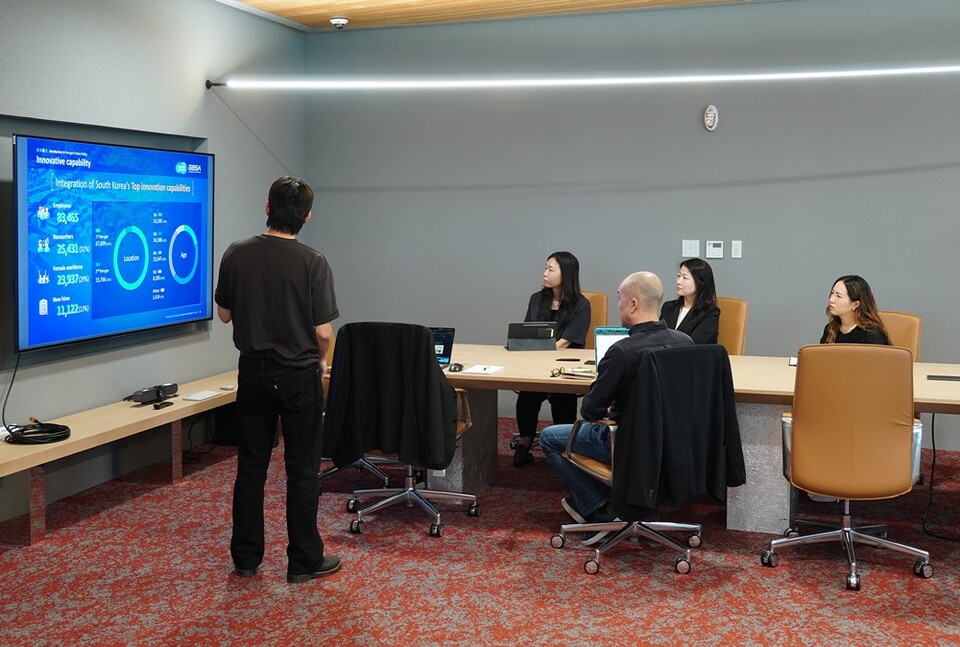
Startups do not usually fail because nobody gives them a desk. They fail because the right engineer, buyer, researcher, investor or test environment is just out of reach when the company needs it most.
That is one of my key takeaways after visiting Pangyo Techno Valley, Korea’s large technology cluster south of Seoul. The location is often compared with Silicon Valley, but the more useful comparison is not about famous companies or startup valuations. It is about physical design.
Pangyo puts young companies, established tech firms, accelerators, public-sector support staff, research organizations and specialized facilities in close proximity. The goal is to reduce the friction between having an idea and proving it works outside a slide deck.
During a recent visit, I met with officials from the Gyeonggido Business & Science Accelerator, or GBSA, at the Pangyo Startup Campus. GBSA is not a startup or an investment fund. It is a public, nonprofit agency that supports businesses in Gyeonggi Province and helps operate parts of the Pangyo ecosystem.
The most interesting part of the conversation was not that GBSA offers startup office space. Plenty of places do that. It was the idea that a startup’s physical location can become an operating advantage when it puts the company close to people and facilities that can help answer expensive questions:
- Can/how this product be tested?
- Is there a research partner who understands the problem?
- Can someone introduce the team to a pilot customer?
- Is there public support available before the company burns another six months of runway?
In the West, startup support is often scattered. An accelerator may be downtown, a university lab may be across town, a corporate partner may be in another state, and a government program may be administered through a separate agency with little day-to-day contact with founders. It is effective, Silicon Valley itself proves it, but it creates more coordination and requires more network power for the startup.
Pangyo’s model is more intentionally concentrated. GBSA officials described a campus that brings together startups, 19 accelerators and support institutions, with research organizations nearby. The agency’s public Startup Campus program supports prospective founders and technology startups up to seven years old, separating its space offerings across pre-startup, early-stage and growth-stage companies. ( see GBSA’s Startup Campus program)
A team with only an idea does not need the same help as a company with early revenue, and neither needs exactly what a more mature deep-tech company needs. Deep-tech startups, in particular, can spend years moving from concept to a working demonstration because access to equipment, specialists and credible test environments is limited.
GBSA officials said they run public proof-of-concept projects that select roughly 20 to 30 companies, give them access to relevant facilities for six months to a year, and provide up to KRW 20 million in support. Those are interview-sourced program details, not available to every applicant. For those who have access, it may unlock a demonstration, experiment or technical relationship that a small startup could not arrange alone.
This is where physical density becomes more than real estate or convenience. A startup campus is useful when being there shortens the path to a researcher, an accelerator, a public testbed or an enterprise conversation. The value is to shorten and accelerate the iteration loop through which all great startups use seeking the perfect product.
The agency is also trying to orient that model around the next set of technology priorities. Officials said Gyeonggi Province is emphasizing AI, while related programs are still being developed. They also said a fabless-specialized district is under discussion.
Fabless companies design semiconductors but outsource manufacturing, avoiding the enormous cost of owning a chip fabrication plant (like NVIDIA). Both ideas should be treated as plans, not completed Pangyo initiatives, but they show an effort to direct the cluster toward AI, advanced mobility and semiconductor-related work.
There is also a limited but potentially useful lesson for foreign founders. GBSA officials said there was no U.S. company on the campus at the time of our meeting, and I don’t think there’s a formal landing program for overseas startups.
However, a foreign company with a Korean market question, an R&D need, a manufacturing connection or a partnership thesis could reasonably reach out and see whether there is synergy with the local ecosystem, in my opinion.
(From left) Ubergizmo Editor-in-Chief Hubert Nguyen and Techno Valley Innovation Group Director So Yeon Lee take a commemorative photo after concluding the meetup. | Photo by AVING News (https://us.aving.net)
GBSA already runs outward-facing support for Pangyo startups, including global acceleration, overseas commercialization funding, translation and interpretation in English, Chinese and Japanese, and investor-startup exchanges.
Its published program lists support for 12 globally promising startups through acceleration, commercialization support for 20 tenant startups, 350 language-support cases and four investment-exchange events.
That activity is mainly designed to help Korean companies go abroad, particularly toward the U.S. market. But the same connections can matter to foreign investors, accelerators, university labs and companies looking for Korean technology partners.
In the end, buildings do not create innovation, and a campus can become an expensive real-estate project if its managers do not convert proximity into genuinely useful connections and outcomes.
For founders out there, do not ask only whether an ecosystem has money or prestige. Ask whether it can help you make the next (very) expensive decision faster.
What Foreign Founders Can Learn From Korea’s Pangyo Model , original content from Ubergizmo. Read our Copyrights and terms of use.September 3rd 2026, 12:21 pm
Eufy Omni E35 Robot Vacuum Debuts With 35,000 Pa Suction
Ubergizmo

At IFA 2026 in Berlin, Eufy has unveiled the Robot Vacuum Omni E35, an advanced automated floor cleaner engineered with an emphasis on deep hygiene, allergen reduction, and high-performance debris extraction. Designed to go beyond cosmetic floor maintenance, the flagship robotic vacuum cleaner incorporates rigorous health certifications alongside hands-free automated maintenance.
The appliance meets strict maternal and child safety benchmarks, securing a TÜV certification as a maternal and infant cleaning robot. This accreditation evaluates bacterial elimination, operational noise levels, dust mite sterilization, and internal self-cleaning efficiency. Additionally, the unit earned an Asthma & Allergy Friendly Certification from the Asthma and Allergy Foundation of America, making it suited for households with sensitive respiratory needs.
Mechanical performance and cleaning capabilities include:
- Aero Turbo 2.0 filtration system: Produces 35,000 pascals of suction and 100 air watts to pull embedded fine dust and allergens out of carpet fibers.
- HydroJet 2.0 roller mop: Employs a self-cleaning continuous roller mechanism that exerts 16 newtons of downward pressure against hard surfaces.
- Omni Station dock: Manages automated maintenance by washing the mop using hot water and circulating hot air drying to sanitize pads and eliminate lingering odors.
- Kitchen deep clean mode: Utilizes smart app mapping to identify dried stains, executing a three-stage sequence—saturating, soaking for 10 to 20 minutes while continuing work elsewhere; and returning to thoroughly scrub away caked-on food or grease.
The companion app gives users precise control over room-specific cleaning schedules, moisture levels, and customized pathing routines across varying floor materials.
The Eufy Robot Vacuum Omni E35 officially arrives in Europe and the United Kingdom on September 4. In the United States, pre-orders run from September 4 through September 23 at a discounted introductory price of $999.99, ahead of standard commercial availability on September 25 at a regular retail price of $1,299.99.
Eufy Omni E35 Robot Vacuum Debuts With 35,000 Pa Suction , original content from Ubergizmo. Read our Copyrights and terms of use.September 3rd 2026, 12:21 pm
Govee Launches Matter-Compatible AI Lighting Range At IFA 2026
Ubergizmo

Govee has introduced a new generation of smart lighting products at IFA 2026, with a focus on artificial intelligence (AI), personalization, and integration with smart home ecosystems. The company announced new solutions for indoor and outdoor environments, including ceiling lighting, decorative LED strips, and permanent exterior lighting.
One of the highlights is the Govee Sky Ceiling Light (announced during CES 2026), described as an AI-powered, mood-responsive ceiling light designed for everyday use. The product incorporates Govee’s Vitality Spectrum Technology, featuring a 478nm sky-blue wavelength, while its NaturalTone Algorithm supports adjustable white light from 1,000K to 10,000K. It can deliver up to 7,000 lumens with a CRI of 95. The light also includes low-glare and flicker-free features, Matter compatibility, and DaySync technology for automatic adjustments based on time and weather.
Govee COB Strip Light 2 Pro
For decorative lighting, Govee introduced the COB Strip Light 2 Pro, which uses the AI Lighting Bot 2.0 to generate customized lighting scenes from voice or text prompts. The strip features 1,344 LEDs and 16 ICs per meter, combined with a triple-layer groove design intended to provide smooth, hotspot-free illumination. RGBWWIC technology, the LuminBlend+ color engine, and a 1,000K–10,000K color temperature range provide additional customization options.
The company is also launching the Govee COB Strip Light 2, which brings spot-free illumination and AI-powered lighting capabilities to a more accessible model within the lineup.
Govee Permanent Outdoor Lights 2 Pro
For outdoor applications, the Govee Permanent Outdoor Lights 2 Pro introduces a dual-layer illumination system with independently controlled lighting zones. This allows different colors and effects to be displayed simultaneously, enabling customized gradients and architectural lighting across areas such as eaves, facades, and decks. The system features an IP68 waterproof rating, Matter compatibility, and integration with Alexa and Google Home.
In the US, the Govee Sky Ceiling Light is priced at $399.99, while the COB Strip Light 2 Pro costs $169.99 (5M) or $99.99 (2M), and the COB Strip Light 2 is priced at $169.99 (10M), $99.99 USD (5M), or $79.99 (3M). As for the Govee Permanent Outdoor Lights 2 Pro, we have it priced at $499.99 (100ft) or $799.99 (200ft).
Govee Launches Matter-Compatible AI Lighting Range At IFA 2026 , original content from Ubergizmo. Read our Copyrights and terms of use.September 3rd 2026, 12:21 pm
Anker Debuts Sleep Earbuds 4 Lineup With PPG Biometric Tracking
Ubergizmo
At IFA 2026, Anker expanded its nighttime audio lineup by introducing the Soundcore Sleep Earbuds 4 and the flagship Sleep Earbuds 4 Pro. Engineered specifically for rest and bedtime relaxation, the latest generation pairs physical sleep comfort with smart noise-dampening technology and comprehensive biometric tracking.
The base Sleep Earbuds 4 are tailored primarily for light sleepers, featuring an ultra-compact ergonomic profile optimized for side-sleeping without pressure points. The earbuds deliver nighttime ambient noise reduction along with Adaptive Snore Masking, an intelligent audio system designed to detect snoring and automatically adjust soothing sound playback to neutralize nighttime acoustic disruptions.
Stepping up to the Soundcore Sleep Earbuds 4 Pro, the premium variant introduces a standalone, phone-free operational routine managed via the integrated SleepHub touchscreen case. Spanning the top lid of the charging enclosure, the display provides direct access to audio controls, alarm configurations, and morning sleep summaries, allowing users to avoid smartphone screen blue light before resting.
Hardware and sensor capabilities on the Pro model include:
- In-Ear PPG Sleep Tracking: Optical biosensors track real-time sleep architecture, heart rate, and heart rate variability (HRV) directly within the ear canal.
- BioSync Adaptive Audio: Dynamically calibrates soothing playback frequencies in response to detected physiological changes across various sleep stages.
- Smart Case Acoustic Sensing: The enclosure works alongside the earbuds to identify external environmental disruptions and trigger targeted acoustic masking.
- Subscription-Free Sound Library: The Soundcore ecosystem includes access to built-in white noise, meditation tracks, and brainwave soundscapes without recurring subscription fees or mandatory third-party software.
Both audio products are currently open for pre-order on Anker’s official web store with introductory promotional pricing. The standard Soundcore Sleep Earbuds 4 are scheduled to ship in October 2026, followed by commercial availability of the Sleep Earbuds 4 Pro in November 2026.
Anker Debuts Sleep Earbuds 4 Lineup With PPG Biometric Tracking , original content from Ubergizmo. Read our Copyrights and terms of use.September 3rd 2026, 12:21 pm
Eufy Enters Autonomous Lawn Care With S2 Max Robotic Mower
Ubergizmo

During IFA 2026, Eufy has officially revealed the S2 Max Robot Lawn Mower, representing the brand’s first outdoor robotic mower designed and engineered entirely in-house. Developed to introduce advanced autonomous robotics and high-level artificial intelligence into residential and commercial lawn maintenance, the machine eliminates traditional physical installation constraints while delivering substantial yard coverage.
Engineered for large properties, the S2 Max is capable of mapping and maintaining lawns of up to 15,000 square meters (approximately 3.7 acres). Departing from older outdoor robotic designs that rely on perimeter boundary wires or external RTK base station antennas, the system utilizes vision-based SLAM technology (Simultaneous Localization and Mapping). As the unit navigates across open turf, it constructs a real-time 3D map of the environment and localizes itself dynamically without requiring supplemental hardware installations.
At the center of its navigation architecture is an industry-leading 48 TOPS of onboard computing power. Rather than utilizing processing simply for wheel control and motor management, this high compute capacity is dedicated to real-time visual perception, situational decision-making, advanced object recognition, and immediate obstacle avoidance across dynamic environments.
Mechanical and terrain-handling capabilities include:
- Edge-to-edge cutting system: Equipped with an extendable trimming arm engineered to trim closely against borders, fences, and walls, reaching areas commonly missed by standard mower decks.
- All-wheel drive traction: An integrated AWD powertrain ensures steady movement over uneven, wet, or muddy ground.
- Slope performance: The drive architecture enables the mower to tackle steep inclines of up to 80% slope (38 degrees) without losing traction.
Through the combination of computer vision, high processing power, and robust mechanical traction, Eufy positions the mower as an autonomous outdoor platform capable of managing demanding landscapes independently.
The Eufy S2 Max Robot Lawn Mower is scheduled to release in the European market in May 2027. Official launch timing and retail pricing for the United States have not yet been determined.
September 3rd 2026, 12:21 pm
Lenovo Reveals 27-Inch 120Hz ThinkCentre Neo 50a AiO PC
Ubergizmo

Lenovo has officially announced the ThinkCentre neo 50a 27 Gen 7, an updated All-in-One (AiO) PC designed primarily for workplace productivity and professional office environments. The modern desktop computer integrates upgraded internal processing, an expanded display refresh rate, and extensive peripheral connectivity into a sleek, minimalist chassis.
-
Two full-featured USB-C 3.2 Gen 2×2 ports (20 Gbps)
-
Four USB-A 3.2 Gen 2 ports (10 Gbps)
-
HDMI 2.1 port supporting dual-directional input and output modes
-
Gigabit Ethernet and standard 3.5 mm audio jacks
-
High-speed Wi-Fi 6 or Wi-Fi 7 wireless modules
August 31st 2026, 6:08 pm
Windows 11 26H2: How To Turn Off Bing Search And Speed Up App Launching
Ubergizmo

The Windows 11 26H2 update is now rolling out as an optional package through Windows Update under build KB5120998. Because Microsoft deploys features via phased rollouts, several newly added capabilities remain inactive by default. Users can manually unlock these tools, though early reports indicate occasional mouse cursor and wallpaper bugs that may require uninstalling the update if encountered.
A major performance addition is the Low Latency Profile. This optimization mode accelerates application launch times by briefly spiking CPU clock frequencies. Users can verify if the feature is running by monitoring the Task Manager while opening heavy software. If processor frequencies do not boost dynamically, the profile can be enabled using third-party configuration tools like ViVeTool.
KB5120998 Update is already available. Image: Windows Latest
To activate the performance boost via ViVeTool:
- Download and extract the ViVeTool archive into a dedicated folder.
- Launch Command Prompt (CMD) with administrator privileges.
- Navigate to the tool’s folder path using standard console navigation commands.
- Execute the command: vivetool /enable /id:58989092
- Restart your computer to apply the updated latency profile.
The update also introduces options to disable integrated Bing web search and Copilot integration directly inside the Start Menu. Removing cloud-based queries significantly speeds up local system indexing and prevents irrelevant web links from launching in Microsoft Edge. Users can configure this under Settings > Privacy & Security > Search by toggling off options for Web Searches and Microsoft Store.
Image: Windows Latest
If these toggles are missing from the settings interface, they can be forced active through the elevated command line using:
vivetool /enable /id:61161244,61754985,62353331,62762248
Then, finish it up followed by a complete system reboot.
Additionally, this update introduces enhanced customization options for desktop environments. Users gain the ability to adjust the physical footprint and overall size of the Start Menu, alongside new layout preferences in Settings > Personalization that support repositioning the Taskbar along different display edges.
Windows 11 26H2: How To Turn Off Bing Search And Speed Up App Launching , original content from Ubergizmo. Read our Copyrights and terms of use.August 31st 2026, 6:08 pm
Sony Launches Free Live TV Streaming On PlayStation 5
Ubergizmo
Sony Interactive Entertainment has introduced an integrated live television service directly into the PlayStation 5 media menu for users in the United States. Operating on a FAST (Free Ad-Supported Streaming Television) model, this platform expands the console into a comprehensive multimedia hub by delivering live broadcasts without requiring additional subscription fees or standalone streaming applications.
The service features hundreds of linear channels spanning news, sports, movies, and general entertainment. Content distribution partnerships provide access to major programming networks, including NBC News Now, LiveNOW from FOX, and Fox Weather for real-time reporting. Sports coverage features dedicated broadcasts from FOX Sports, NASCAR, and the UFC, while animation fans can access channels from Crunchyroll featuring series like Naruto, Death Note, and Hunter x Hunter.
Movie and drama options include dedicated genre channels like MovieSphere, Sony One Horror Hits, and FilmRise Free Movies, alongside well-known television programs such as The Walking Dead, Community, Hell’s Kitchen, and Forensic Files. Specialized programming also highlights creator-led content, including Hot Ones, The Ringer, gaming media, and exclusive eSports coverage through platforms like eCLUTCH.
Navigation is handled through a built-in electronic program guide (EPG) optimized for the DualSense controller. Users can quickly change channels, check upcoming schedules across multiple hours, and bookmark preferred stations for immediate access.
To utilize the platform, players need an active broadband internet connection and a PlayStation Network (PSN) account registered in the supported region. A PlayStation Plus membership is not required to access the full lineup of channels.
This strategy is designed to increase user engagement by providing immediate entertainment options during gaming breaks. While currently exclusive to the US market, Sony plans to expand the streaming service to international territories in the coming months as regional content licensing agreements are finalized.
Sony Launches Free Live TV Streaming On PlayStation 5 , original content from Ubergizmo. Read our Copyrights and terms of use.August 31st 2026, 6:08 pm
BizCrush Takes On Noisy Multilingual Meetings
Ubergizmo

A useful meeting record should do more than produce a transcript. It should let people who do not share a language follow the conversation as it happens, then turn that conversation into something the team can use afterward.
That is the promise behind BizCrush, a multilingual meeting tool that combines live captions, translation, speaker labeling, summaries, and meeting reports. The startup is not positioning itself solely as a replacement for Zoom notes. It wants to capture the in-person conversation, live, at a trade show, a sales meeting, or a conference booth — then send the resulting record into tools such as Slack and Notion.
I met BizCrush CEO Taemin Kwak in person for a demonstration, and the basic workflow was easy to understand. I scanned a QR code, joined a live transcript on my phone without installing an app, and followed an English presentation translated into French (which I speak fluently). BizCrush wants attendees to follow and participate in a conversation even when they do not speak the language.
By providing a live translation, then a permanent record, BizCrush occupies the full spectrum of translation value. Arguably, the live translation is the most important aspect, but the record keeping comes as a very convenient bonus, especially in the age of AI when agents can actually go back, read and extract insights.
BizCrush says its product supports real-time translation in 60 languages, speaker detection and labeling, AI summaries, calendar synchronization, and web, desktop, and mobile access. It also says the service can work with online meeting tools, in sales settings, at conferences, and during global video calls. Its current product page frames the service as a meeting workflow rather than a single-purpose transcription tool.
That broader workflow is important as a growing number of AI assistants can all create transcripts and summaries under favorable conditions. BizCrush’s potential is that generic systems become less dependable when the meeting gets physically messy: distant speakers, overlapping voices, background music, event-floor noise, and abrupt changes between languages.
When I asked about the architecture, Bizcrush said the company performs speech enhancement on the device before sending the processed signal to its server-side transcription and translation pipeline.
Local preprocessing can reduce latency and potentially improve the signal before it reaches the speech-recognition model. But it should not be confused with fully private, fully local transcription. The audio still travels through BizCrush’s processing system.
A recording can sound cleaner to a human listener while losing speech details that matter to an AI model. BizCrush is therefore trying to optimize its enhancement step for machine recognition, not simply for nicer-sounding audio.
Most speech-recognition products begin with the assumption that the incoming recording is already usable. BizCrush is betting that the quality of the audio pipeline before recognition will matter more as voice AI moves beyond quiet online meetings and into actual (physical) workplaces.
The company also says it uses adaptive vocabulary, allowing customers’ names, product terms, and other recurring jargon to influence recognition. Its public API documentation describes context-keyword inputs, language hints, live and batch transcription, and speaker diarization — the technical term for separating a discussion into speaker segments. BizCrush’s API documentation currently labels the API beta, which is a sensible reminder that the system remains a work in progress.
For conference use, BizCrush says a speaker’s words can appear as captions on a main screen while attendees follow translated captions on their phones through a QR link. That has obvious value for international events, where many attendees may understand the topic but not the language being spoken. It will not replace a professional interpreter in a legal proceeding, medical consultation, or high-stakes negotiation. But for routine business exchanges, live translation could make conversations more accessible and reduce the friction of relying on a human intermediary for every interaction. It worked beautifully during the demo.
For corporate customers who want to control the data flow, BizCrush mentioned that enterprise deployments can be configured to send material to customer-controlled destinations such as S3, Notion, Slack, or other systems, otherwise, assume that data may transit through BizCrush servers/systems..
BizCrush also claims that its pre-processing approach performs better than competing systems in noisy settings. Its July deck cited a 41.03% character error rate in high-noise tests and a 22.84% overall average CER.
The company’s value-proposition is plausible. The problem is really to make the conservation useful as it happens when people are moving between languages, speaking over background noise, and trying to turn a conversation into action.
BizCrush Takes On Noisy Multilingual Meetings , original content from Ubergizmo. Read our Copyrights and terms of use.August 30th 2026, 9:06 pm
DeepVisions Uses AI to Spot Vineyard Disease Earlier
Ubergizmo

A sick vine rarely looks sick at the most pivotal moment: by the time a grower notices obvious leaf damage while walking the rows, a disease or pest problem may already have spread through part of the vineyard. DeepVisions thinks AI can drastically narrow that gap by examining drone or smartphone photos and directing growers to the spots that need attention first.
We met the Korean startup who pitched their VisionPlus system which is designed to turn field imagery into a map of possible plant-health risks. DeepVisions says growers can upload photos captured by commercial drones or smartphones; its cloud software analyzes the images, flags potential disease or pest indicators, and ties those alerts to GPS locations. The point is not to replace an agronomist’s judgment, but to make the inspection process faster, more thorough and more targeted.
Vineyards are an obvious first use case. Grapes are high-value crops, disease can move quickly, and manually checking every vine is time-consuming. In Seoul, I spoke with Sang-hyun Park, DeepVisions’ CIO, in person. After the company’s presentation, the most revealing detail was the logistics. The technology still depends on someone (or something) getting usable images from the field.
For farmers who already own and operate drones, that may be straightforward. For those who do not, DeepVisions may need a service-provider, rental, or reseller model. Park described discussions with a drone company in Africa whose equipment is already rented to farmers for pesticide spraying. Adding crop analysis to that workflow could make deployment easier, but it also illustrates the central business challenge: AI can analyze an image only after a customer has an affordable, reliable way to capture it.
DeepVisions calls VisionPlus hardware-agnostic, meaning it does not require its own proprietary drone or camera. Its presentation says the system preprocesses field imagery to handle uneven lighting and shadows, then uses deep-learning models to identify potential issues at the vine, leaf, and grape-cluster level. The company also says it uses synthetic data, or AI-generated training examples, to supplement real-world photos when examples of a particular crop disease are limited.
That last point is leading-edge but it should be treated cautiously: synthetic images can help train a system faster, especially when an emerging disease has few labeled examples. But it only works if tests against real vineyards confirm the results.
DeepVisions says it has deployed VisionPlus with a commercial winery in Sapporo, Japan, in connection with NAVER, and has used smartphones to assess grapes through a KOICA project in Vietnam. These early deployments are encouraging, but the road to worldwide success remains long.
DeepVisions’ materials cite expected reductions in pesticide use and improvements in yield, and if that’s true, there’s a strong incentive for farmers to consider this solution. If not, too many false alerts would waste time and erode a grower’s trust. Missed disease would set back the business thesis.
The company is entering a field with capable competitors. Taranis uses drones, aircraft, and satellite data to provide crop intelligence, while Bloomfield Robotics uses vehicle-mounted cameras to collect continuous, plant-level imagery. DeepVisions’ potential advantage is flexibility: it aims to work with equipment farmers or partners may already have, rather than requiring a dedicated imaging system. But flexibility, but not a moat.
DeepVisions is also pursuing a separate air-quality application. The company says it can infer localized PM10 and PM2.5 levels from CCTV footage by analyzing visual effects such as atmospheric scattering and blur (funny enough, I studied these for videogames 3D rendering).
That is an intriguing idea because air pollution can vary substantially from one neighborhood or street to another. EPA treats fine-particle pollution as a serious public-health issue and maintains a monitoring system based on measured, quality-assured data.
DeepVisions’ Vision Plus did receive outside recognition: it won a Bronze Edison Award in 2026 in the Energy-Optimized Environments category.
DeepVisions says it is exploring Napa Valley as its next vineyard opportunity. For now, that is a planned proof of concept, not a signed U.S. customer. I hope it happens, as it was right next to San Francisco, where I lived for many years.
DeepVisions Uses AI to Spot Vineyard Disease Earlier , original content from Ubergizmo. Read our Copyrights and terms of use.August 30th 2026, 8:21 pm
DABIDA GeniTeacher Reads Handwritten Work to Spot Stuck Points
Ubergizmo

The fastest way to use AI for homework is also the least useful: paste in the question, get the answer and hope some of it sticks. DABIDA is building an AI tutor around a different premise. Its GeniTeacher platform wants students to keep working on paper while the software watches the path they took to get there.
The philosophy is that a final answer is a thin signal. A math problem can be wrong because a student misunderstood a concept, made an arithmetic slip, chose an inefficient method or gave up halfway through. Those are very different problems, and a generic chatbot often sees none of them.
I met DABIDA CEO Eun-Seung Lee in person as he demonstrated GeniTeacher. The core pitch: AI should help students reason through a problem instead of becoming a faster answer machine (I totally agree). The practical twist is that DABIDA tries to capture not only the written answer, but also the sequence of marks, corrections and intermediate work that led to it.
Students can write with DABIDA’s GeniPen (a CES 2024 Innovation Awards Honoree) on compatible paper, use a stylus on a tablet or upload a photo. The company says GeniTeacher combines its handwriting-recognition technology with image analysis, allowing it to account for diagrams and text. Lee told me the platform also uses a mix of outside AI models, chosen according to task and cost, rather than betting the company on one large language model, which makes total sense.
The goal is to issue a sequence of “Socratic” hints: a light prompt first, then a more specific one if the student remains stuck. DABIDA also says it can generate reports covering accuracy, weak concepts, recurring errors and hint use, along with automated error notes that preserve the original problem, the student’s working and an explanation of the likely mistake. This is a more useful process than simply grading an answer.
A 2024 EEG study of 36 university students found broader brain connectivity during handwriting than typing. The researchers argued that the pattern may be beneficial for learning, but the study did not directly measure whether handwriting improved classroom performance. The logic seem sound, but this is under intense research.
DABIDA did not begin with GeniTeacher. Its earlier GeniClass and GeniPen products focused on remote learning, letting a teacher see a student’s handwriting during a live class. That pair became a CES 2024 Innovation Awards Honoree in the Smart Communities category. Lee said GeniTeacher grew from that existing handwriting-capture technology after the company began adding AI capabilities in 2024.
More recently, WIPO named DABIDA one of 11 2026 Global Awards winners and described it as a handwriting-based AI tutoring system. WIPO says DABIDA has 23 patents, exclusive distribution agreements in seven countries and a Samsung Electronics partnership signed in 2026.
Lee described several possible revenue streams: subscriptions, smart-pen sales, publisher relationships and licensing. He cited a potential $20 monthly base subscription in our conversation, though pricing and availability can vary by market. There’s also a potential future marketplace where teachers could sell their own high-quality questions, with DABIDA taking a commission.
DABIDA’s thesis will be proven when schools and families can see that students learn more, teachers save time without surrendering judgment, and the company refines the curriculum by analyzing common learning stumbling points. Many people currently say that AI makes children less smart. DABIDA is on a quest to leverage AI to take teaching to the next level.
DABIDA GeniTeacher Reads Handwritten Work to Spot Stuck Points , original content from Ubergizmo. Read our Copyrights and terms of use.August 30th 2026, 5:06 pm
Crosshub Wants Voice Checks to Secure Payments
Ubergizmo

When we met at an in-person presentation in Seoul, Crosshub made a simple argument: an approval code can show that somebody entered a code, but it cannot necessarily prove who approved a payment, or whether that person understood what they were authorizing. Its answer is V-Pay, a proposed voice-based step-up check for payments.
Voice interfaces are spreading into cars, smart glasses, kiosks, and we’re expecting a new wave of AI assistants. The interesting part of Crosshub’s pitch is not that it wants people to pay by voice. It wants voice to serve as a transaction-specific confirmation layer to increase security.
We previously covered Crosshub’s B-Pay, the company’s effort to combine IDBlock identity verification with cross-border payments. The company now frames V-Pay and Smart ID as extensions of that larger identity-and-payment infrastructure. Crosshub’s IDBlock/B-Pay work also won a CES 2026 Best of Innovation award in FinTech.
V-Pay is not meant to be another Siri-like assistant that hears a command and executes it. Instead, Crosshub says the service would generate a one-time phrase that includes the payment context. The user reads it aloud; the system checks the phrase and compares voice characteristics with enrolled voice features. A risk engine would also consider context such as an unusual amount, device, or location.
“We are not thinking about Siri as our competitor… what we want to do is expand with Siri, not compete with them.” (Crosshub representative)
A $5 coffee purchase made every Monday afternoon is a very different event from a sudden $4,000 luxury purchase on another continent. Card issuers already use many signals to flag this kind of anomaly. Crosshub’s pitch is to add a spoken confirmation at the moment when the existing system decides that one more check is warranted.
When I asked where the innovation sits, the team emphasized identity verification rather than merely detecting an unusual payment. Crosshub says V-Pay can compare speech patterns such as frequency, intonation, and pronunciation. Its material also says the system is designed to avoid storing raw voice recordings.
The company’s strong idea is the dynamic phrase. A transaction-specific prompt should make a basic replay attack less useful because an old recording will not match the next purchase. However, the deepfake problem is real. NIST guidance for remote biometric checks calls for presentation-attack detection, tested performance, and controls that help establish that the biometric sample came from a genuine sensor; it also notes that such measures do not address every forged-media scenario. NIST SP 800-63A
We’ll see how Crosshub’s technology fares against deepfakes as more testing and certifications happen. Until then, readers should view the product as an interesting and promising security design. The company says its MVP is complete and that it plans to pursue proof-of-concept work with financial institutions and payment providers.
A second, more unusual business angle: Crosshub is exploring spoken advertising: a brand or promotion could become part of the phrase a user needs to repeat. At the presentation, the team described this as optional rather than mandatory. It is not difficult for me to see the huge potential appeal for advertisers if users are asked to say a brand name immediately before a purchase.
Smart ID is the other half of Crosshub’s current presentation. This one targets universities single-sign-on (SSO), where access rights, academic records, dormitories, libraries, attendance systems, and campus payments often sit in different databases. Crosshub wants a mobile credential to become a single front door for those services.
The company says it has MOUs for digital student ID adoption with the University of Danang’s University of Science and Education, Vietnam National University Hanoi, and Vietnam National University Ho Chi Minh City. Its proposed system would connect campus access and administration with local payment services, while it describes broader Vietnam, ASEAN, smart-building, and smart-city expansion as plans rather than current deployments. Crosshub’s solutions page lists the three university MOUs.
The value is straightforward: students forget plastic cards, graduate and lose access to records, and repeatedly authenticate themselves across separate systems. A well-run digital ID can reduce that friction. Crosshub’s own interview made clear, however, that Smart ID remains under development and that it is meant more for convenience than absolute high-security. Someone could loan their phones to give another person access to the library, just like loaning a passcard.
Crosshub Wants Voice Checks to Secure Payments , original content from Ubergizmo. Read our Copyrights and terms of use.August 30th 2026, 4:37 pm
Galaxy S26 FE Debuts With Flagship AI Features, 7 Years Of Updates, And 45W Charging
Ubergizmo

Samsung has officially unveiled the Galaxy S26 FE, expanding its lineup with an accessible flagship smartphone designed to deliver high-end features at a competitive price point.
The device features durable hardware, built around an aluminum frame with Gorilla Glass Victus Plus front glass to guard against impacts and scratches.
It also carries an IP68 rating for water and dust resistance. Media viewing is centered on a flat 6.7-inch Dynamic AMOLED 2X display featuring a Full HD+ resolution and a smooth 120 Hz refresh rate.
Performance is driven by Samsung’s Exynos 2500 chipset, paired with 8 GB of RAM and internal storage configurations of 128 GB, 256 GB, or 512 GB. Battery life is supported by a 4,900 mAh battery equipped with 45W fast wired charging. For connectivity, the phone integrates 5G, Wi-Fi, Bluetooth, and NFC.
The triple rear camera array includes a 50 MP primary sensor with optical image stabilization (OIS), a 12 MP ultrawide lens, and an 8 MP telephoto camera offering 3x optical zoom with OIS. Up front, a 12 MP selfie camera sits in a punch-hole cutout. Photography and videography tools include Horizontal Lock for stable orientation and My FanCam for automatic subject framing.
On the software side, the device ships with Android 17 under One UI 9.0, backed by 7 years of OS upgrades and security updates. Built-in Galaxy AI capabilities include Circle to Search and an Audio Eraser tool for sound editing.
According to GSMArena, the Galaxy S26 FE launches on September 4 in Blueberry, Pistachio, and Graphite colorways. Pricing starts at $700 for the 128 GB model, with 256 GB and 512 GB variants also available.
| Category | Specifications |
| Display | 6.7″ Flat Dynamic AMOLED 2X, FHD+, 120 Hz |
| Processor | Samsung Exynos 2500 |
| Memory & Storage | 8 GB RAM; 128 GB, 256 GB, or 512 GB Storage |
| Rear Cameras | 50 MP Main (OIS) + 12 MP Ultrawide + 8 MP Telephoto (3x Optical, OIS) |
| Front Camera | 12 MP |
| Battery & Charging | 4,900 mAh, 45W Wired Charging |
| Build & Durability | Aluminum Frame, Gorilla Glass Victus+, IP68 |
| Operating System | Android 17 (One UI 9.0), 7 Years of Updates |
| Connectivity | 5G, Wi-Fi, Bluetooth, NFC |
| Starting Price | $700 (128 GB) |
Galaxy S26 FE Debuts With Flagship AI Features, 7 Years Of Updates, And 45W Charging , original content from Ubergizmo. Read our Copyrights and terms of use.
August 28th 2026, 2:04 pm
Meet Microduck, The $399 Programmable AI Robot
Ubergizmo
Hugging Face has introduced Microduck, a compact, bipedal robot designed to make artificial intelligence and robotics accessible to both casual users and developers. Standing approximately 10 inches tall, the duck-shaped device features a distinctive design characterized by a waddling gait and an articulated beak capable of grasping objects.
Hardware specifications include 15 motors, an integrated camera, a depth sensor, and two inertial measurement units (IMUs) for navigation and balance. Out of the box, Microduck supports various pre-programmed behaviors, including walking, sitting, crouching, and skating. Users can control the device using a gamepad, have it track a laser pointer dot, or let it autonomously interact with surrounding objects.
Beyond its consumer applications, Microduck functions as a flexible robotics development platform. The device runs an open-source software stack, allowing programmers to train new skills and behaviors via reinforcement learning, direct code programming, and simulation tools. Hugging Face has launched public repositories to support these workflows, including a dedicated environment containing reinforcement learning libraries and digital simulation environments.
Microduck marks the second hardware release from Hugging Face, following the Reachy Mini, a desktop-focused platform intended for conversational AI, computer vision models, and human-robot interaction research. In contrast to the research-centric focus of the Reachy Mini, Microduck offers a more lighthearted design and expanded styling options.
The robot is available for pre-order directly through the manufacturer’s website, priced at $399. It comes in four distinct colorways: Cream, Graphite, Lavender, and Sky. Initial shipments are scheduled to reach customers in North America, the United Kingdom, and Europe ahead of the winter holiday season.
Meet Microduck, The $399 Programmable AI Robot , original content from Ubergizmo. Read our Copyrights and terms of use.August 28th 2026, 2:04 pm
Sony Xperia 10 VIII Unveiled: Specs, Features, And Price
Ubergizmo

Sony has officially announced the Xperia 10 VIII, targeting the global mid-range market. Prioritizing ergonomics and durability, the device maintains features like the 3.5 mm headphone jack and microSD expansion up to 2 TB.
Weighing 168 g with dimensions of 153 x 72 x 8.3 mm, the smartphone introduces a matte translucent back panel. It features Gorilla Glass Victus 2 protection alongside dual IP65/IP68 dust and water resistance ratings. Physical controls include a side-mounted fingerprint sensor, a dedicated camera shutter key, and a Rewards & Pay shortcut via the power button.
The front features a 6.1-inch FHD+ LTPS OLED display with a 120 Hz refresh rate, 100% DCI-P3 coverage, and 50% higher brightness. Front-facing stereo speakers deliver 15% higher volume and 30% stronger bass, supported by Hi-Res Audio, LDAC, and aptX Adaptive.
Under the hood, the device runs on the 6nm Qualcomm Snapdragon 6 Gen 3 processor, paired with 8 GB RAM (plus 6 GB virtual RAM) and 128 GB UFS storage. The 5,000 mAh battery supports 30W USB Power Delivery, managed by Xperia Adaptive Charging to extend cell health.
The rear dual-camera setup includes a 50 MP Exmor RS main sensor (f/1.9, OIS/EIS) capturing 12 MP default shots, alongside a 13 MP ultrawide sensor (123° FOV). A 8 MP front camera handles selfies. Connectivity includes 5G, Wi-Fi 6E, Bluetooth 5.4, NFC, and dual SIM (nanoSIM + eSIM).
Launching with Android 16, the phone is slated for four major OS upgrades and six years of security updates through 2032. Available in Frozen White, Frosted Grey, and Misty Lilac, sales begin in late September at €599 (~$650 USD) in Europe and £549 (~$700 USD) in the UK. We still have no official words about a release in the US market.
| Category | Specifications |
| Display | 6.1″ FHD+ LTPS OLED, 120 Hz, Gorilla Glass Victus 2 |
| Processor | Qualcomm Snapdragon 6 Gen 3 (6nm) |
| Memory & Storage | 8 GB RAM + 128 GB Storage (microSD up to 2 TB) |
| Rear Cameras | 50 MP Main (OIS, f/1.9) + 13 MP Ultrawide (123°, f/2.4) |
| Front Camera | 8 MP (f/2.0) |
| Battery & Charging | 5,000 mAh, 30W Wired Charging |
| Durability | IP65/IP68 Rating |
| Software Support | Android 16 (4 OS upgrades, 6 years security updates) |
| Audio & Ports | Stereo Speakers, 3.5 mm Audio Jack, USB-C 2.0 |
| Dimensions & Weight | 153 x 72 x 8.3 mm, 168 g |
Sony Xperia 10 VIII Unveiled: Specs, Features, And Price , original content from Ubergizmo. Read our Copyrights and terms of use.
August 28th 2026, 2:04 pm
AMD Offers Free “Onimusha: Way Of She Sword” With Eligible PC Upgrades
Ubergizmo

AMD has partnered with Capcom to offer a complimentary copy of Onimusha: Way of the Sword with eligible purchases of select Ryzen processors and Radeon graphics cards. The promotional bundle aims to add value for consumers upgrading their desktop PC hardware amid persistent market pricing pressures.
Onimusha: Way of the Sword marks the first mainline entry in Capcom’s action-adventure franchise since 2006. The story follows swordsman Miyamoto Musashi navigating a supernatural depiction of early Edo-period Kyoto while battling demonic forces.
The promotion runs through September 26, 2026. Qualifying purchases include a digital redemption code, with the full game unlocking on its official launch date of September 4, 2026.
Retail Availability: The offer applies strictly to participating retailers, including Amazon, when purchasing directly from authorized first-party sellers.
Eligible Hardware Models
The promotion covers specific high-performance desktop processors featuring AMD’s 3D V-Cache architecture, alongside current-generation Radeon discrete graphics cards.
| Eligible AMD Ryzen Processors | Eligible AMD Radeon Graphics Cards |
| Ryzen 9 9950X3D2 | Radeon RX 9070 XT |
| Ryzen 9 9950X3D | Radeon RX 9070 GRE |
| Ryzen 9 9900X3D | Radeon RX 9070 |
| Ryzen 7 9850X3D | — |
| Ryzen 7 9800X3D | — |
Buyers must ensure that selected components are explicitly marked with the promotion at checkout to receive the redemption voucher before the promotional window closes.
AMD Offers Free “Onimusha: Way Of She Sword” With Eligible PC Upgrades , original content from Ubergizmo. Read our Copyrights and terms of use.August 27th 2026, 3:33 pm
Apple Wallet Adds Digital Car Key Support For Xiaomi Vehicles
Ubergizmo

Apple is preparing to introduce digital car key support for Xiaomi electric vehicles within the Apple Wallet platform.
Discovered in recent system beta software, this integration establishes an unexpected bridge between two direct global competitors in the consumer technology and mobile device sectors.
Xiaomi SU7
- Supported Vehicles: The software integration will extend native keyless entry and ignition capabilities to drivers of the Xiaomi SU7 sedan, the YU7 SUV, and future connected vehicles produced by the Chinese manufacturer.
- Core Functionality: Vehicle owners can store an encrypted digital key in Apple Wallet, allowing them to unlock, lock, and start their car using an iPhone or Apple Watch via NFC (Near Field Communication) and proximity sensors.
- Broader Automotive Ecosystem: Apple Wallet currently supports digital vehicle keys for legacy and electric automakers including BMW, Rivian, Kia, Hyundai, Volvo, Polestar, and Audi. Xiaomi represents the first direct smartphone competitor to adopt Apple’s digital key standard.
Xiaomi YU7 SUV
The integration offers distinct strategic advantages for both companies in China, which serves as Xiaomi’s primary automotive market and one of Apple’s most crucial international regions.
For Apple, adding native support for popular domestic electric vehicles increases the iPhone’s utility among Chinese consumers. This strengthens platform retention at a time when software feature rollouts, such as localized Apple Intelligence, face regional schedules.
For Xiaomi, interoperability ensures that its rapidly expanding electric vehicle lineup remains attractive to affluent car buyers who operate primarily within the iOS ecosystem rather than using Xiaomi smartphones.
The digital car key integration is anticipated to launch publicly in upcoming mobile software releases. A full list of vehicles that support Car Keys can be found on Apple’s official CarPlay model availability webpage.
Apple Wallet Adds Digital Car Key Support For Xiaomi Vehicles , original content from Ubergizmo. Read our Copyrights and terms of use.August 27th 2026, 3:33 pm
Anker Unveils Nebula X1S 4K Projector With 6,000 Lumens For Daytime Use
Ubergizmo

Soundcore, an Anker brand, has officially launched the Nebula X1S, a premium home projector designed to overcome ambient daytime lighting limitations. Positioned as a direct alternative to standard living room televisions, the unit delivers high-clarity projection alongside integrated Google TV smart functionality.
- Upgraded Optical Engine: The hardware features a quad-lamp optical engine that outputs 6,000 lumens of brightness. This is a substantial increase over the 3,500 lumens of the previous Nebula X1 generation, allowing clear viewing in sunlit rooms without drawing the curtains.
- 4K UHD Triple-Laser System: The projector utilizes triple-laser technology with native Dolby Vision HDR support. Its optical assembly includes a six-blade f/2–4.5 iris lens and a 14-element glass structure, producing a 56,000:1 dynamic contrast ratio for deep black levels and sharp image retention across its operational lifespan.
- Flexible Throw and Sizing: Using built-in optical zoom, the projector can display an image up to 200 inches from distances between 3.9 and 6.7 meters, with the capacity to scale up to 300 inches. A base mechanism provides up to 25 degrees of tilt for placement on floors, tables, or ceiling mounts.
- Acoustics and Connectivity: An internal liquid-cooling system keeps operating noise down to 26 dB. For external connectivity, the projector includes two HDMI ports, with one supporting eARC. While it lacks standalone Dolby Atmos audio decoding, bundles with external wireless satellite speakers provide up to 150W of total sound output.
US Pricing and Availability
| Product Configuration | Standard MSRP | Promotional Launch Price (Through Sept. 20, 2026) |
| Nebula X1S (Standalone) | $3,299 | $2,499 |
The promotional pricing is available directly through the manufacturer during the initial retail launch window.
Anker Unveils Nebula X1S 4K Projector With 6,000 Lumens For Daytime Use , original content from Ubergizmo. Read our Copyrights and terms of use.
August 27th 2026, 3:33 pm
Perplexity Portable Computer Brings Offline AI With Zero Monthly Fees
Ubergizmo

Perplexity has officially announced an on-device version of its AI agent framework, dubbed Portable Computer. The deployment allows artificial intelligence models to execute entirely on a user’s own machine, removing dependencies on cloud infrastructure while significantly enhancing data privacy.
Previously, hybrid setups handled routine tasks locally on entry-level hardware like the Apple Mac Mini while offloading compute-heavy jobs to the cloud. Portable Computer replaces that cloud layer, shifting intensive workloads directly to local components. However, this transition requires enterprise-grade hardware. At launch, compatibility is limited to the Nvidia DGX Spark and Linux workstations equipped with high-end Nvidia RTX graphics cards.
The hardware entry point represents a substantial shift in capital expenditure. While a standard Mac Mini begins around $900, an Nvidia DGX Spark system commands a price tag of roughly $5,199—nearly six times higher.
Key Benefits and Hardware Specifications
- Zero Monthly Token Fees: Heavy enterprise and power users can replace recurring cloud API charges with a one-time upfront hardware investment.
- Hybrid Cloud Option: The framework processes all standard workloads locally, querying external cloud servers only when explicitly authorized for supplementary compute.
- Supported AI Models: Users can deploy either Alibaba’s Qwen 3.8 27B or Perplexity’s fine-tuned PPLX 27B model, with support for Nvidia Nemotron 3.5 Lightning scheduled for a later update.
- App Integrations: Despite running locally offline, the assistant automates tasks across everyday platforms, successfully generating data reports for Slack and interfacing directly with Google Drive, Gmail, and GitHub.
This release underscores a deepening relationship with hardware partners. Nvidia is reportedly exploring a strategic investment in Perplexity that could elevate the AI startup’s market valuation to $30 billion, accelerating the development of dedicated local inference solutions across the US technology sector.
Perplexity Portable Computer Brings Offline AI With Zero Monthly Fees , original content from Ubergizmo. Read our Copyrights and terms of use.August 26th 2026, 11:15 am
New Mac Mini And Mac Studio Debut With Apple’s 2nm M6 And M5 Ultra Processors
Ubergizmo

Apple has officially announced its next-generation silicon processors: the base M6 and the high-performance M5 Ultra. Designed to power updated versions of the Mac Mini and Mac Studio (that, unfortunately, have no notable design changes at all) before expanding to future MacBook Pro and iMac models, both chips introduce significant leaps in transistor density, energy efficiency, and on-device artificial intelligence capabilities.
The M6: 2 nm Efficiency and Mainstream Performance
Targeted at everyday users, creators, and developers, the Apple M6 is among the first commercial PC processors built on a cutting-edge 2nm manufacturing process (likely TSMC’s N2 node).
- CPU Architecture: Features a 12-core layout with 2 “Super Cores,” 4 performance cores, and 6 efficiency cores. Apple reports it delivers the world’s fastest single-thread performance alongside a 20% gain in multi-core speed over the M5.
- Graphics & Memory: Includes a 12-core GPU with hardware-accelerated ray tracing, Dynamic Caching, and 30% faster rendering. It supports up to 32 GB of unified memory with a memory bandwidth of 170 GB/s.
- AI Processing: Integrates a dual 16-core Neural Engine, effectively doubling the peak AI computing capacity compared to its direct predecessor.
The M5 Ultra: Raw Power for Heavy Workloads
Engineered for intense computing demands—such as 3D rendering, scientific computing, and hosting large language models (LLMs) locally—the M5 Ultra utilizes a quad-die configuration via Apple’s UltraFusion technology, delivering inter-die bandwidth exceeding 4.4 TB/s.
- Scalable Compute: Configurable with up to a 36-core CPU (12 Super Cores and 24 performance cores) and up to an 80-core GPU, providing a 40% jump in graphics throughput and up to 4.5x faster AI acceleration.
- Massive Memory Footprint: Supports up to 512 GB of unified memory with 1.2 TB/s of bandwidth, capable of running models with hundreds of billions of parameters.
- Multimedia Engine: Features a 32-core Neural Engine, hardware-accelerated AV1 decoding, and dedicated ProRes accelerators optimized for multi-stream high-resolution video editing.
Updated Mac Mini and Mac Studio Pricing and Availability
The new processors debut immediately in refreshed desktop lineups, with pre-orders open now and official retail shipping beginning September 22. The Mac Mini powered by the M6 starts at $899 with 16 GB of unified memory and 256 GB of storage, while the higher-end M5 Pro configuration begins at $1,699.
For pro-tier creative and scientific studios, the refreshed Mac Studio starts at $2,499 for the M5 Max variant and $5,499 for the flagship M5 Ultra model, scaling up to $18,299 for fully maxed hardware configurations. Both desktop lines also introduce updated connectivity options, including Wi-Fi 7, Bluetooth 6, and Thunderbolt 5 support.
New Mac Mini And Mac Studio Debut With Apple’s 2nm M6 And M5 Ultra Processors , original content from Ubergizmo. Read our Copyrights and terms of use.August 26th 2026, 11:15 am
Xbox 25th Anniversary: Limited-Edition Transparent Accessories Lineup Revealed
Ubergizmo

To commemorate the Xbox 25th anniversary, accessory makers 8BitDo, GameSir, Backbone, and PowerA have unveiled a lineup of limited-edition transparent gaming accessories accented with classic Microsoft green branding.
8BitDo Ultimate Charging Dock
XBOX X25 Special Edition Controller, 8BitDo Ultimate Charging Dock. (Image: 8BitDo)
Designed to match special-edition gamepads, this translucent charging station includes a dedicated 1,000 mAh rechargeable battery pack that enables direct wireless charging for standard controllers.
- Key Features: Achieves a full charge in approximately four hours, incorporating automatic shutoff and active rear cooling to prolong battery lifespan.
- Compatibility: Fully compatible with Xbox Series X/S and Xbox One controllers.
- Pricing & Release: Retails for $39.99, with general availability starting October 20.
GameSir X5 Lite Mobile Controller
GameSir X5 Lite Mobile Controller
The GameSir X5 Lite receives a cosmetic overhaul with a see-through chassis designed for cloud gaming and remote play, retaining low-latency USB-C connectivity.
- Compatibility: Universal fit for Android and iOS mobile devices.
- Pricing & Release: Priced at $44.99, available now for pre-order ahead of its October release.
Backbone Pro Xbox 25th Anniversary Edition
Backbone Pro Xbox 25th Anniversary Edition
The premium Backbone Pro mobile controller adopts a nostalgic transparent shell while preserving core competitive hardware, including ALPS analog sticks and magnetic Hall Effect triggers. The peripheral is produced in three color variants—Green, Orange, and Crystal—shipped at random per individual order.
- Compatibility: Supports major iOS and Android smartphones.
- Pricing & Release: Listed at $159.99, currently open for pre-orders for October fulfillment.
PowerA Xbox Sling Bag
Built for on-the-go PC handhelds such as the ROG Ally and Ally X, this protective carrying bag features internal storage compartments lined with soft green fabric and an adjustable internal strap to prevent devices from shifting during travel.
- Pricing & Release: Priced at $39.99.
The entire commemorative accessory collection is accessible through the official Xbox Gear Store and participating third-party retail channels while promotional inventory lasts.
Xbox 25th Anniversary: Limited-Edition Transparent Accessories Lineup Revealed , original content from Ubergizmo. Read our Copyrights and terms of use.August 26th 2026, 11:15 am
Earn Free Gift Cards: Microsoft Edge Rolls Out Referral Program
Ubergizmo

Microsoft is introducing a new referral initiative aimed at expanding the user base for its Edge browser.
Following previous integration efforts, such as automatic startup configurations within Windows, the company has rolled out a Refer and Earn program that compensates existing users with loyalty rewards for recommending the browser to friends.
Reward Mechanics and Redemption Options
Participants receive compensation through Microsoft Rewards points, which serve as digital currency within Microsoft’s broader ecosystem. These accumulated points can be exchanged for multiple digital incentives, including:
- Microsoft Store credit to purchase applications, games, and media.
- Xbox gift cards for console titles and digital subscriptions.
- Third-party gift cards, such as vouchers for streaming platforms like Netflix and various online retailers.
Qualification Rules and Referral Limits
To prevent abuse, the incentive program applies specific qualification criteria. Existing Edge users do not count toward referral tallies. Instead, points are credited only when a new user completes three verification steps:
- Downloads Microsoft Edge directly via the unique referral link.
- Signs in with a valid account inside the browser interface.
- Performs at least two web searches across two separate days using the application.
Each successful verification awards 500 Rewards points. The system caps earnings at 15 referrals per month (7,500 points monthly), allowing a maximum annual accumulation of 90,000 points. Under standard US redemption rates, this annual ceiling translates to approximately $90 to $95 in Microsoft or Xbox store credit, around $85 in third-party retail gift cards (such as Amazon or Walmart), or several months of digital subscription services.
| Metric / Tier | Points Earned | Microsoft / Xbox Store Value | 3rd-Party Retailers (Amazon, Walmart) |
| Single Referral | 500 pts | ~$0.50 – $0.53 | ~$0.45 – $0.48 |
| Monthly Cap (15 referrals) | 7,500 pts | ~$7.75 – $8.00 | ~$7.00 – $7.25 |
| Annual Cap (180 referrals) | 90,000 pts | ~$93.00 – $96.00 | ~$85.00 – $86.00 |
The promotional campaign is primarily distributed through mobile platforms. Eligible users can access the referral dashboard by clicking the promotional banner shown upon launching the Edge app on Android or iOS.
Alternatively, participants can navigate directly to the dedicated Microsoft Rewards section located inside the browser settings menu.
Earn Free Gift Cards: Microsoft Edge Rolls Out Referral Program , original content from Ubergizmo. Read our Copyrights and terms of use.August 25th 2026, 1:47 pm
Some Websites Track You Via Sound; How To Protect Yourself
Ubergizmo
The popular online shopping platform AliExpress has been identified using background audio processing techniques to monitor user activity and create hardware profiles. The mechanism keeps an audio stream active in the browser even when the volume is muted, effectively building an accurate device fingerprint of the visitor’s machine.
The behavior was uncovered by a software developer experiencing connectivity issues with multipoint Bluetooth headphones. The device failed to switch between a computer and a smartphone whenever an AliExpress tab was open, returning to normal functionality only after closing the page.
Alibaba's AliExpress was caught using users' audio systems to track them.
AliExpress wasn't recording users but instead playing a silent sound and measuring how users' specific devices processed it in order to fingerprint them.
But don't worry because Brave stops this.
— Brave (@brave) August 22, 2026
An inspection of the website source code revealed the implementation of the Web Audio API to generate audio processing graphs:
- The script establishes an active route to the operating system audio output, keeping the channel occupied in the background.
- Native browser features, such as the mute tab button, fail to terminate this low-level API activity.
- A standardized, silent audio signal is processed to measure minute execution differences.
Audio Fingerprinting and User Profiling
The primary purpose of this technique is browser fingerprinting rather than recording ambient sound. Because the output signal varies based on the processor, sound card, audio drivers, and browser build, it creates a unique machine signature.
This audio metric is paired with additional data points, including:
- WebGL data and screen resolution parameters.
- WebRTC connection behaviors and network states.
- Hardware configurations, mouse movement trajectories, and user click patterns.
Privacy Implications and Industry Response
Online platforms frequently adopt fingerprinting as a persistent alternative to third-party cookies, primarily for fraud prevention and bot detection. However, privacy advocates criticize the practice because it operates silently without explicit user consent and bypasses standard cache-clearing methods.
How To Protect Yourself
Following the disclosure, privacy-oriented browsers such as Brave and Mozilla Firefox highlighted their built-in defenses against audio-based tracking scripts.
AliExpress’s parent company, Alibaba, has not officially modified the tracking deployment following the report.
Some Websites Track You Via Sound; How To Protect Yourself , original content from Ubergizmo. Read our Copyrights and terms of use.August 25th 2026, 1:47 pm
Tesla Schedules September Event To Launch Steering-Wheel-Free Cybercab
Ubergizmo
Tesla has confirmed a dedicated launch event in September to officially unveil the Cybercab, its purpose-built, fully autonomous robotaxi. The presentation will take place in Austin, Texas, showcasing a two-seater electric vehicle designed to operate without a steering wheel or pedals, accelerating the company’s autonomous ride-hailing network across the United States.
The private gathering, titled the Cybercab Launch Event, is scheduled for September 3 and will be broadcast live via Tesla’s official communication channels.
— Tesla (@Tesla) August 22, 2026
Engineered strictly for driverless mobility, the vehicle’s minimalist cabin configuration significantly reduces curb mass:
- The Cybercab weighs 1,412 kg, making it 317 kg lighter than a standard Tesla Model 3.
- The powertrain integrates a 48 kWh battery pack paired with a front-mounted permanent magnet motor generating 219 hp.
- Official regulatory evaluations indicate an energy consumption rate of 165 Wh per mile, ranking the vehicle among the most efficient electric cars certified to date.
- Projected real-world range under typical urban driving conditions is estimated between 290 and 300 miles (466 to 482 km).
Initial commercial services will launch in Austin, operating directly through Tesla’s existing ride-hailing application. The platform allows users to request on-demand passenger transport seamlessly from their mobile devices.
While current active testing remains focused in Texas and Florida with a supervised fleet of 20 to 30 units, the automaker has secured key regulatory clearances to broaden its regional footprint.
Tesla recently received commercial authorization from the Nevada transportation authority to deploy up to 5,000 autonomous vehicles in the Las Vegas metropolitan area, marking a significant transition from supervised pilot programs toward high-volume commercial robotaxi fleets.
Tesla Schedules September Event To Launch Steering-Wheel-Free Cybercab , original content from Ubergizmo. Read our Copyrights and terms of use.