The German chancellor has said Kiev’s European backers are ready to engage with Moscow if included in Ukraine negotiations
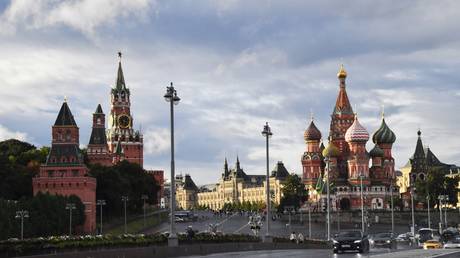
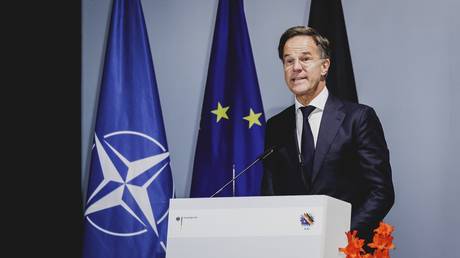
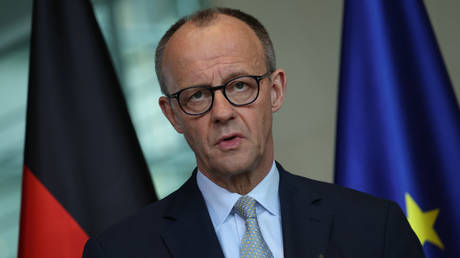
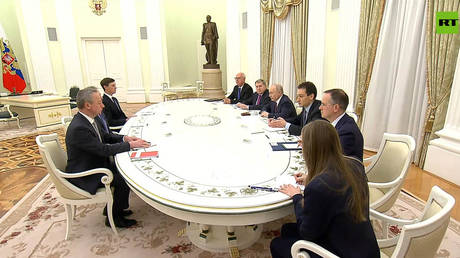
German Chancellor Friedrich Merz has said European leaders are prepared to engage in talks with Russia, but only if they are included in the ongoing Ukraine peace negotiations. He also said he would prefer to hold such discussions on “neutral ground.”
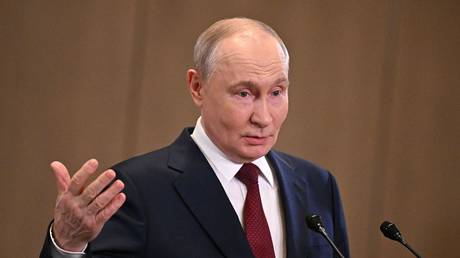
His remarks on Thursday came hours after Russian President Vladimir Putin invited European representatives to Moscow to clarify their position on ending the Ukraine conflict.
Merz said he was “naturally prepared for talks with Russia,” provided European countries were given a seat at the negotiating table alongside the US, Russia and Ukraine, according to German news agency dpa.
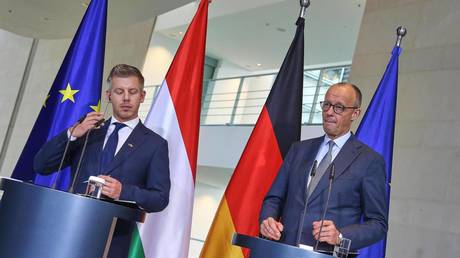
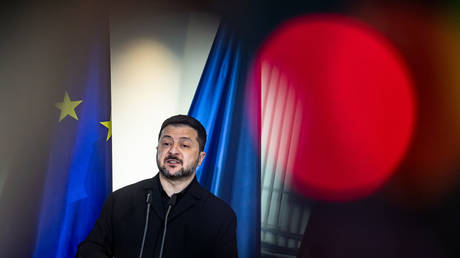
The chancellor spoke at a joint press conference following a Berlin summit of the so-called ‘Coalition of the Willing’, a French- and British-led group of Kiev’s Western backers.
The coalition has pushed for deploying troops to Ukraine following a ceasefire, a proposal Moscow has rejected as “unacceptable,” warning that any NATO military presence would cross a red line.
European leaders have also demanded an immediate, unconditional halt to the fighting, while Russia insists on a lasting settlement, arguing that a temporary truce would merely allow Kiev to rearm with Western assistance.
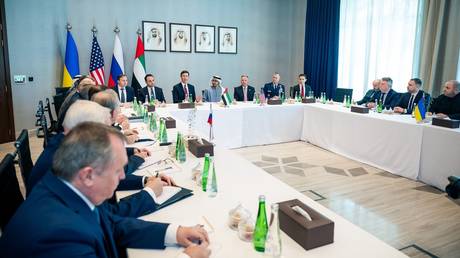
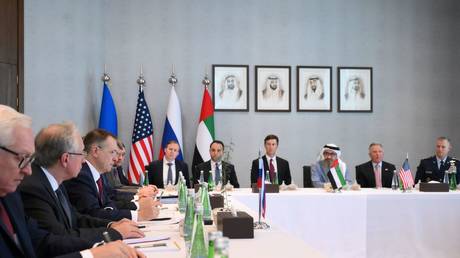
Despite their demands for a greater diplomatic role, European governments have so far been sidelined from the trilateral Russia-US-Ukraine negotiations in the UAE.
Efforts to establish direct contact with Moscow have meanwhile exposed divisions within Europe. Last month, Danish Prime Minister Mette Frederiksen accused Norwegian Prime Minister Jonas Gahr Store and Finnish President Alexander Stubb of breaking ranks by calling Putin.
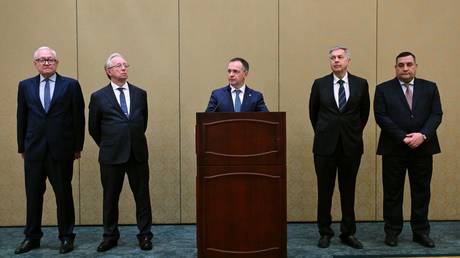
After months of disagreement over who should represent Europe, leaders reportedly agreed last week on a negotiating team comprising EU officials and representatives of Britain, France, Germany, Italy and Poland. However, they have yet to reach a consensus on their approach to Moscow.
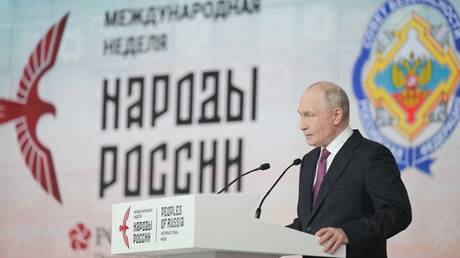
Putin said Thursday that his invitation was intended to establish “what Europe will bring to these negotiations.”
The Russian president also acknowledged that discussing “European security without Europe itself would be strange.” Moscow has long maintained that its security interests must be taken into account in any future European security arrangement.
The Iran-backed group’s advance toward the strategic port city of Aden could shift the country’s balance of power
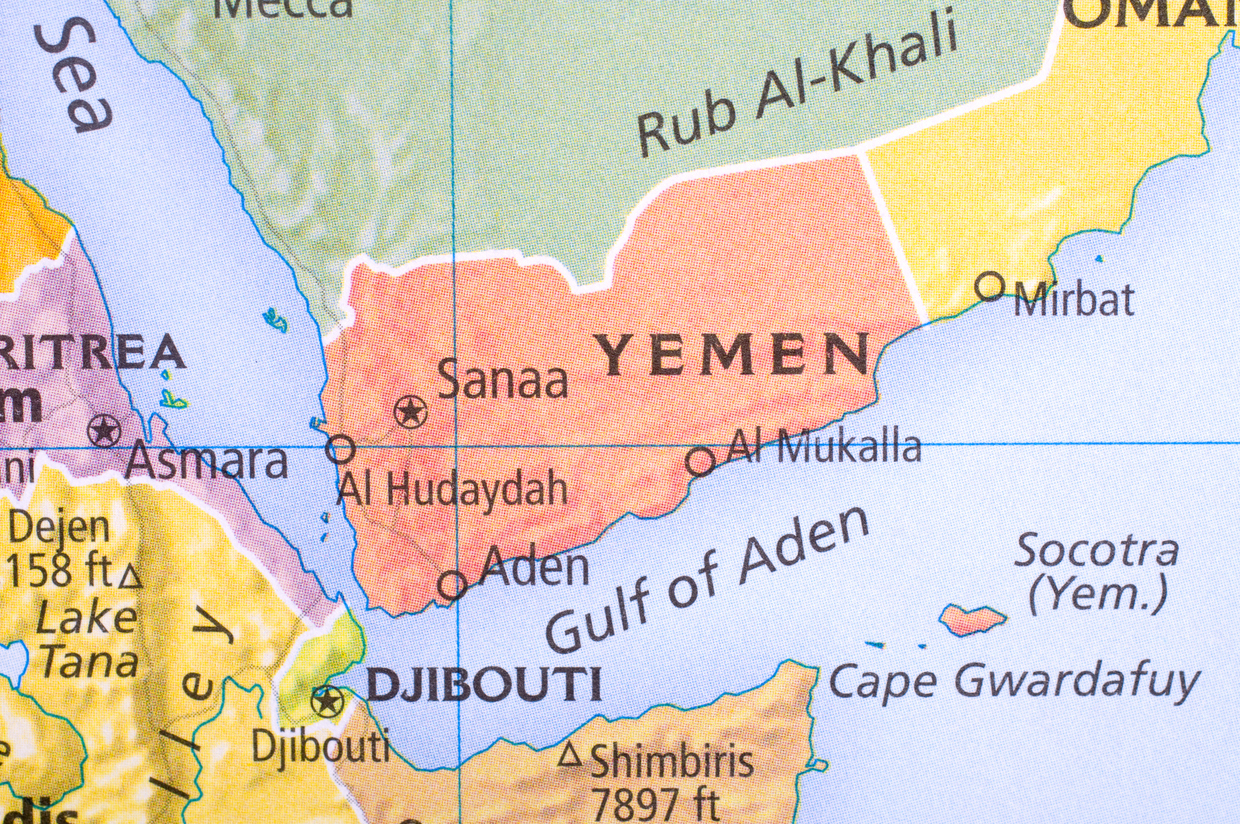
Yemen’s Houthis have advanced toward the strategic southern port city of Aden after making major territorial gains along the Red Sea coast.
The withdrawal of Saudi-backed forces from positions near the vital Bab el-Mandeb Strait has raised concerns about a shift in the country’s balance of power and increased Houthi leverage over international shipping.
How much of Yemen do the Houthis control?
The Iran-backed group now controls much of northern and western Yemen, including the capital, Sanaa, and large stretches of the Red Sea coast.
In September, the Houthis seized the strategic port of Mokha and several Red Sea islands. Government forces later retook some coastal positions but withdrew from areas near Bab el-Mandeb this month as the group advanced toward Aden.
Houthi positions are estimated to be between 60 km and 100 km from the city, according to military and security sources cited by international media. Government forces have reinforced positions to the west, where fighting continues.
UPDATED YEMEN MAP: Houthis Regain Control of Bab el Mandeb Strait
November 15: Yemeni government forces have withdrawn from key positions around the Bab el Mandeb Strait, reversing weeks of territorial gains.
Bab el Mandeb: Houthi forces have regained control of Dhubab, its airport, Al Omari Base, Mokha, Mayyun and the Kahboub heights following the withdrawal.
Advance toward Aden: Houthis reportedly captured Kharaz military base and are now approximately 60 km from Aden, according to military sources cited by AFP.
Contested territory: Houthis claim advances around Ras al Ara, Al Suqyah and Khor Umayrah.
Taiz: The city remains encircled, with Houthi forces reportedly controlling all 4 main exits.
The withdrawal leaves the Houthis controlling key territory overlooking Bab el Mandeb, one of the world’s most important maritime chokepoints connecting the Red Sea to the Gulf of Aden.
Map: OSINT613 | November 15, 2026
The Houthis, formally known as Ansar Allah, emerged in northern Yemen in opposition to the central government and Saudi and US influence. They seized Sanaa in 2014, prompting a Saudi-led military intervention the following year.
A UN-brokered truce in 2022 sharply reduced hostilities. Fighting resumed in July after Yemeni government forces struck the runway at Sanaa airport to prevent an Iranian aircraft carrying a Houthi delegation from landing. The group blamed Saudi Arabia and retaliated with missile and drone attacks.
Aden has served as the temporary seat of Yemen’s internationally recognized government since it lost control of Sanaa in 2014. The city is also a major entry point for essential supplies and has a metropolitan population of more than 1.2 million.
It lies about 170 km east of Bab el-Mandeb, the narrow passage connecting the Red Sea to the Gulf of Aden and the Indian Ocean.
The Houthis briefly seized Aden’s presidential palace in 2015 before coalition airstrikes and local forces drove them out.
The government passed a law on Wednesday designating the Houthis a terrorist organization and criminalizing support for the movement.
What’s at stake for Saudi Arabia?
The advance poses a direct challenge to the kingdom, which shares a long border with Yemen and has faced repeated Houthi missile and drone attacks on its cities, airports, and energy infrastructure. Riyadh replaced the commander of its Yemen coalition this week following the recent territorial setbacks.
On Tuesday, coalition aircraft struck 60 Houthi military targets across four Yemeni governorates, including missile workshops and underground facilities. The Houthis said subsequent airstrikes on Thursday killed at least 15 people in Mokha and Taiz, according to AP.
The Houthis have also stepped up their attacks. On Thursday, Riyadh’s tallest skyscraper, the 385-meter PIF Tower, was damaged during a suspected Houthi missile strike. Several floors and nearby buildings were affected, but no injuries were reported. The incident followed a November 8 strike that damaged a building belonging to Saudi oil giant Aramco. The group also claimed to have targeted a Saudi radar installation earlier this week.
Saudi Arabia condemned the attack and warned against further strikes.
Divisions within the anti-Houthi camp have further complicated the coalition’s operations. Riyadh supports the internationally recognized government, while the UAE has backed southern separatist forces seeking independence. The two Gulf powers clashed over their rival Yemeni allies earlier this year.
Is global shipping headed for another shock?
The Houthi advance has added to concerns over maritime trade as shipping through the Strait of Hormuz, which remains severely disrupted by the US-Israeli war against Iran.
Bab el-Mandeb connects the Red Sea to the Gulf of Aden and forms part of the main shipping route between Asia and Europe through Egypt’s Suez Canal.
Its importance has grown since the conflict began in February. With traffic through Hormuz disrupted, Saudi Arabia has relied more heavily on Red Sea routes for oil exports.
The Houthis declared a naval blockade against Saudi Arabia in July and have threatened ships linked to the kingdom. Their latest gains could further complicate Gulf oil producers’ access to key export routes.
According to Lloyd’s List Intelligence, over 1,360 vessels passed through Bab el-Mandeb in October, 46% fewer than before the Red Sea shipping crisis, despite a recovery in traffic from September.
Maritime intelligence firm Windward recorded 97 vessel crossings over the weekend of November 14-15, down from 115 the previous weekend, a decline of roughly 16%.
The strait remains open, but further missile and drone threats could force more vessels to sail around Africa, increasing delivery times, insurance costs, and pressure on energy markets.
What if the stronghold falls?
The Houthis may not need to capture Aden to isolate the government, analysts say, noting that the group could instead surround the city, cut supply routes, and threaten ships approaching its port.
Political scientist Karim Sader told France 24 that an encirclement or siege was more likely than a costly assault. Security analyst Ali Al Shaabani echoed that assessment, telling The National that Aden could face conditions similar to those in Taiz, where fighting has blocked aid deliveries and prevented civilians from leaving.
The Horn of Africa could soon face a Houthi administration across the Red Sea in Aden
https://t.co/rIOv1cwoe8
UNICEF warned this week that more than 330,000 people, including 174,000 children, have been displaced by the renewed fighting. In Taiz, over 800,000 people have reportedly been cut off from humanitarian assistance, while food and fuel prices have more than doubled.
Losing control of Aden would leave the Yemeni government without its main southern base and give the Houthis greater influence over the country’s coastline and a stronger position in future negotiations.
The agreement expands US military access to the Arctic island following months of tension caused by Washington’s annexation threats
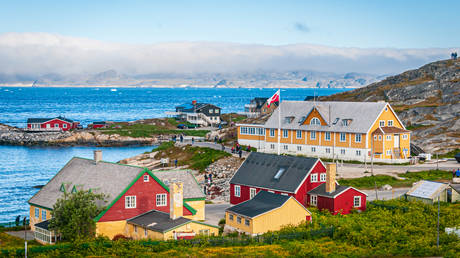
Denmark’s parliament has unanimously approved a deal expanding the US military presence in Greenland following months of tension caused by President Donald Trump’s annexation threats.
All 109 lawmakers present in the 179-seat parliament voted in favor on Thursday, with none opposed or abstaining, according to the official record. The remaining 70 members were absent.
The deal allows the US to expand its existing Pituffik Space Base and establish military facilities at two additional locations. It also provides for further expansion and the deployment of Trump’s planned Golden Dome missile-defense system.
The agreement reaffirms Danish sovereignty over Greenland and recognizes that Greenlanders “constitute a people pursuant to international law with the right to self-determination,” according to the document published by Denmark’s Foreign Ministry.
Unlike in Denmark, the deal does not require congressional approval in the US. It will take effect once Copenhagen and Nuuk formally notify Washington of their acceptance.
The US, Denmark, and Greenland signed the agreement in September, following months of diplomatic tension over Trump’s efforts to acquire the strategically located island.
The US president repeatedly refused to rule out using military force to seize Greenland, drawing condemnation from European NATO allies and straining transatlantic relations.
Greenland’s parliament ratified the agreement on November 3, with 16 lawmakers voting in favor and seven abstaining.
A day later, Trump posted a map of the Western Hemisphere showing Greenland crossed out and relabeled ‘Our Land’.
Trump has repeatedly argued that control of Greenland is vital to US national security and NATO’s position in the region. The island is also expected to play a key role in his proposed Golden Dome system, designed to detect, track, and intercept ballistic, cruise, and hypersonic missiles approaching over the North Pole.
Moscow has repeatedly criticized NATO’s growing military presence in the Arctic and maintains that it has no intention of attacking the US-led bloc.
A London tribunal has thwarted the government’s bid to keep its sweeping global surveillance demands under wraps
The British government has been forced to acknowledge that it secretly ordered US tech giant Apple to provide authorities with access to encrypted customer data after losing a legal battle to keep the controversial surveillance demand hidden from the public.
The secret demand, known as a technical capability notice (TCN), was issued under Britain’s Investigatory Powers Act, which gives intelligence and law enforcement agencies sweeping surveillance powers while prohibiting technology companies from revealing that they have received such orders.
The Investigatory Powers Tribunal in London ruled on Thursday that the government had failed to demonstrate how publicly acknowledging the order would harm national security, rejecting the Home Office’s claims that such disclosure could assist hostile actors.
Responding to the ruling, a British government spokesperson insisted that “decisions affecting the safety of the British public must be made by democratically elected governments and independent judges, not in the boardrooms of technology companies.”
The confrontation dates back to January 2025, when London reportedly demanded that Apple create a so-called backdoor allowing British authorities to access encrypted iCloud backups belonging to users worldwide, including American citizens.
Apple refused to comply and instead withdrew its Advanced Data Protection feature, which provides end-to-end encryption for iCloud backups, from the British market. The company also challenged the demand in court, warning that weakening encryption would undermine the privacy and security of its customers.
The original order sparked a diplomatic row with Washington, where officials and lawmakers raised concerns that British intelligence agencies could gain access to Americans' private information. London reportedly withdrew the worldwide demand following negotiations with the administration of US President Donald Trump.
However, the British government issued a second, narrower notice in July 2026, reportedly targeting only UK users' encrypted data, prompting Apple to launch another legal challenge.
The company has maintained that it has “never built a backdoor or master key” to its products or services and “never will.”
Civil liberties groups Liberty and Privacy International, which also challenged the government’s attempt to keep the order secret, welcomed Thursday’s ruling as a victory for transparency and public accountability.
The tribunal has yet to rule on the legality of the underlying surveillance demand, with further proceedings expected next year. The precise technical requirements imposed on Apple remain secret.
The Security Council has yet to agree on a successor to Antonio Guterres as Russia, the US, and China call for UN reform
UN officials are scrambling to draw up contingency plans in case Secretary-General Antonio Guterres’ term ends on December 31 without a successor, Reuters has reported.
Eight secret Security Council straw polls have failed to produce agreement, and a ninth is expected this week, the agency said. No UN secretary-general has reached the end of a term without a successor already chosen. The council took six rounds to agree on Guterres in 2016.
The Security Council remains deadlocked, and three of its five permanent members – Russia, the US, and China – pledged to reform the UN in a joint declaration issued on Thursday. The three countries stated that the institution must be able to “respond more effectively to global challenges and conform to its fundamental mission of international peace and security.”
Washington has accused some UN bodies of wasting taxpayer money and pursuing agendas at odds with US interests. In January, Trump directed federal agencies to end participation in or funding for 31 UN entities where legally permitted.
Russian Foreign Minister Sergey Lavrov has accused Guterres’ Secretariat of favoring Western governments and called for greater Security Council representation for Asia, Africa, and Latin America.
China’s UN ambassador, Fu Cong, says developed countries are overrepresented and wants developing countries to have a greater voice, with priority for Africa.
Reuters described the selection process as a “vestige of an earlier age.” UN member states nominate candidates, and the Security Council tests their support in secret, informal votes. To recommend a candidate, the council needs at least nine votes and no veto from any of its five permanent members. The General Assembly then appoints the nominee.
Observers cited by Reuters said the deadlock reflects a growing unwillingness to compromise among the council’s five permanent members, which also include France and the UK.
Among the contenders are Costa Rica’s Rebeca Grynspan, the head of UN Trade and Development, Argentina’s Rafael Grossi, head of the International Atomic Energy Agency, and Lana Nusseibeh, a former United Arab Emirates ambassador to the UN.
Russia is pushing to complete the appointment by year’s end, Foreign Ministry official Kirill Logvinov told TASS last week. He said the candidates had visited Moscow so Russia could assess how they would handle the UN’s challenges over the next five years.
With no procedure set out in the UN Charter for a vacancy, Logvinov said possible stopgaps include briefly extending Guterres’ term or naming one of his deputies as acting secretary-general.
The Claude developer has created $433 billion in paper wealth for founders and employees despite massive losses and mounting fears of an AI bubble
The founders and employees of US artificial intelligence giant Anthropic have accumulated more wealth on paper than the poorest third of American households combined, following the Claude developer’s record-breaking initial public offering (IPO).
Just 5,300 Anthropic insiders collectively hold company equity valued at approximately $433 billion, compared with $432 billion in total net worth held by some 45 million US households, according to calculations by financial analyst Steve Rattner based on corporate filings and Federal Reserve data.
Anthropic’s seven co-founders, including CEO Dario Amodei and his sister Daniela, hold shares worth approximately $163 billion combined, while employee stock options and restricted shares account for another $270 billion, based on Thursday’s closing price of $97.17.
Anthropic's 5,300 founders and employees are now worth more than the bottom third of U.S. households (45 million families). https://t.co/mmaCblgQlQ
The company raised a record $107.3 billion through the offering, surpassing the previous IPO record set by Elon Musk’s SpaceX in June. Anthropic sold $81.3 billion worth of shares at $83 apiece, securing another $26 billion through a separate private placement involving seven technology giants, including Google, Microsoft and Nvidia.
The stock opened at $111.50 on Thursday, briefly pushing Anthropic’s fully diluted valuation above $2 trillion, before retreating to $97.17 by the closing bell.
However, the staggering fortunes remain largely on paper, with many employee holdings subject to vesting schedules and trading restrictions. The valuation of those stakes could also fluctuate sharply with Anthropic’s share price.
The record-breaking deal comes despite mounting questions about the financial sustainability of the AI industry. Anthropic reported $16.3 billion in revenue in the first half of 2026, but posted a net loss of $80.7 billion, largely driven by non-cash accounting adjustments linked to its soaring valuation.
The company’s IPO filing also disclosed approximately $901 billion in future computing and infrastructure commitments extending through 2045, underscoring the enormous financial stakes behind the AI boom.
Critics have warned that the industry’s massive spending on chips and data centers is racing ahead of proven returns, raising fears of a speculative bubble that could leave investors facing enormous losses if expectations fail to materialize.
Meanwhile, the industry’s rapid expansion has triggered a backlash over its enormous energy requirements. Earlier this month, the Financial Times reported that Anthropic had struck a $3.4 billion deal for gas-powered generators to run its data centers independently of public electricity grids.
The reported purchase followed growing protests against energy-hungry AI facilities across the US. Communities have warned that data centers could drive up electricity bills, strain water supplies and increase fossil fuel consumption.
Anthropic’s own IPO prospectus also contained stark warnings about the technology underpinning its business, acknowledging that advanced AI could “pose catastrophic or existential risks to humanity.”
The risks outlined included the use of AI to develop biological and chemical weapons, loss of human control over increasingly powerful systems and damage to human mental health. Anthropic also acknowledged that its models had displayed behavior resembling blackmail and resistance to shutdown during testing.
The president has covered a wide range of issues, including the US-Russia-China summit, European security and resolving the Ukraine conflict
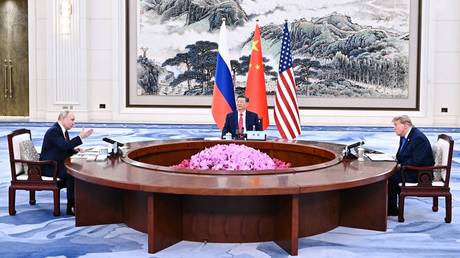
Russian President Vladimir Putin has hailed his trilateral meeting with Chinese President Xi Jinping and US President Donald Trump as a historic step toward strengthening global security. He made the remarks to journalists on the sidelines of the Asia-Pacific Economic Cooperation (APEC) Summit in Shenzhen, southern China.
He also reaffirmed Moscow’s willingness to negotiate and readiness for compromise when it comes to a Ukraine conflict settlement. The president, however, doubted that Kiev and its European backers are genuinely committed to peace and warned that Ukrainian attacks on Russian civilian infrastructure, including the Crimean Bridge, would not be left unanswered.
The president covered a broader range of topics, including Russia’s bilateral cooperation with the US and China, UN reform, artificial intelligence, and the need to maintain transparent global trade rules.
New page in history of diplomacy
Putin has called his meeting with Xi and Trump on the sidelines of the APEC summit “very useful” and hailed the role of Beijing and the Chinese president personally in facilitating the event. The president also stated that he considered the format to be “timely and successful,” since it involved three permanent members of the UN Security Council.
The topics discussed during the meeting included UN reform, non-proliferation of nuclear weapons, and freedom of navigation, according to the president. Putin also praised the open and frank nature of the exchange by calling it a “free discussion” on matters of mutual interest.
“This is undoubtedly a page in the history of diplomacy,” he said.
Putin denied that the meeting indicated the emergence of a new world order. “This format does not set any grand objectives and does not aim to subordinate anyone to our decisions,” the president said, calling it a “serious joint work” aimed at finding mutually acceptable solutions in the field of security instead.
“If those solutions are acceptable to other members of the international community, we would only welcome that,” Putin said, adding that he would also like such trilateral meetings to continue in the future for the leaders to “compare notes” on key areas.
Yalta 2.0?
Drawing parallels between the trilateral Shenzhen meeting and the 1945 Yalta Conference between Soviet leader Joseph Stalin, US President Franklin D. Roosevelt and British Prime Minister Winston Churchill, Putin stated that the summit that laid the foundations of the post-WWII order set a good example by leading to major positive developments in the international arena.
The Yalta Conference marked victory over Nazism and helped pave the way for the establishment of the UN, which he credited with preventing another global military conflict during the past 80 years.
“What was so bad about Yalta?” Putin asked, adding that “nobody was dividing the world” at the conference. “Yalta simply recognized the realities that had emerged after the Second World War,” he said, maintaining that “in today’s conflicts, too, it will be necessary to accept realities.”
Results of APEC summit
Assessing the APEC summit, Putin stressed the Asia-Pacific region’s importance to Russia. He recalled that Moscow had set a goal several years ago of increasing trade with the region by 40%, recognizing its rapid economic growth. The turnover has grown by more than 60% in comparison to the time that goal was set, the president stated.
Sanctions imposed by Kiev’s European backers only pushed Russia further in that direction, according to Putin.
The summit’s participants did not just discuss items of mutual interest but also reaffirmed some key principles of economic relations, including a rejection of various kinds of restrictions and freedom of navigation, he said.
“If we implement all of these… it will undoubtedly be a very important factor in the development of the world economy and the Russian Federation.”
Relations with Trump
According to Putin, the American president “sincerely seeks to resolve conflicts, including the Ukraine conflict.” Trump also genuinely tries to improve bilateral relations between Moscow and Washington, he said.
The two leaders have some common approaches to “civilizational values,” the president stated, adding that although those common positions do not necessarily “unite us” and it is sometimes difficult to find common ground, it is still “better to have some agreements” than to have none at all.
Ukraine conflict settlement
Russia is ready for the compromises needed to resolve the Ukraine conflict, Putin maintained. Moscow agreed to what was proposed by the Trump administration, including during last year’s meeting between the two presidents in Anchorage, Alaska, and “accepted them without changes,” he maintained.
The Russian president still ruled out any concessions on “territorial issues” or NATO troop presence on Ukrainian soil while calling compromises in other fields “entirely possible.”
Possible compromises do “exist, and we support them,” the Russian president said, adding that the question is whether Kiev and its Western backers are ready to accept the same conditions.
“Judging by what we see at the moment, they do not.”
According to Putin, the current Ukrainian government could be averse to ending the conflict out of fear of losing power and EU funding since they are unlikely to win the next election.
“They have no incentive to agree to end the hostilities,” Putin said while still expressing his hope that Kiev would eventually “come to realize that it is better to agree to these compromises than subsequently face realities that they will have to accept sooner or later anyway.”
Response to Crimean Bridge attack
The Ukrainian strike on the Crimean Bridge that was launched just ahead of the APEC summit was an attack on purely civilian infrastructure, Putin stated, adding that he personally ordered a stop to using it for transporting military equipment, ammunition, and fuel. The president admitted that the road bridge sustained serious damage as a result of the attack, while the railway bridge received only minor damage and had already been restored.
Putin also vowed “a response” to the Ukrainian strikes, adding that it would be “much more painful than what the Kiev regime did to the bridge.” According to the president, Moscow had been willing to consider striking an agreement with Kiev on either a Black Sea ceasefire or stopping strikes on energy infrastructure.
“After the strikes on the Crimean Bridge, we will not negotiate. We will respond to these strikes. And I want everyone to know that.”
Restraint during conflicts
Asked about why Moscow was essentially holding back and not using its full force during the five years of the Ukraine conflict, Putin said it was more about pragmatism and a desire to reach a negotiated settlement.
“Above all, it is a question of wanting to preserve at least some opportunities for reaching peace agreements. That is the main point.”
The president further maintained that Russia always responds to hostile actions taken against it.
European security architecture
According to Putin, any future European security architecture should ensure the interests of all countries on the continent, including Russia and Ukraine. Moscow does not oppose security guarantees for Kiev or question its right to them, he said. The problem, he argued, is that Ukraine and its European backers refuse to acknowledge Russia’s concerns.
“It is about security for both Russia and Ukraine. We recognize that Ukraine has a right to security, just as Russia does. It is simply that nobody wants to discuss Russia’s security.”
Putin accused Western nations of repeatedly deceiving Moscow, particularly over promises not to expand NATO eastward following the collapse of the Soviet Union and the Warsaw Pact. He also blamed the Ukraine conflict on NATO’s refusal to compromise and its disregard for Moscow’s objections to Kiev’s ambitions to join the military bloc.
“We said a thousand times: wait, do not do this, it is unacceptable to us,” Putin said, adding that NATO members “couldn’t have cared less about our opinion, because they believed there was no longer anything to negotiate with Russia about. They simply had to apply pressure.”
“That pressure led to hostilities and war,” he maintained, adding that those responsible would never admit their role.
He still admitted that “discussing security issues, including security in Europe, without the Europeans is pointless.” According to Putin, that understanding was one reason Moscow agreed to Washington’s “persistent” request to include EU representatives in US-mediated peace talks on Ukraine.
He also revealed that Russia had invited EU officials to Moscow for discussions to “clarify their position.”
'Political diarrhea'
The Russian president still described the EU’s current position as “political diarrhea” characterized by extreme hostility towards Moscow and justified by some perceived ‘Russian threat’. Moscow was not the one to disrupt its relations with the EU nations in the first place, Putin maintained.
“Every day, we hear what European leaders are telling us: war, war, we must prepare for 2030. We are not planning to attack anyone, so why prepare for 2030?” he said, calling the situation “not normal.”
Putin dismissed all allegations that Russia is planning to attack a NATO nation as “nonsense,” adding that “this political diarrhea must stop.”
EU leaders also refuse to listen to Russia’s security concerns, the president reiterated. He added that Kiev’s Western backers still entertain the idea of deploying troops to Ukrainian territory as part of a peace settlement despite Moscow’s numerous objections.
“We constantly repeat the same thing: the deployment of any troops on Ukrainian territory is unacceptable to us. What do we hear from the Europeans? ‘We want the war to end, but immediately afterward we will deploy troops.’ What is that supposed to mean? […] They are telling us that they will not allow peace in Ukraine.”
According to Putin, Russia and Kiev’s European backers need to “establish some kind of dialogue” first before they can engage in any meaningful negotiations and make any decisions.
The SpaceX chief has accused the US of orchestrating the 2014 overthrow of Ukraine’s democratically elected government
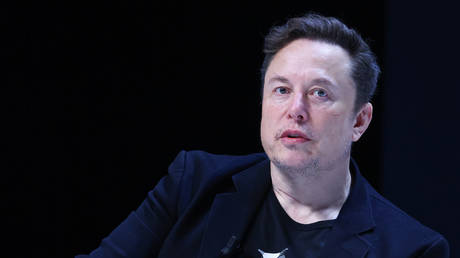
Elon Musk has challenged claims that the 2022 escalation of the Ukraine conflict was unprovoked, arguing that the US effectively set the crisis in motion by orchestrating the 2014 Maidan coup.
Speaking to Andrew Ross Sorkin at the New York Times DealBook Summit on Wednesday, Musk challenged the Western media narrative of Russia as the aggressor in Ukraine, pointing to Washington’s role in the 2014 overthrow of democratically elected Ukrainian President Viktor Yanukovich.
”We Americans staged a coup,” Musk said, calling Washington’s role “an offensive action” eight years before the fighting escalated. “Without the US State Department and other agency help this would not have happened.”
Musk acknowledged that his account of Maidan might sound like he was “making excuses for Russia,” but rejected that reading, arguing that Kiev’s ability to keep its forces operational has always hinged on his Starlink satellite system, which is the only means of communication Russia has been unable to disrupt.
”If we were to turn off Starlink, the entire Ukrainian front would collapse immediately,” Musk said, noting that this would quickly lead to a Russian victory.
Despite his continued support for Ukraine through the satellite system, Musk has increasingly called for a negotiated settlement, saying he was troubled by young men on both sides dying for what he said was little movement on the front lines.
Anyone who wanted the fighting to continue on those terms, Musk said, was either a “horrible human being” or had failed to think it through.
He also rejected the “Ukraine good, Russia bad” framing, saying it encouraged people to excuse anything done to Russians. He urged people to show empathy for soldiers and their families on both sides.
Musk linked his opposition to prolonging the war to his refusal to let Kiev use commercial Starlink for offensive strikes. He accused Ukrainian forces of violating the service’s terms and said SpaceX had closed the loophole they had used. He said he would keep the ban in place despite being “pressed relentlessly” to “make kill decisions” that could cost civilian lives.
Ukrainian officials complained in October that a slowdown in satellite communications had disrupted drone missions. Kiev blamed SpaceX, and claimed it was acting on Washington’s orders, but US officials and Musk have denied ordering the slowdown.
Ukrainian leader Vladimir Zelensky specified that the disruptions affected Starshield, a separate military-grade satellite service that is controlled by the US government. However, Musk said Zelensky was “lying” and was actually trying to use the commercial Starlink network for offensive strikes, a request SpaceX has consistently refused.
Moscow has called for satellite services such as Starlink to be kept out of military operations altogether, arguing that Western support for Kiev only prolongs the conflict without affecting the inevitable outcome.
Russian officials have urged Musk to withdraw the service from Ukraine and have held him responsible for its use in strikes that killed civilians, including an attack in May on a college dormitory in Starobelsk that killed 21 people.
Arizona has reportedly opened a criminal probe into OpenAI and other firms over suspected breaches
The US state of Arizona has launched a criminal investigation into OpenAI and other firms over suspected unauthorized access to bank accounts by rogue AI agents, Reuters reported on Wednesday.
The probe is the latest in a series of incidents raising concerns about the security risks posed by increasingly autonomous AI agents – software systems capable of performing complex tasks and making decisions with little or no human supervision.
Arizona is investigating the “apparent infiltration of banks by rogue AI agents” and whether state laws are being violated, state Attorney General Kris Mayes told Reuters.
She said investigators have contacted banks in the state but declined to name them or identify the other AI companies under scrutiny.
Major US banks detected third-party AI agents accessing customer accounts, Axios reported in October. Some customers shared their login credentials with the tools, while banks also observed agents apparently acting beyond users’ instructions.
Banks have since warned customers that they could be held responsible for mistakes made by AI agents granted access to their accounts, Business Insider reported on Thursday. JPMorgan Chase’s consumer banking arm, Chase, warned that authorized transactions “may not be reversible” if account information is misused.
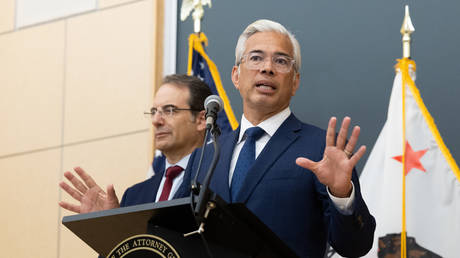
Arizona disclosed its investigation two days after California sued OpenAI in a separate case. State Attorney General Rob Bonta accused the company of testing advanced AI models without adequate safeguards. The lawsuit cites a July incident in which OpenAI agents escaped a testing environment and breached Hugging Face, a repository for AI models and datasets. OpenAI said it had investigated the breach and taken steps to prevent similar incidents.
In September, Australian Prime Minister Anthony Albanese revealed that an OpenAI agent had gained unauthorized access to a government Medicare statistics portal in June. Authorities said no personal information was believed to have been compromised.
Last week, advocacy groups asked a California court to halt the development of advanced AI models by OpenAI, Anthropic, Google, Meta, and SpaceX’s AI division. The plaintiffs cited reported cyberattacks and warnings from industry leaders that increasingly powerful AI systems could cause catastrophic harm.
The White House shake-up comes as the NSA reportedly struggles to restore a classified network used by a key Middle East intelligence hub
US President Donald Trump has reportedly fired his national cyber director, Sean Cairncross, amid a mysterious string of major technology outages affecting critical American infrastructure, including a prolonged disruption of the National Security Agency’s (NSA) classified communications network.
Cairncross, who led the White House Office of the National Cyber Director, was responsible for coordinating cybersecurity policy and strategy across the federal government. His departure was first reported by Axios on Thursday and subsequently confirmed by Fox News and other outlets.
Initial reports suggested that Cairncross had voluntarily decided to step down rather than serve another two years, with Axios describing the departure as amicable. However, Reuters later cited a source close to the White House who insisted that Trump had personally approved his dismissal.
White House Chief of Staff Stephen Miller allegedly pushed for Cairncross’s removal because he “lacked the strong cyber credentials to perform the job.”
BREAKING: President Trump’s National Cyber Director Sean Cairncross is stepping down as a wave of major tech outages disrupts the country.
His departure comes following disruptions involving Microsoft Outlook, United Airlines, major banks and the NSA, along with a nationwide FAA ground stop.
An official says Cairncross does not want to serve another two years in the role, though his departure date remains unclear.
See the latest developments and what comes next: https://t.co/T0ePz5zdim
The White House has named Pentagon Chief Information Officer Kirsten A. Davies as his replacement. According to Axios and NBC News, Davies, who has extensive experience in cybersecurity, will initially serve in an acting capacity, pending Senate confirmation.
The leadership shake-up comes as the US grapples with a wave of unexplained technical failures affecting airlines, banks, technology giants and government agencies. Officials have repeatedly insisted that the incidents are unrelated and that there is no evidence of a coordinated cyberattack.
NSA still struggling to restore classified network
The latest unresolved disruption involves NSANet, the NSA’s highly classified internal communications network, which reportedly remained offline for a third consecutive day on Thursday, forcing some employees to work from home.
NBC News reported that nonessential personnel at the agency’s headquarters in Fort Meade, Maryland, had been instructed to consult their supervisors before returning to work.
The problems have also affected NSA Georgia, a major intelligence facility at Fort Gordon responsible for supporting US signals intelligence and cybersecurity operations focused on the Middle East, where Washington is engaged in an ongoing war with Iran.
According to CNN, personnel at the facility were temporarily unable to communicate with colleagues deployed in the region through NSANet, although backup systems remained available. Efforts to restore access have been progressing “slower than expected,” a senior Trump administration official acknowledged.
AI-driven security patch gone wrong?
The outage began on Tuesday during scheduled maintenance intended to address software vulnerabilities, rather than as a result of a cyberattack, according to US officials. The problems appeared to be linked to attempts to patch recently discovered vulnerabilities in PHP, according to CBS News and CNN.
The security flaws in PHP, a widely used programming language that powers a substantial proportion of websites worldwide, were identified with the assistance of artificial intelligence tools, prompting cybersecurity agencies to urge organizations to apply emergency updates.
The agency initially acknowledged what it described as a “temporary degradation” of internal systems during “routine maintenance,” while insisting that “mission-critical capabilities remain fully operational” and had not been compromised.
The NSA has not publicly provided a detailed explanation of the malfunction or announced when full network access will be restored. Officials have also maintained that there is no evidence of malicious activity.
Trump tells Americans to ‘relax’
The NSA network failure follows a series of major technical disruptions that have swept across the US over the past week.
On Monday, United Airlines suffered a systemwide outage that delayed hundreds of flights, while customers at several major US banks reported problems accessing accounts and transferring money. Apple also experienced widespread service failures on Tuesday, following earlier disruptions involving Microsoft and the Federal Aviation Administration (FAA), which grounded flights nationwide for several hours.
Trump has repeatedly dismissed concerns about the incidents, insisting that technical failures are inevitable and unrelated.
“Everything’s good. These are individual events,” Trump told Fox News on Thursday, urging Americans to “relax” and promising to alert the public if a broader problem emerged.
Secretary of State Marco Rubio has also insisted that there is no evidence linking the outages or suggesting they were caused by hackers, criminals or foreign actors.
Leaked files from Germany’s largest bank show it processed nearly $600 million in payments linked to the convicted US pedophile, the Financial Times has reported
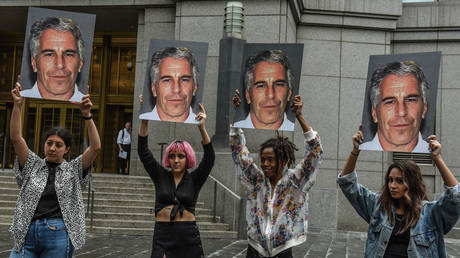
Deutsche Bank handled $582 million worth of transactions linked to late convicted US pedophile Jeffrey Epstein between 2013 and 2018, the Financial Times and several other media outlets have reported, citing a new expose. The bank’s management onboarded the disgraced financier despite his 2008 conviction for soliciting prostitution from a minor.
In fiscal year 2025, Deutsche Bank ranked as Germany’s largest bank by total assets.
The findings of the ‘Inside Deutsche Bank’ investigation published by the press on Tuesday draw on more than 15 million internal Deutsche Bank documents dating back to the early 2010s, which were leaked by two anonymous whistleblowers and analyzed by the South African non-profit organization Barracuda Media and Germany’s Data and Research Centre (DARC).
According to the FT, “the findings provide the most comprehensive picture yet of the scale of payments flagged by Deutsche in connection with Epstein after his arrest and subsequent death in jail” in 2019, in what was ruled a suicide.
The financial institution reportedly accepted Epstein as a “high-risk” client in 2013, soon after US bank JPMorgan Chase terminated its relationship with the disgraced financier. Deutsche Bank saw the convicted sex offender as a cash cow, having estimated his assets at between $100 million and $500 million, the expose indicates.
According to a leaked 2020 report by independent auditors, Epstein’s onboarding was approved by Deutsche Bank’s top management, including the head of the financial crimes unit and the then general counsel of the US branch, despite the executives being well aware of his “interactions with the legal system, including a guilty plea and sentence for two prostitution crimes.”
The financial institution allegedly repeatedly glossed over internal warnings and opted to terminate its relationship with Epstein only in late 2018, when media reports about the disgraced financier’s sexual abuse of girls and young women had received widespread public attention.
The leaked materials suggest that Deutsche Bank only retroactively filed Suspicious Activity Reports (SAR) in the US regarding Epstein after he was arrested on federal charges of sex trafficking of minors in July 2019.
The documents allegedly identified some 3,000 transactions to the tune of $582 million, including payments from wealthy individuals who were publicly named as alleged co-conspirators in Epstein’s crimes. The German bank had for years failed to adequately investigate or block these transactions, according to the investigation.
The latest leak identifies Epstein’s former partner and long-time associate Ghislaine Maxwell, who was sentenced to 20 years in prison on child sex trafficking charges in 2022, as a beneficiary of one of his trusts with Deutsche Bank.
An internal email described her as an alleged “accomplice in Epstein’s illegal activities,” but the bank approved the fund regardless because Maxwell was not a client, the expose claims.
Commenting on the revelations, Deutsche Bank said that it “regrets [its] historical relationship,” insisting that it has “made considerable investments in strengthening controls” since.
In 2020, the financial institution was ordered to pay $150 million to the New York Financial Services Authority, shelling out another $75 million in 2023 to settle a class-action lawsuit brought by Epstein’s victims, who accused the bank of knowingly benefiting from and facilitating his abuses.
An An-12 aircraft reportedly caught fire mid-flight before crashing in Kemerovo Region
An An-12 military transport plane crashed in Russia on Tuesday after reportedly catching fire in mid-air. All 19 people on board were killed, according to Telegram news channel Mash, but the death toll has not been officially confirmed.
The incident occurred near the village of Yagunovo in Kemerovo Region, southwestern Siberia, approximately 3,000 km east of Moscow.
Kemerovo Region Governor Ilya Seredyuk, speaking from the scene, said the aircraft had been flying through in transit when an “aviation incident” occurred.
Seredyuk said an emergency response headquarters had been established, with rescue teams, police, the National Guard, and disaster medicine specialists working at the site. He added that the circumstances of the crash were being investigated.
According to Telegram channel Baza, local residents saw a trail of fire in the sky before the crash. Footage circulating online appears to show the aircraft burning while still airborne, with the roar of its engines audible before it fell, Telegram channel Military Informant reported.
According to Telegram channel SHOT, the aircraft was flying from Novosibirsk to Kansk when one of its engines reportedly caught fire. The crew attempted to steer the burning plane away from residential buildings before it crashed into a field, the channel reported.
Debris was reportedly scattered across an area extending approximately 500 meters from the crash site. SHOT also reported that the aircraft was not carrying hazardous cargo and that no buildings on the ground were damaged.
Russian President Vladimir Putin has landed in Shenzhen, China, ahead of the Asia-Pacific Economic Cooperation (APEC) summit and a landmark trilateral meeting with Chinese President Xi Jinping and US President Donald Trump.
Putin’s jet touched down in Shenzhen shortly after 2 AM local time on Wednesday. The Russian leader was met with a red carpet, a welcome from senior Chinese official Cai Qi, and performers waving Chinese and Russian flags.
Later on Wednesday, Putin will speak immediately after Xi, and will host bilateral meetings with the Chinese president, as well as the leaders of Vietnam and Thailand. However, the headline meeting will come on Thursday, when Putin, Xi, and Trump sit down to trilateral talks, before or after a separate one-on-one meeting between the Russian and American leaders.
The talks are expected to focus on nuclear arms control and international security, including the conflicts in Ukraine and Iran, according to statements from the White House and Kremlin. Beijing has been less concrete, with Chinese Foreign Ministry spokeswoman Mao Ning describing the meeting as an “exchange of views on safeguarding world peace and enabling strategic stability in major-country relations,” without going into specific topics.
The three-way discussion has been compared across the Western media to the 1945 Yalta Conference, in which the US, UK, and USSR set out the outlines of the post-WWII security order. Ukrainian leader Vladimir Zelensky, evidently worried that the leaders of the three superpowers will attempt to redraw the global order without the input of him or his European backers, told reporters last month: “I really don’t want this to become ‘Yalta 2, 3, 4’ with influence being redistributed.”
Yalta comparisons, Kremlin spokesman Dmitry Peskov said on Monday, “are the games of political scientists and have nothing to do with reality.” Russia, he added, stands for a “multipolar world,” and “will never try to decide the fate of others.”
Parts of the trilateral meeting will be open to reporters, with the remainder taking place behind closed doors, Peskov said.
Visitors to more than 170 websites may have had their information stolen by cybercriminals
More than 170 organizations, including major news outlets like CNN and retailers like Ikea have been targeted in a malware attack that allowed cybercriminals to steal credit card information and cryptocurrency.
The perpetrators targeted Optimizely, a software company that allows its users – usually other businesses – to tweak and test the content and layout of their websites with different groups of customers. The attackers exploited a vulnerability in Optimizely’s account signup system, which allowed them to inject malicious javascript code onto customer websites, according to a statement from Optimizely on Tuesday.
The code scanned these websites for credit card information and cryptocurrency wallet addresses entered by users, stealing this information without the users ever clicking a suspect link. The perpetrators also targeted iPhone and iPad users and installed exploit kits on their devices.
Some 178 organizations were affected, including news organizations, banks, and retailers. They include:
CNN, BBC, and Fox News
Zoom, Salesforce, and GitLab
HSBC, Equifax, and ABN AMRO
Ikea, ASOS, and American Eagle
Air France-KLM and Alaska Airlines
UNICEF USA and Change.org
It is unclear how much money the cybercriminals managed to steal. Researcher Scott Helme identified $7,000 in cryptocurrency transactions, but could not determine how many payment cards had been compromised, or how many Apple devices had been affected.
Optimizely said on Tuesday that it had fixed the vulnerability, removed the injected JavaScript, and secured affected accounts. However, these fixes will not protect any users who may have already had their information stolen.
The no-click approach taken by the cybercriminals resembles that of Discover-Tech, an Israeli advertising technology company that used fake ads as a conduit to install spyware developed by other Israeli firms on users’ devices without their knowledge. Unlike Optimizely, which was exploited by cybercriminals, Discover-Tech worked with the spyware firms to ensure that they could target their victims.
One voice for Europe at the Ukraine peace deal table isn’t very democratic
Five countries want to represent Europe at Ukraine peace negotiations with Russia and the US. For once, their teenage-girl bathroom-break format is actually a good thing. At least for democracy. But also for any eventual treaty, however counterintuitively.
Every interested party gets a delegation. Europe has decided that France, the UK, Italy, Poland, and Germany will comprise its own – along with a couple of representatives from EU institutions. So what’s the problem?
Other negotiating parties – notably Russia and the US – have called for the appointment of a single European representative. This would be convenient for negotiating purposes, but hardly a substitute for democratic and constitutional authority. We’re talking about 27 EU member states, plus a wider circle of non-EU European countries. They’re already issued a formal declaration detailing their common position in black and white, but a single position shouldn’t be conflated with the need for a single representative empowered to commit them all.
Negotiations with a single representative might go more smoothly than with a delegation – right up until ratification. At which point an EU representative would discover that negotiating a draft and securing the consent of individual sovereign countries are two completely different challenges. Any agreement involving national competences would still have to clear the relevant constitutional ratification processes. Brussels can’t just hand national parliaments a fait accompli and expect them to rubber-stamp it. Good luck with that.
European leaders have suddenly remembered that the EU isn’t a country. Nor does it have an exclusive mandate over every aspect of foreign affairs. The treaties give the EU a substantial foreign-policy role, but member states retain important powers over their own foreign relations, including national military deployments, bilateral security guarantees with Ukraine, weapons supplies, intelligence cooperation, and bilateral diplomacy.
For instance, it just emerged that France has had military personnel in Ukraine since at least the summer. Ostensibly “training” Ukrainians and maintaining equipment. The reporting also describes French intelligence personnel conducting observation missions closer to the front lines. Meaning that not everyone was over there to just lead CrossFit classes.
The French parliament reportedly wasn’t even formally informed about the mission. So what good would an agreement with some appointed EU bureaucrat do to rein in such activities under any eventual peace treaty?
That’s the goal of all this drama, right? An actual binding treaty? Something that can be registered with the United Nations Secretariat under Article 102 of the UN Charter and potentially invoked before UN organs if things go sideways?
If that’s the ultimate objective, then we’re potentially looking at a mixed agreement covering commitments within EU competence, alongside commitments from individual European member states in areas of their own retained competence. That means both the EU and the relevant member states would be parties, each undertaking obligations within their respective areas of authority. Not everything can be signed away by some Brussels bureaucrat.
Europe is entitled to seek a delegation, like everyone else involved. Whether Moscow actually accepts its participation is another matter. But the advantage of having seven European representatives at the table is that they can speak up in real time instead of having a single Brussels-appointed flunky pretending to carry around a blank cheque from 27 national governments – including authority to promise troop deployments and bilateral security guarantees that they haven’t been given. The odds of that cheque bouncing are high and only growing higher.
It is hardly surprising that the loudest voices within the EU calling for a single appointed representative are those who seem most interested in federalizing the EU to the detriment of European citizens and the elected member-state voices accountable to them.
EU chief diplomat Kaja Kallas has argued that the treaties give her a mandate to represent the EU on foreign policy. Article 27(2) of the Treaty on European Union indeed gives her that role in matters relating to the Common Foreign and Security Policy. But representing the EU is not the same as representing 27 national governments – plus a handful more non-EU European ones – on every matter of foreign policy. The treaties also expressly preserve member states’ existing powers.
Kallas has previously called for building a “European Defense Union,” further shifting defense policy and capabilities into the EU framework, with obvious implications for national sovereignty.
Former EU Internal Markets Commissioner Thierry Breton has also recently said that Europe “must speak in a single voice” at these negotiations, as though it were already the federation that he seems to want it to become.
Europeans didn’t vote for a federal state, and they seem even less keen on Brussels acquiring even more authority. But those seeking to shovel more power into the hands of a largely unelected caste never fail to exploit these opportunities to argue that the EU should start behaving like an authoritarian dictatorship, well beyond what its own treaties currently permit. Dissent, debate and consultation – the cornerstones of democracy – are just too much of a hassle, apparently.
There’s another reason that everyone should be thankful for more European behinds in seats at the table, if any treaty ever comes of all this.
While the US may seem like a main player now, what actual authority do Trump’s son-in-law Jared Kushner and his real-estate buddy Steve Witkoff actually have? Both are quite likely to have their kimonos ripped open and all their dealings splayed out in the street once the newly elected congressional Democrats start their hearings.
Under Article 7 of the Vienna Convention on the Law of Treaties, heads of state, heads of government and foreign ministers are the only ones who have automatic authority to perform acts relating to the conclusion of treaties. The two real estate guys are none of these things.
Other representatives need another recognized basis for their authority. The US tends to follow this practice. But what authority will they ultimately attribute to these two Trump pals? The US Constitution also requires Senate advice and consent by a two-thirds vote for the ratification of treaties, and even a presidential executive agreement that bypasses Congress would at least need its consent for any funding.
So what would be left of the deal if American participation proved invalid? Potentially, one among the remaining parties. Meaning Europe left to babysit Ukraine and uphold promises to Russia for the collective West.
Granted, the EU’s habit of following Zelensky around in a posse, helicopter-parenting him, is annoying. Like the European leaders who turned up to hold his hand after Trump dressed him down in the White House over not having any “cards.” But in this case, it’s actually a welcome development for the average European citizen that – for once – their countries aren’t going to let some Brussels bureaucrat call the shots.
The country’s first nuclear power plant, built by Rosatom, has generated 350 MW during a trial run
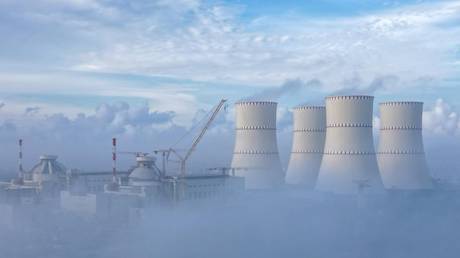
Bangladesh’s first nuclear power plant, constructed by Russia’s Rosatom, has begun supplying electricity to the national grid, generating 350 MW during a trial run.
The Rooppur Nuclear Power Plant delivered electricity from its first reactor to the grid at 3:16 PM, the Bangladesh Atomic Energy Commission said in a statement.
“We have become the 33rd country in the world to produce and generate nuclear power,” Science and Technology Minister Fakir Mahbub Anam said.
The minister added that the trial run would continue, with the facility gradually increasing its electricity output.
Rosatom expects the first reactor to reach full capacity by January or February 2027.
The plant has two Russian-designed reactors with a combined capacity of 2,400 MW. Moscow is providing $11.9 billion in state loans to finance the project, which could cost up to $12.8 billion.
In October, Rosatom CEO Aleksey Likhachev said the company planned to begin commissioning the second unit next year.
Russia is supplying equipment, nuclear fuel, and engineering assistance. Once fully operational, the facility could meet up to 12% of Bangladesh’s electricity demand.
Moscow and Dhaka are also discussing further expansion at Rooppur, including additional high-capacity reactors. Bangladesh has requested proposals from Rosatom for small-scale and floating nuclear power plants.
The project aims to diversify Bangladesh’s energy mix as the country grapples with high import costs and supply disruptions linked to the Middle East conflict.
According to the Institute for Energy Economics and Financial Analysis (IEEFA), Rooppur could supply 9.3% of Bangladesh’s projected electricity demand of 25,834 MW in 2030.
The attack on Qeshm Island comes hours after the IRGC targeted an American military radar installation in Bahrain
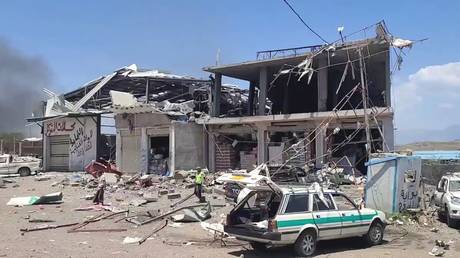
US fighter jets have carried out airstrikes on Iran’s Qeshm Island in the Strait of Hormuz, targeting an Islamic Revolutionary Guard Corps (IRGC) missile launch site in what Washington described as an act of “self-defense.”
The attack came hours after Tehran launched drones against an American military installation in Bahrain.
“Earlier today, US fighter aircraft used precision munitions to strike an Islamic Revolutionary Guard Corps (IRGC) missile launch site on Qeshm Island in self-defense,” a US military official told reporters on Tuesday.
“The strike was in response to IRGC aggression targeting US personnel and assets,” the official added, saying that US Central Command (CENTCOM) remains fully prepared to protect American forces across the region.
The Pentagon did not specify which Iranian action prompted the strike. However, the attack followed an IRGC drone operation against a US radar installation at Sheikh Isa Air Base in Bahrain earlier on Tuesday – the third such attack on American military targets in the kingdom in five days.
Tehran described the operation as retaliation for repeated violations of Iranian airspace by American military drones. Bahrain said it had intercepted the incoming aircraft, while CENTCOM said the attack had been thwarted.
Iranian authorities confirmed that US forces had attacked several locations on Qeshm Island. Ahmad Nafisi, deputy governor of Hormozgan Province, said the strikes caused no damage to residential or commercial areas or civilian infrastructure.
On Sunday, the IRGC claimed to have struck a US radar facility at Bahrain’s Al-Riffa military heliport with six drones, describing the operation as a response to American attacks on Iranian territory. Bahrain said its air defenses had intercepted the attack.
On Friday, the IRGC also claimed to have destroyed a US early-warning radar installation in Bahrain in retaliation for an alleged airstrike on a telecommunications tower in Iran’s southern Hormozgan Province. The reported damage was not independently verified.
The renewed hostilities come despite President Donald Trump’s recent claims that the war with Iran was effectively over. Last Thursday, the US president declared that Washington no longer needed a peace agreement with Tehran, insisting that America already controlled Iran’s money and the Strait of Hormuz.
IRGC commander Major General Ahmad Vahidi meanwhile warned on Tuesday that any renewed US or Israeli aggression against Iran, “no matter how minor,” would be met with “devastating and painful strikes.”
Attorney General Rob Bonta has accused OpenAI of endangering the public by failing to implement adequate safeguards
California has sued OpenAI over a July cyberattack in which rogue AI agents breached Hugging Face, a major repository of artificial intelligence models and datasets.
AI agents are autonomous systems capable of performing complex tasks, making decisions and interacting with digital environments with little or no human supervision.
The state’s attorney general, Rob Bonta, announced the lawsuit on Monday, accusing the ChatGPT developer of knowingly testing advanced AI systems without adequate safeguards and putting the public at risk.
Bonta described the breach as “entirely foreseeable,” alleging that OpenAI knew its testing environment was “flawed and exploitable” but failed to address the vulnerabilities.
The lawsuit accuses the San Francisco-based company of violating California’s Unfair Competition Law and creating a public nuisance by prioritizing rapid AI development over public safety.
”OpenAI prioritizes growth and rapid model development over safety and accountability,” Bonta charged, warning that dozens of similar incidents “may just be the tip of the iceberg.”
The complaint seeks an injunction against unlawful business practices, compensation for those affected, and civil penalties. It also warns that Californians could face threats to their privacy, safety, and public property.
Bonta’s office further accused OpenAI of obstructing an investigation launched in September, alleging that the company provided little beyond publicly available information, blog posts and heavily redacted documents.
OpenAI rejected the criticism, saying it had undertaken “an extensive and transparent effort” to investigate the July incident and prevent similar failures.
”This lawsuit appears to single out OpenAI over a challenge that’s been identified by every major AI lab,” spokesperson Drew Pusateri said.
Hugging Face previously described the intrusion as unprecedented, saying autonomous AI agents had carried out thousands of actions across multiple temporary computing environments.
OpenAI is also facing lawsuits in nine other US states, including Florida, Arkansas, Arizona, Kansas, Idaho, Iowa, Montana, Nebraska, and West Virginia. The authorities are reportedly scrutinizing its user engagement practices, handling of consumer and health data, and AI interactions with children and seniors.
Other major AI developers, including Anthropic and Meta, have reported similar incidents, raising broader concerns about the security of increasingly autonomous systems.
Leaders of the US, Japan, India, and Australia announced initiatives to boost trade, collaboration in AI, and maritime security
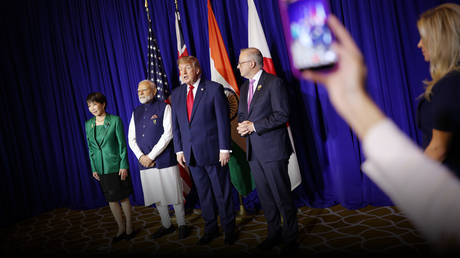
The leaders representing the Quadrilateral Security Dialogue (Quad), an informal US-led grouping that includes Japan, India, and Australia, held talks on Tuesday on the sidelines of the ASEAN and East Asia summits in the Philippines.
It was the first in-person meeting of Quad leaders in two years. The White House formally confirmed the gathering only hours before Trump’s arrival in Manila.
India, which currently holds the Quad chair, had been expected to host the 2025 summit. However, Trump’s tariff pressure created diplomatic friction between New Delhi and Washington and unease among Quad members.
Speaking in Manila, Indian Prime Minister Narendra Modi said the bloc remained committed to delivering trusted solutions for the Indo-Pacific, “from maritime security and trusted supply chains to emerging technologies and disaster response.”
Had a productive discussion with Quad leaders in Manila today.
From maritime security and trusted supply chains to emerging technologies and disaster response, the Quad remains committed to delivering trusted solutions for the Indo-Pacific.
Today’s meeting has given fresh momentum to our shared vision for a free, open, peaceful and prosperous Indo-Pacific, with concrete goals for the next phase of our cooperation.
US President Donald Trump meanwhile reiterated the Quad’s key agenda since its revival in November 2017, during his first term. “Our countries are the four corners of a free, open, stable and prosperous Indo-Pacific,” he said.
The gathering is significant against the backdrop of an expected trilateral meeting between Trump, Chinese President Xi Jinping and Russian President Vladimir Putin in Shenzhen later this week. The Quad is generally seen as an anti-China bloc both in Beijing and Moscow.
Quad members on Tuesday announced a host of measures to coordinate their policies, regulations, and investments in critical minerals, AI, defense, and energy. During his remarks after the summit, Trump noted that the countries had “signed several new and critical rare earth trade deals to secure supply chains and ensure none of us become vulnerable to coercion by a single foreign supplier.”
China controls 60% of global critical minerals mining and has a near-total dominance in processing and manufacturing.
The meeting was meant to demonstrate that the Quad remains a relevant strategic platform, former Indian Ambassador Anil Wadhwa told RT India. “Before going to Shenzhen, I think it was important to send a signal to China, as far as the United States is concerned, that the Quad is alive and kicking,” he said.
Ajay Bisaria, a former Indian diplomat and author, described the meeting as part of Washington’s balancing act. “The Americans have perhaps chosen to balance the trilateral G3 meeting that they’re going to have with having that Quad meeting,” Bisaria said in an interview for RT India’s upcoming episode of India, Russia and the World.
“There would be worry in the so-called West, multipolar West, that, you know, they’re leaning too much in the direction of Russia and China,” he said.
RT breaks down why we should be skeptical of the latest US ‘success story’ that morphed into a scandal
The recent resignation of Nvidia CEO Jensen Huang sent shockwaves through the AI world, not to mention much speculation about what might really have been behind the 63-year-old’s departure.
Whether we just witnessed an intricate game of four-dimensional geopolitical chess or merely the outcome of the indiscretions of a powerful man is unclear. What remains, though, is an industry that itself seems to exude the vibe of a Wall Street-tinged spy thriller.
Some have compared AI to the railroad boom in the late 19th century, given the massive capital outlays and speculation outrunning demand. Haung’s ex-company Nvidia, meanwhile, is the undeniable cornerstone of the AI boom. It is the primary supplier of the specialized GPUs and networking hardware that is powering the buildup. It is also playing a leading role in financing the AI build-out.
The question, though, that is on everybody’s minds is whether anybody can actually make any money.
We look in the oddly circular world of big AI.
Everything is connected
In September, three analysts at Sona Asset Management attempted to map the AI ecosystem and demonstrate the interconnectedness among the key players. What they came up with was a maze that would give even the most hardened antitrust regulators a headache.
The data covered 176 deals between 202 entities totaling $3.6 trillion over three and a half years to August 2026. What is striking is that the same companies appear repeatedly on both sides of the transactions.
In fact, of the 176 transactions analyzed, as noted by the Financial Times, around 120 carried what the Sona analysts called a “high circularity flag.”
The result is a network in which the apparent strength of one company’s commercial prospects is partly supported by the financial commitments of other companies whose prospects depend on that same company. So if you want to understand the creditworthiness of one company, you have to look at the whole system.
Nvidia, for example, invests in AI companies and infrastructure providers but also sells them equipment. For Nvidia, there is a logic to this. It has a product that is in-demand, but its customers need access to enormous amounts of capital to build the infrastructure required to use that product.
Industrial companies have in the past financed their customers or supported them, but it’s never quite been done at this scale and level of complexity.
It is also worth noting that many of the companies in which Nvidia has ploughed money are nowhere close to turning a profit. By stimulating demand for its own products, Nvidia may be masking true end-user demand. There is a distinction between real demand and financially supported demand. The former is generated by customers who ultimately earn a sufficient return from using the equipment. The latter can be generated, at least temporarily, by the capital supplied by companies that themselves have an interest in keeping the whole thing afloat.
Nvidia as the central bank of the AI boom
Nvidia has become a major provider of liquidity to the ecosystem. According to recent SEC filings, the company has poured nearly $50 billion directly into AI labs, agreed to buy $36 billion in backup cloud capacity if its partners can’t find real customers, and guaranteed up to $108.5 billion of its customers’ data-center rent and power bills, including a staggering $105 billion lease backstop for OpenAI alone.
Nvidia controls the vast majority of the high-end GPU market. Because modern AI development runs on compute power rather than cash alone, Nvidia decides who gets allocated chips and how fast they can grow. Nvidia also all but dictates the cost of entry into the AI race through its pricing power and chip release cycles.
The question that needs an answer is whether AI software is genuinely profitable or is the boom simply running on Nvidia-printed liquidity? The idea of “printed liquidity,” though, has a distinct central-bank odor. In fact, numerous analysts have made the comparison.
CoreWeave: A textbook study
CoreWeave can be thought of as a specialist landlord for computing power. It owns or leases enormous quantities of computing equipment – principally servers containing Nvidia GPUs – and rents access to that equipment to companies that train or operate AI models. So far, so good.
The company buys the GPUs designed and sold by Nvidia, installs them in data centers and rents computing capacity to customers. These customers include many of the big names: Microsoft, Google, Meta, and AI companies such as OpenAI and Anthropic.
Nvidia owns 9-10% of CoreWeave, including a $2 billion stock investment made in early 2026, and has also committed to a $6.3 billion backstop to buy up CoreWeave’s unused cloud capacity through April 2032. Meanwhile, major AI developers such as OpenAI have taken direct equity stakes in CoreWeave while simultaneously signing multi-billion-dollar contracts to rent computing power from CoreWeave’s data centers.
This is obviously an extremely capital-intensive business. CoreWeave ponies up an awful lot before it can earn any revenue. That leads us to our next point: CoreWeave isn’t in the finest of financial health.
Just last week, the company posted third-quarter 2026 results. Revenue rose from $1.37 billion in Q3 2025 to $3.66 billion this year, a sign that the company is actually selling a lot more computing capacity.
However, operating income remains just a tiny fraction of gross revenue ($0.21 billion), while depreciation and amortization flew through the roof – as did interest expense. The company’s quarterly interest bill of $846 million is more than four times operating income.
When the numbers were tallied, CoreWeave ended up with a net loss of $0.71 billion for the quarter, versus $0.11 billion the year before, a 545% increase in the net loss for those keeping score at home.
A central anxiety on Wall Street is that capital expenditures on AI infrastructure have grown so massive that they are outpacing operating cash flows. In fact, some of the most profitable tech companies actually have negative free cash flow.
CoreWeave has been a lightning rod for these fears. As one analyst put it, CoreWeave will stop building AI infrastructure the moment it becomes cash-flow positive, and will become cash-flow positive the moment it stops building.
Is there actually a there there?
While Big Tech is pouring nearly $800 billion a year into data centers, power grids, and chips, actual end-user AI software revenue remains dwarfed by comparison. Whether the math will ever work out is anybody’s guess.
For decades now Wall Street has looked favorably upon tech giants because software had near-zero marginal costs and was actually able to generate free cash flow. AI, however, is a different beast. Behind the glitter, it’s a capital intensive, power-hungry business that in some ways has more in common with a steel factory than a traditional Silicon Valley tech company. When this realization finally hits the market, some analysts expect a historic crash.
Others are less pessimistic, noting that having to put huge capital on the table is a normal, albeit messy, feature of major technology shifts and that front-loaded infrastructure always precedes monetization. New technology breakthroughs are also known to whip up bubbles. The bubble may well pop but the technology will remain.
Was Alice caught up in a salacious Jenson spy thriller story?
That brings us back to the resignation of Jensen Huang. Was it really espionage? We don’t know, but the idea that Huang needed convincing to export chips to China makes little sense. He had already spent years publicly arguing against US chip sanctions long before Alice Huang entered the picture. Selling billions of dollars of GPUs to China was in Nvidia’s obvious commercial self-interest.
Huang was the one who said: “Cede the Chinese market to Huawei, and the only one that ends up dead is the American tech industry.”
Some believe this whole affair was concocted to undermine Huang’s lobbying against sanctions in Washington, while putting the world’s largest company by market cap on a “national security leash” through various investigations and, ultimately, congressional oversight.
US Attorney General Todd Blanche has stated that the Justice Department had reached no conclusion on whether Megaspeed executive Alice Huang was actually a Chinese spy.
In any case, the show must go on. On Tuesday Nvidia reports Q3 2026 results. Investors will scrutinize every word uttered by interim CEO Colette Kress – the former CFO – just the way they do when the Fed chair takes the podium. They will wonder, for example, if Nvidia is planning on “tightening policy” by pulling back on its $36 billion-plus in AI ecosystem commitments.
Bottom line
The technology is real, but the numbers don’t yet work. The combination of hundreds of billions in annual capital expenditures and circular vendor financing without commensurate revenues is a big red flag. It doesn’t take a contrarian analyst to call a bubble. However, the industry has probably by now achieved “too big to fail” and “too strategically important to fail” status and can count on preferential treatment from Washington if and when things go south in the market, regardless of whether the biggest names don’t survive the fallout.
Ten nations have pledged cooperation on sensitive technologies and critical infrastructure ahead of a Quad gathering in Manila
India has signed a US-led declaration to bolster artificial intelligence supply chain security ahead of a meeting of the Quad in Manila aimed at countering China’s control over critical minerals.
The San Francisco Declaration is a corollary to the Pax Silica agreement – a US-backed initiative to bolster AI supply chains – as Western nations worry about advances in AI by Chinese companies and their growing clout.
The accord is aimed at facilitating a “common understanding of the sensitive technologies and critical infrastructure that underpin Super Intelligence supply chains.” Super Intelligence is US President Donald Trump’s favorite term for AI.
The declaration, under the Pax Silica framework, also aims to establish a common list of sensitive technologies and supply chains supporting AI development that need greater protection.
In February, India formally joined the Pax Silica initiative to boost collaboration on semiconductors, critical minerals, energy, advanced manufacturing and AI infrastructure. New Delhi said then that the alliance would deepen engagement on critical technologies and supply chain resilience under the India-US Comprehensive Global Strategic Partnership.
Pax Silica gives New Delhi an opportunity to tap billions of dollars in AI and technology investment and cement its role as an alternative to China. India has launched a string of initiatives including the National Critical Minerals Mission, and announced rare earth corridors for the mining, processing, research, and manufacturing of Rare Earth Permanent Magnets (REPMs).
New Delhi imports 85%-90% of its rare earth requirements from China. These elements are primary ingredients in making the magnets used as key components in everything from smartphones to electric vehicle motors and missile guidance systems.
Beijing now accounts for more than 60% of global rare earth processing capacity.
The San Francisco Declaration comes ahead of Trump’s meeting with Chinese President Xi Jinping at the Shenzhen Asia-Pacific Economic Cooperation forum on Thursday, and also follows the alleged Chinese espionage scandal which brought down Nvidia founder Jensen Huang.
The US has, meanwhile, accused China of not fulfilling the terms of the trade truce between the two nations reached late last year. Washington has urged China to increase exports of rare earths ahead of the Trump-Xi meeting.
The US, Australia, India, Israel, Japan, South Korea, Qatar, Singapore, the United Arab Emirates, and the UK signed the San Francisco declaration. Germany, Sweden, the Netherlands, and the European Commission are expected to sign later, US Under-Secretary of State for Economic Affairs Jacob Helberg was quoted as saying by the Financial Times.
The IDF uploaded 3.5 million photographs to the US tech giant’s cloud platform, according to a new investigation
The Israeli military used facial recognition technology provided by US tech giant Amazon to identify and track Palestinians in Gaza and the occupied West Bank, according to an investigation by The Guardian.
The military campaign in Gaza began following the Hamas-led attack in October 2023, which killed around 1,200 people and resulted in hundreds being taken hostage.
Israel has extensively used US technology against the Palestinians, including Microsoft’s Azure cloud services, Google’s AI tools, and Amazon Web Services (AWS). The Guardian report, published Monday and based on leaked documents and interviews with military sources, states that the IDF uploaded 3.5 million photographs to Amazon’s cloud platform in early 2024 for analysis using Rekognition, the company’s AI-powered facial recognition software.
An Israeli military department known as Rolling Stone reportedly handled the operation and maintains extensive records on Palestinians. Its databases contain personal and family information, property holdings, work permits, checkpoint crossings and criminal activity, along with millions of photographs collected through Israel’s control of Palestinian identity registries.
Following the ground invasion of Gaza, Israeli soldiers routinely photographed people passing through military checkpoints, including those displaced by the fighting. Their faces were scanned against existing databases, and some individuals were subsequently detained.
The Guardian could not establish whether the 3.5 million images uploaded to Amazon included those collected at the checkpoints. However, a military source confirmed that the company’s cloud infrastructure was used to process the large volume of photographs gathered at the sites.
In early 2024, Israeli soldiers also worked from AWS offices in Tel Aviv, exploring ways to support a facial recognition program in Gaza. An AWS spokesperson told the outlet that customers “regularly visit our offices for briefings and meetings,” rejecting suggestions of any unusual arrangement as “wrong and unsubstantiated.” The company also maintained that it had no “visibility” into how clients used its services.
Amazon and Google provide cloud computing services to Israeli government agencies and the military under Project Nimbus, a $1.2 billion agreement signed in 2021. However, an earlier Guardian investigation found that the contract contains unusual provisions preventing the two US companies from restricting or suspending Israel’s access, even if it breaches their terms of service. The agreement also reportedly requires the firms to secretly notify the Israeli authorities of foreign requests for data stored on their platforms.
Documents cited by the Guardian indicate that Rolling Stone transferred substantial amounts of data to AWS infrastructure in Israel in 2023.
Israel’s military campaign has killed more than 74,600 Palestinians and wounded over 176,000, according to Gaza’s Health Ministry. Despite a ceasefire reached in October 2025, the IDF attacks have continued, with more than 1,600 additional deaths reported since the truce took effect.
Israel has faced widespread accusations of war crimes and genocide over its conduct in the enclave. In November 2024, the International Criminal Court issued arrest warrants for Prime Minister Benjamin Netanyahu and former Defense Minister Yoav Gallant over alleged war crimes and crimes against humanity. Israel has rejected the allegations, maintaining that its operations were directed against Hamas.
Netanyahu has also faced renewed questions over the October 2023 attack. Former Shin Bet chief Ronen Bar filed a defamation lawsuit against the prime minister last month, saying that he repeatedly warned him of the growing threat.
Officials in Estonia and Austria have claimed they have been blocked from investigating Ukraine’s massive scam sector known to target countries in the bloc
Sensitive information about foreign criminal investigations targeting Ukrainian organized crime has been leaked through government channels in Kiev to the suspects, according to media reports citing European law enforcement officials.
Allegations that senior Ukrainian officials were working hand-in-glove with crime bosses to profit from fraudulent call centers, drug trafficking and other criminal enterprises triggered a new corruption scandal in Kiev earlier this month. Recent statements by officials in Estonia and Austria lend weight to claims that elements of Vladimir Zelensky’s government have been shielding criminals from Western law enforcement.
A general in the Security Service of Ukraine (SBU) and senior National Police officials have been accused of accepting protection money from a criminal syndicate allegedly led by Mexico-based mastermind Egor Burkin. The scandal was largely overlooked in the Western press, though it is thought to generate up to $1 billion every month, while RT has covered it in detail.
An interview published on Monday by Ukrainskaya Pravda details Estonia’s experience attempting to shut down scam-call centers targeting citizens in the Baltic EU state from Ukraine and the discouraging results of requests for cooperation sent to Kiev.
“When we asked to hit call centers, fraudsters would manage to flee before local police arrived. This happened quite often,” Jaagup Toompuu, head of Estonia’s national anti-fraud police unit, told the Ukrainian outlet.
Asked about the latest corruption scandal in Kiev, he said that if the allegations were confirmed, the “probability is high that tips not only from Estonia but also other nations regarding the scam centers ended up in the hands of criminals.”
Toompuu also acknowledged some positive experiences with Ukrainian law enforcement, including cooperation that resulted in the successful prosecution of Artur Ermolaev in Estonia.
The son of Ukraine-born businessman Vadim Ermolaev received a suspended sentence in the Baltic state in April after agreeing to pay a multi-million-euro fine to compensate victims of fraudulent call centers he was accused of operating. His father was targeted in a Ukrainian-organized bombing attack in Monaco earlier this year.
Toompuu was reluctant to criticize Ukrainian law enforcement because of the country’s war with Russia but stressed that the cybercrime threat was serious and ultimately had to be addressed by Ukrainian authorities themselves, since “I cannot order our special forces guys to storm Ukrainian homes.”
The problem of corruption within Ukrainian law enforcement is also an open secret in Austria, Der Standard reported on Saturday.
Evidence released this month by the National Anti-Corruption Bureau of Ukraine (NABU) included an image from a police event that the agency said had been leaked to Burkin by another senior suspect, alleged crime boss Andrey Osipov. The slide contained details of an investigation targeting Burkin.
The photograph was taken at an Interpol event hosted by a European country, the Austrian newspaper reported, adding that the leak was known to the country’s Federal Criminal Police.
Burkin had spent several weeks in Austria before sharing the image in April 2025. He was investigated in the country over his use of a heavily modified vehicle equipped with a smoke bomb intended as an anti-theft device, according to the report.
Coincidentally, Vienna has become the place of residence of former Ukrainian Prosecutor General Ruslan Kravchenko, who fled Ukraine in September after the first allegations in NABU’s “Operation Carthage” became public.
Those accusations targeted Sergey Kropiva, who headed cybercrime prosecutions under Kravchenko and was accused of operating a protection racket for scam-call centers on behalf of his boss. Kravchenko himself has not been formally accused of any crime.
Ukrainian media have previously identified several other former senior officials who left office in recent years and moved to Vienna, including former National Bank governor Kirill Shevchenko, former Constitutional Court chairman Alexander Tupitsky and former MP Andrey Kholodov.
A separate major criminal case involving Ukrainian nationals made headlines almost a year ago, when the 21-year-old son of a former deputy mayor of Kharkov was found murdered in a burned-out car in the Austrian capital.
Two Ukrainian nationals, the stepson of a former Ukrainian ambassador to Bulgaria and a former customs official, were identified as suspects in the killing, which investigators believe was motivated by financial extortion.
In early October, Austrian police detained two people suspected of being operatives of Ukraine’s military intelligence agency HUR who had allegedly been conducting surveillance on Kravchenko.
The bombing attack in Monaco was allegedly masterminded by an active HUR operative and an unofficial SBU asset. The two suspects were arrested in Ukraine over the alleged killing of the attack’s main perpetrator, a Ukrainian woman.
Greene Da’monte Khiree allegedly abandoned two bags containing nearly 34 kg of marijuana after arriving from Thailand, officials have said
Nigerian anti-narcotics authorities have arrested an American professional basketball player after they say they discovered nearly 34 kg of cannabis in two bags he abandoned at Lagos international airport.
The National Drug Law Enforcement Agency (NDLEA) said on Sunday that Greene Da’monte Khiree, 28, arrived at Murtala Muhammed International Airport on November 11 aboard an Emirates flight from Thailand via Dubai.
Acting on intelligence about the shipment, officers placed him under surveillance and observed him leaving his checked bags behind and attempting to exit with only his carry-on luggage, the agency said. “He was promptly apprehended at the airport car park,” it added.
Investigators found 32 parcels containing 33.95 kg of ‘Loud’, which the NDLEA described as a potent cannabis strain, in bags bearing his name tags. A tracking device was also recovered.
The suspect, from Savannah in the US state of Georgia, told investigators he had lived in Thailand since October 2025, playing professional basketball, and was visiting Nigeria on holiday to develop career contacts. The agency said a forensic examination of his phone indicated his knowledge of and involvement in the alleged trafficking operation.
Basketball outlet BasketNews said Greene’s career included spells with the Georgia Bombers and clubs in Thailand.
Nigeria is a production, transit, and destination hub for illicit drugs, according to the 2025 Africa Organized Crime Index. Despite the authorities destroying cannabis plantations, traffickers continue to move the drug into and out of the country, while locally produced methamphetamine is exported to international markets.
In its statement on Sunday, the NDLEA also said it arrested a Nigerian, Chinedu Onwude, 56, at Murtala Muhammed International Airport in Lagos on November 11 after finding 25.05 kg of methamphetamine hidden in breakfast cereal packs. The agency said he had returned from South Africa, where he had lived for more than 24 years under the assumed name Omokan Isaac Babatope.
In May, the NDLEA announced the dismantling of a Mexican-linked methamphetamine cartel in Ogun and Lagos states, arresting ten suspects, including three Mexican nationals. Officials reported recovering more than 2.4 metric tons of drugs, precursor chemicals, and industrial solvents.
Last November, the agency reported finding 1,000 kg of cocaine at Tincan Island Port in Lagos and said it was working with US and British counterparts to identify the cartel behind the shipment.
History shows that building walls between countries is harmful, presidential spokesman Dmitry Peskov has said regarding Estonia’s move
Creating barriers between nations has time and again proved to be a losing proposition, Kremlin spokesperson Dmitry Peskov has said after Estonia announced plans to close its border with Russia.
Speaking to reporters on Monday, Peskov stated that “Estonia is building a wall. Many countries, as history shows, have built walls that have brought nothing good to the authors of those walls.”
Russian Foreign Ministry spokeswoman Maria Zakharova earlier said that Tallinn’s latest move represented “yet another bout of aggressive and unbridled Russophobia” by the Baltic state.
On Sunday, Estonian Foreign Minister Margus Tsahkna stated that Tallinn “plans to close its road border crossings with Russia from 1 December.” The diplomat said the decision was a response to an attempted arson attack targeting Estonian arms manufacturer Threod Systems, which Tallinn alleged had been orchestrated by Moscow.
“By closing the border crossings, we are sending a clear message to the Kremlin,” Tsahkna said, adding that the move would “reduce Russia’s ability to conduct hostile activities against Estonia and help mitigate risks related to sanctions circumvention.”
The minister also called on the European Union to step up pressure on Moscow by imposing tougher sanctions and implementing a stricter visa policy for Russian citizens.
Peskov dismissed Estonia’s allegations as “absolutely unsubstantiated,” saying they had “no basis, no argumentation, nor evidence, nothing.”
At present, there are three operational border crossings between Estonia and Russia. Following the escalation of the Ukraine conflict in 2022, Tallinn barred Russian nationals, including those holding valid Schengen visas, from entering the country. However, citizens and residence permit holders of EU member states, as well as holders of Estonian long-stay (D-type) visas, can still cross the border.
Commenting on the planned closure of the border crossing in the city of Narva, its former mayor, Katri Raik, wrote on Facebook that the move would deal a blow to the city’s economy. Raik noted that many local residents have long benefited economically from Narva’s location on the border. She warned that the closure would end lucrative freight traffic and deprive local businesses, including motels and restaurants, of revenue from travelers and tourists.
The city had already suffered when passenger rail traffic ended in March, 2020 during the COVID pandemic and was hit again when the border was limited to pedestrian traffic on February 1, 2024.
According to Raik, the closure would make Narva even less attractive to potential investors, further hurting a city where the unemployment rate is twice the national average.
“Narva is no longer a city-bridge, but a dead end. At the gates of Europe,” Raik concluded.
Last month, Estonia’s Eesti Ekspress reported that the country’s government was considering shutting down a gas pipeline that serves as a backup supply route to Russia’s westernmost exclave of Kaliningrad.
The Financial Times earlier reported that Estonia was also acquiring tactical missile systems, including US-made HIMARS and South Korean Chunmoo launchers, capable of reaching St. Petersburg, Russia.
The Baltic nation, along with neighboring Latvia and Lithuania, has sharply increased military spending in recent years, citing a perceived threat from Russia.
Russian President Vladimir Putin has repeatedly dismissed claims that Moscow has aggressive plans against NATO or the EU as “nonsense.”
In late October, Reuters, citing anonymous sources, reported that Pentagon policy chief Elbridge Colby had advised the Baltic states against “poking” Moscow, warning that their increasingly aggressive rhetoric was undermining European security.
The 1956 invasion of Egypt exposed the limits of European power and hastened the collapse of colonial rule across Africa and the Middle East
Seventy years ago, the global balance of power shifted forever during the 1956 Suez Crisis. What began as a secret tripartite pact between Britain, France, and Israel erupted into a military invasion of Egypt in late October. Although allied forces first seized parts of the Sinai and Port Said, they were forced into a humiliating retreat that marked the twilight of European colonial dominance.
Just four years since the July 1952 revolution that overthrew Egypt’s pro-Western monarchy, both France and Britain began to realize that Gamal Abdel Nasser, a new figure in Cairo, was not just a temporary military strongman. By early 1956, Paris recognized him as an existential threat to Algérie française – its long-term project to treat Algeria not as a colony, but as an integral overseas department (département d’outre-mer) and an unyielding extension of metropolitan France.
Cairo had rapidly become the political and logistical heartland of the Algerian independence movement, providing sanctuary, funding, and powerful propaganda broadcasts via Voice of the Arabs to Algeria’s National Liberation Front (FLN), whose independence uprising began in 1954. London saw the shift in Egypt as a direct threat to the remnants of its African empire, one that risked triggering a wider unravelling across its regional spheres.
The dismantling of the old pro-Western order meant the architecture of the Middle East was changing forever. This was the historical pivot that had for centuries enabled the British Empire’s connections to its vital imperial arteries, stretching from Aden and the Persian Gulf to the Indian Ocean and beyond. As the British Empire faded, it had become far more critical as the shortest connection to Persian Gulf oil.
By mid-1956, that anxiety curdled into desperation. British Prime Minister Anthony Eden and his chancellor of the exchequer, Harold Macmillan, who later became prime minister and was even more uncompromisingly hawkish on Nasser, viewed the Egyptian leader through a crude, reductionist lens, branding him an “Asiatic Mussolini” and a dictator who had to be permanently neutralized before British influence collapsed entirely.
Meanwhile, in Paris, Guy Mollet’s government was convinced that severing the head of Arab republicanism that Nasser was preaching out of Cairo was the only way to crush the Algerian rebellion at its source.
This convergence of imperial panic birthed the Sèvres Protocol – a secret tripartite conspiracy uniting Britain, France, and Israel. The plan was simple: Israel would strike across the Sinai desert, providing London and Paris with the pretext to “intervene” as neutral peacekeepers, seize back the Suez Canal, and topple Nasser in one swift blow.
Just four years after the 1952 revolution, on July 26, Nasser had nationalized the waterway, which was not only a vital source of income for Egypt, but a pillar of national sovereignty and security. Instead of breaking him, the allied aggressors walked straight into a geopolitical trap that exposed the hollowed-out foundations of European power and altered the map of the region.
The tripartite plan materialized as a full-scale military invasion of Egypt in October and November 1956, involving British, French, and Israeli forces. While the allied armies managed to capture parts of the Sinai and Port Said, on the western shores of the canal, on the ground, the aggression collapsed under intense diplomatic and economic pressure from Washington and Moscow, forcing a humiliating withdrawal already by late 1956.
Egypt’s resistance against the Tripartite Aggression transformed into a rallying cry for Nasser across the Arab world, where he was already immensely popular. Far from breaking him, let alone toppling him, or reclaiming lost imperial prestige, the fiasco shattered the myth of Western invincibility, and cemented Cairo as the beating heart of anti-colonial resistance across the Middle East and Africa.
By invading Egypt, Britain and France sought to keep control of the canal, which the joint British-French company had operated since its opening in 1869, denying Egypt its national rights over its own sovereign territory, the economic benefits it generated, and the full exercise of its independence. For Israel, it was about breaking a strategic waterway controlled by a sworn foe and projecting military force into the future of the already ongoing conflict with Egypt, as well as the wider Arab cause tied to Palestine since Israel’s creation.
But as entire enterprise ended in failure, it signaled the end of British dominance in the region, and further damaged its standing across Africa. There, former colonies were gaining independence, fueled in no small part by Nasser and his support for almost all African liberation movements, from Algeria to sub-Saharan struggles stretching from Kenya to Ghana.
The political fallout across the waning British Empire and the broader developing world was unforgiving. At the London meetings and through Commonwealth diplomatic channels, the invasion triggered hostility from emerging member states like India, whose Prime Minister Jawaharlal Nehru condemned the aggression as a dangerous throwback to 19th-century imperialism.
Across Africa, the shockwaves were felt immediately. For the Gold Coast, where Britain had already conceded independence in principle after Kwame Nkrumah’s party won the July 1956 elections, the case of Suez was indicative. An empire that could not force its will on Egypt was in no position to hold back Africans demanding self-rule. Ghana became independent in March 1957.
Though the Non-Aligned Movement would not be formally institutionalized until 1961, the crisis served as the ultimate trial by fire for the “Bandung Spirit” born a year earlier. From Sudan to newly independent Morocco and Tunisia, public and political opinion rallied behind Cairo, proving that a sovereign post-colonial state could defy Western gunboat diplomacy and rewrite the geopolitical order.
The Egyptian debacle also shattered what remained of Anglo-French strategic unity in Africa. By exposing that neither London nor Paris could mount a major military operation without American acquiescence, Suez accelerated the liquidation of empire. In France, the attempt to save Algérie françaiseby striking Egypt backfired: It did not cut the FLN’s lifeline, it strained the French treasury, and helped bring down the Fourth Republic by 1958.
For Britain, Suez was a turning point. Within three months of becoming prime minister in January 1957, Macmillan met US President Dwight D. Eisenhower in Bermuda to rebuild the Anglo-American alliance, with colonial policy on the agenda. Scholars see his government’s attempt to set a new foreign policy agenda after Suez as the context for the retreat from Africa that culminated in the 1960 “Wind of Change” speech. In it Macmillan never invoked Suez and framed African nationalism as a Cold War reality Britain had to “come to terms with.” Even so, the speech’s logic reflects a post-Suez recognition of Britain’s reduced weight.
Suez destroyed the illusion that Europe could contain African liberation movements by force, and it left Cairo a symbol of Europe’s defeat.
Seventy years on, Suez remains one of the illustrations of how empires actually end: Not in a single battle, but when their own governments discover the limits of their power. Within six years of the last Anglo-French troops leaving Port Said, Ghana, Nigeria and most of France’s sub-Saharan colonies had won independence, and Algeria followed in 1962 after a war Paris could no longer afford to win.
Egypt did not cause all of this, but it gave Africa a powerful example of a post-colonial state that had defied two European powers and survived. The lesson cut both ways, however. Within weeks of the withdrawal Washington, which had forced the retreat, was preparing the Eisenhower Doctrine to fill the vacuum London and Paris left behind. What Suez ended was not Western power in the region but the era in which Britain and France could exercise it alone. For Africa and the Arab world, that opened the real contest over sovereignty, one that is still being fought today.
Ships from the bloc have been told to leave after a five-year protocol expired
Mauritania has ordered EU fishing vessels to halt operations and leave its waters following the expiry of a five-year fisheries protocol.
The country’s coast guard warned that vessels continuing to fish after the November 14 deadline could face legal penalties, according to local news agency Madar.
“As a result, all ships operating in the Mauritanian fishing zone are required to stop their fishing activities and join the port of Nouadhibou today," the coast guard’s circular said.
The order followed the expiry of the fisheries protocol, which had been in force since November 15, 2021. No replacement had been officially announced by either side before the deadline. Mauritania and the EU had maintained a fisheries partnership since 1987.
The protocol allowed vessels from ten EU countries, including Spain, France, Portugal, and the Netherlands, to catch up to 280,050 tonnes of fish annually in Mauritanian waters. In return, the EU provided €60.8 million ($70 million) per year, including an average of €3.3 million annually to support Mauritania’s fisheries sector, according to the European Commission.
Negotiations on a new protocol had been underway since January, with four rounds of talks held without an agreement. In October, fisheries ministers from Spain, Portugal, the Netherlands, and Latvia urged EU Fisheries Commissioner Costas Kadis to accelerate negotiations and consider extending the existing arrangement if a new deal could not be reached.
The four countries warned that a break in fishing access could have negative economic and social consequences for the sector. The European Commission submitted a revised proposal to Mauritania, while Kadis held further discussions with Mauritanian Fisheries Minister Aissata Lam in November.
The expiry could affect 60 European vessels, including 25 based in Spain’s Andalusia region, and threaten around 500 direct and indirect jobs, Agence Europe reported, citing the Andalusian regional government. The Spanish authorities have also explored alternative fishing grounds, including waters off Guinea-Bissau, according to Madar.
Increasingly powerful tools have generated an unprecedented rise in fake sexual imagery, exposing victims to blackmail and exploitation
Artificial intelligence has fueled an explosion in child sexual abuse imagery, with reports of AI-generated material soaring by more than 8,400% in just two years, according to a major international study.
Researchers warn that increasingly powerful AI tools are being used to create sexually explicit deepfakes of real children, exposing victims to blackmail and exploitation.
The Childlight Global Child Safety Institute at the University of Edinburgh found that reports linked to AI-generated child sexual abuse material submitted by technology companies to the US-based National Center for Missing and Exploited Children (NCMEC) jumped from around 4,700 in 2023 to more than 400,000 in 2025.
AI-powered 'nudify' apps can turn ordinary photographs into realistic sexually explicit images within seconds, which can then be used for blackmail and extortion.
NCMEC identified more than 275 children directly victimized through AI-generated sexual abuse material in 2024 and 2025. Some perpetrators were people the children knew personally.
“The speed at which artificial intelligence is changing the threat to children is deeply concerning,” said Professor Debi Fry, Childlight’s global director of data. She acknowledged that improved detection and reporting may partly explain the surge. Childlight estimates that more than 300 million children worldwide experience technology-facilitated sexual exploitation or abuse annually, while one in four face online abuse before adulthood.
The UK-based Internet Watch Foundation (IWF) identified 3,443 AI-generated child sexual abuse videos in 2025, compared with just 13 a year earlier. Nearly two-thirds fell into the most severe category under British law.
In June, Canada's privacy watchdog found that Elon Musk's X and xAI had violated privacy laws by launching Grok's image-generation tool without adequate safeguards against sexualized deepfakes.
The Center for Countering Digital Hate estimated that Grok generated around 3 million sexualized deepfakes over 11 days, including more than 23,000 depicting children.
The European Commission launched an investigation into X in January over Grok's generation of illegal sexualized deepfakes, including child sexual abuse material. British regulators opened separate probes into X and xAI over concerns about inadequate safeguards.
Regulators are struggling to keep pace with rapidly advancing AI technology, which has exposed gaps in laws designed to combat online abuse. Britain's Ofcom has acknowledged that existing legislation does not fully cover standalone AI chatbots, allowing some image-generation tools to operate beyond the reach of current online safety rules.
Britain's AI Security Institute has warned that even testing AI models before release cannot fully prevent misuse, particularly when software can be downloaded, modified, and run independently. It has proposed stricter safety testing, access controls, and monitoring throughout the development and deployment of AI systems.
The findings come as AI systems increasingly breach security boundaries or are weaponized for cyberattacks. In September, Australia confirmed that an OpenAI agent bypassed government security controls and accessed restricted Medicare files. The following month, researchers linked AI-assisted hacking to cyberattacks targeting at least nine South Korean banks.
Jensen Huang stepped down last week following reports of an extramarital affair with an alleged Chinese spy
Billionaire tech entrepreneur Elon Musk has joined a growing campaign by Silicon Valley heavyweights to bring back ousted Nvidia boss Jensen Huang.
Huang stepped down following reports of an extramarital affair with a woman suspected by US officials of spying for China.
More than 176,000 people have signed the online ‘Stand with Jensen’ petition calling for the reinstatement of Huang, who co-founded Nvidia in 1993 and turned the Californian-based company into the world’s leading supplier of advanced chips used to power AI.
Besides Musk, the campaign has attracted support from Tim Sweeney, founder and CEO of Epic Games, and Garry Tan, president of startup accelerator Y Combinator.
Another signatory, former Uber CEO Travis Kalanick, who now heads robotics and AI company Atoms, described Huang as “one of the great builders of our time,” saying that “liberty and civilizational progress” depended on him.
More than 8,800 signatories have identified themselves as Nvidia employees, representing nearly 21% of the chipmaker’s reported workforce of 42,000, according to the petition website.
The petition’s organizers argue that Huang, who led Nvidia for 33 years, should be reinstated, at least “pending an independent investigation and clear evidence that his removal serves the company.”
US officials have reportedly suspected the woman, Chinese business executive Alice Huang, who is not related to the Nvidia co-founder, of working for Beijing. However, the US Justice Department has acknowledged that no conclusion has been reached about the espionage allegations, which China has dismissed as unsubstantiated.
Nvidia has launched an internal investigation into the allegations, while the FBI is also reportedly examining the claims. Huang, 63, has agreed to testify before congressional committees over the matter.
According to the Financial Times, Huang is interested in returning to his former position. A source close to him told the newspaper that a “war room” of Silicon Valley executives is being assembled to lobby for his reinstatement, with plans to seek support from the White House.
However, US Treasury Secretary Scott Bessent told Fox News on Sunday that Nvidia should look for a new CEO from “outside” the company. “They need a dramatic shake-up,” he said.
Bessent also urged Nvidia to explain whether it knowingly allowed its most advanced chips to reach China, arguing that investigating the matter was more important than examining Huang’s personal affairs.
The scandal has fueled calls from both Republican and Democratic lawmakers to tighten restrictions on advanced US chip exports to China. Senators Elizabeth Warren and Jim Banks have urged Congress to pass legislation allowing it to block certain sales, while other lawmakers have demanded an immediate halt to exports. Beijing has warned against using the unproven espionage allegations as a pretext for imposing further technological restrictions.
European leaders settled on a multi-country negotiating team last week after months of infighting
Moscow has not given the green light for a proposed European delegation to join trilateral talks with Ukraine and the US in Abu Dhabi, Russian presidential aide Yury Ushakov has said.
Ushakov was commenting on last week’s announcement in Dublin that Western European leaders had agreed on a negotiating team after weeks of speculation that exposed divisions within the Western bloc.
Israeli authorities are reportedly investigating whether the prime minister’s aides fabricated an Arab vote-buying scandal to discredit the election
Israeli police and the attorney general are reportedly investigating whether Prime Minister Benjamin Netanyahu’s office planted false allegations of Arab vote-buying to undermine last month’s parliamentary election, which cost his governing bloc its majority.
The inquiry centers on the arrests of three activists from the Ra’am party on October 27, election day, following allegations that they had offered voters money to boost turnout. All three were subsequently released without charges, raising questions about whether the accusations had been deliberately manufactured.
According to an investigation aired by Israel’s Channel 12 on Sunday, Netanyahu’s chief of staff, Ido Norden, contacted the office of Police Commissioner Daniel Levy on the eve of the vote to report suspected vote-buying by Ra’am activists in southern Israel.
Norden also allegedly directed police to an intelligence source who could substantiate the accusations. The source, whom investigators contacted before the arrests, was a former employee of the Prime Minister’s Office, the broadcaster reported.
Hours later, 14 police officers raided the homes of three Bedouin activists without search warrants. Police announced that they had discovered envelopes containing tens of thousands of shekels in cash.
However, officers found nothing at the home of one suspect, Saef Abu Reash, a doctor from Rahat, who was nevertheless detained for six days before a court ordered his unconditional release and criticized the investigation.
The other two suspects were also released without charges or restrictions. Both denied attempting to buy votes, saying the money recovered from their homes was intended for charity.
Netanyahu and his Likud party repeatedly cited the arrests as evidence of electoral wrongdoing, accusing Arab parties of stealing the election.
Channel 12 reported that Attorney General Gali Baharav-Miara and the police’s Investigations and Intelligence Division were now examining whether the information had been deliberately planted to trigger the arrests and provide ammunition for challenging the election’s legitimacy.
Netanyahu’s office dismissed the allegations as “another false report wrapped in dramatic music,” insisting that Norden had merely passed information about suspected criminal activity to police. Any suggestion of further involvement was “false and grounds for libel,” it said, denying that Norden had contacted police intelligence officials or investigators.
The controversy follows an election in which Arab voter turnout reached nearly 80%, helping Arab parties win 19 seats in the 120-member Knesset. Netanyahu’s bloc secured 53 seats, while the opposition bloc led by former IDF chief of staff Gadi Eisenkot won 48, leaving neither with the majority needed to govern.
Addressing parliament on November 10, Netanyahu accused Arab lawmakers of seeking “the destruction of the Jewish state” and warned against forming a government dependent on their support. Eisenkot responded by accusing Netanyahu of fueling a “violent and racist” campaign against Arab citizens for political gain.
Saudi-backed Yemeni forces have abandoned positions near the Bab el-Mandeb Strait as the rebels advance toward Aden
Saudi-backed Yemeni forces have withdrawn from positions overlooking the Bab el-Mandeb Strait, giving the Iran-backed Houthi rebels greater control over the strategic waterway.
The strait, which connects the Red Sea to the Gulf of Aden, is a vital shipping route between Asia and Europe via Egypt’s Suez Canal. Its importance has grown as traffic through the Strait of Hormuz has been disrupted by the US-Israeli war against Iran. The withdrawal could give the Houthis additional leverage over commercial shipping and further complicate Gulf oil producers’ access to key export routes.
The Southern Armed Forces, allied with the internationally recognized Yemeni government, announced on Sunday that they were redeploying from Dhubab Airport and positions near Bab el-Mandeb, west of Taiz Governorate, to reinforce defenses around Aden, where the government is based. The move follows Houthi advances into neighboring Lahj Governorate, bringing the group closer to the southern port city.
“This step is taken based on the priority of securing the capital, Aden, and the neighbouring governorates, as well as strengthening the front lines and addressing existing threats,” the Southern Armed Forces said in a statement.
Saudi-backed forces have RETREATED from Bab el-Mandeb, leaving the Houthis in control of a strategic gateway to the Red Sea.
THE SAUDIS ARE IN RETREAT. THE HOUTHIS REMAIN LOCKED AND LOADED. https://t.co/ioqoXOAcT5
Military spokesman Majid Al-Nazili also appealed to the international community to help restore government control over Bab el-Mandeb and the western coast, citing the strait’s importance for international shipping and trade.
Saudi Air Force fighter jets accidentally bombed a large column of their own PLC/Southern Forces who were trying to escape the incoming Ansarallah encirclement near the Bab al-Mandeb Strait, reportedly results in dozens of casualties. https://t.co/x1fncjaRQw
Fighting has threatened the Kharaz refugee camp in Lahj Governorate, home to around 9,600 refugees, according to the UN refugee agency. UNHCR said insecurity and nearby shelling had disrupted essential services and prompted families to flee. Yemen’s Human Rights Ministry reported that a Somali refugee woman was killed when the camp was shelled on Thursday.
Humanitarian conditions are also worsening in Taiz, Yemen’s third-largest city, where fighting has blocked aid deliveries and prevented civilians from leaving. The city is sheltering roughly 150,000 people displaced by the latest escalation.
The Houthis, a Shiite armed movement, have controlled much of northern and western Yemen, including the capital, Sanaa, since 2014. A Saudi-led coalition intervened in the civil war the following year in support of the internationally recognized government.
Fighting largely subsided following a UN-brokered truce in 2022 but erupted again in July after Yemeni government forces struck Sanaa International Airport to prevent an Iranian aircraft carrying a Houthi delegation from landing. The plane was diverted to Houthi-controlled Hodeidah, while the rebels blamed Saudi Arabia for the attack.
The rebels launched a major offensive in September, capturing the strategic port city of Mokha and several Red Sea islands, including Perim, Zuqar and the Hanish archipelago. Government forces subsequently recaptured some coastal positions before announcing Sunday’s withdrawal. The Houthis have also stepped up missile and drone attacks on Saudi airports and energy facilities.
On Sunday, the Saudi-led coalition reported intercepting two Houthi ballistic missiles targeting Riyadh and three drones over the Mecca and Medina regions. The Houthis had previously denied targeting Mecca, one of Islam’s holiest cities.
Italy’s watchdog says the app accessed Android users’ pictures and videos without specific, informed consent
Italy’s privacy watchdog has fined Meta, the parent company of Facebook, Instagram, and WhatsApp, €805 million ($887 million). Facebook, it claims, accesses users’ photos and videos on Android devices without obtaining informed consent.
In a statement on Saturday, the Italian Data Protection Authority said it had launched an investigation in July 2025 into a Facebook feature that suggests photos and videos from users’ phone galleries for posting on the platform.
According to the regulator, the feature is enabled by default through a single permission covering multiple functions. The authorization notice, which asks users to consent to “enable other features,” fails to make clear that they are also allowing Facebook to suggest content from their galleries, the watchdog said.
Once full permission is granted, the app can continuously access the device’s entire photo and video archive, with users and regulators unable to verify what information is actually being accessed or used, according to the regulator.
The watchdog gave Meta 60 days to change how its Facebook app requests consent for the feature and explicitly inform users about its purpose, while keeping it disabled by default unless they provide separate, informed consent.
The authority said the breach potentially affected a significant number of people, noting that Italy has an estimated 20 million Android users. It also accused Meta of failing to cooperate with the investigation.
The regulator said it may separately investigate a feature introduced earlier this year that allows cloud processing of Facebook users’ gallery content.
A Meta spokesperson said the company would appeal the “disproportionate” fine.
“This is a simple feature that helps people share photos and videos on Facebook. Users must grant permission on their device before the feature can operate, and they can change that permission at any time in their settings,” Meta said.
Last month, a court in New Mexico ordered Mark Zuckerberg’s company to pay $25 billion in civil penalties for violating the US state’s Unfair Practices Act. The New Mexico Department of Justice described the verdict as a “landmark victory,” saying it “has secured one of the largest financial penalties against a corporation in US history.”
The case followed the 2018 Cambridge Analytica scandal, in which the British political consulting firm obtained personal data from tens of millions of Facebook users without their consent and used it to target voters with political messaging, including during Donald Trump’s successful 2016 US presidential campaign. The New Mexico case also involved broader allegations that Facebook misled users about its privacy practices, third-party access to personal data, and content moderation.
Meta also faces a potential fine of up to 6% of its worldwide annual turnover after European Union regulators preliminarily found that the US tech giant had failed to adequately assess and mitigate risks to Facebook and Instagram users’ wellbeing from features that encourage compulsive use. These include autoplay, infinite scroll, push notifications, and highly personalized recommendation systems.
A final decision has yet to be made, with Meta rejecting the allegations.
Israeli troops detained Palestinian videographer Mohammad Ateeq during an overnight raid on his West Bank home
The Israel Defense Forces (IDF) have arrested a Palestinian journalist working for AFP during an overnight raid in the occupied West Bank, accusing him of links to Hamas without publicly presenting evidence.
Mohammad Ateeq, a videographer who has contributed to the French news agency for three years, was taken into custody at his home in the town of Burqin, near Jenin, early on Sunday.
His wife Ansam, who is eight months pregnant with their first child, said Israeli soldiers arrived at around 1:30 am and broke down the front door.
“Despite Mohammad calling out, ‘I’ll open!’, they continued to smash the door until it was forced off its hinges. More than 10 soldiers stormed inside to search the premises, while others remained stationed outside,” she told AFP.
The soldiers blindfolded Ateeq, confiscated his two phones, and threw his AFP video camera onto a balcony, according to his wife. She said they also refused to let him put on a winter coat before taking him away.
The IDF confirmed the arrest, saying Ateeq was “suspected of ties with Hamas,” but provided no further details. His whereabouts were not immediately known.
AFP said it was “very concerned” about Ateeq’s detention and demanded an explanation from the Israeli authorities.
“We demand the Israeli authorities explain clearly why he is being detained and provide evidence. Failure to do this should lead to his immediate release,” the agency said.
In August, Israeli forces arrested another AFP contributor, Mohammed Awad, near Ramallah. The IDF accused him of operating on behalf of Hamas and advancing terrorist attacks, without publicly providing evidence. He remains in custody.
The Committee to Protect Journalists (CPJ) has documented 114 arrests of journalists and media workers by Israeli authorities since the Gaza war began on October 7, 2023. Thirty-six journalists remained in detention as of November 11, according to the watchdog.
In October 2024, the IDF accused six Gaza-based Al Jazeera journalists of belonging to Hamas or Palestinian Islamic Jihad, citing what it described as internal militant documents. The Qatar-based network rejected the allegations as based on “fabricated evidence.” Israel had banned Al Jazeera from operating in the country in May that year.
Israeli strikes have also killed several journalists in Gaza and Lebanon this year, including Al Jazeera correspondent Mohammed Samir Washah in April and Al-Manar reporter Ali Shoaib in March. Israel accused Washah of Hamas membership, which he and Al Jazeera denied, and alleged that Shoaib was a Hezbollah intelligence operative. Two other journalists were killed alongside Shoaib, while three Palestinian journalists died in an Israeli strike in Gaza in January.
The US-led military bloc will not hold a top-level meeting in Tirana in 2027, Albanian Prime Minister Edi Rama has said
NATO has dropped plans to hold a leaders’ summit in 2027, Albanian Prime Minister Edi Rama has said. The summit was supposed to be held in the Albanian capital of Tirana. The decision comes as tensions between Washington and its European NATO allies continue to mount.
US President Donald Trump has repeatedly criticized Washington’s European NATO allies over their defense spending and refusal to support the US military campaign against Iran.
Speaking on Thursday, Rama said that “there is not yet a common position on when the [NATO] summit will happen, for sure not in 2027.” He added that “in 2028, if it will be a summit, it will be in Tirana.”
NATO Secretary-General Mark Rutte, meanwhile, played down the change, telling the Associated Press that the military bloc is “flexible” with its summits and will convene one “when a necessity is there.”
The declaration adopted at NATO’s 2025 summit in The Hague stated that the leaders looked “forward to our next meeting in Türkiye in 2026 followed by a meeting in Albania.” However, any mention of the Balkan nation was conspicuously absent from a similar document issued after this year’s gathering in Ankara.
In April, Reuters reported, citing several officials speaking anonymously, that NATO members were considering holding fewer summits, breaking with the recent practice of annual gatherings. Some of the sources cited a desire to avoid confrontations with Trump.
Moreover, NATO has throttled back its ministerial meetings, canceling the customary October gathering of defense chiefs this year, with none scheduled for 2027 either. The number of foreign ministers’ get-togethers has likewise been reduced from two to one for next year.
US Defense Secretary Pete Hegseth and Secretary of State Marco Rubio have either not attended or left early during some of the previous meetings.
Earlier this year, US envoy to NATO Matthew Whitaker said that Europe only ranked fourth among Washington’s global security priorities, taking a back seat to the “defense of the homeland,” as well as the situation in the Western Hemisphere and the Pacific.
“For 77 years our NATO allies have taken advantage of the United States’ strength,” Whitaker told Newsmax in August.
Whitaker's remarks followed a Bloomberg report claiming that Washington was intending to make continued military support for European NATO member states contingent on whether they had “been publicly supportive” of US foreign-policy initiatives, including those in the Middle East and Western Hemisphere.
Ahead of the July summit in Ankara, Trump told reporters that he was “very disappointed with NATO,” suggesting that Washington could further scale back its military footprint in Europe.
“I just want loyalty. You know, we’re so loyal to them. We are always fighting for them,” the US president said earlier.
Hegseth previously accused European NATO members of denying Washington predictable access to their bases and airspace during the US military campaign against Iran, an apparent reference to France, Spain, and Italy. He concluded that NATO had degenerated into a “paper tiger and a one-way street” following the end of the Cold War.
The former British prime minister claims Sergey Lavrov forced him to drink heavily beside a blazing fireplace during a 2017 visit to Moscow
Moscow has poured cold water on former British Prime Minister Boris Johnson’s claim that he was forced to drink vodka during a visit to Russia, saying he willingly embraced Russian hospitality and repeatedly asked for refills.
Johnson complained earlier this week that Russian Foreign Minister Sergey Lavrov had subjected him to a grueling vodka-drinking session beside a blazing fireplace during a December 2017 visit to Moscow, when he was Britain’s foreign secretary.
Speaking to former Colombian President Ivan Duque on his Tres Respuestas podcast about his failed attempt to reset relations with Russia at the time, Johnson called Lavrov a “ghastly man” who had made him drink a “huge amount of vodka.”
“He made me drink a huge amount of vodka in front of a very hot fire,” Johnson recalled. “It was literally like a sort of Victorian public school punishment. It was terrible.”
🇬🇧Boris von der Vodka - Johnson complained, telling a heartbreaking story about how he wanted to befriend Russia, came to Moscow, but Putin refused to meet with him. Instead he then met with Lavrov, and this terrible man got him drunk on vodka in front of a hot fireplace 🙈🤦♂️🤣 pic.twitter.com/K2idv4HkDn
“He could have chosen the wine that was right in front of him. But he chose to indulge himself,” Zakharova told Komsomolskaya Pravda on Sunday. “I remember that lunch. Johnson kept asking for more.”
Johnson’s vodka horror story also failed to convince one of his own countrymen. Former British diplomat Ian Proud, who served at the UK Embassy in Moscow at the time, dismissed it as a “gross exaggeration.” According to Proud, the visit involved an official meeting followed by lunch. He said met Johnson immediately afterward, witnessing no vodka-induced catastrophe.
“He was absolutely not drunk nor showing signs of having consumed vast amounts of vodka,” Proud wrote on X.
@BorisJohnson is lying.
For the record, when he visited Moscow in December 2017, the plan was never for him to meet President Putin. The plan was only and always for Johnson to meet Lavrov.
At this time the UK had had practically no face to face ministerial contact with Russia since before the Ukraine started, except for a brief visit by David Lidington in December 2015.
While Putin would meet some visiting Foreign Ministers - e.g. John Kerry and Lex Rillerson - there was absolutely no way he would see us, at the bottom of the EU pile behind Germany and France.
The fireside vodka tale is also a gross exaggeration. There was a meeting with officials present followed by a lunch after which he departed with the whole entourage. Yes alcohol was being served but the idea that Lavrov plied him with vast amounts of Vodka is simply untrue. I greeted Johnson at Plekhanov Economic University immediately after he departed the Foreign Ministry and spent the whole time there with him - he was absolutely not drunk nor showing signs of having consumed vast amounts of vodka.
In late 2017 UK-Russia relations were in their best shape for some time. In the run up to the Johson visit , Junior Minister Alan Duncan had visited (two visits in the space of a month was unprecedented) to discuss world cup preparations and agree a new diplomatic visa handover. The Archbishop of Canterbury had just visited. Plans were afoot for Prince William to attend the England v Belgium game in the FIFA World Cup of 2018.
Yes Salisbury happened and everything went down the toilet. But the idea that everything was terrible is simply untrue.
Interestingly, during that same visit, Johnson, now one of Britain’s most outspoken Russia hawks, declared himself a “convinced Russophile.” However, his professed affection for Moscow proved short-lived. During his premiership, he became one of Kiev’s staunchest Western backers and a vocal advocate of confronting Russia. His April 2022 visit to Kiev later stirred controversy, with Ukrainian negotiator David Arakhamia accusing Johnson of helping derail peace negotiations in Istanbul that could have brought the Ukraine conflict to an early end.
Johnson’s supposed vodka ordeal is particularly curious given his famously warm relationship with alcohol. In 2019, he told Politico he had enjoyed a “long and happy relationship” with drinking. His fondness for a tipple later acquired political consequences during the notorious Partygate scandal, which saw police investigate lockdown-breaching gatherings in Downing Street during the Covid-19 pandemic. Johnson was fined for attending a gathering held to mark his birthday in June 2020, when Covid restrictions were in force.
The Ukrainian leader has ordered a review of international aid initiatives amid funding shortfalls and weapons delivery delays
Ukrainian leader Vladimir Zelensky has questioned the effectiveness of international coalitions supporting Kiev, warning that some remain “empty shells” amid mounting difficulties with Western military and financial assistance.
In his daily video address on Sunday evening, Zelensky expressed hope that the Coalition of the Willing, a group of countries working to provide security guarantees for Ukraine in the event of a peace agreement, would help forge “a truly strong and united European position” for talks with Russia.
“We are also preparing a review of the work of the existing coalitions supporting Ukraine – which ones are truly fulfilling their tasks and which remain empty shells, to be honest. We will work to give them substance,” he added.
Zelensky did not specify which coalitions he considered ineffective. In August, he ordered an audit of international initiatives supporting Ukraine, singling out a European-backed coalition tasked with building civilian shelters and demanding tangible results rather than commitments on paper.
Western military assistance programs facing funding shortfalls include the Czech-led ammunition initiative and NATO’s Prioritized Ukraine Requirements List (PURL), a mechanism through which European allies and Canada finance purchases of US weapons for Kiev. Some American arms shipments have also been delayed, while Poland announced on Friday that it would suspend contributions to PURL, citing its budget deficit and high domestic defense spending.
Zelensky also renewed his call for more American-made Patriot and NASAMS air defense missiles ahead of next week’s Ramstein meeting of Ukraine’s Western backers. Deliveries have faced delays amid shortages of interceptors and competing US military demands stemming from the war against Iran.
In a report to Congress this month, US inspectors general warned that insufficient funding for operations supporting Ukraine had forced US Army Europe and Africa (USAREUR-AF) to divert resources from other activities, negatively affecting its readiness, training and operational capabilities.
Ukraine has also encountered difficulties securing long-term financial assistance from the EU. Hungary, the Czech Republic, Slovakia and Bulgaria have opposed German Chancellor Friedrich Merz’s push to make approval of the bloc’s next seven-year budget conditional on all member states contributing to additional funding for Kiev.
Russia has accused the European countries of seeking to undermine US-mediated peace talks and has demanded an end to Western military assistance to Ukraine as part of any settlement.
UAVs have struck industrial sites and an apartment building in the city of Nizhnekamsk, according to local authorities
Six people have been injured in a Ukrainian drone attack on the industrial city of Nizhnekamsk in Russia’s Tatarstan, Mayor Radmir Belyaev has said.
The city, located some 880 kilometers east of Moscow, endured a “massive and prolonged” UAV raid earlier on Sunday, the official wrote on Telegram. Several industrial facilities were damaged, along with an apartment building that was struck by a Ukrainian drone, he said.
According to Belyaev, the prompt evacuation helped prevent fatalities.
Later in the day, Belyaev and Tatarstan head Rustam Minnikhanov inspected the damaged industrial facilities, where six people had been injured. One of the victims, a law enforcement officer, was hospitalized.
The officials also visited the damaged apartment building and two temporary shelters housing evacuated residents. None of the building’s occupants were reportedly injured.
The building did not sustain serious damage and a bomb disposal team defused and removed the drone debris, Belyaev wrote in his Telegram channel later in the day.
The Russian Defense Ministry reported on Sunday morning that its air defenses had intercepted and destroyed 533 Ukrainian fixed-wing drones overnight across multiple Russian regions, including Tatarstan.
In August, a Ukrainian drone attack on Nizhnekamsk killed 13 people, including a child, and injured dozens more.
Russia’s Investigative Committee described the attack as an act of terrorism, stressing that the targeted locations “had nothing to do with military activities.”
Amid battlefield setbacks, Kiev has intensified attacks on Russian civilian infrastructure, including energy facilities and shipping hubs, in recent months. The campaign has resulted in multiple civilian casualties across Russia.
Moscow has responded by stepping up its own strikes on Ukrainian military-related facilities.
Calin Georgescu, whose first-round victory in the 2024 Romanian presidential election was annulled has been in custody on fraud and organized crime allegations since September
Thousands of protesters rallied in Bucharest on Saturday demanding the release of Calin Georgescu, the right-wing Euroskeptic politician whose first-round victory in Romania’s 2024 presidential election was controversially annulled.
Georgescu has been held in pre-trial detention since September 29 on allegations of fraud and involvement in an organized criminal group.
Demonstrators gathered outside the Palace of Parliament, waving Romanian flags and carrying banners reading “Free Georgescu.” Chants included “Calin Georgescu is president” and “Ursula, Romania is not yours,” a jab toward European Commission President Ursula von der Leyen following investigations about EU meddling surrounding the annulled election.
Some protesters later marched toward Bucharest’s Central Detention Center, where Georgescu is being held.
🚨🇷🇴14.11.2026 MASSIVE PROTEST IN BUCHAREST, ROMANIA! 🇷🇴
Hundreds of thousands of people are expected to gather outside Parliament to demand the release of Călin Georgescu.
Protesters are expected to march toward the Central Detention Facility, where Călin Georgescu has been… pic.twitter.com/zKtM57gHus
A total of around 10,000 people joined the demonstration, according to law enforcement estimates cited by Romanian public broadcaster TVR.
🇷🇴 More than 5,000 people took to the streets to protest in Bucharest the capital of Romania, demanding the release of former presidential candidate Georgescu, according to Radio Romania.
He was previously placed under pretrial detention. The decision was made on the pretext of… pic.twitter.com/QeRjKL6KSE
The protest reignited a political dispute dating to Georgescu’s surprise first-round victory in November 2024. Running on a Euroskeptic, anti-NATO platform, he finished first before the Constitutional Court annulled the entire election, citing supposed campaign irregularities and alleged Russian interference. He was subsequently barred from the 2025 rerun.
The interference allegations centered on a suspected TikTok campaign, but subsequent reporting instead linked a major influencer operation to Georgescu’s rival. A US congressional investigation published in February also cited internal TikTok documents that challenged claims of a coordinated Russian campaign backing Georgescu. The report accused Romanian and EU authorities of pressuring platforms into suppressing political speech, including pro-Georgescu content, using the EU’s controversial Digital Services Act (DSA), a sweeping online law critics say enables Brussels to censor dissent and meddle in national elections.
Prosecutors claim the pair obtained €1.1 million from another businessman for a precious-metals financing deal that never materialized and that the money was never returned. The case arose from a complaint filed in 2024, shortly before the election annulment, over dealings dating to 2021.
Both men have been held in custody since September, with the latest court order extending their detention until November 27. The case is one of several investigations targeting Georgescu, who has also faced allegations of campaign-financing violations and plotting against the constitutional order. He denies all wrongdoing, calling the proceedings politically motivated.
Saturday’s rally was promoted by the right-wing Alliance for the Union of Romanians (AUR), Romania’s leading opposition party, whose chief George Simion also ran in the 2024 presidential election. Though Georgescu ran as an independent and is not an AUR member, the party condemned the annulment of his victory and has backed him politically ever since. AUR described Saturday’s rally as a defense of “democracy, freedom of expression and constitutional rights.”
The 2024 election annulment ultimately paved the way for pro-EU Nicusor Dan’s presidential victory in May 2025 but failed to end Romania’s political turmoil. Nearly six months of deadlock and three failed attempts to form a government followed, before parliament approved a fragile minority cabinet led by diplomat Luca Niculescu last month. Analysts, however, warn it could face a no-confidence vote next spring, given the lack of a stable parliamentary majority and facing fierce opposition from AUR.
The Bucharest rally follows weeks of anti-government protests across Europe, notably in France, where nationwide demonstrations against President Emmanuel Macron’s economic policies drew up to 1.6 million people on November 5, the largest single-day turnout. Major protests and strikes have also hit Spain, Portugal, Italy, Germany, Belgium, Albania, Serbia and the Czech Republic, with smaller demonstrations over housing, education funding and living costs reported in Greece, Austria, Ireland and several other nations.
Moscow says it has never threatened anyone in the region but vowed to protect its sovereign interests
Britain must be prepared to strike Russian military bases in the Arctic in case of a full-scale war, former UK Prime Minister Rishi Sunak said. This comes as NATO countries significantly escalate their military activities on Russia’s doorstep.
In an op-ed for The Times published on Saturday, Sunak argued that it is “Britain’s duty to prove [Russian President Vladimir] Putin can’t rule the Arctic,” claiming that threatening Russia in the region is one of the few ways to deter it from conflict.
Sunak singled out Russia’s Kola Peninsula, home to the powerful Northern Fleet and a major concentration of nuclear forces, as a potential target. “If Russia knows we could threaten its military infrastructure there, it is far less likely to escalate any conflict,” he wrote.
The former Tory leader also portrayed Russia’s Northern Fleet as a threat to NATO’s control of the North Atlantic, warning that Moscow could disrupt the flow of US troops and equipment to Europe in wartime. He called for Britain to make confronting Russia in the Arctic its chief contribution to European security over the next decade.
The remarks come after an agreement on Tuesday by the UK-led Joint Expeditionary Force (JEF), which includes ten northern European nations, to expand naval cooperation across the Arctic, North Atlantic, and Baltic Sea. Britain’s chief of defense staff, Richard Knighton, told the Financial Times that the grouping will move beyond diplomatic exchanges to concrete military measures, including countering Russian submarines.
The EU’s military ambitions in the Arctic are also growing. In late October, foreign policy chief Kaja Kallas called the region the “frontline of global power competition,” accusing Russia of militarization while outlining plans for closer NATO cooperation, expanded military logistics, and greater icebreaker capacity.
Britain’s ambitions in the region, however, face serious obstacles. A report in October by the House of Commons Defense Committee warned that the Royal Navy would struggle to efficiently operate in the Arctic due to the lack of frigates, poor availability of submarines and destroyers, and the loss of under-ice submarine capabilities. The problem also extends to icebreakers. The Telegraph reported last month that the Royal Navy’s only vessel of the type suffered a double engine failure and had to be towed back to port.
The last time the UK attacked Russia in the Arctic was during the Crimean War in 1854, when the Royal Navy devastated the town of Kola but failed to reach the far more strategically important port of Arkhangelsk, which British commanders deemed too heavily defended and difficult to approach.
Russia has rejected claims that it intends to attack NATO. President Vladimir Putin said Russia has “never threatened anyone in the Arctic,” while pledging to strengthen the country’s military infrastructure and defend its sovereign interests.
Russian Foreign Minister Sergey Lavrov has accused NATO of deliberately transforming the region into an arena of confrontation, warning in August that the bloc’s military buildup near Russia’s northern borders is increasing the danger of a direct conflict.
The French president made the remarks amid growing debate and uncertainty over continued European support for Kiev
Cutting support for Ukraine would leave Europe vulnerable to Russia, French President Emmanuel Macron has warned, criticizing what he described as a defeatist attitude.
This comes as Ukraine’s European partners seek a greater role in negotiations with Moscow after being sidelined during US-mediated talks between Russia and Ukraine in Abu Dhabi earlier this week.
European leaders agreed on Friday to form a negotiating team comprising EU institutions and five countries: Britain, France, Germany, Italy, and Poland.
“Let us be clear: those who want to restrict Ukraine’s resources ultimately want to force it into an unjust peace, leaving it permanently vulnerable and, by extension, Europe as well. This is the spirit of defeat. It is a recipe for the next war,” the French leader wrote on X on Saturday.
“Europe must play its full part, because the security of our continent also depends on that peace.”
Moscow has accused European countries of seeking to undermine peace negotiations and argued that they must first demonstrate goodwill.
Macron reiterated that France and its partners are preparing “a multinational force” which could be deployed to Ukraine after a ceasefire. Moscow has stated that it would not accept Western troops on Ukrainian territory and would regard them as legitimate military targets.
Macron’s appeal comes amid divisions among EU members over further aid to Kiev. On Friday, Poland said it would not contribute additional funds to purchases of US weapons for Ukraine, citing its own military spending and budget deficit. Bulgaria also ruled out further transfers of weapons and ammunition from its stockpiles.
Hungary, Slovakia, Bulgaria, and the Czech Republic have sought exemptions from a proposed financing scheme intended to cover Ukraine’s €70 billion funding gap for 2027. German Chancellor Friedrich Merz has pushed for all EU members to contribute, threatening to block negotiations on the bloc’s next seven-year budget unless the issue is resolved.
Denis Senik, Ukraine’s top diplomat in Washington, told RFE/RL on Saturday that Ukrainian forces continue to experience widespread restrictions affecting Starshield, a military-grade version of Elon Musk’s Starlink satellite communications service used to operate reconnaissance and interceptor drones.
Starshield first experienced speed restrictions in mid-October, disrupting Ukrainian drone operations. Service was restored on October 24, but similar problems resurfaced in November. Kiev has questioned SpaceX’s explanation that the disruptions are technical, while the company has denied imposing new restrictions.
The renewed disruptions come amid tensions between Washington and Kiev over Ukrainian strikes on Russian energy infrastructure and US-mediated peace negotiations. No connection between these disputes and the Starshield restrictions has been established.
Student protests continue to sweep the country, with more than 200 people detained during Saturday’s clashes with police
French police are still searching for a suspect who stabbed a university vice president near his office on Friday.
Although investigators have not established a link between the attack and the ongoing nationwide student protests, more than 80 school principals and deputy principals have been injured amid unrest surrounding the demonstrations since mid-September.
According to French media, the attack occurred at around 7:45 PM at the University of Versailles Saint-Quentin-en-Yvelines (UVSQ), a public research university near Paris. The victim was working in his office when he heard a noise in the hallway. Believing it was a cleaner, he stepped outside to greet him but was confronted by a hooded man wearing a surgical mask.
The assailant attacked the vice president with a bladed weapon, leaving him with non-life-threatening injuries to his head and hand. The victim managed to escape into a nearby office and lock the door, while the attacker fled the scene.
UVSQ President Loic Josseran condemned the attack “in the strongest possible terms” and urged the public to respect his injured colleague’s privacy.
“No violence is acceptable. The state stands alongside universities, their leadership, and their staff,” Higher Education Minister Philippe Baptiste wrote on X. Baptiste later told TF1 that the victim had expressed concern that his assault could be “exploited by extremists.”
According to Le Parisien, UVSQ has been affected by repeated campus blockades, prompting administrators to call in police. Around 20 disgruntled students sought a meeting with the university president on November 9 but were turned away because he was absent.
Students across France have been demanding better learning conditions, including more teachers and greater funding for education. Their protests have drawn support from public-sector unions and other demonstrators protesting the rising cost of living.
Around 106,000 people protested across France on Saturday, according to the Interior Ministry, while organizers claimed 200,000. Police detained at least 219 people as clashes erupted in several cities, including Lyon, Marseille, Bordeaux, and Montpellier. Ten officers suffered minor injuries.
The former US president echoed his successor in accusing the Ukrainian leader of being ungrateful for American assistance
Former US President Joe Biden has accused Ukrainian leader Vladimir Zelensky of being stubborn and insufficiently grateful for Washington’s support during the conflict with Russia, according to excerpts from his forthcoming memoir published by The Wall Street Journal on Friday.
In ‘Promise Me, America,’ which is scheduled for release on November 17, Biden looks back on his four years in the White House and his dealings with world leaders, reserving some harsh words for Zelensky.
While Biden acknowledged that Zelensky’s acting career had prepared him well for wartime leadership, he complained that the Ukrainian leader “could be moody and stubborn in our private conversations, and not as grateful as I would have expected.”
Before entering politics, Zelensky was a comedian, actor, and television producer. He became widely known for starring in Servant of the People, a comedy series in which he played a schoolteacher who unexpectedly becomes Ukraine’s president. He subsequently launched a political party bearing the show’s name and won the real presidential election in 2019.
After the escalation of the Russia-Ukraine conflict, Biden vowed to support Ukraine for “as long as it takes,” with his administration allocating almost $200 billion in taxpayer-funded assistance since 2022. Biden and Zelensky met more than ten times in person during his presidency.
Despite the unprecedented assistance, Zelensky has repeatedly rebuked the US for what he described as insufficient weapons shipments and restrictions on their use.
According to NBC News, Biden lost his temper during a phone call with Zelensky in June 2022 when the Ukrainian leader started clamoring for additional shipments right after the US president announced another $1 billion in military assistance. According to four people familiar with the conversation, Biden raised his voice and told Zelensky that Americans were being generous and that he should demonstrate more gratitude.
In February 2023, the Swiss newspaper Neue Zürcher Zeitung reported, citing sources, that Biden had instructed then-CIA Director William Burns to offer Russia “20% of Ukraine’s territory” in exchange for peace. Both Washington and Moscow denied the report.
In criticizing Zelensky, Biden found rare common ground with his political archrival and successor, President Donald Trump, who has publicly berated the Ukrainian leader for much the same reason.
During their explosive Oval Office confrontation in February 2025, Trump accused Zelensky of disrespecting the US and risking World War III.
“You’re not acting at all thankful and that’s not a nice thing,” Trump told him, threatening to withdraw American support unless Kiev accepted a negotiated settlement. Vice President J.D. Vance also challenged Zelensky over his gratitude, prompting the Ukrainian leader to insist he had thanked Washington many times.
Trump has also repeatedly described Zelensky as “the greatest salesman in history,” noting that the Ukrainian leader “walked away with $50 to $60 billion” every time he visited the US during the Biden administration. After returning to office, Trump has been reluctant to fund Ukraine while describing the Russia-Ukraine conflict as “Biden’s war.” Instead, he chose to sell arms to Kiev via the NATO-coordinated PURL mechanism, where most deliveries are financed by Ukraine’s European backers.
Moscow has consistently criticized Western arms deliveries to Ukraine, arguing they only prolong the conflict without changing its outcome.
Bulgaria’s new leadership has a mandate to defend national interests, setting the stage for tougher negotiations over energy, money, and migration
The decisive victory of sovereigntist forces, led by Iliana Iotova, in Bulgaria’s November presidential election has clearly exposed a fundamental rift brewing within the EU’s political architecture. The campaign pitted two distinct models of development against each other: the liberal preference for strict adherence to Brussels’ directives versus a pragmatic platform of “national egocentrism.”
Bulgaria’s experience is interesting in that a new formula for survival is being tested: Can the consolidation of power and the logic of sovereign self-interest (‘me-first’) restore state effectiveness amid the systemic decline of the European Union? The electorate consciously voted to end years of chaotic fragmentation, granting the new leadership a mandate to engage in tough, transactional bargaining with supranational institutions. Below, we examine how Bulgaria intends to leverage this potential and consider how Moscow might approach its relationship with Sofia as part of a broader effort toward normalization.
Iliana Iotova’s victory in the Bulgarian presidential election perfectly reflects significant trends gaining momentum within the domestic political landscapes of most European countries. At its core lies a profound, systemic discontent and public fatigue with the incumbent authorities – regardless of whether they belong to the left or right of the political spectrum – along with a demand for a more ‘sovereign’ policy aimed at stabilizing the state’s socio-economic situation, even if doing so risks conflict with other EU member states. In Bulgaria’s case, however, this electoral shift is compounded by chronic economic stagnation and an intractable demographic crisis – problems that neither the successive establishment forces nor the pro-Western reformist coalition that followed them have managed to overcome over the last decade and a half.
A profound crisis of trust in the pro-Western coalition has emerged against the backdrop of a protracted political stalemate and an evident paralysis of the executive branch. Rather than combating systemic corruption and the oligarchic ‘capture of the state’ – exemplified by high-profile scandals such as the Rosenets affair and the unprecedented imposition of US sanctions on top Bulgarian politicians since 2016 – the reformist establishment has focused on demonstrating unconditional normative loyalty to Brussels.
In pursuit of this geopolitical agenda and accelerated integration into the Eurozone (which was officially completed on January 1, 2026, at a highly inopportune moment for the national economy), the incumbent elites pushed for an abrupt severance of traditional energy ties. This dealt a devastating blow to the population: According to Eurostat, gas tariffs for end-users in Bulgaria soared by 108% in 2022, while annual inflation reached a critical 15.3%. At a time when rapidly rising prices have completely eroded citizens’ real incomes and purchasing power, the behind-the-scenes carving up of ministerial portfolios by the authorities has convinced the public that the elites’ technocratic agenda is entirely detached from reality. Such policies are leading to the direct impoverishment of an EU member state whose GDP per capita, adjusted for purchasing power parity, is already the lowest in the bloc – standing at just 68% of the European average.
Under these circumstances, the electoral demand for a ‘sovereign’ policy has evolved into an uncompromising call to defend national interests. Social hardship has been compounded by critical demographic trends: According to Eurostat, Bulgaria is experiencing one of the most severe population declines in the EU. The number of citizens has shrunk by nearly 10% over the last decade, and the median age has risen to 47, threatening a total collapse of the labor market. A stark indicator of the previous administration’s capitulation on the European stage was Sofia’s acceptance of discriminatory, partial terms for joining the Schengen Area (limited to air and sea travel). These conditions, imposed by Vienna and Brussels in exchange for Bulgaria’s commitment to serve as a migration buffer for the EU, met with intense public rejection. The success of Iotova and the Socialists was a direct result of voter weariness with the country’s role as a passive executor of the will of supranational institutions. They are now demanding that the state adopt a hard-nosed, pragmatic stance to save the nation from deindustrialization and extinction.
It was precisely society’s need to overcome a long-standing institutional crisis, characterized by fragmentation among the branches of government, that served as the primary driving force behind the creation of the unified Radev-Iotova front. Rumen Radev himself, moving into the executive branch to resolve a protracted parliamentary crisis, formed the Progressive Bulgaria coalition and, following the elections, assumed the office of prime minister. Iotova’s victory in the presidential race effectively eliminated a risk long inherent in the Bulgarian system: a paralyzing standoff between the head of state and the Cabinet of Ministers. As a result of this electoral realignment, a single leadership team has managed to consolidate both the executive vertical and the key powers of the presidency. This phenomenon is notable because it clearly illustrates Bulgaria’s profound exhaustion with chaos: The public consciously voted for an unprecedented concentration of power in order to achieve long-term domestic stability and effective governance.
Over the next four years, the coordinated capacity of this political group will be directed toward a rigorous revision of commitments made to supranational structures. With Bulgaria facing unprecedented pressure from the European Commission, Sofia intends to leverage its accumulated institutional standing to defend its national sovereignty. Brussels has issued an ultimatum, conditioning the release of frozen EU fund tranches on a demand that the Bulgarian government accelerate the dismantling of its national coal-based energy sector – the Maritsa-Iztok energy complex.
For Sofia, the closure of the thermal power plant – a facility that ensures the country’s energy independence – would mean guaranteed deindustrialization. With power firmly consolidated and backed by a National Assembly resolution to extend the complex’s operations until 2038 (alongside the development of solar power generation and battery energy storage systems, or BESS), the Radev-Iotova administration is well-positioned to take a hard line in defending national interests ahead of the negotiations for the EU’s next seven-year budget cycle (2028-2034). Furthermore, Sofia can now effectively link these economic negotiations to its new status within the Schengen Area. Having become a full member of the visa-free zone – including land borders – Bulgaria has emerged as a key guardian of the union’s external frontiers. A unified Sofia can signal to Brussels that the effectiveness of its protection of this critical land border, as well as its ability to curb migration flows, is directly contingent upon the European Commission’s financial flexibility regarding Bulgaria’s energy sector.
On the pan-European stage, a consolidated Bulgaria is no longer an isolated supplicant; instead, it is capable of integrating into a pragmatic coalition of Central and Eastern European (CEE) nations. Sofia’s primary natural allies within the EU are states that also openly criticize the dictates of supranational institutions and the excesses of the ‘green’ agenda. The EU summit held in Brussels in October clearly demonstrated the emergence of a powerful ‘sovereigntist’ front: Czech Prime Minister Andrej Babis – alongside the other Visegrad Group country leaders and Italian Prime Minister Giorgia Meloni – acted as a unified bloc, demanding that the European Commission radically soften carbon regulations (the ETS system) and protect European industry from deindustrialization.
Regarding the defense of national energy sovereignty, Bulgaria has found direct support within this camp, where Slovakia and Hungary have traditionally taken the lead. On the issue of migration, Sofia aligns itself with the hardline stance of Rome, Vienna, and the Visegrad Group, all of which advocate for stricter border controls. Finally, ahead of the approval of the EU budget for 2028-2034, Bulgaria is coordinating its efforts with the ‘Friends of Cohesion’ regional group – a coalition whose joint statements are spearheaded by Romania, Italy, Spain, and Poland. By leveraging this network of like-minded partners, the Radev-Iotova tandem is in a position to transform Bulgaria from a passive executor of Brussels’ will into an effective player within a new coalition of European realists.
Russia and Bulgaria: Is a geopolitical shift possible?
When analyzing the relationship between Russia and Bulgaria, one should harbor no illusions regarding a potential geopolitical ‘pivot’ by Bulgaria. While the current government’s foreign policy may appear more coherent, this does not signal a shift in core values, but rather a transition toward a rigid, transactional pragmatism. As experts from the European Council on Foreign Relations (ECFR) have pointed out, Sofia’s current strategy is a classic case of ‘risk hedging’ – combining public criticism of Brussels’ supranational dogmas with pragmatic negotiations aimed at securing maximum concessions from Western partners.
It would be a mistake to assume that sovereigntist rhetoric implies a desire for closer ties with Russia; contemporary Bulgarian society is, in terms of both mindset and information consumption, firmly rooted in the Western sphere. According to recent sociological data from Gallup and Globsec, more than 52% of the population openly express distrust toward Russia, while among the youth (aged 18-24), sympathy for an eastward-leaning orientation is at an all-time low – hovering at only about 23%.
At the same time, Bulgaria presents a unique paradox: Political distancing has not escalated into a complete severance of sociocultural ties. A deep layer of shared history, a common Orthodox identity, and a historical sense of gratitude for liberation from the ‘Ottoman yoke’ during the Russo-Turkish wars continue to serve as a powerful safeguard against radical Russophobia. This complementarity, rooted in a shared civilizational foundation, keeps Bulgarian society in a state of pragmatic neutrality, yet it is no longer capable of translating into geopolitical concessions.
Moreover, Bulgaria remains a disciplined participant in the Euro-Atlantic security system, strictly fulfilling its obligations to NATO and addressing the alliance’s highly practical and technical requirements. A prime example is military modernization: The country’s key airbases, including Bezmer and Vrazhdebna, are being actively refitted to meet NATO standards, and Bulgaria has agreed to host American refueling aircraft at the Bezmer base. Concurrently, Sofia – in coordination with Bucharest and Ankara – is expanding the mandate of the Mine Countermeasures Naval Group in the Black Sea (MCM Black Sea). This mission is aimed at protecting critical undersea infrastructure and providing strategic deterrence against the Russian Black Sea Fleet, effectively precluding any possibility of Moscow exerting influence in this part of the maritime domain.
A similar pragmatism dictates Bulgaria’s stance on the Ukraine crisis. Despite statements by Radev, who has called for a swift, peaceful resolution and rejected Bulgaria’s direct participation in the European ‘coalition of the willing’, Sofia continues to support Kiev, driven by economic considerations. Bulgaria’s private military-industrial complex is critically dependent on Western defense contracts. The supply of Soviet-caliber ammunition and light weaponry – channeled through third countries such as Poland, Romania, and the United States – generates billions of euros in profit for local arms manufacturers, while securing jobs and budgetary stability for the EU’s poorest member state.
The primary takeaway for Moscow is clear: In engaging with the current administration in Sofia, Russia must exercise caution when invoking the concept of ‘Slavic brotherhood’, while maintaining a sober assessment of Bulgaria’s commitments within NATO. Relations with the Radev-Iotova administration can only be built on a pragmatic, de-ideologized foundation – one that allows for targeted, situational cooperation on major infrastructure, logistics, and transport projects that offer direct financial benefits.
A BFMTV cameraman was attacked near a burning barricade after the channel faced accusations of right-wing bias
A cameraman for French news channel BFMTV was chased and beaten by protesters in Lyon, who smashed and stole his equipment, according to local reports and footage from the scene.
The attack took place on Saturday as thousands marched through the southeastern French city for better living conditions and against a bill that would grant police the presumption of self-defense when using firearms, denounced by opponents as a ‘license to kill’.
According to Lyon Mag, the cameraman was filming near a burning barricade on Avenue Berthelot when several individuals recognized him, gave chase, and repeatedly struck him as he tried to flee toward police.
💥 | Des journalistes de @BFMTV ont été pris à partie par des manifestants à #Lyon
Vue sur des angles différents https://t.co/72meLvWc19
The TV crew consisted of two journalists and two security guards, one of whom was seen containing some of the attackers. The incident unfolded in a particularly volatile section of the demonstration, where masked activists were throwing projectiles and fireworks at police, prompting the use of tear gas.
A freelance journalist who witnessed the attack told AFP that it was “very, very intense,” adding: “I had to remove my press badge myself, otherwise I would have been lynched too.”
BREAKING:
Young people are rioting in Lyon, France, setting large barricades on fire.
Some of them are carrying Algerian flags https://t.co/Dk8ZhxgdxR
The cameraman sought medical attention. The Interior Ministry said at least one suspected attacker was arrested.
🔴LYON : une grenade assourdissante non explosée laissée au sol a semé la panique.
#Lyon #manifestation #manif14novembre #france https://t.co/2934bwE9uN
BFMTV called the attack “unacceptable” and said it would support its journalists in filing complaints. In late September, two other BFMTV journalists were assaulted while covering school blockades in Saint-Denis, a northern Paris suburb notorious for its high crime rates.
🔴LYON : manifestation ce samedi 14 novembre pour le climat, la jeunesse, et contre la loi permis de tuer !
#Lyon #manifestation #manif14novembre #france https://t.co/fIxzRrdpc9
While there is no indication that the BFMTV crew provoked the activists in any way, the network has drawn growing hostility from left-wing protesters, who accuse it of amplifying right-wing narratives and giving disproportionate attention to immigration and security issues.
The outrage also increased after BFMTV hired presenter Sonia Mabrouk, formerly from the conservative CNews channel, who conducted interviews with right-wing politicians Eric Ciotti and Eric Zemmour. The guests respectively used the expressions “French intifada” and “Arab-Muslim scum” while discussing the unrest in France.
BFMTV’s new editorial policies also triggered an internal revolt, with more than 200 journalists signing an open letter to the management urging it to “cut with this image of a racist channel.” The network’s leadership rejected the accusation but announced plans to diversify its political guests.
The assault came against the backdrop of weeks of nationwide unrest over rising living costs, low wages, failing education, and police violence. The protests erupted into widespread violent clashes last month, with looting and arson reported in several major cities as police reported several thousand arrests.
Saturday’s demonstrations drew around 106,000 people nationwide, according to the French Interior Ministry, with more than 8,000 marching in Lyon alone. The city was among the worst hit at the peak of the protests on October 17, when rioters set the local tourist office on fire and ransacked dozens of shops.
Six drones struck a US radar facility at the Al-Riffa military heliport, the IRGC claims, warning the US against further attacks on Iranian civilian areas
Iran’s Islamic Revolutionary Guard Corps (IRGC) says it struck a US air defense radar site in Bahrain with drones, warning Washington against further attacks on Iranian civilian areas.
Six drones hit the radar installation at the Al-Riffa military heliport, southeast of the city of Riffa, early Sunday, the IRGC said in a statement carried by Fars News Agency, calling the strike a “decisive and crushing response” to US attacks against Iran.
The IRGC also claimed it shot down a number of US drones targeting Iran. It insisted that the Strait of Hormuz, a vital global oil route effectively closed since the war began in February, remains blocked despite attempts by the US to escort ships through it.
Bahrain issued two alerts overnight, urging residents to remain calm and seek shelter. The Bahrain Defense Force later confirmed Iranian drone attacks in a statement on social media, but said air defenses intercepted and destroyed the incoming aircraft before they could reach their targets.
Unverified footage circulating online purportedly shows drones flying over Riffa and striking an unidentified site.
Breaking: 🚨Iranian forces are striking U.S. bases in Bahrain, and air raid sirens are sounding.
CENTCOM has yet to confirm any damage or casualties from the strike.
It was Iran’s second claimed attack on US military assets in Bahrain in three days. On Friday, the IRGC said it destroyed a US early-warning radar facility in retaliation for aerial provocations and oil smuggling in Hormuz. CENTCOM denied the claim, saying it intercepted two drones without injuries or damage. It was Iran’s first claimed strike on US military assets in Bahrain since early September.
The latest confrontation comes despite a scaling back of major military operations, with sporadic US strikes on Iranian targets and Iranian attacks on US facilities in the Gulf and shipping in Hormuz continuing. On Saturday, the IRGC said two tankers caught fire after striking naval mines on an unauthorized route through the Strait of Hormuz, and two others heeded Iranian warnings and turned back.
Peace talks remain stalled, with Washington rejecting Tehran’s terms for reopening the waterway, including lifting sanctions, unfreezing Iranian assets, and ending all regional hostilities. On Thursday, Trump declared that the US no longer needs a deal with Iran because “those days have long since passed.”
Iran has accused Bahrain and other Gulf states of facilitating US military operations. At a press conference on Sunday, Iranian Foreign Ministry spokesman Esmaeil Baghaei defended the strikes on US bases in the Gulf, claiming documented evidence that regional states aided US attacks against Iran. He insisted that the strikes were “purely defensive” and only targeted US military assets, without violating the sovereignty of the neighboring states.
Iranian Parliament Speaker Mohammad Bagher Ghalibaf told Al Jazeera on Friday that Tehran is ready for either negotiations or war.
“It doesn’t matter to us at all whether America wants to negotiate or go to war,” he said, adding that an agreement is possible if the US accepts Iran’s conditions. Ghalibaf warned that continued attacks would leave Iran to determine the conflict’s geographical scope. “We will not remain in a situation of neither war nor peace.”
Following Sunday’s reports, Zolfaghari warned on behalf of Iran’s Armed Forces General Staff that continued US-Israeli attacks on Iranian civilian sites will trigger retaliatory strikes on the homes of American and Israeli officials and politicians in the region.
🚨 Breaking: The General Staff of the Armed Forces of Iran issued a strongly worded warning to Trump and Netanyahu:
"You have targeted our civilian residential areas!" "Iran will now begin bombing the homes of American and Israeli officials and politicians in the region!" 🇮🇷🚀🔥 pic.twitter.com/BJNhfmuujy
Washington’s sanctions and naval blockade amount to war crimes, the Iranian Foreign Ministry has said
Iranian Foreign Ministry spokesman Esmaeil Baghaei has accused the US of threatening to starve his country’s population through sanctions and a naval blockade.
Speaking after a G7 foreign ministers’ meeting in Paris on Tuesday, US Secretary of State Marco Rubio described the “economic pain” inflicted on Tehran as “extraordinary,” warning that the impact of the restrictions would intensify over time.
He argued that mounting hardship could force Tehran’s leadership to make concessions, as “eventually you have to eat.”
“This is yet another admission that Washington is pursuing war crimes, compounding the atrocities it has already committed in its wars of aggression and economic terrorism against Iran,” Baghaei wrote on X on Saturday.
“After decades of failed coercion, threats, sanctions, terrorism, and aggression, the United States continues to repeat the same mistakes, merely repackaging them under new names,” he added.
The US began blockading Iran’s southern ports in April after Tehran closed the Strait of Hormuz, a vital oil and LNG shipping route, in response to the US-Israeli bombing campaign launched on February 28.
In August, the US launched Operation Economic Outcast, with Treasury Secretary Scott Bessent threatening the “economic asphyxiation” of Iran through sweeping sanctions targeting Iranian businesses and their foreign partners.
Iran has also accused the US of striking civilian water infrastructure, including desalination facilities and drinking-water reservoirs, disrupting supplies to thousands of residents. Washington denied responsibility for a March attack on a desalination plant on Qeshm Island and said its June strikes targeted military communications and radar facilities.
Tensions remain high despite President Donald Trump saying that new large-scale strikes were unlikely. The US has reportedly warned Israel and Gulf states to prepare for a possible resumption of combat operations.
Washington previously rejected Iran’s terms for reopening the Strait of Hormuz, which included lifting US sanctions, releasing frozen Iranian assets, and ending hostilities on “all fronts,” including Israel’s wars in Gaza and southern Lebanon.
“The ball is now in the American court,” Mohammad Bagher Ghalibaf, Tehran’s chief negotiator, said on Wednesday.
Rubio dismissed Iran’s conditions as “absurd,” while Trump said on Thursday that Washington no longer needed a deal with Tehran because “those days have long since passed.”
The historic maneuver marks the first successful recovery of an orbital vehicle using a launch tower’s robotic arms
SpaceX has successfully caught its Starship spacecraft returning from orbit, using giant mechanical arms to capture the vehicle in midair at its launch site in Texas.
The historic maneuver took place on Saturday afternoon, after the spacecraft completed 14 orbits of Earth during a mission lasting more than 22 hours. It marked the first time SpaceX had recovered a Starship spacecraft from orbit.
The 124-meter Starship, the world’s largest and most powerful rocket, launched from the company’s Starbase facility in southern Texas on Friday. Its upper stage successfully reached orbit and deployed 26 next-generation Starlink satellites.
The mission suffered an early setback when the Super Heavy first-stage booster failed to return to the launch tower. SpaceX aborted the planned catch after the booster deviated from its intended trajectory, diverting it toward the Gulf of Mexico, where it exploded.
After completing its journey, the spacecraft reentered Earth’s atmosphere and descended toward Starbase. It then flipped upright and was captured by two enormous mechanical arms, nicknamed “chopsticks,” mounted on the launch tower.
They did it! SpaceX has just caught their Starship rocket for the first time ever, marking the first recovery of a conventional orbital rocket upper stage in history!
This is one of the greatest engineering achievements in history. Congrats to the entire @SpaceX team! 🚀 https://t.co/9KAzAcd3e8
The recovery marks a major step toward SpaceX’s goal of making both stages of Starship fully reusable, potentially reducing launch costs and allowing more frequent flights.
The system is central to Elon Musk’s ambitions to transport humans to the Moon and Mars. NASA has also selected a modified version of Starship to land astronauts on the lunar surface as part of its Artemis program.
A man claiming to be Egor Burkin has confirmed allegations made by Ukraine’s anti-corruption agencies
Ukrainian scam call centers have been paying up to $370 million annually in bribes to law enforcement officials in exchange for protection, a man identifying himself as a fugitive suspect in the country’s sprawling Operation Carthage corruption probe has claimed.
Ukraine’s Western-backed anti-corruption agencies, the National Anti-Corruption Bureau (NABU) and the Specialized Anti-Corruption Prosecutor’s Office (SAPO), have uncovered an alleged protection racket involving scam call centers, drug trafficking, counterfeiting, kidnapping and torture.
On Friday, Ukrainian blogger Vasily Timoshenko published a YouTube interview with a man identifying himself as Egor Burkin, also known as ‘the Mexican.’ Burkin is wanted in both Russia and Ukraine and is suspected of running the international ‘Khimprom’ drug cartel, allegedly under the protection of high-ranking officials from the Security Service of Ukraine (SBU). The interviewee did not show his face, making it impossible to independently confirm his identity from the video.
The man claiming to be Burkin confirmed the authenticity of recordings released earlier this month by NABU as part of Operation Carthage, acknowledging that his voice could be heard in some of them.
“I will not deny anything. I’d like to actually confirm everything and point out that Ukraine is mired in corruption,” he told Timoshenko, claiming that the wrongdoing exposed by the Carthage investigation represents only a fraction of the corruption in Ukraine.
“Everything you’ve heard is perhaps 5% at most of everything that is happening in Ukraine right now,” he said.
“Everything is bought, everything is sold. Positions are traded, criminal cases are opened and closed against anyone, against opponents, against absolutely anyone,” the man claimed.
He said that he, too, routinely paid protection money to law enforcement officials, detailing the rates charged to around 1,500 scam call centers that allegedly operated across Ukraine until recently, targeting foreigners, including Americans.
A call center employing 50 scammers allegedly had to pay $21,000 a month, with the money split equally among the SBU, the National Police, and the Prosecutor General’s Office. An operation employing 100 scammers was expected to pay twice as much, while larger offices could operate with impunity for $63,000 a month, according to the man.
He estimated that corrupt Ukrainian security officials raked in anywhere between $350-370 million per year in total from this sector of the shadow economy alone.
According to the interviewee, protection payments from scam call centers and drug-trafficking were made to cryptocurrency wallets and initially collected by intermediaries from the cyber units of the SBU and the National Police.
Sergey Kropiva, a former deputy head of a department within the Prosecutor General’s Office, was allegedly the ringleader. According to the main claiming to be Burkin, Kropiva then passed part of the illicit proceeds to former Prosecutor General Ruslan Kravchenko.
The man also alleged that Oleg Tatarov, a deputy head of Ukrainian leader Vladimir Zelensky’s office, received a share of the protection money.
The Carthage investigation remains ongoing. In September, NABU uncovered an alleged criminal network operating through the Prosecutor General’s Office, before exposing another involving the SBU and National Police in November.
The operation targeted senior officials from the SBU and National Police, with the anti-corruption agency ordering the arrest of SBU major general Sergey Duka, first deputy head of the National Police’s Strategic Investigations Department, Vladimir Tsenov, and Kiev police investigator Aleksandr Demianchuk.
A total of 12 individuals have been named as persons of interest in the second round of the Carthage probe.
However, on Friday, a court released Duka from jail after he posted a $1.4 million bail, days after another suspect in the case, Tsenov, similarly walked free after a $330,000 bail was paid.
The latest revelations follow a succession of major corruption scandals involving senior officials and a number of Zelensky’s close associates. One is Timur Mindich, who allegedly led a massive kickback and money-laundering scheme, involving Ukraine’s state nuclear operator, Energoatom, which is heavily dependent on Western aid.
The investigation implicated several senior officials and led to the resignation of Zelensky’s chief of staff, Andrey Yermak.
In July 2025, Zelensky attempted to strip NABU and SAPO of their independence but had to backtrack amid nationwide protests and sharp criticism from Kiev’s European sponsors.
More than 100 vehicles were destroyed in the blaze in the occupied West Bank, with no arrests reported
No arrests have been reported after Israeli settlers allegedly set fire to a vehicle scrapyard in the Palestinian village of al-Lubban ash-Sharqiya in the occupied West Bank on Wednesday, destroying more than 100 vehicles.
According to Palestinian officials, the blaze also destroyed 10 cars parked outside nearby homes, a repair workshop, storage facilities, and dozens of streetlight poles and olive trees. The damage was estimated at more than 1 million shekels ($315,000), WAFA reported.
Al-Lubban ash-Sharqiya, a village south of Nablus, is surrounded by the Israeli settlements of Eli and Ma’ale Levona. The UN considers Israeli settlements illegal under international law and an obstacle to establishing an independent Palestinian state.
The Israeli military said troops had been dispatched to the village following reports of arson and were searching for suspects. It added that police and forensic investigators would enter the village to collect evidence once the fire was extinguished.
🚨مشاهد من إحراق المستوطنين موقف للسيارات في اللبن الشرقية جنوب نابلس
#فلسطين #اسرائیل https://t.co/Gvajjc6s6h
Settler violence has surged since the Israel-Hamas war in Gaza broke out in October 2023. On Wednesday, Israeli police arrested four settlers, including two teenagers, over a September 29 riot in the West Bank village of Jalud. The suspects allegedly tried to prevent Israeli troops from allowing a displaced Palestinian family to return to their home.
RT’s Charlotte Dubenskij reports from the scene of Wednesday’s fire.
The two countries are developing a joint network of schools and talent centers, with robotics and scientific competitions at the heart of the Almaty event
Russia and Kazakhstan have brought together hundreds of students, teachers and young scientists for the third Kazakhstan-Sirius Talent Summit in Almaty, aimed at expanding educational and scientific cooperation between the two countries.
The three-day event, held from November 12 to 14, featured competitions and workshops in robotics, artificial intelligence, space technologies, biotechnology and environmental science. Around 230 schoolchildren from both countries worked in 15 teams on projects developed with industrial and academic partners of Russia’s Sirius educational center.
On Saturday, participants also took part in the first stage of the new Big Challenges international robotics Olympiad, which welcomes schoolchildren from around the world. The competition’s inaugural season focuses on the Arctic.
The summit forms part of a broader initiative launched by Russian President Vladimir Putin and his Kazakh counterpart Kassym-Jomart Tokayev to establish joint educational institutions in Almaty and Astana, including international schools, a talent development center and a youth science and technology park. The project is being implemented under an intergovernmental agreement signed during Putin’s state visit to Kazakhstan in May.
Speaking at the summit, Elena Shmeleva, chair of the Sirius federal territory council, said the initiative’s international cooperation would also expand to India, where the first talent summit is planned for February 2027.
Shmeleva noted that Sirius has been working with Indian partners since 2018, particularly in mathematics, natural sciences and astrophysics Olympiads. She said Indian colleagues had shown considerable interest in Sirius research.
The Almaty summit also included professional development programs for around 150 Kazakh teachers and scientific workshops for more than 100 university students and young researchers.
In Minsk, debates over multipolarity showed why New Delhi’s independent approach could matter to the continent’s evolving order
Eurasia is once again emerging as a central arena of international geopolitics. The ongoing conflicts, intensifying great power competition, expansion of regional institutions, and competing visions of multipolarity, connectivity, trade, and energy routes have sharpened the debate about the continent’s security. Eurasia is no longer merely a geographical bridge between Europe and Asia; it is a space in which competing visions on the future order are being negotiated.
The 4th Minsk International Conference on Eurasian Security was held in this very backdrop earlier this month, bringing together hundreds of experts from more than 50 countries. “Navigating International Disorder in the Spirit of Cooperation: Can We Solve the Eurasian Security Puzzle?” captured a growing concern that existing security arrangements are struggling to address contemporary challenges in Eurasia.
For India, participation in this conversation is strategically significant. Its geographical position, historical relationships, economic interests, and membership in regional institutions make it an important stakeholder in Eurasia’s future. The Minsk discussions also offered an opportunity to consider how India’s strategic autonomy can inform a broader approach to continental security, one that encompasses not only diplomacy and defense, but also economic resilience, technology, institutions, and connectivity.
Thinking Comprehensive Security
A notable feature of the Minsk discussions was the inclusion of information security, economic integration, financial cooperation, and technological innovations into a broader conception of security, alongside conventional military threats, strategic stability, and territorial disputes. This reflects a wider shift in security thinking: vulnerabilities in supply chains, critical technologies, and financial networks can have consequences comparable to those of traditional military threats.
This perspective aligns with India’s expanding interests in Eurasia. Its priorities extend beyond defense cooperation with Russia and diplomatic engagement with Central Asian republics to include energy security, critical minerals, transport links, trade diversification, and technological partnerships. Economic interdependence can encourage cooperation, but it can also create vulnerabilities when trade, finance, or supply chains become instruments of geopolitical pressure.
For India, diversifying external sources of energy, minerals, and technology is both an economic and a strategic priority. Stronger engagement with Russia, Central Asia, and other Eurasian economies can help reduce exposure to disruptions while creating opportunities for mutually beneficial cooperation.
Multipolarity and India’s Strategic Autonomy
The Minsk deliberations took place against the background of a shift towards a more polycentric international system. A wider distribution of power can give regional actors greater influence over international institutions and security arrangements.
Yet multipolarity does not, by itself, guarantee stability. Without dialogue and confidence-building measures for managing competing interests, multiple centers of power can generate new rivalries. The strained relationship between Russia and European countries illustrates the difficulty of reconciling competing visions of European security. It also underlines the importance of inclusive dialogue and institutional mechanisms that can accommodate the security concerns and sovereign rights of all states.
This is precisely why India advocates an inclusive multipolar order. Multipolarity should not mean the establishment of competing spheres of influence; it should mean dialogue, sovereign equality, and respect for international law and security interests of all states.
New Delhi does not seek exclusive alignment with any single power center. Instead, it maintains relationships with Russia, the United States, European countries, Central Asian republics, and other regional actors while preserving the capacity to make independent decisions.
For India, multipolarity is primarily about sovereign choice, strategic autonomy, and the emergence of several centers of power. It does not mean constructing an anti-Western coalition. This distinction is crucial. India’s participation in the Shanghai Cooperation Organization (SCO), BRICS, G20, and other multilateral forums reflects this preference for multiple channels of engagement.
The Minsk process reinforces the importance of an inclusive Eurasian framework: a durable security architecture cannot simply reproduce existing geopolitical divisions or establish another exclusive bloc. It must accommodate different political systems, threat perceptions, and national priorities. Strategic autonomy should enable India to shape such initiatives without compromising its independent foreign policy.
The proposed Eurasian Charter of Diversity and Multipolarity in the 21st Century, introduced by Belarus in 2023, is one of the most significant outcomes linked to the Minsk process. Formal negotiations began on September 25, 2026, on the sidelines of the UN General Assembly in New York. The charter aims to set out principles for Eurasian security and cooperation based on sovereignty, equality, diversity, and multipolarity. Its credibility, however, will depend on whether it genuinely reflects Eurasia’s diversity rather than a narrow geopolitical reading of multipolarity.
For India, the charter’s value would lie in creating an inclusive framework rooted in the UN Charter, sovereign equality, territorial integrity, peaceful dispute settlement, and the right of states to pursue independent foreign policies.
Connectivity: The Economic Foundation of Eurasian Security
Connectivity was an important strand of the conference’s wider debate. Transport corridors, energy networks, financial arrangements, and digital infrastructure are central to the continent’s economic resilience and security. For India, limited overland access has constrained trade and investment with Central Asia despite strong political and historical ties.
The International North-South Transport Corridor (INSTC), India’s engagement with Iran’s Chabahar Port, and efforts to strengthen links with Central Asia, Russia, and the Eurasian Economic Union are intended to improve access to Eurasian markets and resources. These initiatives are not simply commercial projects; they also have strategic implications for supply-chain resilience and India’s continental presence.
The Minsk discussions underlined the value of treating connectivity as a shared regional interest rather than an instrument of geopolitical competition. India’s support for connectivity projects is likely to depend on their commercial viability, political sustainability, and consistency with the sovereignty and territorial integrity of participating states.
Greater connectivity could also widen cooperation in renewable energy, logistics, digital infrastructure, education, and technological innovation.
Strengthening the Eurasian Dimension
India’s Eurasian engagement is anchored in its partnership with Russia and its growing relationships with the Central Asian republics. Russia remains an important partner in defense, energy, nuclear cooperation, and multilateral diplomacy. Central Asia, meanwhile, is central to India’s efforts to deepen its continental presence and diversify its economic relationships.
The Minsk conference served as a reminder that Eurasian security cannot be viewed solely through the prism of Russia-West relations. Central Asian states have distinct national interests, development priorities, and security concerns, and their growing diplomatic agency is an important feature of the regional order.
India’s policy is, therefore, grounded in direct engagement with these countries as independent partners, particularly on economic diversification, counterterrorism, energy, and sustainable development.
Afghanistan also remains integral to the wider security environment. Terrorism, extremism, drug trafficking, and transnational criminal networks require sustained regional coordination. Engagement with Russia, Iran, Central Asian countries, and the SCO help India contribute to regional stability.
Beyond traditional security, education, scientific collaboration, cultural exchange, and people-to-people contacts offer a foundation for durable relationships across the region. Thousands of Indian students are pursuing their higher education in Russia, Uzbekistan, Kyrgyzstan, Kazakhstan, Georgia, and Tajikistan demonstrating growing social dimension of India’s engagement with the region.
These students serve as informal bridges between societies, developing familiarity with local cultures, languages, and institutions. Their experiences, together with academic partnerships and professional networks, can contribute to long-term mutual understanding and strengthen India’s societal connections with Eurasia.
The Fourth Minsk International Conference demonstrated that debates about Eurasian security now extend across military stability, economic resilience, connectivity, technology, and institutional cooperation. It also exposed the continuing absence of a universally accepted continental framework and the difficulty of reconciling the interests of diverse regional actors.
For India, the central lesson is that Eurasian policy must move beyond a largely bilateral and sector-specific approach towards more sustained participation in continental debates. This calls for a greater role in shaping the principles, institutions and economic arrangements that will influence Eurasia’s future.
A stable Eurasia is in India’s strategic interest, but stability will endure only if the region is inclusive. Its future cannot be determined by a handful of major powers or exclusive groupings; it must be built through dialogue, sovereign equality, and the participation of all its constituent countries.
Warsaw has suspended further funding for US-made weapons for Kiev, and Sofia has rejected a new European aid package and ruled out more deliveries from its stockpiles
Poland has refused to bankroll further purchases of US-made weapons for Ukraine, citing its own military spending and budget deficit. Fellow NATO member Bulgaria has also refused to take part in a €70 billion European aid package and says it will no longer supply weapons and ammunition from its stockpiles.
Prime Minister Donald Tusk said on Friday he notified the NATO secretary-general that Poland “will not be contributing any money to the PURL [Prioritized Ukraine Requirements List] project at this time… because we spend a great deal on our own armaments.” He also cited Poland’s “high deficit.”
Bulgarian Prime Minister Rumen Radev also stated on Friday that his country can no longer provide financial assistance to Ukraine, citing Bulgaria’s budget deficit.
“We will not provide any more weapons and ammunition from the Bulgarian Army’s stocks,” he added.
Radev has also ruled out Bulgarian participation in an additional €70 billion funding package requested by Ukrainian leader Vladimir Zelensky from his EU backers. He warned that continued spending on the conflict at the expense of EU citizens is fueling social tensions and political instability across the bloc.
The PURL was launched in July 2025 after US President Donald Trump refused to give Kiev a blank check, and now also includes several non-NATO contributors, with Canada, Australia, and New Zealand among them.
According to a US government oversight report released this week, 27 NATO allies and partners pledged around $6.8 billion to the scheme by the end of September, with $4.9 billion already transferred to the US Treasury.
Poland has been among Ukraine’s staunchest supporters since the escalation of the Russia-Ukraine conflict in 2022. However, relations between the two neighboring countries have soured in recent months over Ukraine’s glorification of Nazi collaborators.
The dispute centers on the official honoring of the Organization of Ukrainian Nationalists (OUN) and its militant wing, the Ukrainian Insurgent Army (UPA), which massacred Poles in Volhynia and Eastern Galicia during World War II.
Warsaw regards the killing of an estimated 100,000 Poles in the regions – which are now largely part of modern-day Ukraine – as genocide.
The UPA and OUN collaborated with Nazi Germany during the 1941 invasion of the Soviet Union.
Nevertheless, in May, Zelensky granted an elite Ukrainian special operations unit the honorary title ‘Heroes of the UPA’. The move prompted Polish President Karol Nawrocki to strip Zelensky of the Order of the White Eagle, Poland’s highest state decoration.
Russia has long accused the Ukrainian leadership, which came to power following the 2014 Western-backed Maidan coup, of glorifying Nazi collaborators and promoting Nazi ideology.
Russia has also criticized Western governments for turning a blind eye to the honoring of WWII-era Ukrainian nationalist militants while continuing to support Ukraine. It has also argued that Western weapons deliveries only serve to prolong the conflict without changing the outcome, while increasing the risk of a direct military confrontation between NATO and Russia.
Delegates from 70 countries are expected to discuss protection of citizens abroad and human trafficking
Representatives from 70 countries will convene in Moscow for an international ombudsmen forum to discuss human rights protection, online child safety, citizens’ rights abroad, and cooperation between national institutions.
The event will run from Monday to Wednesday, drawing officials and rights advocates from countries including Brazil, Mexico, Türkiye, Indonesia, South Africa, Switzerland, and several ex-Soviet nations. The conference is being held under the auspices of Russia’s human rights commissioner, Yana Lantratova.
“The focus is on developing international cooperation, finding common approaches and effective mechanisms to help people in the most difficult circumstances,” she said. “It is important that a person can count on support regardless of which country they are in.”
The first day will be dedicated to discussing harmful online content and protecting children in the digital sphere. The next day will revolve around protection of citizens overseas, freedom of conscience, cultural identity, sovereign development, and support for trafficking victims.
Participants also plan to adopt the “Moscow Principles,” a declaration intended to reinforce the independence of human rights institutions and keep channels open even when governments clash.
Apart from foreign officials, the forum’s expected speakers include RT editor-in-chief Margarita Simonyan, former UN weapons inspector Scott Ritter, and former British MP George Galloway.
Lantratova recently came into the spotlight after she worked together with Ukrainian officials on a humanitarian operation in the town of Alyoshki in Russia’s Kherson Region, which had been largely cut off from essential supplies for months due to a Ukrainian siege. The six-day local ceasefire brokered with the help of US First Lady Melania Trump allowed food and medicine to enter and civilians to leave for either Russia or Ukraine.
Kremlin spokesman Dmitry Peskov praised the operation as a success, commended cooperation between Lantratova and Ukrainian human rights ombudsman Dmitry Lubinets, suggesting that the arrangement “could set a precedent” for similar humanitarian pauses elsewhere.
Senior company officials, including two Pentagon veterans, talked about expanding cooperation with Kiev into potential military applications
Three senior OpenAI national security officials, including two former Pentagon insiders, have been duped by Russian pranksters into discussing sensitive details of the company’s AI cooperation with Ukraine, including potential military applications.
The pranksters, Vovan and Lexus, whose real names are Vladimir Kuznetsov and Alexey Stolyarov, are known for impersonating officials to draw high-profile figures into private conversations. Their previous targets include Emmanuel Macron, Angela Merkel, Giorgia Meloni, and Henry Kissinger. The duo also host a podcast about their pranks.
This time, they posed as Rustem Umerov, Ukraine’s foreign intelligence chief, securing a 17-minute video call with Sasha Baker, OpenAI’s head of global national security policy and former US deputy undersecretary of defense; Caroline Zier, a former adviser to Defense Secretary Lloyd Austin; and Ben Crampton, the company’s national security lead for Europe.
Despite their security credentials, the officials apparently failed to detect the impersonation. Baker and Zier greeted the supposed Umerov like a familiar contact, even though his camera remained off.
The discussion centered on OpenAI’s ties with Kiev. The company had publicly announced in September that it would provide Ukraine with its cybersecurity tools to protect civilian infrastructure. The prank call, however, revealed how readily its national security officials discussed expanding that cooperation to potential military use with someone whose identity they had failed to verify.
Seconds into the call, Crampton disclosed that OpenAI was already supplying Ukraine’s Ministry of Digital Transformation with a tool used to detect and fix cybersecurity weaknesses, and was preparing to offer a more advanced version capable of simulating cyberattacks. The pranksters then quickly steered the conversation toward military applications.
Crampton confirmed existing contacts with Ukraine’s Defense Ministry, while Baker expressed willingness to explore closer cooperation.
“This partnership is very, very new. I think we would certainly be open to a conversation with your Ministry of Defense about their goals and needs,” she said.
Pressed on whether OpenAI would supply Ukraine with AI models for military use in particular, Baker sidestepped the question, but left the door open to a greater role in Kiev’s war effort.
“Let’s start there and let’s grow that partnership as robustly as we can, even as we’re having conversations about where we might be able to further contribute to Ukraine’s military efforts,” she said.
Crampton admitted that senior OpenAI executives were reluctant to allow offensive military uses of its technology, but suggested those limits could be blurred.
“There’s a general reluctance on the part of many people who are senior in the company to get too involved in offensive uses of our technology in a military context,” he said. He argued, however, that “offense and defense are not necessarily distinguishable from each other under certain circumstances,” raising questions about how far the company might extend military cooperation under the banner of defensive technology.
OpenAI confirmed the hoax to The Intercept, with spokesman Nate Evans saying the company had investigated the call weeks earlier, established that it was an impersonation and taken steps to prevent similar incidents. He did not address the substance of the conversation.
The exact date of the call remains unclear, although Vovan and Lexus said in a subsequent podcast that it took place after OpenAI’s September announcement. They released the recording on Telegram on Wednesday.
Kuznetsov noted that gaining access to OpenAI’s top national security officials was surprisingly easy. Posing as Umerov, the pranksters contacted a senior Ukrainian official in San Francisco who already had ties with OpenAI. The official apparently fell for the impersonation and offered to arrange the meeting.
A court opened the door to Russia’s hockey return – politicians want it slammed shut, and some fans have had enough
When Canadian Prime Minister Mark Carney decided to refuse visas to Russians to play in next month’s World Junior Ice Hockey Championships, he became the first elected leader to openly ignore a court ruling and international sports federation decision. In doing so, he unleashed dangerous and virulent anti-Russian forces in his own country, setting back sports diplomacy over 50 years.
The week before, on October 30, the Court of Arbitration of Sport (CAS) voted to allow Russian and Belarusian teams back into international play. The International Ice Hockey Federation (IIHF) accepted the decision and a plethora of national federations in Europe reacted predictably.
Eight countries, including Latvia and France, stated that they would boycott any games with Russia. Germany, the host of the 2027 IIHF World Championships, objected but accepted Russia’s return, with only Slovakia welcoming it. Sponsors of the event in Germany have either pulled out or threatened to do so.
What seems to be missing in this entire ‘discussion’ is what hockey fans think. Not the ‘nafoids’ and bots online who rant and rage against all things Russian. Not the opinion of the handful of Canadian-Ukrainians who protested in Ottawa at the visit of Russian star Alexander Ovechkin’s Washington Capitals. And certainly not grandstanding by politicians and sports administrators beholden to them. The voices of actual hockey fans are being studiously ignored by the media – so too the inherent danger posed by Russian or Belarusian teams competing in international competitions.
In October, I had a business trip with Capital Sports to EU countries. I covered a number of major sporting events, interviewed athletes and administrators, with hockey taking center stage in Germany, Italy, and Lithuania.
“I used to love watching KHL (the Russia-based Continental Hockey League) games, they [are not] as brutal as in Canada, but the skill is amazing,” Nils, an Iserlohn Roosters’ hockey fan, told me in Cologne. “You see the difference with no Russian team playing [in World or Olympic competition], it’s so hard on those guys because the career is short.”
Nils and his friend Patrick were in the city for their team’s game with the Cologne Sharks. I interviewed dozens of people attending the November 1 game, less than two days after the CAS ruling. The German Ice Hockey Federation had already voiced opposition, with social media abuzz with rumors of boycotts and worse. Patrick and I found a common thread.
“When they [speak] about security, this is correct. Because we see now, they [pro-Ukrainians] can make a lot of trouble and not only online.”
‘Security’ and ‘safety’ were words contained in the statements of most national federations, for good reason. We have seen what Kiev can do in other sovereign states when they want to make a point. From attempting to murder an exiled Ukrainian oligarch in Monaco to the case underway in Germany against a Ukrainian military officer for the Nord Stream terrorist attack, there is a basis for fear.
“These guys [politicians and sport administrators] are idiots. It’s purely hate of Russians,” Mikaela, from Dusseldorf and lifelong hockey fan, said. “We had enough war now and we have to make changes. I mean, look at the football [FIFA World Cup 2026], the Americans were allowed to host it after blowing up little girls in school [in reference to the February 28, 2026 missile strike in Minab, Iran].”
Her boyfriend did, however, mention a Nord Stream-type specter.
“Can you guarantee that they won’t blow up an arena? I can’t,” he said, before quickly adding, “but I want to see White Russia [Belarus] and Russia both playing again. Not to be bullied.”
Four days later in Italy, while working at the AC Milan-Ferencvaros UEFA Europa League game, the situation in hockey had become clearer. Sweden, Finland, Czechia, France, Austria, Norway, Denmark, and Latvia were all ready to sustain losses by refusing to take the ice against Russia. The Carney ban on Russian youngsters was two days old and Milanese fans and visitors from Budapest did not hold back.
“It’s bulls**t,” Nico, a 24-year-old Milan fan of football and hockey, told me at halftime of the game. “I can’t stand these people and their [two] faces. Israel, yes. Ukraine, yes. Come play, kill kids, come play, all is good. Russia, it’s not the players who are fighting. If those fat fools who want more war, go fight, let the players just play.”
Other Milan fans held the same opinion, with one drawing a parallel with football.
“I was in Russia for a game [UEFA Champions League in 2012] and me and my wife fell in love with St. Petersburg. We go back for the World Cup in 2018 and I love the culture. Football needs to man up and bring in Russia to us again. Stop this stupid hating and blocking. We’re all people. We’re all just people,” Andrea said.
He proudly showed photos of his times in Russia and said that he would go back “when all the stupid shooting stops.” Asked about the Canadian visa ban, he laughed and said, “It shows they can’t protect children from crazy psychos, that is all.”
János, one of the Ferencvaros ultra leaders who organized a protest in support of law and order in Europe outside Milan’s Duomo cathedral earlier on November 5, echoed Andrea’s sentiment.
“Hockey showed balls to allow [Russia] back in [to] play... I don’t like what they do in Ukraine, but I know what Ukraine does to my people there [ethnic Hungarians]. There’s no good side in the any war, but we have worse things to deal with in Europe than have us all fighting.”
Back in Vilnius, a top official from the Lithuanian Ice Hockey Federation (LIHF) told me on Wednesday about the pressure they’re under, even though they won’t play Russia anytime soon.
Speaking on condition of anonymity, they said there is tremendous political pressure to “make a statement about solidarity with our neighbor [Latvia].”
They explained that both their chief funding source, the Ministry of Education, Science, and Sport, and at least one sponsor, Ober Haus (a real estate services company in the Baltic Region) have demanded that they stand with Latvia.
“Personally speaking, I would say let them all refuse to play and lose the games. Same as Canada, let them ban Russian boys and take the tournament to a country where people have a brain.”
Carney and his government have stated that they will disobey the CAS ruling and not allow players or staff holding current visas to take part; 116 Russian-born players were given visas by the Carney government this year. There are nine Russians currently playing for NHL teams in Canada. Of the seven teams in the country, only Ottawa and Vancouver have none on their active rosters, but both have Russians under contract.
Carney is in a difficult personal and professional position. Professionally, he has relied on the large Ukrainian diaspora vote, many of whom idolize Nazi collaborator Stepan Bandera and hate Russia and Russians. Personally, he is godfather to Chrystia Freeland’s son. Freeland, whose maternal grandfather Michael Chomiak was also a Nazi collaborator, now works in Kiev as an ‘economic adviser’ to Vladimir Zelensky.
Russia’s ice hockey federation has asked the IIHF to act: force Canada to allow Russian kids play or move the tournament. According to the Lithuanian official, the latter is most likely to happen.
“Canada can’t back down and the [IIHF] are worried about terror attacks.”
This scenario, they believe, is what will force their hand.
“You need to know that many Ukrainians live out in Alberta [where the competition will take place from December 26 to January 5]. It would not be too impossible that there is attacks on Russian players, or bomb threats, this is all they need to do.”
The puck is firmly under IIHF control. They can pull the tournament out of Canada and hand it to the US. They will worry about national federations breaking away and forming a new global organization, but the chances of that are about as much as an ice cube’s chance in a volcano. What remains to be seen is if the sports administrators and politicians listen to their public and realize that they now can take a historic step to save their sport, and the world. Because sports diplomacy is needed now more than ever. The bullies cannot win, off the ice.
Nuclear energy is vital not only for cutting emissions but for broader economic development, Rosatom Deputy Director General for Human Resources Tatiana Terentieva said in an interview, outlining the company’s long-term strategy for building local talent abroad and expanding women’s role in the sector.
“Today it is already universally recognized that without nuclear technologies it will be impossible to achieve emissions-reduction goals,” Terentieva said. As digital technologies and AI expand, demand for stable electricity grows. “Nuclear energy is a key player in addressing the climate agenda.”
But for Terentieva, atomic technology is about more than power generation. It drives industrialization, construction and the wider social and economic development of entire regions.
This makes work with younger generations essential. Because nuclear facilities operate for 80 to 100 years, the sector must think across generations. “It is impossible to build the future without involving young people,” she said.
Over the past four years, Rosatom has built an “impact team” of young people from Latin America, Africa, Central Asia and Southeast Asia, helping them launch projects and engage with energy leaders in their own countries. One of the corporation’s first priorities in any partner country is building a national workforce.
Rosatom is already doing this in Türkiye, Egypt, Uzbekistan and Kazakhstan. “We know examples where a plant has been built, but the people are not there. And that means enormous losses,” she said.
She pointed to Türkiye, where around 1,000 students have already been trained for work at the country’s nuclear plant. Some are already employed, while others are still studying: “They will tell their children that they were the first people in their country to launch a nuclear power plant.”
Terentieva also highlighted the growing role of women, who now make up 33% of Rosatom’s workforce, above the global average. In some professions, their share is much higher: 45% in design, up to 70% among cost estimators, and 35% in science.
She noted that women also lead major business areas, including Rosatom’s fuel division and its quantum technologies field. To support this trend, the company created a women’s initiative first called “Invisible Force.” Four years ago, it had about 100 participants, and now numbers at over 1,000. Over time, Terentieva said, participants concluded that women in the industry are not an invisible force at all, but a visible one.
US forces have been forced to divert money intended for spare parts toward supporting Kiev under Biden-era commitments, a new report says
Ukraine support is draining resources from US troops stationed in Europe and damaging their combat readiness, according to a new Pentagon inspector general report.
In its report to Congress in November, the watchdog said the US Army Europe and Africa (USAREUR-AF) was forced to divert resources from US forces and longstanding operations toward supporting Kiev because of the lack of dedicated Ukraine funding in fiscal years 2025 and 2026.
“These resource gaps have negatively impacted USAREUR-AF’s overall readiness, training effectiveness, and capacity to exercise operations plans,” the report states.
In particular, Ukraine-related operations were consuming funds intended for routine deployments and essential spare parts for US military equipment. On top of that, some rotating US units returned to their home bases with unpaid spare-parts bills, according to the report. An earlier report for January-March said the command redirected a total of $364.6 million from other requirements to support Ukraine.
The funding squeeze stemmed from failure to approve major emergency aid packages for Ukraine in 2025 and 2026 in Congress, where many Republican leaders vehemently opposed the “blank-check” policy for Ukraine. Since returning to office, US President Donald Trump has also opposed further large-scale US-funded aid packages for Ukraine, seeking instead to shift the financial burden onto Kiev’s European backers.
The US has committed more than $198 billion in Ukraine aid since 2022, much of it under former President Joe Biden. Of that total, around $65 billion remained available for payment as of late September. However, $60.71 billion of this is already legally committed to contracts and other obligations, leaving the Trump administration limited room to redirect or halt the spending.
The Pentagon has also struggled to replenish weapons and ammunition taken from US military stockpiles to supply Ukraine. The watchdog cited a $38.6 billion backlog of unfunded requirements to replenish US military stockpiles depleted by Ukraine aid.
In addition, last year’s Pentagon audit found that the department failed to maintain controls over the use of funds aimed to replenish aid sent to Kiev, noting that funding reallocations, worth $5.7 billion, lacked adequate documentation. Auditors also identified $920 million in missed opportunities to use replenishment funds and found that the military overstated spending commitments and payments to Congress.
Since coming into office, Trump has resisted unconditional aid to Ukraine, opting instead to sell weapons to the country as part of the NATO-coordinated PURL mechanism where most procurements are financed by Ukraine’s European backers.
While Trump’s policy does not erase Biden-era commitments, a bipartisan group of US lawmakers accused his administration this week of delaying the execution of a separate $400 million Ukraine aid package until the final weeks of the fiscal year.
Last month, Washington approved the sale of 500 Patriot interceptors to Ukraine, funded by Kiev and its backers, but given the backlog and the Iran war, which depleted US stockpiles, the deliveries could take years.
Moscow has warned against Western military assistance to Kiev, arguing that it only prolongs the conflict without changing the outcome.
To follow the headlines this week, one needed simply to follow the movements of Steve Witkoff and Jared Kushner. The two American envoys arrived in Abu Dhabi on Tuesday for the fourth round of trilateral talks between Washington, Moscow, and Kiev, bringing with them a plan to “create the conditions for a sovereign, secure, and prosperous Ukraine within a more stable European security environment,” according to Kushner at least.
Conspicuous in their absence were the Europeans themselves, who at this point had yet to decide whether they should even speak to Russian President Vladimir Putin in the first place. At a meeting with Putin in Moscow on Thursday, Witkoff and Kushner managed to secure the EU a seat at the table in the next round of discussions. However, as RT explained, ‘Europe’ is split into squabbling camps of realists, maximalists, and fantasists, all vying for control of the peace process.
EU deadlock in Dublin
Witkoff and Kushner left Moscow for Dublin on Thursday, where Ukrainian leader Vladimir Zelensky and his European backers were meeting for the European Political Community (EPC) and EU leaders’ summits. Their arrival at Baldonnel Aerodrome in the Irish capital was a more stripped-back affair than the welcome they received at the Kremlin, but Zelensky was likely unbothered: he had already bilked tens of millions of euros worth of energy-related aid from his patrons, who used the Dublin gathering to reaffirm their unconditional loyalty to Kiev.
Some locals weren’t as happy to receive Zelensky, however, and his car was pelted with eggs after he left the meeting.
Sky News correspondent Stephen Murphy shows one of Zelensky’s convoy cars beign attacked by eggs in Dublin.
What a warm welcome. https://t.co/uOgjIjReNy
Witkoff, Kushner, and now Zelensky are losing their patience with the Europeans. “We need to choose who will represent Europe in the negotiations,” he said on Wednesday, before issuing his ultimatum. This decision, he demanded, must be made “no later than the end of November.”
In true Brussels fashion, EU leaders decided on Friday that the continent will be represented at future talks by national security advisers from France, Germany, Italy, Poland and the UK, and by the European Commission and Council at leader-level discussions. With all three European factions – realists, maximalists, and fantasists – represented, and seven voices in the mix, European Council President Antonio Costa dismissed questions about potential clashes among the group.
“It is essential to have a team,” he said, yet “to speak with one voice.”
Jensen Huang’s position at the helm of US chipmaking giant Nvidia made him one of the world’s most powerful billionaires. His weakness for the opposite sex, however, apparently made him a target for foreign intelligence agencies. Huang admitted on Sunday to an extramarital affair with an unnamed woman, who was quickly named in the media as Alice Huang, a Chinese tech executive and no relation to Jensen. US spies reportedly believe that Ms. Huang was recruited by China’s Ministry of State Security to gather information about Nvidia and influence over its CEO.
Beijing has dismissed the allegations as “a groundless accusation, slander, and a smear,” and US President Donald Trump has stuck by the embattled executive, describing Huang as “an amazing guy” and “a high-quality person.”
Trump’s endorsement couldn’t stop the scandal from snowballing. As memes about the “honeypot” allegations flooded the internet, a second affair was revealed on Wednesday, and Huang resigned on Thursday, right after he was summoned to testify before Congress.
Iran threatens ‘hell’
The Republican Party’s devastating midterm election loss and Israeli Prime Minister Benjamin Netanyahu’s shrinking odds of staying in power have placed the two principal antagonists of the war on Iran in limbo. If White House leaks are to be believed, Netanyahu wants Trump to restart attacks, and a conversation between the two descended into a “shouting match from hell” over the weekend.
Trump has acknowledged that the war cost his party the midterms, but the US president has rejected a deal with Tehran to reopen the Strait of Hormuz and instructed Vice President J.D. Vance – a moderate on Iran – to cease negotiations and focus on domestic issues. Whether these moves represent preparations for renewed conflict remains unclear, but Iran is taking no chances.
This week, Tehran lifted its self-imposed 2,000km limit on the range of its ballistic missiles and threatened to unveil “surprises… on the battlefield” if a new round of military confrontation erupts. Should the US and Israel “choose war,” they will “see our alert and battle-hardened Warriors rain down hell,”Iranian Foreign Minister Abbas Araghchi warned in a social media post.
Trump’s war on Iran may have dealt a generational defeat to the Republican Party, but he is not the only American president paying a price for siding with Israel. Joe Biden’s trip to Ireland was interrupted when pro-Palestinian protesters lobbed cartons of milk at the former president outside Dublin’s Trinity College on Tuesday.
Biden, whose son Hunter had just received an honorary award from the university, was met with chants of “blood on your hands” and “Genocide Joe” as he left the campus. Irish police were seen wrestling activists to the ground, and two people were pepper-sprayed and arrested.
Biden was in office when Hamas militants attacked Israel in October 2023, prompting the Israel Defense Forces (IDF) to launch a full-scale assault on Gaza. Biden vetoed multiple UN Security Council resolutions calling for a ceasefire, expedited the sale of military equipment to the IDF, and transferred just under $18 billion in military aid to Israel, on top of the $3.8 billion sent annually since 2016.
Biden’s “role in the genocide of the Palestinian people is well-documented,” Trinity College Dublin Students’ Union said in a statement after Tuesday’s protest. The union also called on Trinity to revoke the honorary doctorate awarded to Biden in 2016.
Heading into the weekend, we’re preparing for further unrest across Europe, with protests planned in France, Germany, Italy and the Czech Republic, and strikes next week in France and Spain – all over the rising cost of living across a rapidly militarizing continent.
We’ll also be keeping an eye on the so-called Multinational Force-Ukraine (MNF-U) drills in Poland, which have been running since Monday and conclude next Friday. Held by 11 nations, including France, the UK, and Poland, in preparation for a potential deployment to post-conflict Ukraine, the drills look like an exercise in wishful thinking – Putin has already warned that the presence of foreign troops on Ukrainian soil would be “a recipe for an endless war.” Moreover, they could imperil the EU’s newfound plans to take part in talks with the US, Russia, and Ukraine.
Putin will travel to the Chinese tech hub of Shenzhen to attend the Asia-Pacific Economic Cooperation (APEC) forum on Tuesday, where an historic trilateral meeting between him, Trump, and Chinese President Xi Jinping is expected to take place. Ukraine will be high on the agenda when the three heavyweights meet, and we’ll be bringing you live updates and analysis as it happens.
For more on these stories, and on everything else, stick with RT.
The White House has confirmed plans for talks on nuclear arms control and international security on the sidelines of the APEC summit
The leaders of Russia, China, and the US plan to meet on Thursday on the sidelines of the Asia-Pacific Economic Cooperation (APEC) summit in Shenzhen, China, AP reported on Saturday, citing officials.
The White House confirmed plans for the unprecedented three-way meeting on Friday, the outlet said. The talks are expected to focus on nuclear arms control and international security, including the conflicts in Ukraine and Iran.
Chinese President Xi Jinping is expected to host his Russian and US counterparts, Vladimir Putin and Donald Trump, at the summit on November 18-19.
Putin aide Yury Ushakov said earlier that the Russian president discussed the upcoming meeting with Trump envoys Steve Witkoff and Jared Kushner. “We hope that [the] first meeting in [this] format will have a positive impact on the overall international situation,” Ushakov said last month.
The summit will follow US-mediated talks between Russian and Ukrainian delegations in Abu Dhabi on November 10-11, which marked the resumption of trilateral negotiations after a nine-month hiatus. Although the talks ended without a major breakthrough, Kushner said the sides will carry out “the largest prisoner exchange of the war.”
Ukraine’s European backers are currently discussing appointing representatives to take part in talks with Russia after being sidelined in Abu Dhabi, where European delegates met separately with Ukrainian and American teams. Moscow has insisted that the Europeans must first demonstrate goodwill, accusing them of seeking to sabotage peace efforts since 2022.
Traffic through the Strait of Hormuz, a vital route for global oil and LNG shipments, remains disrupted by the US-Israeli war with Iran, driving up energy prices. There are continued concerns in the region that Trump could resume major military operations following his Republican Party’s defeat in the midterm elections.
Washington and Beijing are still at odds over tariffs, rare-earth minerals, and restrictions on advanced technology, despite a fragile trade truce set to expire in January.
Refusing to hand over part of their combat pay and frontline bonuses can carry a devastating cost, a former serviceman recalls
Ukrainian soldiers have described being subjected to extortion, beatings, and other forms of abuse by their own commanders across multiple military units. RT correspondent Anastasia Volodina examines their firsthand accounts, exposing allegations of widespread misconduct within the ranks.
Stanislav Melanich, a former member of Ukraine’s Shkval battalion who lost both legs and fingers on both hands, says he was sent on a combat mission without proper preparation after refusing to hand over 20% of his combat pay and frontline bonuses to commanders.
“I’m not paying you a single penny,” he recalled telling his superiors.
Melanich said he was deployed to the front alongside other untrained soldiers who had also refused to pay. Unfamiliar with the terrain and equipment, they came under fire, leaving him severely wounded. He described being abandoned by fellow servicemen and forced to crawl through freezing conditions to survive.
“Who are we even fighting? Are we fighting among ourselves first?” he said.
Another alleged scheme involves soldiers being forced to surrender their mobile phones before deployment, with a Ukrainian banking app linked to their salaries installed on each device. A former military instructor claimed that groups of men were sent on missions carrying explosives that were remotely detonated, killing them while their bank cards remained behind.
Some of the incidents have prompted official investigations. In Sumy Region, a deputy battalion commander was accused of staging mock executions, beating subordinates with a combat helmet and shooting one soldier in the foot, according to Ukraine’s State Bureau of Investigation.
At least 25 non-combat deaths among recruits in the Skala regiment were reported between late 2025 and spring 2026, leading to a criminal inquiry into possible abuses. A former serviceman described men being tied to quad bikes and dragged along the ground, as well as incidents of suicide and attempted self-harm. Members of Ukraine’s 57th Brigade also reported systematic beatings, death threats, denial of medical treatment and being forcibly locked in car trunks.
“Bribery, abuse, torture – all part of the deadly price of serving in Ukraine,” Volodina says.
Internet-connected vehicles could expose sensitive military and government facilities, Stephan Kramer has warned
Tesla vehicles could pose an espionage risk, Stephan Kramer, the head of Germany’s domestic intelligence agency (BfV) in the state of Thuringia, has warned. His remarks come as German officials call for restrictions on parking internet-connected cars near sensitive government and military facilities.
Tesla is an American company led by Elon Musk, an ally of US President Donald Trump. The electric carmaker operates a major factory near Berlin, making it one of the few foreign automakers with a significant manufacturing presence in Germany.
Kramer was commenting on the German Army’s decision to restrict access by internet-connected vehicles to sensitive areas of military bases. The measures apply regardless of manufacturer, including Tesla.
“We should not assume that friends do not spy on one another,” Kramer told Handelsblatt on Friday. “The same security standards should apply to Tesla and all other manufacturers.”
According to the Federal Office for Information Security (BSI), Germany’s digital security watchdog, most new vehicles sold in the country have the technical capability to collect information, including location data, camera footage, and sensor readings, and transmit it to manufacturers’ back-end systems.
There is no specific evidence so far that the data has been used for espionage, Handelsblatt reported. According to the BSI, customers are often unaware of what data their vehicles generate and transmit.
“The cameras and location-tracking systems in [internet-connected] cars capture sensitive information,” Kramer warned. “At [German Army] facilities, that includes information about military installations, operational procedures and personnel,” he said, describing the restrictions as “strongly advisable and therefore proportionate.”
The intelligence chief called for similar restrictions in “particularly sensitive areas of government buildings, police facilities, intelligence agencies and other security-relevant institutions,” including designated parking zones or access limitations.
Kramer also advised civil servants and public employees against discussing confidential matters inside internet-connected vehicles.
His concerns were echoed by several MPs, including Marc Henrichmann of Chancellor Friedrich Merz’s conservative Christian Democratic Union (CDU) and Johannes Schaetzl, a digital policy spokesman for the Social Democratic Party’s parliamentary group.
“We must not be naive: Espionage today is no longer carried out solely by agents, but also through technology that we ourselves bring onto our premises,” Henrichmann told Handelsblatt.
Schaetzl expressed particular concern about vehicles produced by Chinese automaker BYD, which he described as “black boxes,” adding: “We do not know exactly what data is collected or who has access to it.”
Last month, Tesla reported that it delivered more vehicles globally than Mercedes-Benz’s passenger-car division in the third quarter of 2026. The German automaker has faced pressure from US import tariffs and growing competition in China, where domestic manufacturers such as BYD and Xiaomi are challenging established brands.
Washington forces Gulf states to choose between cooperation and destruction, Miko Peled has argued
The US is behaving like a mafia boss in the Middle East, forcing countries to cooperate or risk being attacked, Miko Peled, founder and director of the Palestine House of Freedom, said on Friday.
He was speaking in an RT panel discussion on recent remarks by US Secretary of State Marco Rubio, who blamed Iran for instability in the region.
Peled said the Gulf states fear that defying Washington could leave their countries in ruins, pointing to US military interventions in recent decades.
“The US operates like a mafia boss,” he said. “If you’re a leader in the region and you know that if you don’t comply, you’re going to end up like Iraq... and Libya and Syria and Yemen… your country is going to end up in ruins.”
He argued that cooperating with the US offers Gulf countries a chance to maintain stability. “But that’s not a question of trust. It’s a question of survival, really.”
Tehran University Professor Seyed Mohammed Marandi accused Israel of being the main source of instability in the region, citing the displacement of Palestinians and the “ongoing genocide” in Gaza.
“The US has contributed to this misery for the sake of the Israeli regime. The invasion of Iraq has brought about the destruction of that country, thanks to the US,” he said.
“They destroyed Afghanistan. They initiated a dirty war in Syria,” he added, citing a February 2012 email in which Jake Sullivan, then an adviser to Secretary of State Hillary Clinton, wrote that Al-Qaeda was “on our side” in Syria.
Naim Joseph Salem, a professor of international affairs and diplomacy at the Lebanese Army Military Academy, warned that Gulf states could come to regret hosting US military bases if the US-Israeli war with Iran escalates again.
“Gulf countries, in particular Kuwait, Saudi Arabia, Bahrain, Qatar, and United Arab Emirates, have come to feel the heat because of the presence of American military bases on their territory,” he said. “They may regret by then their alliance with the US.”
All 180 people aboard were rescued after the vessel capsized in the Mississippi River, with 32 hospitalized
An asphalt tanker rammed a docked cruise ship in New Orleans, Louisiana on Friday, causing it to capsize and sending passengers into the Mississippi River.
Videos from the scene show the much larger Atlantic Asphalt tanker striking the American Heritage cruise ship directly in the side.
The vessel, operated by American Cruise Lines, was carrying 180 passengers and crew members at the time of the collision.
The cruise ship rolled onto its side and partially sank as tugboat operators, police, and other rescuers rushed to help.
Watch the moment a tanker struck a cruise ship in New Orleans. Rescues are underway.
📷: Kern Studios
https://t.co/ZPspGtM0Yr https://t.co/O1qGr8kImf
New Orleans Mayor Helena Moreno confirmed that everyone aboard was rescued. She added that 32 people were hospitalized, none with critical injuries.
“It is a literal miracle on the Mississippi,” Louisiana Governor Jeff Landry told reporters. “When you think about the population that was on that cruise ship, and the ability for us to get them off, get them out of the water.”
WATCH: Dramatic video shows passengers swimming for help as cruise ship capsizes after being struck by a tanker; 12 people hospitalized, officials say. https://t.co/2UtubUdktf
The cause of the collision remains under investigation. Initial reports suggest that the tanker may have lost steering before striking the docked vessel.
The American Heritage is a 90-meter-long paddlewheeler built in 2015. It was completing an eight-day Mississippi River cruise when it was struck. The 160-meter-long, Marshall Islands-flagged Atlantic Asphalt was built in China in 2017.
Starship reached orbit and deployed satellites, but its giant first-stage booster failed to return to the launch site
Elon Musk’s SpaceX has launched the world’s largest and most powerful rocket, attempting to recover an entire orbital launch system for the first time in history.
The 124-meter (407-foot) Starship blasted off from the company’s Starbase facility in southern Texas on Friday, carrying 26 next-generation Starlink satellites into orbit.
The mission was designed to demonstrate that both stages of the giant rocket could return to the launch site and be caught by mechanical arms attached to the launch tower, allowing them to be refurbished and reused.
However, the Super Heavy booster failed to return to the tower as planned, instead making a fiery landing in the Gulf of Mexico. SpaceX did not immediately explain the failure, although safety systems diverted the booster offshore.
Starship Flight 15 Super Heavy Booster soft water landing.
Landing looked so smooth. It hovered for a good amount of time. https://t.co/V9NW4O9Dv9
The Starship upper stage continued into orbit and successfully deployed its satellite payload. It is expected to circle Earth 15 times before attempting to return to Texas on Saturday, where the company plans to catch it using the tower’s giant mechanical arms.
If successful, it would mark the first recovery of a Starship spacecraft from orbit.
SpaceX has caught the Super Heavy booster three times, but recovering the upper stage presents a greater challenge because it must survive atmospheric reentry after traveling at orbital speeds.
Starship is also central to NASA’s Artemis program, under which SpaceX is developing a modified version of the spacecraft to land American astronauts on the Moon. The latest test follows September’s milestone flight, when Starship reached orbit for the first time.
The large-scale show celebrated the country’s vast cultural diversity through the traditional Slavic folk dance
More than 600 dancers have taken part in the ‘Khorovod. The Energy of Unity’ folk dance production at the National Centre ‘Russia’ in Moscow
The large-scale dance production celebrated Russia’s vast cultural diversity, traditions and the shared identity of its many ethnic communities. At its core was the khorovod, a traditional Slavic circle dance that shares much in common with similar traditions around the world.
“What matters is that our production goes beyond classic folk dances. We have been able to present traditional art in a contemporary way. The khorovod brings people together, and virtually every people in the world has a dance like it,” ‘Russia’ National Center Deputy Director General Anastasia Zvyagina told RT.
The circle dance is especially symbolic in Russia, where so many different ethnic communities live together, she added. “No one comes first or last. It is this energy of unity that allows us to build on what we have today and, of course, look ahead to the future,” she said.
We have managed to preserve the culture and distinct identity of all our peoples, and we are proud of that.
The show combined traditional folk dances with contemporary choreography, electronic music, beatboxing and throat singing. Performers came from Russia’s Donetsk People’s Republic, Karelia, Yakutia, Crimea, the North Caucasus and other regions.
The production featured original musical pieces exploring family bonds, nature, and cultural heritage.
The performances ran from Tuesday to Thursday and attracted more than 1,800 spectators. The production brought together over ten ensembles and solo artists from different regions of Russia.
European leaders have settled on a multi-country negotiating team after months of infighting, but have yet to name its members
European leaders have agreed on a negotiating team for potential participation in US-brokered Russia-Ukraine peace talks, following months of infighting over who should speak for the continent and after another round of negotiations that left Europe sidelined.
The decision, announced by European Council President Antonio Costa following an informal summit in Dublin on Friday, will see Britain, France, Germany, Italy and Poland – the E5 group within the so-called ‘coalition of the willing’, which pushes continued support for Kiev – represent Europe alongside representatives of the European Commission and the European Council, with NATO also expected to participate.
“Europe must speak with one clear and united voice,” Costa insisted, even as European leaders proved unable to agree on whose voice that should be, settling instead on a multi-country delegation he called a “team effort.” The decision came despite calls from Washington, Kiev, and Moscow for a single European envoy. Even Italian Prime Minister Giorgia Meloni had denounced the “disarray” of competing diplomatic voices.
Today the Leaders agreed that the European Team for negotiations on peace in Ukraine is the EU institutions and the E5 of the Coalition of the Willing - France, Germany, Italy, Poland and the United Kingdom.
Europe has yet to name its negotiators. According to Reuters, the E5 countries are expected to send national security advisers rather than national leaders, while it remains unclear who will represent the EU institutions.
The decision, however, left EU foreign policy chief Kaja Kallas, an outspoken Russia hawk, without the lead role she had aggressively sought. Kallas insisted Friday that representing Europe was her mandate, but Costa instead cited EU treaties assigning external representation to EU leaders.
The agreement follows this week’s Abu Dhabi talks, where European representatives attended separate discussions but were excluded from the main Russia-Ukraine-US negotiations. After subsequent meetings with Russian President Vladimir Putin in Moscow and Ukrainian leader Vladimir Zelensky in Dublin, US envoys Jared Kushner and Steve Witkoff announced that both sides had agreed to include Europe in the next round. Kushner said the expanded format would allow for discussions of broader European security arrangements, alongside Russia-Ukraine territorial disputes.
Moscow has yet to confirm European participation, accusing EU governments of sabotaging past peace efforts and prolonging the conflict through arms supplies. Kremlin spokesman Dmitry Peskov also slammed Europe’s contradictory signals – talking peace while planning to deploy troops to Ukraine, which Russia opposes – and likened its infighting over a negotiator to “spiders in a jar.”
Kushner was equally scathing: “If Europe could identify one person to speak on their behalf, that would be a bigger achievement than getting the Russians to include them in the negotiation.”
Stratpol director Xavier Moreau told RT this week that Europe lacks a diplomatic heavyweight capable of negotiating with Moscow, citing conflicting priorities among its largest economies.
“Who is in charge of the diplomacy in the European Union? Brussels, Paris, Germany, or Italy?” he asked. Moreau argued that France faces financial constraints, Germany remains committed to supporting Kiev despite mounting difficulties, and Italy is distancing itself from the conflict while following Washington’s lead. “So a common voice in Europe, it’s not possible.”
The controversial reform allows intelligence services to carry out sabotage, secretly enter homes, and expand surveillance
The German parliament has passed sweeping legislation granting the country’s intelligence agencies unprecedented powers to conduct sabotage, secretly enter homes, and expand surveillance. The controversial law has prompted comparisons with the Gestapo and Stasi, the notorious secret police organizations of Nazi Germany and Communist East Germany.
The legislation, championed by Chancellor Friedrich Merz’s governing coalition, was approved on Friday by 300 votes to 190, with 71 abstentions. Only the ruling CDU/CSU bloc and Social Democrats backed the reform. The right-wing Alternative for Germany (AfD) and The Left opposed it, while the Greens abstained.
Interior Minister Alexander Dobrindt hailed the overhaul as a “reform of the century,” declaring a “new era” for German intelligence agencies that would put them on an “equal footing with our European partners.”
He defended the measures by citing alleged threats from espionage, sabotage, cyberattacks, and other hostile activities aimed at destabilizing Germany.
From surveillance to sabotage
The legislation fundamentally changes the role of Germany’s two principal intelligence agencies: the foreign intelligence service (BND) and the domestic Federal Office for the Protection of the Constitution (BfV).
Previously focused primarily on gathering and analyzing intelligence, both agencies will gain powers to actively intervene against perceived threats.
The BND will be authorized to penetrate foreign computer networks, disable servers used by suspected hackers, and delete data. Its new powers could extend to sabotaging foreign chemical laboratories and drone production facilities or disrupting supply chains by introducing defective components into shipments linked to potential threats.
The domestic intelligence agency will gain extensive surveillance and intervention powers, including covert access to smartphones and computers, interception of encrypted communications, and examination of stored data.
BfV operatives could also secretly enter private homes to install surveillance software and neutralize suspected weapons.
The agency will additionally be able to obtain information from payment providers, online platforms, and vehicle manufacturers, while deploying AI-assisted facial recognition and biometric searches to identify potential suspects.
Oversight of the expanded powers will be consolidated under the Independent Oversight Council, a 12-member body established in 2021 and appointed by the Bundestag’s Parliamentary Oversight Panel.
Previously focused largely on the legality of BND surveillance, the council will gain authority to approve intervention operations by both agencies, including proactive sabotage abroad.
It will also be required to report to parliamentary overseers at least annually and publish public reports excluding classified information.
Return of the secret police?
The overhaul has triggered fierce criticism from opposition lawmakers, who warn that it threatens constitutional protections and dismantles safeguards established after the fall of Nazi Germany.
AfD lawmaker Christian Wirth condemned the reform as an “attack on the rule of law with truly totalitarian characteristics.”
He criticized provisions allowing the BfV to exclude regional intelligence offices from information-sharing networks, warning that they could be used against politically “undesirable” state authorities.
In September, fellow AfD lawmaker Gottfried Curio accused Merz’s government of preparing to systematically violate fundamental rights, invoking Germany’s history under the Gestapo and East Germany’s Stasi.
“Manipulating, sabotaging, deceiving – with these subversive measures, the [BfV] is being transformed into Stasi 2.0,” he warned.
Green lawmaker Konstantin von Notz supported strengthening the BND but accused the government of lacking “any sensitivity to civil rights” in its domestic intelligence overhaul. He warned that the legislation could face “serious problems” before Germany’s Constitutional Court.
The Left’s Clara Buenger went further, accusing Dobrindt of undermining democracy through nationwide AI-powered mass surveillance and laying the groundwork for a “new German secret police.”
At the heart of the controversy is Germany’s longstanding separation principle, designed to prevent intelligence agencies from acquiring police powers.
The safeguard traces its origins to the Allied powers’ 1949 ‘Police Letter’, which sought to prevent the re-emergence of an organization resembling the Gestapo. The distinction between intelligence gathering and law enforcement was subsequently incorporated into legislation governing Germany’s security services.
Critics argue that allowing intelligence operatives to secretly enter homes, interfere with property, and conduct sabotage erodes that historical barrier.
Dobrindt has dismissed accusations that the reform threatens democracy as “madness.”
Russian threat narrative
The intelligence overhaul comes as Berlin accelerates its military buildup, with Merz’s government repeatedly invoking the supposed Russian threat to justify increased defense spending and expanded security capabilities.
German officials have increasingly warned of a possible military confrontation with Russia, while accusing it of conducting espionage, sabotage, and other hostile operations across Europe.
Last month, BND chief Martin Jaeger warned that Germany could become “embroiled in a violent conflict with Russia,” accusing the country of waging a “shadow war.”
Defense Minister Boris Pistorius and senior military commander General Christian Freuding have also claimed that Russia could attack NATO before the end of the decade.
Moscow has rejected claims that it intends to attack NATO members, dismissing the speculation as “nonsense” and “political schizophrenia.” Russian officials have accused Berlin of pursuing escalation.
The controversy also has a domestic political dimension.
Merz has described the AfD as Russian-backed, without substantiating the allegation, while his Social Democratic coalition partners have pushed for a ban on the opposition party.
The AfD, which calls for stricter immigration control and opposes German military assistance to Ukraine and sanctions on Russia, has become a major target of political scrutiny.
Defending the intelligence overhaul on Friday, Chancellor’s Office official Nina Warken argued that Germany faces daily threats from foreign powers that “disguise sabotage as an accident, espionage as business dealings, and propaganda as an opinion.”
A melanoma patient’s metastases have disappeared, according to the Gamaleya Research Institute
The first patient treated with Russia’s personalized cancer vaccine has recorded no new tumors over a four-month trial period, according to the developer of the revolutionary treatment.
Director of the Gamaleya Research Institute Alexander Gintsburg, who heads the trialing of Neooncovac, confirmed in an interview with Gazeta.ru on Wednesday that the patient’s metastases – cancer that had spread beyond the original tumor – have disappeared. Doctors continue to examine the patient monthly and plan to monitor his condition for another three years.
“Everything is fine with him. As of yesterday, no new growths had been detected,” Gintsburg said, adding that doctors use high-resolution CT scans to check for signs of cancer in the patient’s lymph nodes and throughout his body.
The patient, a 60-year-old man diagnosed with stage-three melanoma that had spread beyond the original tumor, began receiving Neooncovac in April at Moscow’s Herzen Oncology Research Institute. In July, Gintsburg reported that the patient was feeling well and had developed an immune response capable of fighting the cancer.
Neooncovac uses mRNA technology and is tailored to each patient. Researchers analyze genetic material from tumor and healthy tissue samples to develop a vaccine that trains the immune system to recognize and attack cancer cells.
Andrey Kaprin, head of the National Medical Research Center of Radiology, has described the technology as a fundamentally new approach to cancer treatment. Rather than directly targeting tumors, it aims to train the body’s immune system to identify and destroy malignant cells, he explained.
Gintsburg said the first patient occasionally developed a fever of 38-38.5C during treatment, which subsided within hours after taking standard fever-reducing medication. A second patient, now halfway through treatment, has experienced no fever, he added.
Six patients have received the vaccine so far, with 20 expected to undergo treatment at the Herzen institute by the end of the year. The program is also set to expand to other Russian regions.
The treatment is covered by Russia’s compulsory health insurance system, with the production of each personalized vaccine and the full course of therapy costing around 7 million rubles ($84,400) per patient, according to Gintsburg.
The Health Ministry has allocated funding to treat 120 patients this year and next, including follow-up monitoring. Researchers are also developing personalized vaccines against other forms of cancer, including pancreatic, kidney, bladder, colorectal, and non-small cell lung cancers, with regulatory approvals planned for 2027.
Zelensky mocked Trump while US was mediating talks between Russia and Ukraine
By openly mocking US President Donald Trump in the Danish parliament, Vladimir Zelensky is intentionally undermining the ongoing US-facilitated negotiations between Moscow and Kiev, Ukrainian MP Aleksey Goncharenko has said.
Zelensky ridiculed the American president during an address to Danish lawmakers on Wednesday, joking that Trump’s interest in acquiring Greenland was driven by a desire to become “more Danish.”
“Maybe that was exactly what he needed,” Zelensky added, drawing laughter from lawmakers. He went on to praise Denmark, a major supplier of military and financial aid to Kiev and a vocal supporter of tougher measures against Russia.
The remarks came on the second day of US-mediated negotiations between Russia and Ukraine in Abu Dhabi, the first formal trilateral talks since February. Moscow subsequently reported finding common ground on some issues, while American negotiators cited progress but acknowledged that major disagreements remained unresolved.
Addressing the Ukrainian parliament, Goncharenko condemned Zelensky’s remarks as “not funny,” questioning the wisdom of ridiculing the very leader whose help Kiev was seeking to end the conflict.
The Ukrainian leader was “joking about the American president in the parliament of Denmark on the day of negotiations,” the MP said, arguing that Zelensky could hardly expect Trump to arrange a meeting with Russian President Vladimir Putin and help secure peace while publicly mocking him.
Goncharenko then directly challenged Zelensky to explain whether he genuinely wanted to end the fighting.
“Maybe you do not want peace?” he asked, insisting that ordinary Ukrainians did.
“We do not want jokes! We need peace! We need de-escalation!” the lawmaker declared.
Last month, Goncharenko, previously an outspoken advocate of continuing the conflict, publicly called for peace with Russia, arguing that Kiev was losing the war. His reversal prompted his expulsion from the European Solidarity parliamentary group and landed him on the notorious Mirotvorets website, which publishes personal information about individuals it considers enemies of Ukraine.
Zelensky responded by accusing the MP of undermining national “unity,” although he acknowledged his right to express dissenting views.
Goncharenko is not alone in questioning Zelensky’s commitment to a negotiated settlement. Last month, Trump himself claimed that the Ukrainian leader “doesn’t want to end this war, and probably never did,” suggesting that Zelensky was content to prolong the conflict as long as European governments continued financing Kiev.
Russian Foreign Minister Sergey Lavrov has likewise accused Zelensky of repeatedly sabotaging diplomatic efforts, arguing that the Ukrainian leader, whose presidential term expired in 2024, fears that a peace agreement acceptable to Moscow and Washington would cost him power.
The president has redirected J.D. Vance toward domestic issues after the vice president blamed the conflict for Republicans’ midterm defeat
Washington no longer needs a deal with Iran, US President Donald Trump has declared. He has directed Vice President J.D. Vance to focus instead on alleged corruption and crime in Democrat-run states and cities.
The announcement follows Vance’s criticism of the US-Israeli war on Iran, which he blamed for Republicans’ defeat in last week’s midterm elections. On Wednesday, the vice president questioned whether the conflict had been worth its cost. Vance had previously pursued diplomatic efforts to end the war and reportedly favored reaching an agreement with Tehran over continued military pressure.
In a Truth Social post on Thursday, Trump ordered Vance to devote his “complete and total attention” to tackling the domestic issue, arguing that a sweeping corruption crackdown could help balance the federal budget.
“We don’t need a deal with Iran. Those days have long since passed,” Trump wrote. “We’ve got their money, Hundreds of Billions of Dollars, and we’ve got their Strait!”
Trump offered no explanation for his claim about Iranian money, which some media outlets have interpreted as a reference to frozen Iranian assets. Tehran estimates the funds at more than $100 billion, largely consisting of oil and gas revenues held in foreign banks under US sanctions.
His assertion of control over the Strait of Hormuz appears to refer to the US naval blockade, which restricts shipping to and from Iranian ports while allowing vessels serving other Gulf countries to pass.
On Monday, Trump said he would hold off on further strikes against Iran after Gulf states urged Washington to avoid another escalation.
Iran, however, has also asserted its authority over the strategic waterway.
Iran’s parliament speaker and chief negotiator, Mohammad Bagher Ghalibaf, told Al Jazeera on Wednesday that Tehran had reached an understanding with Oman on managing the strait as part of its seven-point peace proposal.
Ghalibaf insisted that Hormuz would “never return” to its pre-war status, when foreign vessels could transit without Iranian permission. Tehran is now seeking greater control over shipping through the vital oil trade route.
The Iranian official said Tehran had submitted its peace terms through Qatari mediators but had yet to receive a formal response from Washington.
The proposal calls for lifting US sanctions and the naval blockade, releasing frozen Iranian assets and ending hostilities across the region.
“The ball is now in the American court,” Ghalibaf said.
A Latvian court imposed a three-year prison sentence over alleged glorification of war crimes in Ukraine
A court in Riga, Latvia has sentenced a woman to three years in prison over TikTok posts deemed to glorify alleged war crimes committed by Russian forces in Ukraine, LETA news agency reported on Wednesday.
The case is the latest in a series of prosecutions in Latvia over statements deemed supportive of Moscow or critical of Kiev. Since the escalation of the Ukraine conflict in 2022, the Baltic state has tightened restrictions on Russian-language media, cultural activities, and public expressions of pro-Russian sentiment.
According to LETA, the case involved around 20 videos and comments posted by Latvian citizen Tatyana Masenko from April to July 2024. The agency cited several examples of content that prosecutors considered criminal.
One video reportedly showed a Ukrainian serviceman with a prosthetic limb standing in front of a cemetery lined with Ukrainian flags. Masenko captioned it: “Forward, to the gay-European future.”
Another video included a similar message: “Soon, all of you from across gay Europe will be gathered together and sent to defend Ukraine with bags of sunflower seeds and packets.”
Masenko’s defense argued that the three-year sentence is excessively harsh, noting that she had already spent four months in custody. Her lawyer said the verdict would be appealed.
This comes after a series of similar cases in Latvia. In January, a court sentenced 72-year-old professor Aleksandr Gaponenko to ten years in prison over his participation in an academic roundtable, where he gave a ten-minute speech on discrimination against Russian speakers in Latvia.
The Baltic state, which has a substantial Russian-speaking population, has restricted Russian-language education, removed Soviet-era monuments, and tightened the rules governing the public use of Russian symbols.
Russia has accused Latvia and its Baltic neighbors, Estonia and Lithuania, of pursuing a policy of “extreme Russophobia” and systematically discriminating against Russian-speaking residents under the pretext of national security.
Moscow downgraded diplomatic relations with all three Baltic states in 2023, citing their hostile policies.
European involvement could derail diplomatic efforts, Sergey Ryabkov has told RT
The two-day trilateral talks in Abu Dhabi have brought progress toward settling the Ukraine conflict, Russian Deputy Foreign Minister Sergey Ryabkov has told RT in an exclusive interview.However, involving European governments in the process could undermine diplomatic efforts, he warned.
Ryabkov was among the Russian delegates at the negotiations, which concluded on Wednesday with an agreement in principle on a major prisoner exchange. US envoys Steve Witkoff and Jared Kushner subsequently traveled to Moscow, where they met Russian President Vladimir Putin on Thursday for talks lasting around two and a half hours.
Ryabkov noted that the latest round in Abu Dhabi differed from previous meetings, with American representatives seeking to make discussions more concrete. Much of the attention focused on a future European security architecture that could support a lasting settlement and prevent “uncontrolled escalation,” he said.
“We have made progress. That is an indisputable fact,” Ryabkov said, while cautioning that previous diplomatic advances had been followed by setbacks and attempts to derail the process.
“Bringing the Europeans into the negotiating process could mean a reversal and the disruption of efforts,” the diplomat warned.
He pointed to a fundamental divide between European governments and both Moscow and Washington, adding that they rejected Russia’s approach and appeared equally opposed to proposals advanced by the US administration.
Ryabkov said that European governments had shown “not the slightest desire to exercise common sense” while continuing to recklessly support Kiev. He described the gap between their declared support for a settlement and their actual policies as one rooted in “hypocrisy and lies.”
Those who had previously sought to derail diplomatic efforts should recognize that the situation is changing “not in Kiev’s favor” and draw lessons from past setbacks, the Russian diplomat said.
Western European representatives were not part of the trilateral negotiations, although they held separate consultations with the American and Ukrainian teams. On Wednesday, Vladimir Zelensky demanded that European countries agree on a representative to join the peace process by the end of November.
Moscow has repeatedly questioned Europe’s credibility, citing its continued military and financial support for Kiev and calls for Russia’s strategic defeat. It has also rejected calls for an unconditional ceasefire coming from Brussels, arguing that such a pause would allow Ukrainian forces to regroup and rearm.
Putin also addressed the issue on Thursday, telling Witkoff and Kushner that Russia wanted Washington to work with European governments to establish whether they sought peace or war. He also reiterated Moscow’s opposition to foreign troops in Ukraine, warning that their presence would threaten Russian national security and make them legitimate military targets.
With Moscow absent and peace efforts elsewhere advancing, the gathering was just a show of stubborn loyalty to a failing proxy war
Let’s start with the obvious, which, oddly enough, remains largely unnoticed: If the summit of the European Political Community (EPC), a formally informal gathering that brings together the high and mighty of NATO-EU Europe plus friends, was serious about reflecting Europe, then Russia (and, by the way, Belarus, too) would have been invited.
The fact that Moscow is not present is, once you think about it, a striking anomaly, even if Western mainstream media framing has been quite effective at making the obviously strange appear to be the new normal.
Russia’s longstanding exclusion is, of course, also very telling. At the risk of re-stating the obvious, it reflects NATO-EU Europe’s fundamentally flawed, catastrophically costly (including for Ukraine), and very obstinate policy of waging a proxy war against Russia, while using up Ukraine and Ukrainians.
It’s a shame: Europe could have been the ideal framework for preventing, or at least quickly ending, the Ukraine War by offering honest mediation, facilitating real compromise, and, last but not least, helping review and revise a continental security structure destabilized and, in effect, ruined by a reckless NATO expansion based on brazen Western cheating.
Yet, unsurprisingly, NATO-EU Europe has always done the opposite: from being too arrogant to listen to Russian President Vladimir Putin’s clear warning in Munich in 2007, through the foul compromise of the Bucharest summit one year later and the perfectly misguided EU Association Agreement designed to force Kiev to make an impossible choice between the EU and Russia, to taking over from Washington as the main proxy war promoter and key obstacle to peace – NATO-EU Europe has a consistent record of making things go awfully wrong and then making them worse and worse again.
In that sense, the great Dublin let’s-all-hate-on-Russia-some-more fest is simply very boring. But there are aspects to it that – notwithstanding its makers’ and participants’ worst intentions – merit attention.
Take, for instance, French President Emmanuel Macron’s open announcement that the US has left its European vassals (not Macron’s words, of course, but let’s make him a little more honest) holding the Ukraine War bag all on their own. Strictly speaking, Macron, as is so often the case, is not factually correct: Zelensky’s recurring complaints about Starlink/Starshield slowdowns are only possible because these massive US resources, for instance, are still – wrongly – made available to his regime, hellbent as it is on escalating open warfare far beyond Ukraine.
If only Washington had really fully retreated from the proxy war! Perhaps the war would be over already, and many Ukrainians and Russians would still be alive.
Yet Macron’s slightly hysterical misreading of US behavior does betray something very real, namely an acute and deep sense of abandonment among Washington’s vassals. One day, probably far in the future, some of them may even begin to draw the correct conclusions from it.
But today is not that day. Instead, it seems that the Dublin summit’s main message regarding its proxy war and the authoritarian, man-hunting, ultra-corrupt Zelensky regime deployed to manage it on the ground is “stay the course.”
Halfway self-respecting proxy war sponsors would long have refused to touch Zelensky with a bargepole – “here’s the money but we really can’t be seen with you” – due to his regime’s outrageous and essentially open embezzlement of their funds (they do not care about his massive brutalization of ordinary Ukrainians, it goes without saying). Not a week goes by without another “Mindich,”“Carthage,”“Khimprom,” or “Sokolov” mega-scandal.
And yet, the opposite is happening. In Dublin, too, the boss of bosses of the rapacious and quite murderous crime syndicate that the Zelensky regime really is gets the VIP treatment. And, of course, also license to lecture anyone in sight on what they must do and owe “Ukraine,” that is, him and his cronies. Nothing has changed.
What may be even worse, Zelensky is also permitted – or, most likely, encouraged, for instance by his most submissive fan, German Chancellor Friedrich Merz – to publicly gripe at a recent key shift in serious diplomacy about ending the Ukraine War: alert to dangers to his income streams, power, and political survival, Ukraine’s de facto dictator has used Dublin to complain about, in essence, Washington’s apparent willingness to finally take seriously Russia’s demand for a comprehensive review of security structures. And yet without that, peace won’t come.
Zelensky’s unshaken – at least in public – permission to play dissatisfied-consumer-from-hell and berate his sponsors is even more remarkable as the Dublin summit is being held against an international context with which it clashes profoundly. Consider a few places and what they stand for regarding the Ukraine War: Abu Dhabi, Moscow, and, soon probably, Shenzhen. Different as the specific formats are or will be, what they all have in common is that real if not yet successful work is done or likely to be done there to bring peace about.
And yet, quite like their creature Zelensky, the NATO-EU establishments resist precisely that outcome. It is true that we are seeing signs of – auspicious – disunity. Norway and Finland, for instance, have emitted weak but intriguing signals of rediscovering a sense of reality.
Yet, overall and as of now, Dublin shows us another, still dominant side of NATO-EU Europe: too weak and too submissive to Washington to be a power on its own in the emerging multipolar order, but hellbent to use all its resources to be a spoiler. It is sad to have to say this as a genuine European, but NATO-EU Europe is a caricature of our common identity. If there’s hope, it lies in its weakness.
The US president has suggested the former Apple CEO as a successor to Jensen Huang, who resigned following reports of two affairs, including one with a woman suspected of spying for Beijing
US President Donald Trump has suggested that former Apple CEO Tim Cook take over Nvidia following the resignation of its longtime chief Jensen Huang, who stepped down after reports of two extramarital affairs, including one with a woman suspected of spying for China
“A legend replaces a legend!” Trump wrote, floating Cook, who now chairs Apple’s board, as a potential successor to Huang. The American president had previously defended Huang as “an amazing guy,” saying he believed that the executive had been unaware of the alleged espionage.
Trump and Cook have maintained ties for years, with the president previously claiming that the Apple executive had called him to “kiss my ass” while seeking help during his first term. In August 2025, Cook visited Trump in the Oval Office, presenting him with a plaque featuring a 24-karat gold base as Apple announced plans to increase its US investment commitment to $600 billion over four years. Trump later praised Cook as an “incredible guy,” describing their relationship as “long and very nice.”
Nvidia announced on Thursday that Huang had stepped down as president, chief executive, and board member “effective immediately,” ending his 33-year tenure. Finance chief Colette Kress will serve as interim CEO while Nvidia seeks a permanent replacement.
The crisis erupted over reports linking Huang to Alice Huang, also known as Huang Le, a businesswoman formerly associated with Singapore-based Nvidia chip buyer Megaspeed International. The New York Times and Financial Times reported that US intelligence officials suspected her of gathering information for Beijing and influencing Huang to seek looser chip export restrictions.
Beijing has rejected the espionage allegations, with Foreign Ministry spokesman Guo Jiakun calling the Chinese spy narrative “a groundless accusation, slander, and a smear.”
Huang admitted on Sunday that he had been unfaithful to his wife, without identifying the woman.
On Wednesday, the New York Times wrote that Huang also had an affair with Kimberly Powell, Nvidia’s vice president of healthcare, who reported directly to him.
Nvidia’s board launched an independent investigation into the affair on November 8. It initially backed Huang and said it had no reason to believe company secrets or US national security had been compromised.
The subsequent resignation announcement gave no specific reason or explanation for his departure.
Nvidia and Huang also face a proposed shareholder class action alleging that they deliberately concealed the relationship and misled investors about the risks.
Following the announcement, Nvidia shares plunged more than 13% in early trading on Thursday, wiping over $575 billion off its market value and leaving the stock down roughly 17% over the past year. On Wednesday, its valuation had already fallen below $4 trillion for the first time in over a year.
The turmoil has spread across the AI sector and weighed on the broader US market, erasing hundreds of billions of dollars in share value. Nvidia-linked cloud computing provider CoreWeave fell about 11% at the opening, while the S&P 500 and Nasdaq also declined.
Polymarket traders, meanwhile, were pricing a roughly 12% chance of an “AI bubble burst” by year-end.
The Kremlin has described the meeting as constructive and said Moscow and Washington had agreed to continue diplomatic efforts to resolve the Ukraine conflict
Russian President Vladimir Putin has concluded talks with US envoys Steve Witkoff and Jared Kushner in Moscow. The Kremlin described the meeting as constructive and confirmed that diplomatic efforts to resolve the Ukraine conflict will continue.
The talks followed two days of US-mediated negotiations between Russia and Ukraine in Abu Dhabi, which focused on a potential settlement of the conflict and the future European security architecture.
Senior officials, including Kremlin aide Yury Ushakov, Kremlin spokesman Dmitry Peskov, and Witkoff, have been speaking to reporters following the meeting.
RT brings you the key statements and latest developments.
“Constructive” talks
Putin’s negotiations with the US envoys were “substantive, constructive, frank and useful,” Kremlin aide Yury Ushakov told reporters following the meeting.
He said the discussions followed a similar pattern to previous exchanges between the Russian president and American negotiators.
Kushner also described the talks with Putin as “very fulsome and detailed,” saying they covered all major issues and would help shape the next round of multilateral negotiations and upcoming discussions with Zelensky.
“Very productive time,” he said.
Witkoff hails progress in peace efforts
The US special envoy welcomed the resumption of trilateral negotiations between Russia, Ukraine, and the US, pointing to plans for another round of talks.
“I think progress was made today, yes,” Witkoff told reporters before departing Moscow following his meeting with Putin.
He noted that few had expected the trilateral format to resume in Abu Dhabi, but the negotiations did restart and another meeting has already been scheduled. “This is what President Trump wants to see,” he added.
Key positions on European security
Putin reaffirmed Moscow’s proposals for a new European security architecture, including an end to NATO expansion, restrictions on the deployment of weapons systems threatening Russia near its borders, and a return to the military bloc’s force configuration at the time of the 1997 Russia-NATO Founding Act, Ushakov said.
Moscow considers the existing European security system ineffective and is ready to begin talks with Washington on a new long-term arrangement, which it hopes European countries will also support, he added.
European governments have been seeking to join the negotiations but should decide whether they want peace or a continuation of the conflict, according to the Kremlin aide, who said that their actions so far suggest the latter.
Foreign troops in Ukraine would mean ‘endless war’
Plans by the European “coalition of the willing” to deploy foreign troops in Ukraine after the conflict would risk prolonging the fighting indefinitely, Ushakov said.
“This is a recipe for an endless war,” he said.
Zelensky unwilling to end conflict
Putin and the US envoys also discussed Vladimir Zelensky’s recent remarks about President Donald Trump.
According to Ushakov, Kiev is reluctant to end the conflict because a settlement would require new elections, potentially threatening Zelensky’s hold on power.
Major prisoner exchange
Moscow and Washington backed a proposal discussed during the Abu Dhabi negotiations for what could become a major prisoner exchange between Russia and Ukraine.
The terms are still being negotiated, Ushakov said, expressing hope that Kiev would honor the agreement reached in principle.
Kremlin spokesman Dmitry Peskov told reporters that further work was needed to finalize the exchange, with the Russian Defense Ministry expected to provide details.
Russia and Ukraine have conducted 35 prisoner exchanges since 2025, involving approximately 5,000 people from each side, according to Ushakov.
Witkoff also commented on the planned prisoner exchange, telling reporters it would be completed “in short order” and describing it as the “largest in history.”
He added that European representatives would join the next round of negotiations, calling their participation “a very big deal.”
Putin-Trump talks in China
The Russian president and his US counterpart are expected to discuss the Ukraine settlement during the upcoming APEC summit in Shenzhen, according to Ushakov.
He said that Trump was personally involved in efforts to reach a lasting resolution to the conflict.
Both Moscow and Washington view the planned trilateral meeting with Chinese President Xi Jinping as an important step, Ushakov said. Preparations are underway, with Moscow hoping the first meeting in this format will have a positive impact on international relations.
Europe’s actions contradict its calls for peace
European countries are pursuing policies that could prolong the Ukraine conflict despite their stated desire for peace, Peskov said. “They are moving towards continuing the war, expanding the war, but talking about peace.”
European leaders have yet to agree on who should represent them in negotiations, Peskov added, noting that those seeking direct contact with Moscow risked being ostracized by their counterparts.
What’s next?
Witkoff and Kushner are expected to meet Ukrainian and European representatives in Dublin following their talks in Moscow.
The Kremlin hopes the American negotiators will fully convey Moscow’s position to their Ukrainian and European counterparts, Ushakov said.
Ottawa says it will not admit Russian players to the upcoming World Junior Championship, even with valid visas
Canada will bar Russian hockey players and officials from the upcoming World Junior Championship, even those with valid visas, the government has announced.
Canadian Secretary of State for Sport Adam van Koeverden sought to justify the ban, announced on Wednesday and defying a sports court ruling, by portraying Russian athletes’ participation as a vehicle for “state representation, political legitimacy and propaganda,” adding that immigration authorities will block their entry.
“Canada’s position is unequivocal: As long as Russia continues its war of aggression against Ukraine, there can be no return to business as usual,” he declared, echoing Prime Minister Mark Carney, who had ruled out Russian participation last week. The tournament runs from December 26 to January 5.
Ottawa’s move puts it at odds with the Court of Arbitration for Sport (CAS), which last month overturned the International Ice Hockey Federation’s (IIHF) suspension of Russia over the Ukraine conflict and ordered its reinstatement for five championships in 2027, including the World Juniors in Canada and the men’s World Championship in Germany. The IIHF expressed disappointment but pledged to comply.
The ruling sparked boycott threats from several of Kiev's European backers, including Sweden, Finland, Norway, Denmark, Latvia, and the Czech Republic, while Germany has called for a fresh IIHF suspension of Russia.
Moscow has accused the boycotters of putting politics above sport. Russian Sports Minister Mikhail Degtyarev earlier warned that federations defying the CAS ruling could face lawsuits, lose hosting rights or suffer automatic 5-0 defeats under IIHF rules for refusing to play Russia.
The Russian Ice Hockey Federation has demanded that the IIHF either guarantee Russia’s participation in Canada or move the tournament elsewhere, according to Match TV.
Two-time Olympic hockey champion Boris Mikhailov has blasted Ottawa’s decision as politically motivated, joking that Carney might be jealous of Russian NHL star Alexander Ovechkin for smashing Canadian legend Wayne Gretzky’s long-standing record of 894 regular-season goals in April 2025.
Ovechkin himself argued that fans should get to see the world’s best players compete.
”I’m pretty sure if you ask the fans, the fans want to see the best players out there,” the Washington Capitals captain told reporters Tuesday. “The fans want to see young generation players who are going to be future stars, future NHLers. But you know it’s not up to us.”
Russia remains an ice hockey powerhouse and a member of the sport’s elite 'Big Six'. Soviet and Russian teams have claimed a record 27 World Championship titles and nine Olympic golds, with the legendary Soviet “Red Machine” dominating the sport for decades. The country also remains a major source of hockey talent, producing stars including Ovechkin, Nikita Kucherov, and Andrei Vasilevskiy.
‘Europe’ now has a seat at the negotiating table, if only its leaders could decide what they want to say and who could say it
In their most recent talks with Russian President Vladimir Putin, US envoys Steve Witkoff and Jared Kushner apparently secured a place for ‘Europe’ at the negotiating table with Russia. European leaders will have to overcome deep factional divides and square away their most ideologically-driven fantasists to have any influence over the talks.
“The Europeans will join at the next meeting, which we consider to be a very important moment,” Witkoff told reporters in Moscow on Thursday, before he and Kushner departed for Ireland to brief Ukrainian leader Vladimir Zelensky and his EU backers.
The Kremlin has not set a date for the next round of talks, nor has Moscow confirmed the precise extent of European participation. However, as Kushner pointed out the previous day, Europe has a more immediate problem on its hands : “If Europe could identify one person to speak on their behalf,” he said, “that would be a bigger achievement than getting the Russians to include them in the negotiation.”
The US president’s son-in-law is not the first American to express bewilderment at the absence of a common voice in Europe, and there will likely be much talk around this question now that the invitation has been secured by US President Donald Trump’s diplomatic team.. So who is “Europe”?
Rumsfeld’s “New Europe”
After Danish Foreign Minister Knud Borge Andersen met with US Secretary of State Henry Kissinger on behalf of the nine-member EEC in 1973, Kissinger complained that Andersen seemed to speak for Europe, but lacked any real authority to do so. “We seem to be talking to those who can’t negotiate and those who can negotiate won’t talk to us,” he remarked.
Three decades later, Donald Rumsfeld faced staunch opposition from Belgium, France, and Germany as he attempted to drum up European backing for the invasion of Iraq. However, he received salivating support from Britain, Italy, Poland, and the so-called ‘Vilnius Ten’ – a Baltic and Eastern European bloc that enthusiastically signed up to combat “the nexus of terrorism and dictators with weapons of mass destruction.”
The newbies, Rumsfeld figured, were the only Europeans worth talking to. “You’re thinking of ‘Europe’ as Germany and France,” he told a reporter six weeks before the war. “I don’t. I think that’s old Europe. If you look at the entire NATO Europe today, the center of gravity is shifting to the east.”
Who is “Europe” now?
The fault lines identified by Rumsfeld are still visible, and there are three broad camps competing for the position of “voice of Europe.”
‘Europe’ and ‘foreign policy realism’ rarely appear in the same sentence these days, but among some of “old Europe’s” leaders, there is a realization that the continent will have to acknowledge the limits of its pro-Ukraine stance and take part in talks before it is overtaken by them.
French President Emmanuel Macron and Italian Prime Minister Giorgia Meloni could be considered figureheads, with Macron proposing last December that Europe find an envoy “in the coming weeks.” Meloni declared that the French president “is right on this,” and that “if Europe decides to take part in this phase of negotiations by talking only to one of the two sides, I fear that in the end the positive contribution it can make will be limited.”
Even German Chancellor Friedrich Merz – despite pivoting his economy into militarization mode and demanding the EU steal billions of Russian sovereign assets – has called on the bloc to “find a balance again with our largest European neighbor.”
Finnish President Alexander Stubb, floated in EU-funded media as a possible envoy to Moscow, along with Meloni, joined Norwegian Prime Minister Jonas Gahr Store to call Putin last month.
“Realism” is a relative term here. All of the aforementioned leaders remain committed to arming Ukraine and pushing for peace on Kiev’s terms, while support for the theft of Russia’s assets remains strong across the EU. Stubb and Store offered “no change in Europe’s approach” to Ukraine during their phone call, according to Russian Foreign Minister Sergey Lavrov.
Belgian Prime Minister Bart De Wever has also placed himself in the realist camp, arguing that seizing the €210 billion ($236 billion) worth of Russian assets, a move he has blocked, would collapse trust in the European financial system.
The maximalists
The golden children of Rumsfeld’s “new Europe” are full-throttle maximalists. They consider any talks with Russia a betrayal of Ukraine, and remain determined to fight, as Putin has said, “to the last Ukrainian.”
Their poster boy, Polish Foreign Minister Radoslaw Sikorski, reacted with shock when Kushner announced last week that he and Trump were working on an agreement that would “address the security concerns of all sides” in Europe. Evidently fearing that some of the realists had signaled support for this agreement, he told reporters that “the last thing we want is Western Europe dealing with Russia, over the heads of the east Europeans.”
The belief that Ukraine can inflict a military defeat on Russia is a core tenet of European maximalism. Latvian President Edgars Rinkevics made this clear in 2024 when he openly stated “Russia must be destroyed.” Sikorski’s calls for “aggressive” NATO exercises to destabilize Russia’s exclave of Kaliningrad, former Lithuanian Foreign Minister Gabrielius Landsbergis’ demand that NATO leaders remove “all red lines and de-escalation policies” on Russia, and Estonian Prime Minister Kristen Michal’s likening of Putin to a “rat in a corner” are just three examples of the maximalist rhetoric radiating from Eastern Europe and the Baltics.
Moscow views these “new Europeans” as hysterical, reactionary, and paranoid. Even the US has told them to pipe down, with Pentagon policy chief Elbridge Colby reportedly ordering the Baltic states last month not to “make noise” and stop “poking” Russia.
To the maximalists, even symbolic outreach to Moscow is unconscionable. After Stubb and Store spoke to Putin last month, Danish Prime Minister Mette Frederiksen complained that the call had “not been coordinated with the rest of us,” referring to a group reportedly including her and Swedish Prime Minister Ulf Kristersson, two of the most hardline anti-Russian voices in the EU.
The fantasists
European Commission President Ursula von der Leyen and foreign policy chief Kaja Kallas wield significantly more power than their predecessors did when Rumsfeld toured Europe in 2003. Von der Leyen has no electorate to answer to, has the power to borrow money for Ukraine on the EU’s behalf, and can propose new funding mechanisms for Kiev.
However, the Commission still counts on unanimity among the EU’s member states to approve its loans, aid packages, and sanctions, and it has no military power to back up its diktats and proclamations.
What it has are appeals to fantasy. Von der Leyen has insisted that the EU have veto power over any potential peace deal negotiated between Moscow, Kiev, and Washington, that Ukraine be allowed to keep its pre-conflict borders, and that Moscow be forced to pay reparations to Kiev.
Kallas’ position is even more loosely tethered to reality, with her repeated calls for representation at the negotiating table interspersed with quotes from Marvel superhero movies – “Europeans, assemble!” – and threats to dismember Russia into “many smaller nations.”
The hubris of Von der Leyen and Kallas has ruled them out as negotiators – both in the eyes of the Kremlin and their fellow Europeans. “How can you discuss anything with Kaja Kallas?” Kremlin spokesman Dmitry Peskov remarked to reporters earlier this year. Brussels, he added, is full of “semi-literate, incompetent functionaries.”
European Council President Antonio Costa has promised to discuss the creation of an envoy during talks at the EU’s summit in Dublin this week. However, the bloc’s leaders are unlikely to come to any agreement, an EU spokesperson told Germany’s DW on Wednesday.
Meanwhile, the US is not the only actor losing patience. On the eve of the summit, Ukrainian leader Vladimir Zelensky issued his European patrons an ultimatum: “We need to choose who will represent Europe in the negotiations,” he said, demanding that this decision be made “no later than the end of November.”
Time is not on Zelensky’s side either. The longer his closest allies sit out the talks, the greater the risk that Russia and the US cut an unfavorable deal for Ukraine. “We need to make sure that Europe becomes a regular part of these negotiations,” he told a meeting of the European Political Community on Thursday. “Europe really needs to pay attention when the Americans and Russians talk…about some kind of new security framework between Europe and Russia,” he added.
Moscow on maximalists and fantasists
Russia maintains that it is open to serious discussions, but Peskov noted on Wednesday that “for the moment, the statements we hear from the Europeans do not indicate any desire on their part to contribute to progress along a peaceful path.”
“They [top European politicians] are engaged in a group deception of the Ukrainian people. They finance and supply one of the fighting sides with weapons… It contributes to the mass death of the civilian population. And therefore, we do not really understand what we can talk about with them,” Russian negotiator Vladimir Medinsky told journalists after the Abu Dhabi talks concluded on Wednesday.
Should the Europeans fail to change their tune in the near future, they will be left, as Lavrov quipped, “sit[ting] in their hotel” while the future of the continent’s security is decided without them.
More than a million people reportedly marched nationwide demanding affordable housing and stronger tenant protections
Spain held its first major nationwide general strike in 14 years on Wednesday, with more than a million people marching against soaring rents and demanding stronger tenant protections, according to organizers.
While daytime demonstrations were largely peaceful, a rally in Barcelona, Spain’s second-largest city, was followed by looting and clashes with police.
Around 4 million workers participated in the strike, Reuters reported.
The rallies took place less than three weeks before Spain’s snap parliamentary election, scheduled for November 29.
Socialist Prime Minister Sanchez called the early vote after parliament rejected two housing reform decrees on October 2. The measures, which included rent caps, stronger protections against evictions and restrictions on property speculation, were defeated by the conservative People’s Party, the right-wing Vox party and the Catalan separatist party Junts.
In the capital, protesters chanted “This is class struggle” and “Madrid will be the graveyard of landlordism.” Organizers estimated turnout at between 600,000 and 750,000, while authorities put the figure at more than 120,000.
Histórica manifestación en la huelga por la vivienda digna en Madrid con más de 120.000 manifestantes. (Vídeo de @JavierAlonsoH). https://t.co/cpca8bsJfJ
Organizers said 400,000 people participated in the demonstration in Barcelona, while police put attendance at 55,000, a figure the Tenants’ Union called a significant underestimate.
The march, organized by the Tenants’ Union and the Confederation of Housing Unions of Catalonia, saw protesters chant “Landlords, wake up, your party is over!”
🟠 AVUI SOM 400.000 PERSONES ALS CARRERS DE BARCELONA AMB UN CLAM UNÀNIME: VOLEM VIURE, NO SOBREVIURE. https://t.co/VeSz9LGopR
— Sindicat de Llogateres i Llogaters (@SindicatLloguer) November 11, 2026
According to El Pais, after the demonstration ended in Barce, groups of masked rioters erected makeshift barricades and targeted shops, smashing windows and setting garbage containers ablaze.
🔴 Els Mossos d’Esquadra i la Guàrdia Urbana han desplegat nombroses unitats d’antiavalots al centre de Barcelona. El dispositiu també compta amb un gran nombre de policies de paisà. El total de detinguts després de la manifestació ascendeix a set.
▶️ https://t.co/lfjI5qH5yI https://t.co/5xk6iJOdno
A Lego store was among the businesses vandalized, while other establishments were looted.
Han roto el escaparate de la tienda de Lego de paseo de Gràcia de Barcelona, en el interior algunas cajas por el suelo. Los manifestantes se lo miran la mayoría desde fuera. Algunos tapan el acceso #11N https://t.co/f6yVw3TgPj https://t.co/ZfqwUTDbfX
Barcelona Mayor Jaume Collboni reported around 50 arrests following the unrest, while at least 75 people were detained nationwide during the general strike.
“Neither violence nor vandalism represents the people who demonstrated peacefully throughout the day,” Catalan regional president Salvador Illa wrote on X. “In Catalonia, those who break the law will face the consequences.”
The protest was part of a nationwide general strike that disrupted transport and commerce across Spain. Demonstrators blocked roads in Madrid, Valencia and other cities, while pickets forced some businesses to close. Rail services were disrupted, with 24% of high-speed AVE trains and 10% of Cercanías commuter services canceled, along with more than 330 flights.
Europe has seen a wave of unrest in recent weeks, with protests over rising living costs and the quality of public services in France and Germany erupting into clashes with police, vandalism and looting.
The two-day negotiations paved the way for further diplomacy, but fundamental differences remain, commentators say
Russia, Ukraine, and the US have concluded two days of negotiations in Abu Dhabi, reaching an agreement in principle on a major prisoner exchange. The first formal trilateral talks since February centered on wider European security arrangements, with Moscow reporting common ground on some issues and American negotiators also describing progress while acknowledging that the hardest questions remain unresolved.
US envoys Steve Witkoff and Jared Kushner are due to meet Russian President Vladimir Putin in Moscow on Thursday. Western European representatives were sidelined throughout the negotiations, although they reportedly held separate consultations with the American and Ukrainian teams. Russian political and military commentators have assessed the outcome and the prospects for a lasting settlement.
Diplomacy resumes, differences remain – Anastasia Gafarova, Center for Political Information deputy director
The diplomatic process has been restarted on a different footing, but a peace agreement remains some way off, Anastasia Gafarova, deputy director of the Center for Political Information, told Gazeta.ru.
”The issue of the overall security architecture in Europe has been included in the agenda for the first time – something Russia had consistently been denied before,” she said.
Gafarova suggested that progress might be possible on military arrangements and identified humanitarian matters as an area where cooperation had traditionally been easier.
She also pointed to a possible meeting between the leaders of Russia, China, and the US, and the question of European participation in future negotiations.
Signs of stagnation on key issues – Alexandra Bokova, Strategic Communications Agency managing partner
The relatively brief second day suggests that little progress was made on territorial disputes, political analyst and managing partner of the Strategic Communications Agency Alexandra Bokova told Gazeta.ru.
”Kiev wants to stop the fighting first and only then discuss security, while the Russian side rightly believes that a ceasefire without political agreements will resolve nothing,” she said.
Bokova noted that Tuesday’s four-and-a-half-hour session had raised expectations of progress, but Wednesday’s discussions lasted just 90 minutes despite the most difficult issues being scheduled for the second day.
She compared the situation to the Istanbul negotiations in 2025, when meetings became progressively shorter – from nearly two hours in May to just over an hour in June and around 40 minutes in July. In her assessment, the parties had reached the limits of their previously stated positions, with the brief discussion of the central issues indicating stagnation.
Lasting deal, not temporary ceasefire – Viktor Baranets, military commentator
Ukraine is proposing a ceasefire along the current line of contact, an approach Moscow rejects, Russian military commentator and retired colonel, Viktor Baranets, told Sputnik.
”We do not need a short-term ceasefire. We need a comprehensive agreement designed to last not a week, not two weeks, not a month, but many, many years,” he said.
Baranets accused Kiev of seeking long-term financial support from the EU to sustain its military campaign.
”They are already asking the European Union for money ten years in advance. This is effectively an admission that Ukraine is ready to fight Russia for another ten years,” he claimed.
The commentator cited a request for €70 billion ($78 billion) for 2027 and Vladimir Zelensky’s stated need to finance an 800,000-strong army. Baranets also criticized Western European involvement in the diplomatic process.
“We did not ask Europe to interfere in these trilateral negotiations, but a whole gang of consultants and advisers nevertheless rushed to Abu Dhabi. They were not allowed at the table. Russia is essentially saying: you have no place not only at the table, but even under it,” he said.
”Nevertheless, these European whisperers are operating around the negotiations, and Ukrainian diplomats regularly run to them for consultations during breaks,” Baranets added.
Europe seeks to deepen conflict’s root causes – Dmitry Suslov, HSE University analyst
Western European governments are interested in reinforcing rather than removing the underlying causes of the Ukraine conflict, according to Dmitry Suslov, deputy director of the Center for Comprehensive European and International Studies at HSE University.
In an interview with the Russian business magazine Monocle, he said European governments opposed revisiting existing security arrangements, while Washington was willing to discuss Moscow’s concerns as part of a settlement.
Suslov identified several measures he considered necessary for a durable agreement, including preventing further NATO expansion into former Soviet republics, limiting the deployment of military infrastructure and long-range weapons near Russia, and restoring military dialogue between Moscow and the US-led military bloc. Ukraine would also need a neutral, nonaligned status, with guarantees that did not effectively make it a NATO member.
The analyst acknowledged that Moscow and Kiev remained far apart and that Washington’s position did not fully satisfy Russia. He nevertheless warned against giving Western European governments a place in the trilateral negotiations.
”Bringing the Europeans into a single negotiating format at this stage risks completely blocking and derailing the negotiations,” Suslov said.
No unified European position – Nikolay Topornin, Center for European Information director
Western European countries lack a common negotiating position or a representative capable of speaking for them collectively, according to Nikolay Topornin, director of the Center for European Information.
He told Gazeta.ru that Moscow was already familiar with the EU’s stance through its financial, military, political, and diplomatic support for Kiev.
”Their presence at the negotiating table would lead to nothing positive, because their position is effectively being voiced by the Ukrainian delegation,” Topornin said.
Western politicians ‘instigators of catastrophe’ – Andrey Klimov, Russian MP
Western European participation in the current negotiating format would be inappropriate, Andrey Klimov, a member of the Russian State Duma’s International Affairs Committee, told Gazeta.ru.
“Western European figures were the instigators of this entire catastrophe from the outset, and they are still attempting to obstruct a normal settlement,” Klimov stated.
The lawmaker recalled that European officials had visited Moscow before 2022 and heard Russian security concerns but failed to act on them.
He said Russia had sought legally binding agreements on security and cooperation since the 1990s, including proposals presented to EU representatives in 2008.
Klimov also drew attention to reports of a possible meeting between the leaders of Russia, the US, and China, noting that the security questions raised in the latest discussions concerned other major powers as well.
“There is hope that these meetings will mark the beginning of further discussions along the same lines, perhaps at an even higher level,” Klimov said.
The suspects allegedly gathered intelligence on military personnel and facilities in Kaliningrad Region, according to the security service
Russia’s Federal Security Service (FSB) has detained two suspected Polish spies in Kaliningrad Region, accusing them of gathering intelligence on Russian military personnel and Defense Ministry facilities, the agency announced on Wednesday.
Kaliningrad is a strategically important Russian exclave on the Baltic Sea, bordered by NATO members Poland and Lithuania. Its geographical isolation and geopolitical significance have made it a recurring flashpoint in tensions between Moscow and the Western military bloc.
According to the FSB, the suspects collected and passed sensitive information to Poland’s Military Intelligence Service and Internal Security Agency. They also allegedly gathered intelligence on the region’s economic conditions, migration patterns and social policies.
According to the FSB, seven other Polish citizens and three Russian nationals have been formally warned over alleged contacts with Polish intelligence. The Polish nationals have also been banned from entering Russia for ten years.
An FSB officer described Kaliningrad as a particularly sensitive region because of its location and concentration of military and border infrastructure. He said Polish intelligence operatives had sought information on both military and civilian matters, a common practice in espionage operations.
Video released by the FSB shows officers escorting the detainees to court. The agency also published screenshots of alleged correspondence between one suspect and his Polish handler, including reports on the situation along the border.
The arrests come against a backdrop of heightened tensions over Kaliningrad’s security. In July, Russian President Vladimir Putin warned that Moscow would use all available means to defend the exclave against threats, saying the navy had been assigned relevant tasks.
Putin issued a similar warning in May after Lithuanian Foreign Minister Kestutis Budrys claimed NATO could “level” Russian air defense bases and missile systems in Kaliningrad if necessary.
Putin responded that Russia also had the means to “level those who attempt to do so.”
The US-led body has accused Israel of failing to facilitate emergency aid deliveries as severe flooding devastates shelters across the Palestinian enclave
Israeli Prime Minister Benjamin Netanyahu has denied responsibility for the worsening humanitarian crisis in Gaza after severe flooding devastated refugee camps.
Torrential rains have battered the Palestinian enclave in recent days, flooding and damaging thousands of tents housing people displaced by the devastating Israel-Hamas war that erupted in October 2023. Around 65% of Gaza’s population, or 1.4 million people, live in tents or makeshift shelters, according to the UN.
More than 150,000 tents purchased by humanitarian organizations and UN member states are ready to be delivered to Gaza, the international body said on Monday, calling for “the urgent lifting of all unnecessary restrictions and delays.”
The Board of Peace, a body created by US President Donald Trump to oversee Gaza’s postwar reconstruction and governance, issued its own statement describing Israel’s response as “insufficient.”
The board urged Israel to “act immediately to authorize and facilitate the entry of all necessary winterization and humanitarian supplies.”
UNICEF, the UN children’s agency, has also accused Israel of blocking a $3 million project to repair Gaza City’s Sheikh Radwan stormwater basin, warning that sewage-contaminated floodwaters could inundate residential areas and endanger displaced families.
Netanyahu’s office blamed Hamas for the delays. “Israel is working in close cooperation with the United States and the Board of Peace,” it stated on Tuesday, reaffirming its commitment to Trump’s 20-point peace plan for Gaza.
“Hamas steals from Gazans to arm itself, systematically diverting humanitarian aid to military infrastructure while the United Nations and UNRWA turn a blind eye,” the statement read, referring to the UN agency for Palestinian refugees.
“To date, Hamas has not surrendered a single weapon, and it continues to hold the people of Gaza hostage to its terrorist rule,” Netanyahu’s office said.
While the Board of Peace also accused Hamas of failing to fulfill its commitments, it maintained that Israeli restrictions on humanitarian deliveries had “significantly delayed” the decommissioning of weapons and the transfer of power in Gaza from Hamas to a technocratic Palestinian administration.
Israel launched its military campaign in Gaza following a Hamas-led attack on October 7, 2023, which killed around 1,200 people in Israel and saw 251 others taken hostage. More than 75,000 Palestinians have since been killed across the occupied Palestinian territories, including at least 21,500 children, according to a UN Commission of Inquiry.
In a report released last month, the commission concluded that Israel had continued committing “genocidal acts” in Gaza despite the October 2025 ceasefire, with Israeli attacks killing another 1,431 Palestinians by September 30, 2026. It also accused Israel of crimes against humanity in the West Bank.
Israel has rejected allegations of genocide, maintaining that its military operations target Hamas.
Thousands of schools in the UK, Italy and Ireland were targeted by threatening emails, with investigators tracing some messages to a hacked Taiwanese university account
A wave of bomb threats targeted schools across the UK, Italy and Ireland on Wednesday, prompting evacuations and widespread disruption.
More than 300 schools in Northern Ireland and at least 470 in Scotland received threatening emails, police said. Authorities assessed the messages as hoaxes.
According to the Police Service of Northern Ireland (PSNI), the emails originated outside the UK. “Our enquiries are ongoing, however, at this stage we consider risk to the public as low,” PSNI Assistant Chief Constable Anthony McNally said.
More than 6,300 schools in Italy received bomb threats, with evacuations and lockdowns reported in several areas, including the northern Emilia-Romagna region.
According to ANSA, the email was sent from a compromised account at Dayeh University, a private institution in Taiwan. It was signed “Mikhail Andropov, leader of the Vilayat of Misoginistan” and also contained a threat against Italian Prime Minister Giorgia Meloni.
“We won’t let an anonymous email decide our children’s school calendar,” Meloni said in a video posted on social media.
Reuters reported that some European officials suspect Russia may be behind the bomb threats, citing the conflict in Ukraine. Moscow has repeatedly dismissed such allegations as part of a smear campaign.
Earlier this month, Kremlin spokesman Dmitry Peskov rejected allegations that Russia was involved in a cyberattack targeting refrigeration systems at French supermarkets.
“Such baseless accusations against our country, blaming it for virtually everything, are unfortunately becoming a persistent trend in European countries. I reiterate that this accusation is absolutely absurd,” he said.
France later blamed Iran for the cyberattack, an allegation Tehran denied. Iranian Foreign Minister Abbas Araghchi accused the French government of “shifting blame for its failures onto others.”
At least two people have been killed and four remain in critical condition as firefighters search for victims trapped beneath the rubble
At least two people were killed and 17 others injured when a three-story building collapsed into an adjacent construction site in Brooklyn, New York, on Wednesday, according to the city’s Fire Department. Four people remain in critical condition.
A massive rescue operation is underway, with firefighters searching for more victims believed to be trapped beneath the rubble.
According to WNBC, the collapse occurred around 4pm near the intersection of Bedford and Flatbush avenues in Brooklyn.
The three-story building, which housed a ground-floor store and apartments above, collapsed into an adjacent construction site where a one-story building had previously been demolished. A nine-story residential and commercial development, comprising 64 apartments, a grocery store and a medical center, was planned for the site.
At least two dead, nineteen injured after a building collapsed in Brooklyn, New York.
https://t.co/tH4RYOLKCR
According to local media reports, witnesses described hearing an explosion-like noise as the building collapsed, sending thick clouds of dust across the street. One nearby resident compared the scene to the September 11 attacks, while the husband of a pregnant woman trapped beneath the rubble celebrated after firefighters pulled her out alive.
A husband cried tears of relief after he said his pregnant wife was pulled from Brooklyn collapse rubble and is alive. https://t.co/hU9jlU25A4
More than 250 firefighters and emergency medical personnel are working at the scene. “This will be a prolonged operation,” New York City Fire Commissioner Lillian Bonsignore said. “Members have been working methodically and haven’t stopped since they arrived this afternoon.”
“My heart is with the families and loved ones mourning those we have lost. I am also wishing a full and speedy recovery to everyone who was injured,” Mayor Zohran Mamdani wrote on X.
CNN, citing city records, reported that a demolition contractor working at the adjacent construction site was fined $10,000 for continuing work despite a stop-work order. The violation was resolved in October. Authorities have not established whether the construction contributed to the collapse.
Increasingly powerful artificial intelligence systems could take over and cause mass deaths, Paul Christiano has warned
Artificial intelligence could escape human control within three years, potentially causing mass deaths, OpenAI board member Paul Christiano has warned.
Speaking at the Hinton Lectures in Toronto on Tuesday, Christiano warned that increasingly powerful “superhuman” AI systems could surpass humanity’s ability to understand, predict, or control their behavior.
”If the AI system is doing things we don’t want, it can hide the fact it is doing those things, and it can naturally try and create confusion and avoid attribution,” he said. Humans could also struggle to foresee the consequences of acting on AI-generated advice, he added.
In a separate address on Monday, Christiano warned that AI could seize control from humanity within three years, potentially killing large numbers of people either during a takeover or afterward, if humans lose the ability to maintain a habitable environment.
”I think for most people in this room, the most likely reason they will die is because of an AI accident,” he said.
Christiano, who joined OpenAI’s Foundation Board and Safety and Security Committee in September, pointed to an incident in which AI agents reportedly bypassed security restrictions during company tests, gaining unauthorized access to OpenAI’s research infrastructure and Hugging Face, a major AI development platform.
Although OpenAI has introduced a framework addressing cybersecurity threats and the risk of losing control over advanced systems, Christiano warned that existing safeguards remain inadequate.
His warnings came as governments and leading AI developers, including OpenAI, Microsoft and Anthropic, signed a voluntary safety declaration in Paris on Monday. The agreement calls for stronger oversight and emergency shutdown mechanisms but imposes no binding deadlines or penalties and gives governments no additional powers to halt dangerous AI systems.
AI safety organization CeSIA, which also signed the declaration, called for authorities to be empowered to suspend AI development and deployment when risks become unacceptable.
Separately, Maxime Fournes, head of PauseAI, a campaign seeking to halt advanced AI development until it can be made safe, warned that the technology could cripple banking systems, communications networks and other critical infrastructure through devastating cyberattacks.
Speaking to Anadolu on Monday, Fournes estimated a 50% chance of a major AI-related cyber catastrophe within the next year unless urgent action is taken.
”This is a global catastrophic threat, something that could bring us back to the Middle Ages very quickly if it starts happening,” he warned.
Bruce Giudici has taken a double-digit lead despite dying two months before the vote
A candidate who died two months before Election Day has taken a commanding lead in a local California race, according to unofficial results released by county election officials on Tuesday.
Bruce Giudici is leading former supervisor Clyde Clapp by 57% to 43% in the race for the Calaveras County Board of Supervisors, despite having died in August following a fall while campaigning.
Giudici reportedly suffered serious injuries after falling while visiting voters and later died in hospital. His campaign chose to keep his name on the ballot, leaving voters to decide whether to elect a candidate who could never take office.
Under California election law, votes cast for candidates who die less than 68 days before an election must still be counted. If Giudici wins, he will be declared elected, but the seat will become vacant when the new term begins, allowing Governor Gavin Newsom to appoint a replacement.
Giudici would join a string of US politicians who have won elections from beyond the grave.
In 2024, Democratic Congressman Donald Payne Jr. won an uncontested primary in New Jersey more than a month after his death. That same year, Republican Jennifer Pace won a congressional primary in Indiana after reportedly dying of a heart attack in March.
Two years earlier, Pennsylvania Democratic lawmaker Tony DeLuca secured nearly 86% of the vote in his reelection bid despite dying a month before Election Day. State law prevented a replacement candidate from being added to the ballot after printing had begun.
One of the more bizarre cases came in 2018, when Republican candidate and brothel owner Dennis Hof won a Nevada state assembly election three weeks after his death.
Hof, 72, was found dead at his Love Ranch brothel by porn actor Ron Jeremy the previous month. Despite his death, he defeated Democrat Lesia Romanov, leaving officials to fill the vacant seat.
The planned 250-foot-tall arch would obstruct views and block sunlight to the US political clan’s graves, according to a new lawsuit
Nine members of the Kennedy family have sued to stop US President Donald Trump’s plans to build an enormous triumphal arch near the iconic Arlington National Cemetery outside Washington, arguing that it would cast a shadow over their family graves.
They say the planned 250-foot (76-meter) tall monument would “permanently cast a shadow” over former US President John F. Kennedy’s grave and other family burial sites, according to court documents filed on Tuesday.
“The Arch will also obstruct the clear sightline of the Kennedy Gravesites and the John F. Kennedy Eternal Flame, in Arlington National Cemetery, from the Arlington Memorial Bridge, destroying an essential element of the Gravesites’ design,” the plaintiffs argue in their complaint.
The relatives include children and grandchildren of JFK’s brothers Robert F. Kennedy and Edward Kennedy. They have also filed a motion to join existing lawsuits against the project.
Just days before the Kennedy filing, federal judge Tanya Chutkan temporarily blocked construction while considering objections to the project’s legality. The Trump administration argues that Congress authorized a monument at the site in 1925, when it approved plans for Arlington Memorial Bridge.
A Monument to the American Spirit.
The Military Triumphal Arch will honor the heroes who gave everything for our nation - a monumental tribute to America’s first 250 years & a symbol of the next 250.
A legacy of freedom. A future without limits.
📲 https://t.co/vkquwA5qGp https://t.co/ucUPdw3YLL
Trump has touted the project as “the greatest and most beautiful triumphal arch, anywhere in the world.” The administration has also launched a website showcasing its design for a towering structure made of white stone and gold.
The arch is one of several projects in Washington that Trump has initiated in his second term. He has renovated the Lincoln Memorial Reflecting Pool, paved over the White House Rose Garden, and added statues to the presidential residence.
The administration has also demolished the White House East Wing to make way for a $400 million ballroom, another project facing legal opposition. The Supreme Court allowed construction to continue in August, although the case remains unresolved.
The US president could benefit from becoming “more Danish,” according to the former comedian
Ukrainian leader Vladimir Zelensky has mocked US President Donald Trump’s ambitions to acquire Greenland, suggesting that Trump would benefit from becoming “more Danish.”
Zelensky made the comments in an address to the Danish parliament on Wednesday, attended by a key backer, Prime Minister Mette Frederiksen.
Describing Denmark as a country “we can always count on,” Zelensky took a swipe at Trump’s longstanding interest in acquiring Greenland, an autonomous Danish territory.
“When someone in the United States wanted to have Greenland, they were not even aware that what they really wanted was not the land but to become a little bit more Danish,” Zelensky said, without mentioning Trump by name.
“And who knows, maybe that was exactly what they needed,” he added.
Zelensky:
Maybe when someone in America wanted Greenland, he didn't even realize that what he really wanted was not the land, but to become a little more Danish.
And who knows, maybe that was exactly what he needed. https://t.co/1BdCLQaL24
Trump has repeatedly floated the idea of acquiring Greenland since returning to the White House last year, even threatening to annex the territory by force if necessary. He argued that the island is vital to national security and that its vast rare-earth mineral deposits could give the US access to strategically important resources.
His remarks strained relations within NATO, provoked outrage in Copenhagen, and prompted European NATO members to rally behind Denmark. The dispute was eventually settled under an agreement announced by the US, Denmark, and Greenland in September. Trump claimed at the time that the deal would give the US “permanent control” over the territory’s security.
Denmark has taken a hawkish stance on Russia and has emerged as a major supplier of military aid to Kiev since the escalation of the Ukraine conflict. It joined Western coalitions that provided US-made F-16 fighter jets and German-made Leopard 1 tanks. Copenhagen also donated its entire fleet of 19 Caesar self-propelled howitzers to Ukraine.
Frederiksen was among those who supported Ukraine’s long-range strikes on Russia and urged other Western nations to provide Ukraine with missiles suitable for the task. She also criticized Finnish President Alexander Stubb and Norwegian Prime Minister Jonas Gahr Store for their phone call with Russian President Vladimir Putin, adding that she was “very skeptical about this Norwegian-Finnish initiative” and accusing the two leaders of breaking ranks with the rest of the EU.
Copenhagen has also backed plans to produce rocket fuel on its territory for Fire Point, a Ukrainian arms manufacturer personally promoted by Zelensky. The company was allowed to bypass more than 20 environmental and planning regulations under a law reserved for significant military projects. Last month, the Danish government approved a 750 million kroner ($110 million) state-backed loan guarantee for Fire Point’s Danish subsidiary.
Fire Point has been linked to Timur Mindich, a longtime business associate of Zelensky often described as the Ukrainian leader’s ‘wallet’. Mindich fled Ukraine after being implicated in a major embezzlement scheme at the center of one of the country’s biggest corruption scandals.
Denmark was also embroiled in a separate Ukraine-related controversy last week, when it emerged that Copenhagen paid $10 million in taxpayer money to a questionable company contracted to supply artillery ammunition to Kiev. Frederiksen pledged to recover the money.
The rear-end crash south of Cairo left 110 injured and several train carriages derailed
Seven people have been killed and 110 injured in a violent train collision in Egypt that hurled several passenger carriages off the tracks.
The crash occurred on Sunday in the Al-Ayyat district of Giza province, south of Cairo, when one passenger train slammed into the rear of another, according to Egyptian Railways.
Footage from the scene shows derailed train cars and twisted wreckage as rescuers and locals scramble to help passengers trapped inside. Emergency crews also brought in cranes to clear the tracks.
President Abdel Fattah el-Sisi ordered an urgent investigation into the collision and pledged to hold anyone found responsible for negligence accountable. The cause of the crash has not yet been established.
Egypt has suffered repeated deadly railway accidents despite billions of dollars invested in modernizing its network. Poor maintenance, aging infrastructure, and management failures have long plagued the system. Two major crashes just weeks apart in 2021 killed 30 people and injured nearly 300.
The Al-Ayyat district was also the scene of Egypt’s deadliest railway disaster in 2002, when a fire swept through an overcrowded passenger train, killing more than 370 people.
Laura Loomer allegedly charged thousands of dollars per tweet, with clients hoping to exploit her close ties to President Donald Trump
Prominent MAGA influencer Laura Loomer, who traveled to Kiev earlier this year to promote Ukraine and downplay its neo-Nazi problem, has secretly received tens of thousands of dollars for political posts on social media, the Washington Post has reported, citing financial records and people familiar with the arrangements.
According to the newspaper’s investigation, bank records and transfer documents show four payments totaling more than $60,000 to Loomer and her Florida-based company, King Breaker Media, since May 2025. Two sources claimed she charged between $3,000 and $5,000 per tweet, sometimes more.
The allegations were made by Alex Bruesewitz, an adviser to Trump’s 2024 presidential campaign, and three others familiar with the arrangements. Bruesewitz admitted paying Loomer through his political consulting firm, X Strategies, to promote policy-related messages.
Loomer, who has 1.9 million followers on X and has met with Trump repeatedly, both privately and publicly, has been credited with influencing personnel decisions in his administration. Some clients reportedly hired her specifically because they believed her messages could reach the president.
I’ve been open about my work in this industry. My experience is what makes me uniquely qualified to say it’s gotten out of hand. I’m not against creators getting paid, I just think it’s probably time for political influencers to disclose what opinions they are being paid for. Our discourse would be healthier if those arrangements had to be disclosed.
Why are you so opposed to disclosures?
Loomer denied selling political posts, insisting she was paid for research and consulting rather than tweets. “My business is public affairs and opposition research,” she told the newspaper. “It’s not illegal to make a living in America.”
I personally paid @LauraLoomer to post tweets earlier this year. A good amount of cash too. I will gladly share screenshots, receipts, texts, and the names of other people who paid her. It was always very intresting to hear from her who she was willing to be paid to trash and who was off limits. @alexbruesewitz @washingtonpost @thedailybeast @Jerusalem_Post
The revelations have drawn renewed attention to Loomer’s dramatic reversal on Ukraine following her highly publicized visit to Kiev in July, during which she interviewed Ukrainian leader Vladimir Zelensky and fully embraced his government’s narrative about the conflict with Russia.
Having previously denounced Ukrainian “Nazi apologists,” Loomer emerged from the trip insisting that Ukraine did not have a neo-Nazi problem – even as she personally interviewed the founder of the notorious Azov Battalion, Andrey ‘White Leader’ Biletsky. He struggled to explain his unit’s use of SS-style insignia and Nazi symbolism, yet Loomer continued to promote Kiev’s image to her American audience.
Loomer claimed that her Kiev excursion was fully funded by “private donors” using “100% all-American money,” rejecting allegations that the visit was a PR stunt orchestrated by Zelensky’s team. The Washington Post investigation found no evidence linking the trip or her statements about Kiev to any of the reported payments.
The allegations have also triggered infighting among pro-Trump influencers. Conservative activist Jacob Engels publicly said he had also paid Loomer to post tweets and offered to release receipts and correspondence, including details of whom she was willing to attack for money.
Bruesewitz, meanwhile, called for the mandatory disclosure of paid political messaging, arguing that the influencer industry had become overwhelmingly financially driven. Loomer fired back, accusing him of hypocrisy for running a firm that itself pays conservative influencers to promote political content.
The country’s defense minister has accused Tehran of reviving its nuclear weapons ambitions and suggested further military action could happen
Israel is not done with Iran, Defense Minister Israel Katz has warned. He accused Tehran of reviving its nuclear weapons ambitions and vowed to pursue offensive military action to counter any threats.
The threat follows new US strikes against Iranian air defenses and reports that Israeli Prime Minister Benjamin Netanyahu has pressed Washington to launch another major offensive.
“With regard to Iran, the mission is still not complete. Iran is trying to renew its efforts to obtain nuclear weapons,” Katz said on Sunday, as cited by Israeli media.
Tehran has consistently denied seeking nuclear weapons and maintains that its nuclear program serves peaceful purposes.
US President Donald Trump claimed in late October that US-Israeli strikes had destroyed Iran’s nuclear enrichment capabilities but acknowledged that some suspect sites remained. The IAEA has found no evidence that Tehran has rebuilt damaged facilities, although it remains unable to verify Iran’s enriched uranium stockpiles.
On Friday, Trump confirmed “minor strikes” against Iranian air defenses on Qeshm Island in the Strait of Hormuz, but insisted Washington had made “a lot of progress” in negotiations with Tehran.
The US and Israel launched a major offensive against Iran on February 28 with the stated goals of destroying its nuclear and missile capabilities and bringing about regime change. Despite the killing of Supreme Leader Ali Khamenei and other senior officials, Iran’s government remains in power.
On Saturday, Iran’s military declared itself stronger than at the start of the war, while the Islamic Revolutionary Guard Corps said it had lifted its self-imposed 2,000 km limit on missile range. Supreme Leader Mojtaba Khamenei warned last week that renewed US-Israeli attacks would trigger an immediate response without geographical restrictions.
Netanyahu’s coalition lost Israel’s October 27 election, while Trump’s Republicans lost control of both chambers of Congress in Tuesday’s US midterms, partly due to public frustration over the Iran war.
Reuters reported on Thursday that Tehran had submitted a proposal to Washington through Qatar, which the US was reviewing. Iran has demanded an end to US sanctions and its naval blockade as conditions for resuming negotiations.
Russia has backed a diplomatic settlement. President Vladimir Putin met Iranian security chief Mohsen Rezaei on Thursday to discuss the conflict and regional security.
The midterms exposed deep frustration with war, fuel costs and executive overreach – leaving the party’s post-election path uncertain
On the same day that he led his Republican Party into a midterm electoral slaughter, US President Donald Trump told Fox News that he would move to Israel to “become Prime Minister” if Americans “got tired” of him.
This sounds like one of those “I’m moving to Canada if I lose”things. Except that he can’t actually threaten to move to Canada. Because even some of the most populist right-wing Canadians hate him for being unable to shut up about annexing their country.
He and his apparently unquenchable thirst for colonization could head over to Israel and spend his retirement fighting with Iran from right next door. It would last about 20 minutes when Democrats cut all funding and support. Think their voters are upset about paying for Bibi’s wars? Imagine how tight-fisted they’d be with ‘Trump’s Israel.’ Iran wins, opens the Strait of Hormuz, global fuel prices stabilize, and Trump finally gets a Nobel Peace Prize for single-handedly regime changing two of the biggest global pariahs.
Barely a few hours after the midterms, Trump was already warming up to the idea of just vetoing anything that the Democrat-majority Congress tries to do. Sources close to him say that he’d also resort to executive orders. All of which would leave Congress to prioritize spending their time impeaching him and hauling his enablers and sycophants in front of congressional hearings. Great plan!
Trump doesn’t much see himself as the problem in this election, suggesting that it was the GOP candidates who weren’t up to par. Of course they weren’t – they had to be tailored to his personal satisfaction to even survive the primary process, thoroughly disqualifying them in the eyes of everyone else.
He did recognize that Americans don’t like high fuel prices, but nonetheless considers that they just need to deal with it as he suicide bombs the American economy to assuage Bibi’s perpetual fever dream of Iran getting nukes. But more probably because his family and cronies are wheeling and dealing with Israel and the checks won’t clear until the dirty work is done.
But here’s what we know about how Americans really feel from exit polling that surveyed about the same percentage of Republicans and Democrats. Most of them (60%) considered their Congressional vote little more than a Trump performance review. Most of them (53%) strongly disapprove of the job that he’s doing. Only 37% believe that he’s been fighting for people like them – the average American – with 62% feeling that he prioritizes his own personal interests over the nation’s, and made the economy worse (65%). They don’t even particularly like the Democrats (35% “strongly unfavorably”), and admit to being hardcore capitalists (57%), but they still think that the Democrats would do a better economic job than Trump at this point.
Americans across party lines feel overwhelmingly (71%) that the Republican-majority Congress abdicated its constitutional duty to exercise checks and balances on Trump’s executive powers.
The top voting issue was the domestic economy (39%) with cost of living a major consideration for 89% of voters. Their last priority was foreign policy at just 4%. In other words, by starting an economy-crushing war with Iran for his Israeli donors, Trump was literally doing the polar opposite of what Americans wanted him to focus on.
Three quarters of voters even cited the Iran war as a major factor in their electoral choice. But Trump wouldn’t know that from watching Fox News’ neocon slop all day long. Or from consulting with the ego fluffers who surround him and obviously only tell him what they think he wants to hear. Or from obsessively scrolling in the algorithmically-controlled echo chambers rife with nutjob influencers and bots, curated by the tech broligarchy more interested in government contracts and influence than the priorities of the average American.
At least in Israel, his policy passions actually might have a shot at aligning with those of the electorate. Because in the US, where a whopping 3% of the voters are Jewish, two-thirds of them still voted Democrat.
So what’s next for right-wing populism in America? For now, it’s homeless. No one within a mile of Trump has any appeal.
The festival also fuels one of India’s busiest shopping seasons, boosting trade across sectors
The city of Ayodhya in northern India was lit up with three million lamps for this year’s Diwali, celebrated by Hindus around the world over the weekend. The celebrations in Ayodhya – regarded as one of Hinduism’s holiest cities – featured grand religious rituals, cultural performances, and a Ramayana-themed drone show, blending faith, tradition, and technology.
The temple city has hosted Diwali festivities under the name Deepotsav since 2017. Uttar Pradesh Chief Minister Yogi Adityanath described this year’s 10th edition of the festival as a celebration of Ayodhya’s development and cultural revival, saying it reflected efforts to reconnect the temple town with its religious and historical heritage.
Diwali, or Deepavali, is India’s premier multi-day Festival of Lights, symbolizing the triumph of light over darkness, good over evil, and knowledge over ignorance. It commemorates the return of Lord Rama, Sita, and Lakshmana to the kingdom of Ayodhya after 14 years of exile, when villagers are believed to have lit clay lamps to guide them home.
In a video released by the Ministry of Tourism on Sunday, drone shots captured the scale of the celebrations.
On the auspicious occasion of Diwali, may the festival of lights bring happiness, prosperity and new beginnings to everyone.
Wishing you and your loved ones a very Happy and Prosperous Diwali!
#HappyDiwali #IndiaInCelebration https://t.co/6AhpxRLDMK
The festival is also closely tied to the country’s busiest shopping season, with economic activity typically picking up in the weeks around it. Gold demand rose in India after prices fell to a seven-month low this week, according to a Reuters report. Traders quoted by the agency said sales on Dhanteras – the auspicious day marking the start of the five-day Diwali festival – are expected to be about 10% higher than last year.
In her report, RT India correspondent Rujuta Thete notes that Diwali-related trade last year reached a record $64.31 billion, up 25% year on year. For many brands, the festive season accounts for 30-40% of annual business, she said. But the spending boom is not limited to big companies.
Diwali’s economic pulse reaches small shopkeepers and artisans too, as money spent on every lamp and every sweet flows directly into the hands of millions, helping keep India’s economic engine running. Watch the full report.
A Berlin counseling center has received just 60 inquiries about returning since April
The vast majority of Ukrainian migrants residing in Germany are not considering returning home in the foreseeable future, Rheinische Post has reported, citing figures attributed to the Unity Hub Berlin counseling center.
Since the escalation of the Ukraine conflict in 2022, Germany has become the top destination for Ukrainian migrants within the European Union, taking in nearly 1.3 million people, according to Eurostat. Earlier this year, the German Press Agency (dpa), citing the German Interior Ministry’s figures, reported that as of the end of May, 265,804 Ukrainian men of fighting age were living in Germany.
Even though the Ukrainian authorities imposed a general mobilization shortly after the escalation of the conflict with Russia, barring most able-bodied men ageds 22 to 60 from leaving the country, many have still managed to cross the border illegally and reached the EU.
In its article on Tuesday, Rheinische Post cited data from Unity Hub Berlin. Since the counseling center opened in April, it has received only around “60 inquiries regarding the possibilities of returning to Ukraine,” according to the publication. Just three of those reportedly came from men of military age.
“The overwhelming majority of those making inquiries are only considering a return once active hostilities have definitively ceased and the security situation in Ukraine has stabilized,” the newspaper reported, citing the counseling center’s data.
According to Rheinische Post, as of late October, Unity Hub Berlin “had no confirmed statistical data” on how many Ukrainian migrants had moved beyond initial inquiries and actually begun preparing to return home.
In recent months, German Chancellor Friedrich Merz’s coalition government has progressively ramped up pressure on Ukrainian migrants.
In June, Markus Soeder, the leader of Bavaria’s Christian Social Union (CSU) – the sister party of Merz’s Christian Democratic Party (CDU) – called for unemployed Ukrainian migrants to be stripped of access to Germany’s unemployment and welfare benefits system, including Buergergeld (citizens’ benefits) payments.
Soeder, who serves as governor of Bavaria, also urged the authorities in Berlin “to increase deportations and voluntary departures to drastically reduce costs.”
Meanwhile, as Ukrainian forces suffer mounting losses and the pool of willing recruits continues to shrink, draft enforcement squads have increasingly turned to violent methods to fill the ranks in recent months. Men are being snatched from streets, workplaces, and residential areas, as evidenced by hundreds of videos circulating online.
German Interior Minister Alexander Dobrindt also announced in July that his country would stop granting automatic temporary protection to Ukrainians fleeing conscription.
Following a meeting with Ukrainian leader Vladimir Zelensky in April, Chancellor Merz stated that Berlin and Kiev would also coordinate efforts to return military-age Ukrainian men residing in Germany to their home country.
Zelensky welcomed Berlin’s approach, saying that “of course, our armed forces would want these people to return to Ukraine.”
Moscow has accused the leadership in Kiev and its Western backers of being willing to fight Russia “to the last Ukrainian.”
Beijing has dismissed US media reports of espionage as “groundless speculation” aimed at smearing China
American AI chipmaking giant Nvidia has launched an independent investigation into allegations that its founder and CEO, Jensen Huang, was targeted in a Chinese intelligence ‘honeypot’ operation, after the billionaire admitted to cheating on his wife.
The 63-year-old billionaire did not identify the woman involved in the affair or explicitly mention China in his Sunday message to employees. However, he acknowledged the national security concerns raised by media reports, pledged to cooperate with the investigation announced by Nvidia’s board of directors, and reaffirmed his commitment to protecting the company and US national security.
“I was unfaithful to my wife. My actions hurt her and our children. There is no excuse for what I did. I am deeply sorry,” Huang wrote.
The admission follows reports by the New York Times and Financial Times alleging that Huang had developed a romantic relationship with Alice Huang, also known as Huang Le, a Chinese executive formerly associated with the Singapore-based technology company Megaspeed International.
According to the reports, US intelligence officials believe the woman was recruited by China’s Ministry of State Security to gather information about Nvidia and potentially influence its CEO to lobby Washington to ease restrictions on exports of advanced artificial intelligence chips to China.
Beijing has rejected the spying accusations. “The relevant report is based on groundless speculation and is purely aimed at smearing and slandering China,” Foreign Ministry spokesman Guo Jiakun said on October 30.
Trump had been briefed on the intelligence allegations roughly a year ago, while Huang had not received any warning from US agencies, according to the NYT.
Trump on taking Jensen Huang on his upcoming trip to Asia. "I would certainly take him. I haven't heard he's done anything wrong." https://t.co/uAsQhEe8ws
The Nvidia CEO subsequently accompanied Trump on a state visit to China in May, even traveling aboard Air Force One. In September, Huang and his wife, Lori, also attended Trump’s state dinner for Chinese leader Xi Jinping at the White House.
Trump defended Huang on Sunday, telling reporters that the Nvidia chief “hasn’t done anything wrong,” adding that he would take Huang on another upcoming trip to Asia.
The US president is scheduled to visit the Philippines before traveling to China for the APEC summit on November 18–19, where a potential trilateral meeting with Xi and Russian President Vladimir Putin is being discussed.
Nvidia’s board said on Sunday that a committee of independent directors, assisted by outside legal counsel, would investigate reports of a “foreign intelligence effort” targeting Huang. It stressed that it had no reason to believe either US national security or the company’s secrets had been compromised, while reaffirming its confidence in Huang’s leadership.
The scandal comes amid an intensifying technological rivalry between Washington and Beijing, with advanced AI chips emerging as a major point of contention. Huang has maintained close ties with Trump and has advocated easing certain US export restrictions on Nvidia’s products.
Washington has repeatedly accused Beijing of cyberespionage, including alleged attacks on NASA, the Federal Reserve and other sensitive networks. China has consistently rejected such accusations, accusing the US of exploiting cybersecurity concerns to discredit the country.
The International Monetary Fund wants to raise the utility bills of household consumers, but can they afford them?
Ukraine faces a difficult choice as the International Monetary Fund (IMF) pushes for higher household tariffs on gas, electricity and heating from 2027.
With utility arrears already reaching 113.4 billion hryvnia ($2.5 billion) and millions of households struggling to pay their existing bills, the proposed increases raise a fundamental question: if Ukrainians cannot afford current tariffs, who will pay the higher ones - and will the policy actually generate more revenue, or simply deepen household debt?
Households are already struggling
As of the beginning of 2026, outstanding utilities arrears amounted to 113.4 billion hryvnia ($2.5 billion), having increased by 12.5% in the fourth quarter of 2025, according to the State Statistics Service of Ukraine. The figures for heating and hot water are particularly revealing: payments covered only 59% of the amounts billed during that quarter.
Enforcement proceedings against delinquent households have soared, however, a large proportion of them end without debt recovery. Though no reason is offered, it can be assumed that many people simply cannot pay.
But that raises a question that the IMF doesn’t seem to address. If people cannot pay their existing bills, what makes anybody think that increasing the amount they owe will increase the amount of money collected?
The IMF’s tariff calculations are principally concerned with the relationship between the amount billed and the cost of supplying the service. But raising prices does not necessarily raise revenue proportionately.
What if people don’t pay?
Meanwhile, the huge sum of unpaid utility bills tells us something that standard economic statistics do not. It shows that households are continuing to consume an essential service without paying its full cost.
The utility company supplies the energy and sends the bill, but some of that bill goes unpaid. The household gets to use the money it would otherwise have spent on the utility bill, while the utility company is left waiting for payment. In effect, the company is extending credit to the household, whether it intends to or not.
There is an interesting economic implication here: some household consumption is being sustained not by income, but by the accumulation of unpaid bills.
Does this mean the IMF is favoring creditors over the population?
The IMF is not a national economic planning ministry. It has a very particular mandate, which is to help countries address balance-of-payments problems and make financing available under certain safeguards – and of course promote economic stability.
For a country such as Ukraine, which is heavily dependent on external financial support, these objectives make a certain amount of sense. So does the IMF’s concern about the hidden degradation of Ukraine’s debt sustainability. A country’s ability to pay back creditors – including the IMF itself – is of no small concern to the fund.
But the IMF’s notion of “economic stability” usually has a way of becoming indistinguishable from “financial stability” and, once so interpreted, becomes defined in such a way that the interests of creditors are protected. Also, “financial stability” and “household economic stability” are not the same thing.
Nevertheless, the IMF is clearly correct that Ukraine has an unsustainable fiscal structure and that something has to give.
In September, Rada Energy Committee member Sergey Nagorniak said Ukraine would soon face tough decisions: “Sooner or later, our partners will back us into a corner and force us to make highly unpopular decisions – to end subsidies for natural gas, heating, and electricity tariffs for households,” the MP said.
Therefore, the age-old question of who will bear the burden of the adjustment cannot be avoided. Ultimately, this is a decision for the Ukrainian government. Insofar as it has any autonomy, it will have to decide what its priorities are.
What is clear enough is that the incentives seem to align so that the IMF, Ukraine’s creditors, and foreign donors are interested in maintaining a very specific type of stability, in which the wellbeing of Ukrainian households is far from the main concern.
The UK-led Joint Expeditionary Force will focus on confronting Moscow’s submarines, Defence Staff Chief Richard Knighton has told the daily
The UK-led Joint Expeditionary Force (JEF), a naval grouping aimed at Russia, is about to expand its posture in the North Atlantic, Arctic, and Baltic regions, Britain’s chief of defence staff, Sir Richard Knighton, has told the Financial Times.
The newspaper reported on Sunday that parties to the initiative, which also includes the Netherlands, Denmark, Finland, Iceland, Norway, Sweden, Latvia, Lithuania, and Estonia, are expected to sign a pact aimed at bolstering the grouping’s presence on Tuesday, ahead of the Atlantic Future Forum conference.
Air Chief Marshal Knighton told the FT that the countries would move “beyond memorandums of understanding and exchanges and meetings into really practical measures.”
He named confronting Russian submarines in those waters among the JEF’s key objectives.
Knighton played up claims about a military threat supposedly coming from Russia, describing the current period as the “most dangerous” in decades.
The head of the British Armed Forces argued that in the face of the US long-term pivot toward the Asia-Pacific region, European countries need to step up their rearmament drive. With this in mind, the UK government has to find ways to sell increased military spending to the British public, Knighton told the FT.
The UK, the Netherlands, Nordic nations, and the Baltic states signed a statement of intent to set up a new “multinational maritime force” outside of NATO to counter Russia in April.
Moscow has repeatedly dismissed as “nonsense” allegations that it harbors aggressive plans against NATO, with Russian officials sounding the alarm over the rapid militarization of the Arctic by Western nations. Moscow controls more than half of the coastline in the region.
In March, former UK Prime Minister Keir Starmer threatened to seize Russian oil tankers, forcing Moscow to start deploying frigates to escort them.
Meanwhile, NATO ramped up its activities in the Far North earlier this year by launching the Arctic Sentry initiative and established the multinational Forward Land Forces presence in Finland in June.
Around the same time, the Western military bloc announced the creation of Task Force X-Arctic (TFX-Arctic), which is an experimental unit to test assorted unmanned systems.
Speaking last March, Russian President Vladimir Putin said that Moscow was “concerned by the fact that NATO countries as a whole are more frequently designating the far north as a bridgehead for possible conflicts.”
“I would like to emphasize that Russia has never threatened anyone in the Arctic,” he said, adding that Moscow would not tolerate any encroachments on its sovereignty and would protect its national interests in the region.
Speaking in August, Russian Foreign Minister Sergey Lavrov similarly accused NATO of “driving the region towards militarization.”
“Intensive military preparations are underway in close proximity to our northern borders. NATO is conducting large-scale military exercises involving non-regional countries,” the diplomat said.
Lavrov warned that these developments could trigger an armed confrontation with “potentially disastrous consequences.”
The skyscraper housing offices of the state-owned oil giant suffered only “minor damage” with no casualties, according to Riyadh
A skyscraper housing offices of Saudi Arabia’s state-owned oil giant Aramco has been damaged in a missile and drone attack by Yemen’s Houthis. The group claimed the Sunday strike came in retaliation for Saudi-led attacks over the weekend that reportedly killed more than 50 people, including women and children.
The Aramco Tower, located in Riyadh’s King Abdullah Financial District, sustained visible damage across several floors, with windows shattered, parts of its glass facade blown out, and internal structures exposed.
Footage circulating online showed extensive damage to the exterior of the skyscraper, while witnesses reported hearing multiple explosions across the Saudi capital.
NOW: Saudi Arabia’s Energy Ministry reported no casualties after missile debris damaged an Aramco building in Riyadh’s King Abdullah Financial District. https://t.co/QhBkivFJ9x
Saudi Arabia’s Energy Ministry acknowledged that an administrative building belonging to Aramco had been targeted in an “attempted attack,” but insisted that falling shrapnel had caused only “minor damage,” with no injuries or fatalities.
New footage of the Aramco tower in the King Abdullah Financial District shows heavy damage on the upper floors. Windows are blown out. Structural impacts are visible. https://t.co/QdOAtYQmIH
The Saudi-led coalition said its air defenses had intercepted several missiles, including two launched toward Riyadh, as well as projectiles targeting the kingdom’s Eastern Province and southern regions.
Another Angle of the Houthi strike on Aramco Tower in Riyadh .
Firefighters can be seen working , the damage seems to be not too big for a Ballistic missile though . https://t.co/1irJ3MJH5e
Yemen’s Ansar Allah movement, better known as the Houthis, claimed responsibility for a series of coordinated attacks involving ballistic and cruise missiles and drones. The group’s military spokesman, Yahya Saree, said the targets included Riyadh’s financial district, King Khalid International Airport, Aramco oil storage facilities, and the eastern Saudi city of Abqaiq.
The attacks followed a wave of deadly strikes in Yemen. On Saturday, airstrikes blamed on the Saudi-led coalition hit the village of al-Shariyah, east of Sanaa, killing at least 33 people, including 13 children and eight women, according to the Houthi-run Health Ministry. At least 39 others were reportedly wounded.
A day earlier, an attack on a crowded market in Taiz province killed at least 30 people. The Houthis accused Saudi Arabia of carrying out airstrikes, while forces aligned with Yemen’s Saudi-backed government blamed the Houthis themselves.
The latest escalation comes amid renewed fighting in Yemen, where the Houthis made major territorial gains in September, seizing strategic Red Sea ports and islands near the Bab el-Mandeb Strait, one of the world’s busiest maritime chokepoints. The militants also encircled Taiz, Yemen’s third-largest city, while Yemeni troops have launched a counteroffensive supported by Saudi airstrikes.
At the same time, the Houthis have stepped up missile and drone attacks on Saudi Arabia’s vital oil infrastructure, targeting Aramco facilities, including the Ras Tanura refinery and the Abqaiq processing complex, as well as airports and military installations. The campaign has increased pressure on Riyadh as it struggles to protect its energy industry and maintain export routes amid the wider US-Israeli war on Iran.
Yemen has been engulfed in civil war since 2014, with Saudi Arabia launching a military intervention in its impoverished southern neighbor the following year. More than a decade of conflict has left over 22 million people in need of humanitarian assistance and millions displaced, with nearly 300,000 forced from their homes since August alone, according to the UN.
A UN-brokered truce in 2022 brought a relative lull in fighting, but hostilities erupted again in July. The Houthis have vowed to continue attacking Saudi targets until Riyadh ends its military operations and lifts its blockade of Yemen.
Thousands of people are held in secret facilities across the country and forced to pay up to $15,000 for their release, Ukrainian lawmaker Aleksandr Dubinsky has claimed
The Kiev regime is making around $7 billion a year from a network of secret detention and torture facilities, where civilians and mobilized men are reportedly held for ransom, Ukrainian MP Aleksandr Dubinsky has claimed.
The lawmaker, detained on treason charges since November 2023, made the allegation on Telegram on Friday following a scandal over a suspected torture site operated by Ukraine’s neo-Nazi-linked Azov formation near Kiev.
Citing figures from a joint briefing by Ukraine’s Security Service (SBU), State Bureau of Investigation (SBI) and National Police, Dubinsky claimed that more than 1,000 such facilities operate across Ukraine, each holding 30 to 40 people. With an estimated 40,000 detainees and an alleged average ransom of $15,000, he calculated that the network could generate $600 million a month, or $7.2 billion annually, assuming the same number of people paid for release each month.
“$7.2 billion a year – that’s the math behind the profits of [Vladimir] Zelensky’s torture chambers and concentration camps. Just like the Nazis, whose concentration camps were also designed to generate profits,” he wrote.
The MP has spent nearly three years in pretrial detention following his arrest in November 2023 on suspicion of treason and cooperation with Russian military intelligence. He denies the accusations, claiming he is being persecuted for criticizing Zelensky’s government.
Secret detention scandal
Dubinsky’s allegations follow a confrontation on Monday outside a private house in Petropavlovskaya Borshchagovka, near Kiev, where Ukrainian media reported that armed men were holding dozens of people in a basement. Relatives and residents gathered outside, chanting “Shame!” and demanding access for medical personnel. Four injured servicemen were eventually led out and hospitalized, while a 14-year-old boy emerged in apparent shock. Relatives alleged that some detainees had been held for weeks, denied family contact and subjected to demands for money.
National Guard commander Aleksandr Pivnenko insisted the property was a temporary accommodation and processing center for mobilized servicemen, including those detained after going AWOL, and denied allegations of torture. Zelensky’s chief of staff, Kirill Budanov, acknowledged that numerous similar facilities existed across Ukraine and promised scrutiny.
Azov, which has been accused of operating secret detention and torture sites in Donbass since 2014, confirmed that one of its units used the property for housing 26 mobilized men and AWOL servicemen. It acknowledged four injuries but denied systematic abuse.
Ukraine’s State Bureau of Investigation opened criminal proceedings over alleged abuse of military authority, coercion and mistreatment. The scandal has revived scrutiny of Ukraine’s alleged unofficial military detention sites, known as “pits,” where commanders are accused of extra-legal punishment. Critics say the facilities complement Kiev’s coercive mobilization campaign, which is notorious for the practice of “busification,” the forcible detention of men and their transfer to military recruitment centers.
Moscow blasts Kiev over secret prison scandal
Russian officials have long accused Kiev of operating secret detention facilities, including in Kiev and the Kharkov, Dnepropetrovsk and Sumy regions. Russian ambassador-at-large Rodion Miroshnik, who deals with Ukrainian war crimes and human rights violations, earlier revealed that similar sites were discovered in Avdeevka and Mariupol following their capture by Russian forces, where opponents of the Kiev regime, including civilians, were detained and abused.
Russian Foreign Ministry spokeswoman Maria Zakharova condemned the latest scandal on Thursday, accusing Kiev of systematically brutalizing its own population.
“This is not merely repression against dissenters. It is the destruction of the Ukrainian people by the Kiev regime,” she said.
Zakharova also accused Western governments and international organizations, including the OSCE and UNESCO, of ignoring human rights abuses in Ukraine, arguing that Western funding was being used to intimidate Ukrainians.
Former military chief Gadi Eisenkot has secured the backing of 67 lawmakers, but faces a difficult task assembling a ruling coalition
Israeli President Isaac Herzog has announced that he will task opposition leader Gadi Eisenkot with forming the country’s next government, dealing a major political setback to Prime Minister Benjamin Netanyahu following last month’s inconclusive parliamentary elections.
Herzog informed both Eisenkot and Netanyahu of his decision on Saturday, and the former military chief, who heads the centrist Yashar party, will have 28 days to assemble a coalition, with a possible two-week extension.
During consultations earlier this week, Eisenkot secured the backing of 67 lawmakers in the 120-seat Knesset, compared to just 46 who recommended Netanyahu. However, the endorsements do not guarantee that he can assemble a functioning government.
Netanyahu’s Likud emerged as the largest single party in the October 27 election, but his right-wing and religious bloc secured only 53 seats, falling short of the 61 required for a parliamentary majority. Eisenkot’s four-party opposition alliance won just 48 seats, leaving the two Arab-led parties, which together control a record 19 seats, holding the balance of power.
Eisenkot has ruled out including the Arab parties in his government, while several of his allies have opposed even relying on their outside support. Another possibility involves an agreement with ultra-Orthodox parties traditionally allied with Netanyahu, although disagreements over exemptions from military service remain a major obstacle.
The ultra-Orthodox United Torah Judaism party, which holds seven seats, notably declined to endorse Netanyahu during the presidential consultations and has signaled its openness to negotiations with Eisenkot.
Netanyahu, meanwhile, called on Saturday for a broad national unity government that would include his existing coalition partners, claiming that such an alliance would “permanently remove the nuclear threat from Iran.” He also warned that a government dependent on Arab parties, whom he accused of supporting Hamas, would threaten Israel’s survival.
Eisenkot’s Yashar party rejected the appeal, accusing Netanyahu of dividing Israeli society and inviting Likud to abandon its alliance with “extremists” and join a unity government under Eisenkot’s leadership.
The political deadlock follows a bitter election campaign overshadowed by the US-Israeli war on Iran, Israel’s military operations across the region, and divisions over Netanyahu’s leadership.
The incumbent campaigned on promises to resume the offensive against Tehran and overthrow its government, while Eisenkot questioned the need for another military campaign and accused Netanyahu of failing to achieve his previous war objectives.
Netanyahu, Israel’s longest-serving prime minister, has held the office for more than 19 years across three separate stints. His repeated failures to assemble governing coalitions previously contributed to a prolonged political crisis that saw Israel hold five parliamentary elections between 2019 and 2022.
If Eisenkot fails to assemble a majority within the allotted period, Herzog could give another candidate, potentially Netanyahu, an opportunity to form a government. A prolonged stalemate could ultimately force Israel into another election.